
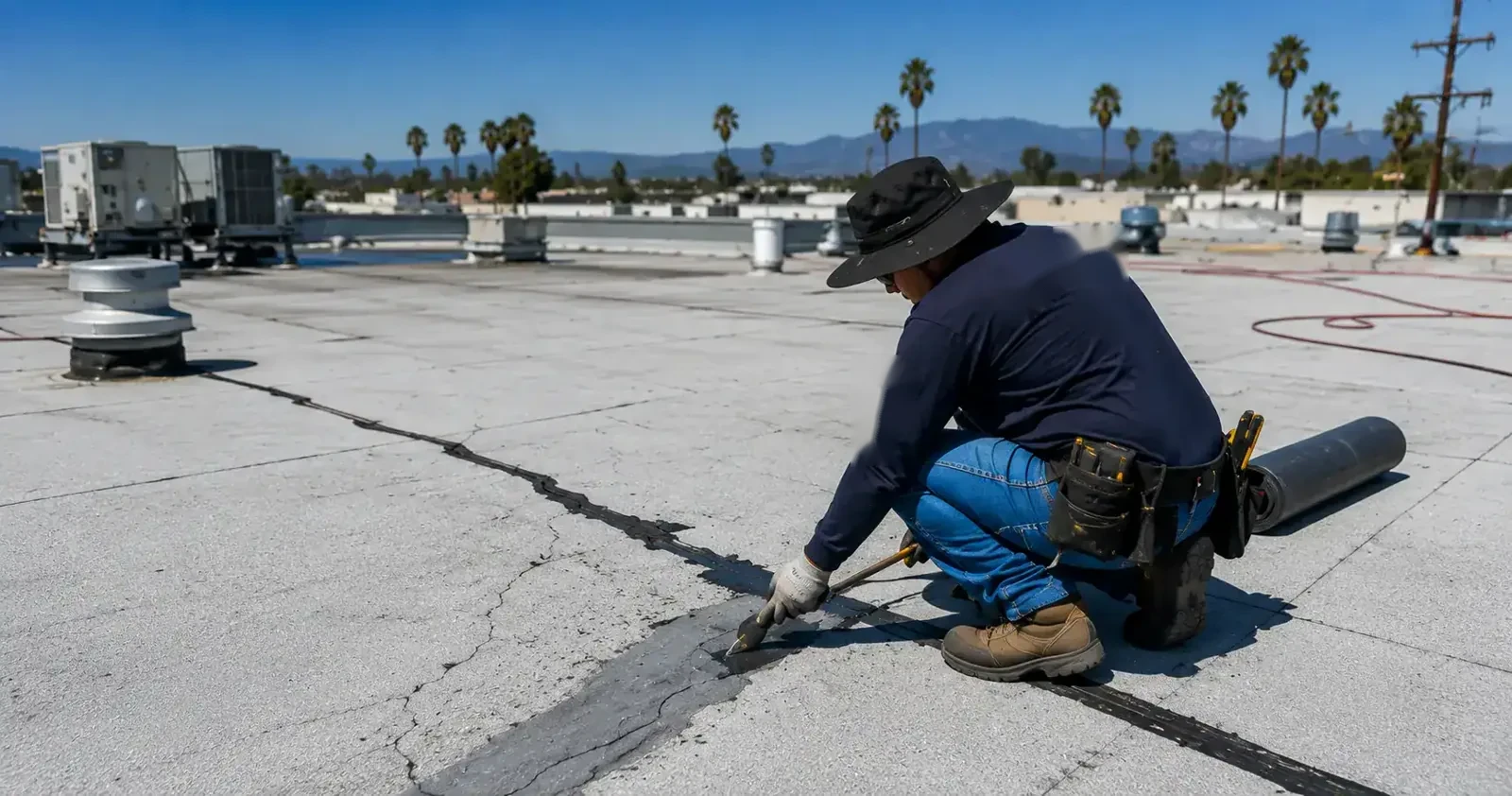
Trace commercial roof leaks to a repairable defect, document the tie-in, and plan access around building operations in North Las Vegas.
A ceiling mark gives the investigation a starting point, not a repair address. Water can enter at a seam, curb, wall termination, drain, or penetration and travel before it reaches a room. We compare the leak date and interior location with roof zones, prior patches, equipment work, and the drainage path above. The inspection record separates what is visible from what still needs testing, so the repair scope follows the defect rather than the stain.
For a building in Downtown North Las Vegas or the broader Industrial Lands planning area, the city's 2006 framework map is historical area context, not a current zoning determination. The same field sequence applies across the city: map the report, inspect the assembly, then set a repair boundary the crew can photograph and verify. When a leak returns after earlier work, a focused commercial roof repair review should compare the old tie-in with the present water path.
Start with the leak record
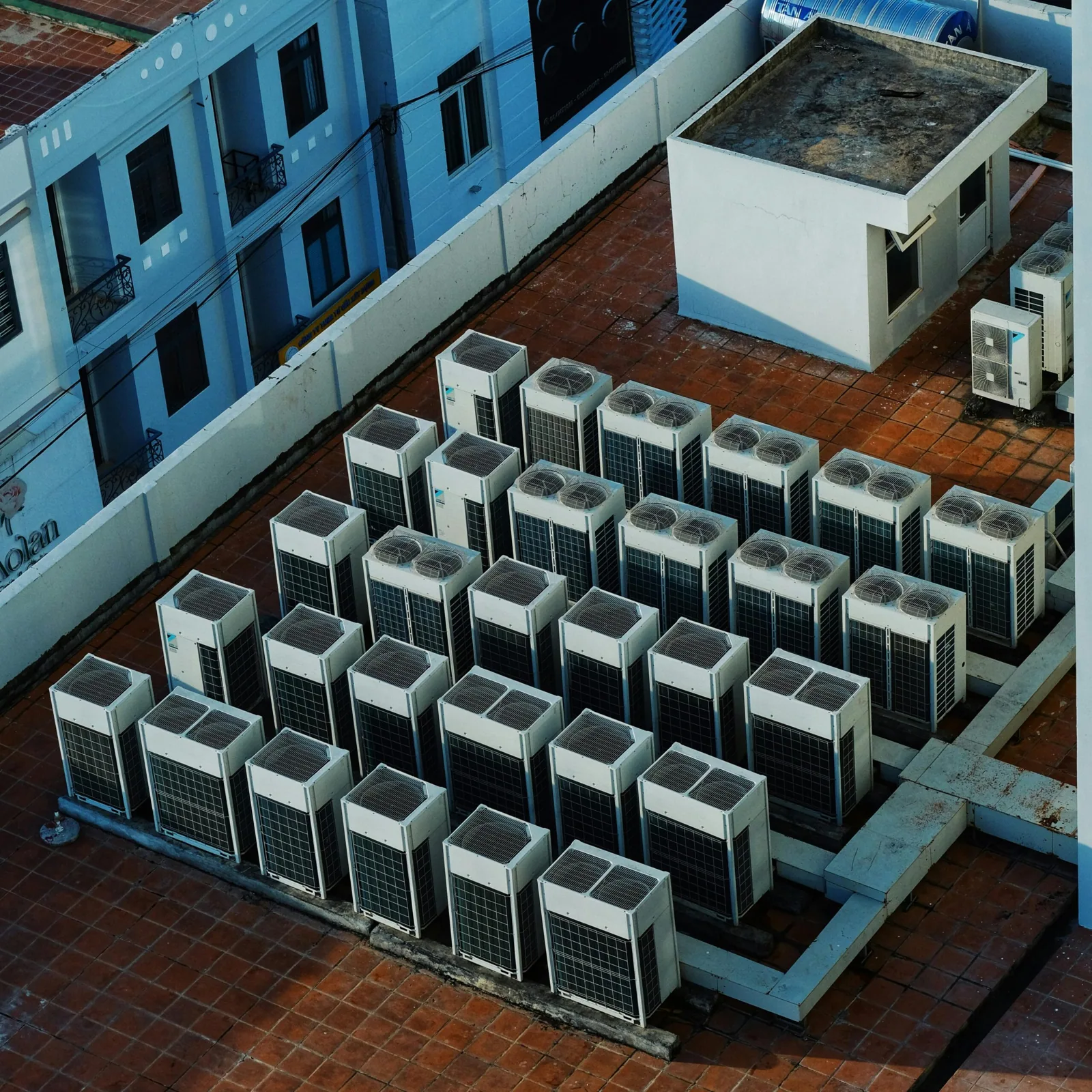
Record the room, ceiling grid or wall line, date and time, weather, and whether water was actively entering or only a mark remained. Ask when the area was last dry, whether the leak followed roof work or an equipment change, and which spaces must stay open during inspection. If several reports arrived together, keep them separate until their paths are checked; one storm can expose more than one weak detail.
Inside, look for the shape and age of staining, wet insulation at an accessible ceiling opening, corrosion, and the direction of water travel. These observations narrow the search but do not identify a roof defect on their own. The inspection should record competing explanations and request safe access to the area that can resolve them. A documented commercial roof inspection can organize those findings.
COMMERCIAL ROOFING IN NORTH LAS VEGAS, NEVADA
Trace the assembly from above
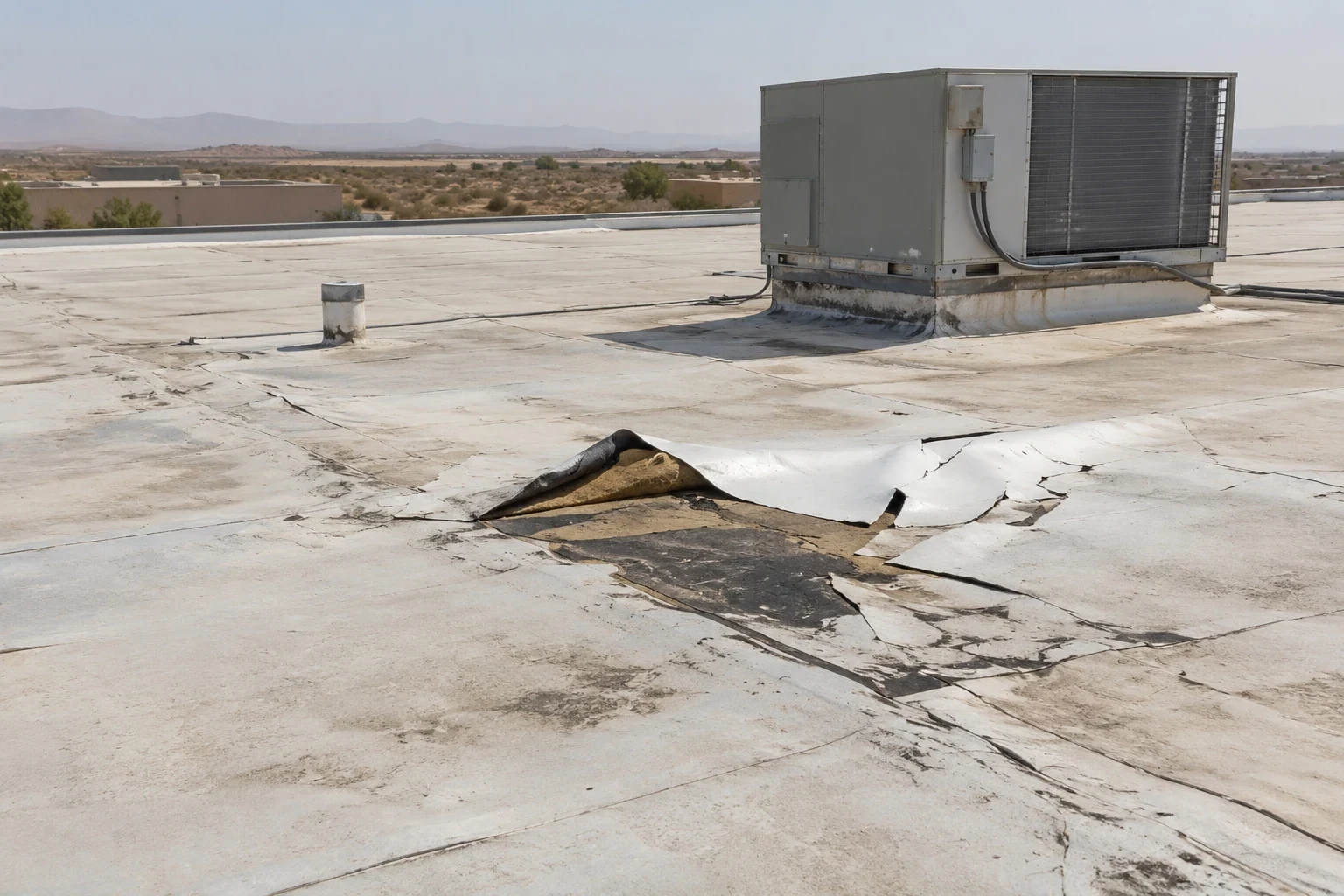
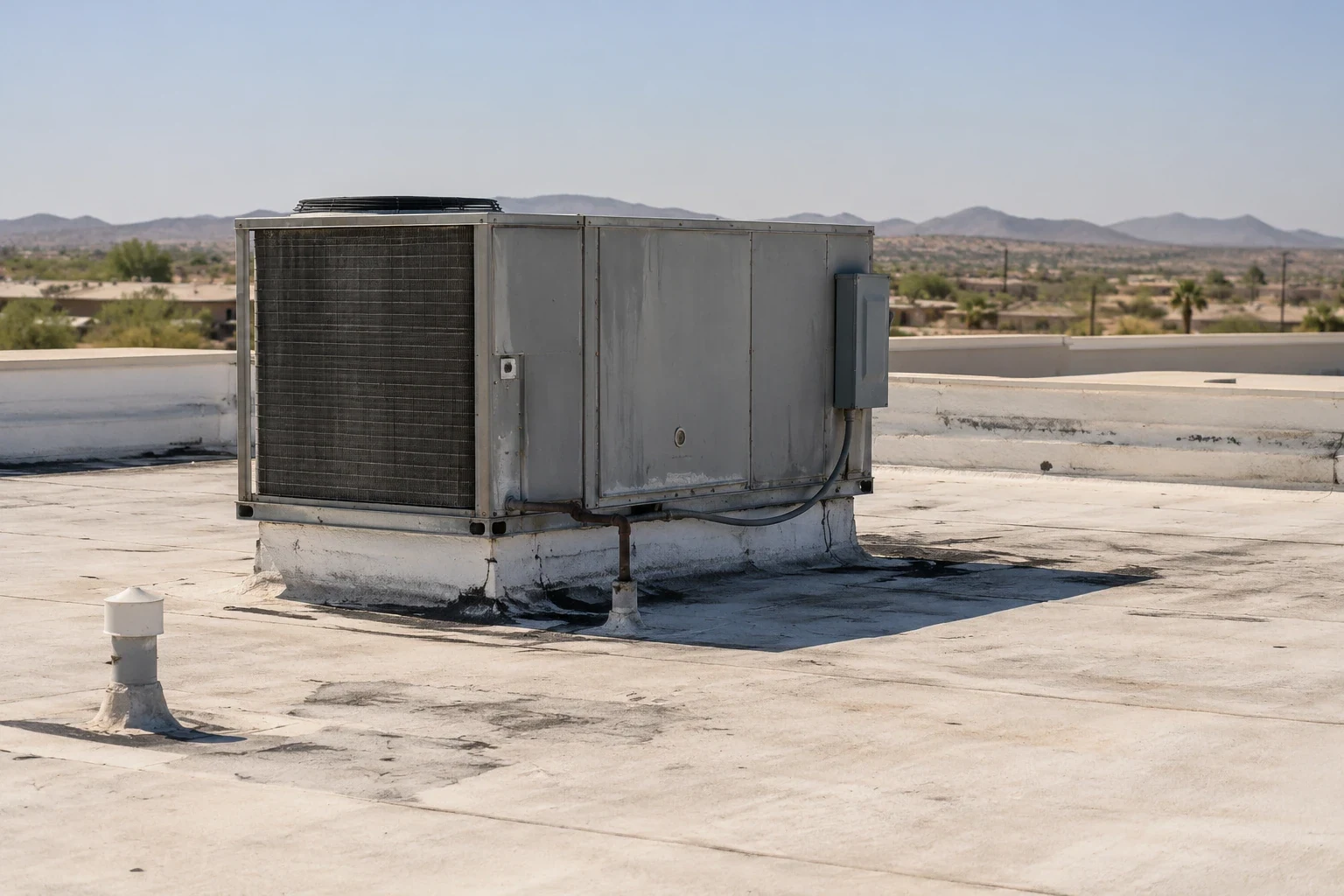
On the roof, orient the report against the roof plan and mark the nearest seam, drain, curb, wall, expansion joint, penetration, and edge. Inspect the likely uphill and cross-slope paths, not just the point directly above the room. Check membrane laps, corners, flashing terminations, pitch pockets, fasteners, metal transitions, and any patch that may have bridged a moving joint.
For a thermoplastic membrane such as TPO or PVC, a repair may need clean, sound material and a compatible welded tie-in; TPO membrane details still need field confirmation. EPDM membrane usually calls for a different preparation and patch detail. If records are missing, use an exposed edge or controlled test opening when authorized, and photograph the layers before they are covered.
Use weather as timing context
The National Weather Service characterizes the Las Vegas Valley as hot desert, with summer monsoon periods capable of bringing brief heavy rain and gusty wind. Treat that as regional timing context, never evidence that a named roof took damage. When reviewing a report, note the storm window and whether water appeared during or after it. A building near the Cheyenne Technology Corridor still needs its own inspection record, assembly information, and access review.
Heat exposure also matters during repair planning. Surface temperature can affect work windows, material handling, and how long a prepared area remains workable. Coordinate the visit for safe roof access and the product's installation conditions. Do not close a wet assembly simply to finish before the end of a shift; first determine whether insulation or deck material needs to be opened, dried, or replaced.
Set the repair boundary
Mark the repair perimeter against a feature that another person can locate: a seam intersection, curb corner, drain, wall, or measured roof-plan reference. The written scope should identify the observed defect, material removal, substrate preparation, patch material, tie-in method, and finished termination. Remove loose or contaminated material rather than burying it. Where wet insulation is confirmed, define how far the opening will be evaluated and how replacement material will be fitted before the membrane is restored.
A repair is a reasonable option when the defect is localized, compatible material is available, and the surrounding roof can accept a sound tie-in. Multiple wet areas, recurring leaks at different details, widespread seam separation, or a brittle and poorly adhered surface may call for testing or a broader condition review.
Coordinate access and occupied space
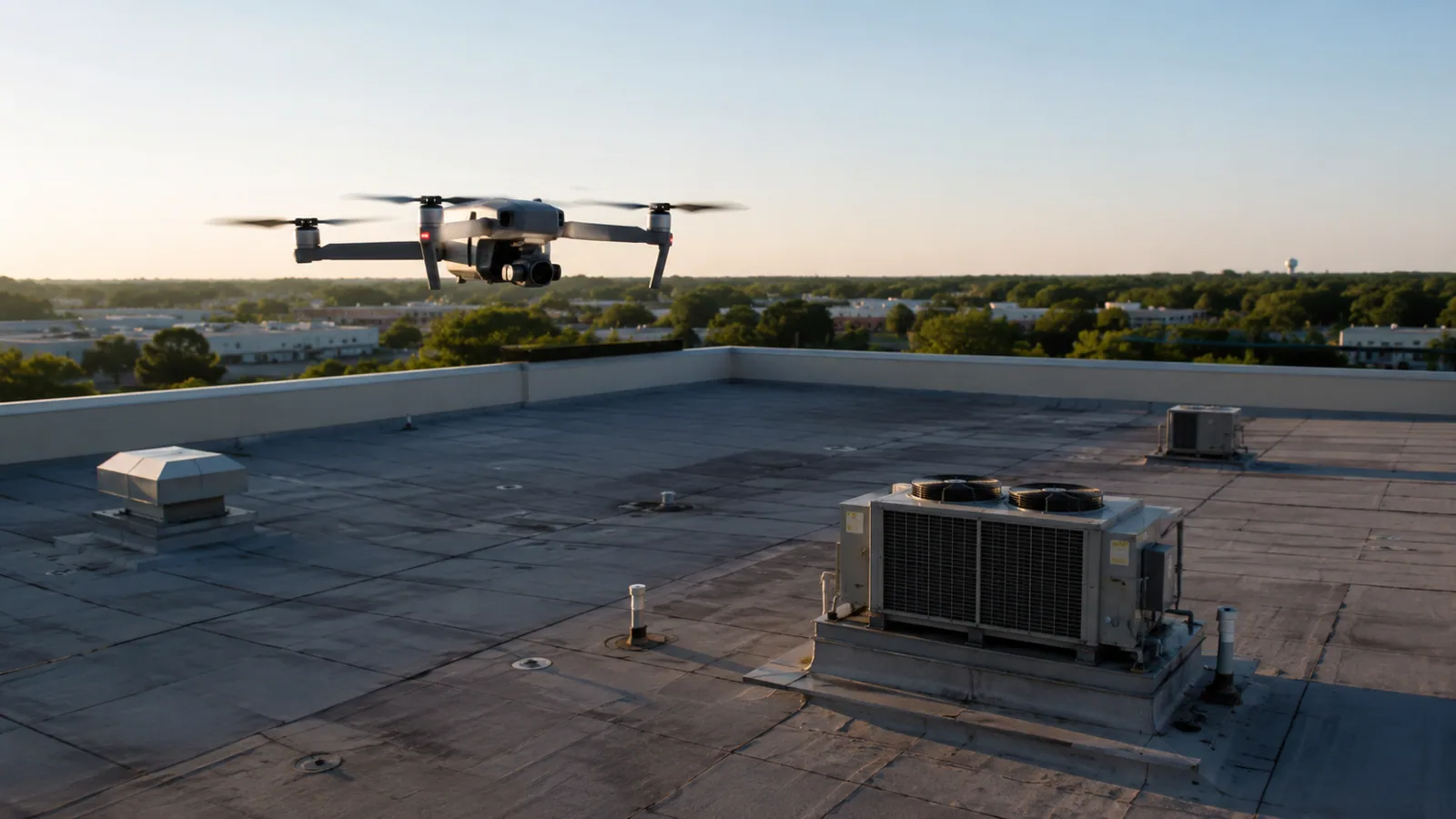
Confirm roof keys, escorts, ladder or hatch rules, fall protection expectations, tenant notices, and any restricted production or patient-care periods before the crew arrives. A leak above a work area may need temporary protection while the investigation proceeds, but any temporary measure should be documented with its location, material, and next inspection point. Keep the facilities contact informed when an opening exposes insulation or deck that changes the work boundary.
For a multi-tenant property, match interior reports to suite and roof-zone labels without assuming that neighboring spaces share one source. Protect inventory and equipment below the work area, control debris, and agree on who can authorize an expanded opening. In North Las Vegas's broad commercial districts, access conditions vary by property and operator; the district name is useful for dispatch planning, not a substitute for site rules.
Close the loop with evidence
Before closing the repair, photograph the prepared substrate, each exposed layer, the completed patch, and the perimeter. Record dimensions, material identifiers when known, weather conditions, and any area that could not be reached. Tie the closeout to the original room report and roof-plan zone so a later inspection can tell whether water returned at the same detail or somewhere else. Note whether the repair addressed an entry point, water-damaged material, or both.
A post-repair check should use a method suited to the assembly and the owner's operating constraints. If the source remains uncertain, state what evidence is missing and schedule the next diagnostic step rather than claiming the roof is resolved. The record should help the facilities team decide when to reopen the area, monitor a ceiling, or bring the roofer back.
Prepare the right inspection
Share the roof plan if available, leak dates, interior photos, prior repair records, known membrane type, equipment changes, and access or operating-hour rules. Include the areas that must remain in service and the person authorized to approve a test opening. We can inspect commercial roofs across North Las Vegas, including broad service areas such as the Industrial Lands and Downtown, then document the observed condition and repair boundary. For an active leak requiring rapid attention, call the emergency roof repair team and describe the safest access point.
Our around-the-clock response is available every day, including holidays. Tell us whether water is actively entering, what space is affected, and whether electrical equipment or stored goods are at risk. The first visit should answer a defined question: where the water is entering, what material is affected, and what work can be completed safely.
Commercial Roofing Questions
Why can the ceiling stain sit away from the roof leak?
Water can run along a deck, insulation facer, seam, beam, or wall before it reaches the interior finish. We map the stain to a roof zone and inspect likely uphill and cross-slope paths, then document which route is supported by visible evidence.
Can a previous patch be repaired again?
Sometimes. The existing patch must be checked for adhesion, compatibility, moisture below it, and movement at the detail. If the patch covers a wet or contaminated surface, adding another layer can hide the condition rather than correct it.
What should a facilities lead do if water continues entering?
Keep people clear of ceiling openings, electrical hazards, and slippery floors; protect movable equipment only when it is safe. Note the time and affected room, then call for roof response. Do not climb onto a wet roof or move a ceiling panel beneath an active leak.
Will a roof test always identify the leak source?
No single test fits every assembly. Moisture scans, controlled openings, and water testing answer different questions and have access or safety limits. We recommend a method after reviewing the roof type and the evidence gathered from the interior and roof surface.
What records help plan commercial leak repair?
A roof plan, membrane or coating information, leak dates, interior photos, prior repair invoices, and records of recent rooftop work help connect the report to a roof zone. Access rules and the contact authorized to approve an opening also keep the inspection moving.
More Roofing Detail
Trace the water path before the repair is scoped
Call to schedule a commercial roof leak investigation in North Las Vegas. Share the leak timeline, affected space, roof records, and access rules so the inspection can trace the water path and document a repair boundary.