
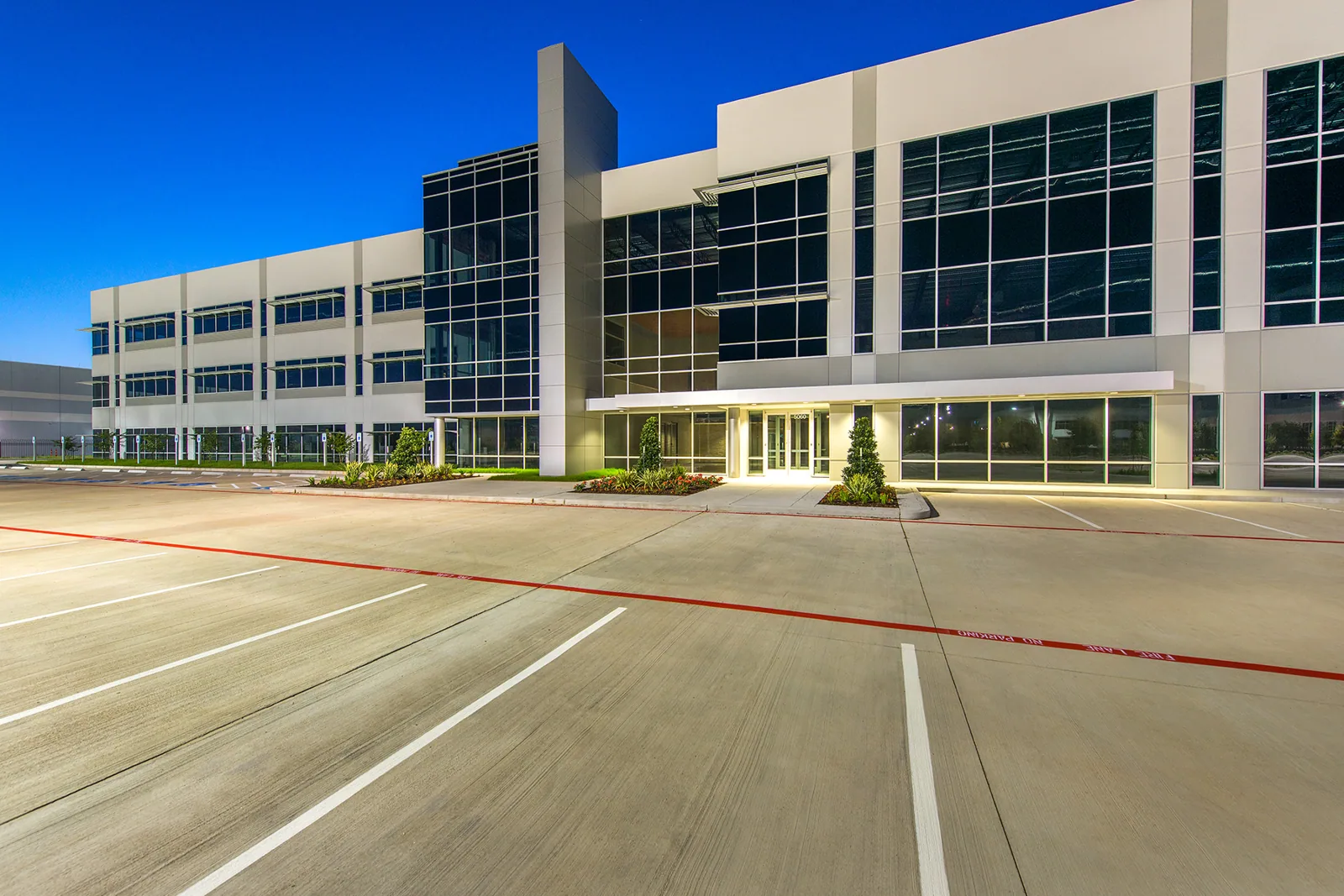
Roof inspection, repair and planning for property managers running several buildings in North Las Vegas, NV, with one record format and clear priorities.
A work order that reads "ceiling stain, suite 140" tells a property manager very little about the roof, and the first job on any multi-building roof program is to turn that sentence into a roof zone, a water entry path and a decision. For managers running several properties in North Las Vegas, NV, we start with the request that is waiting: authorize a repair, answer an owner, settle a tenant complaint or set next year's reserve. Then we decide what the inspection has to establish before anyone picks a scope or a price.
The city covers about 101 square miles, and Census figures describe both dense and lower-density areas inside that footprint. Buildings in different parts of it can differ in drainage, rooftop equipment and access rules, so a single assumption about "the portfolio" does not hold. We record each roof on the same terms, so a decision about one building can be weighed against the rest of the group.
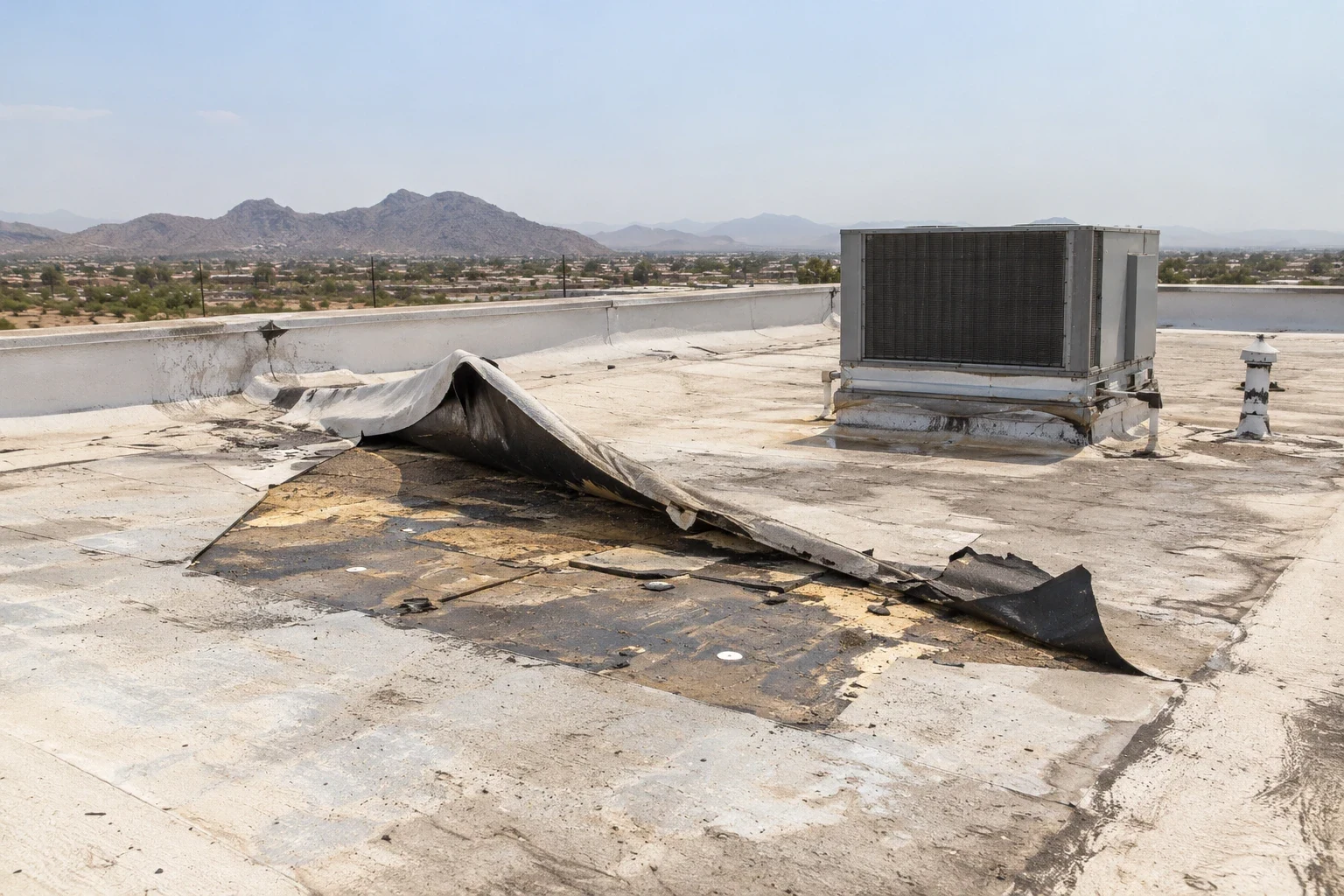
Work order: trace the stain to a roof zone
Start with the interior report: the room, the date, whether it rained, whether an air handler was running and whether the stain has grown. Mark it on the roof plan, then walk the roof upslope of the stain and look at everything water could cross on the way: seams, curbs, drains, pipe penetrations, wall flashings and any recent equipment work. Water often travels along the insulation or deck before it shows, so the entry point can sit well away from the mark.
We write the finding in a form a tenant and an owner can both read: the roof zone, a photograph, the condition seen and the decision it supports. If the evidence does not settle it, the record says so and names the test that would. A commercial roof leak repair proceeds on the confirmed entry point, and anything still uncertain stays on the list as an open item with a date.
Commercial Roofing Questions
What decides whether a tenant leak is repaired now or scheduled?
Active water entry near electrical equipment, stored goods or occupied space decides it. A confirmed entry point with ongoing leakage gets repaired promptly, while a stable stain with no growth can be scheduled. We state the urgency in the report so the manager can explain the timing to the tenant.
How should a manager choose which roof to replace first?
Rank by evidence: active leaks, wet insulation, drainage faults and repeated repairs at the same details. Age is a secondary signal. We present the ranking with photographs, so the owner sees why the first roof is first.
Who authorizes a test cut during an inspection?
The owner or manager must approve it, because it opens the roof. We ask for that authority before the visit, patch the opening the same day and record its position. Without a test cut, moisture readings remain indications.
Can one report cover buildings in different parts of the city?
Yes. We use the same checklist and photograph layout on every roof, then list the buildings in one summary with a ranking. The city spans about 101 square miles, so the report also notes access differences between sites.
What does emergency response cover for a managed property?
Round-the-clock emergency response includes holidays. A crew protects the opening, documents the damage and reports to the manager, who then authorizes permanent repair.
More Roofing Detail
COMMERCIAL ROOFING IN NORTH LAS VEGAS, NEVADA
Portfolio: rank roofs by what the evidence shows
Age alone is a poor ranking tool. A seven-year-old roof with a blocked scupper and open laps can be a bigger risk than a fifteen-year-old roof with clean drainage and sound seams. We rank by active water entry, drainage condition, the state of seams and flashings, the likelihood of moisture in the insulation and what the building holds underneath. The result is a short list of roofs that need action this year and a longer list that need watching.
That ranking feeds roof capital planning, where each roof gets a decision (repair, maintain, restore or replace) and a rough sequence. Owners can see why one building goes first, and a manager can defend the order with photographs. For managers with many sites, a multi-site roof program keeps the checklist, the photograph layout and the roof naming scheme the same from building to building. Keep the open-items list in one shared file, with the roof zone, the date raised and the person who owns the next step, so a change of manager does not erase the history.
Exposure: plan the visits around monsoon and wind
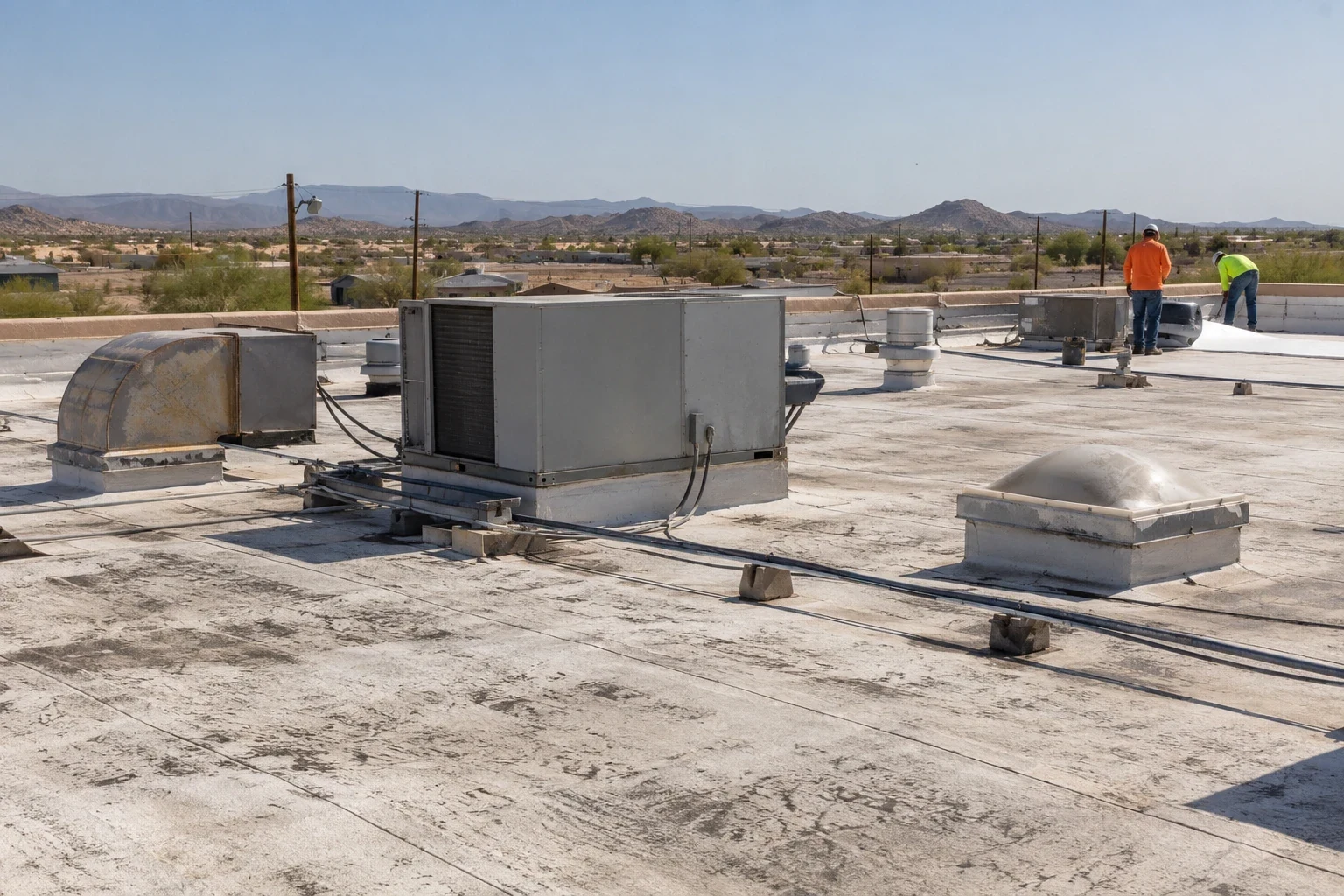
In a hot, sunny desert the monsoon thunderstorms of July and August are the stress test, with gusty wind, heavy rain and flash flooding in low areas. Wind events come more often in spring and fall. Those are regional patterns, and we use them to time visits, not to claim a roof is damaged.
In practice, that means a pre-season walk in late spring to clear drains and scuppers, check edge metal and photograph conditions, and a post-storm walk after a heavy event to compare against the baseline. A preventive roof maintenance schedule built on those two visits keeps small items small. Where a repair cannot be finished before a storm window, we place temporary protection and list what remains.
Access: protect tenants and operations while the roof is open
Managers answer to tenants, and a roof crew above an operating suite has to be planned like any other disruption. We agree on access routes, staging areas, noise windows and who can authorize a shutdown of rooftop equipment. Fire lanes, deliveries and customer paths stay open, and ladders or hoists are placed where they do not block them.
On a multi-tenant building, we map the roof by suite so a tenant complaint can be traced to the zone above it and updates go to the right people. An occupied building reroofing plan divides the roof into sections, dries each one in before the day ends and records what is open at every stage. Managers get a daily note of what was done and what is planned next, which gives them something specific to tell tenants.
Owners and contractors: keep every party on the same page
A manager sits between several parties. Owners and investors want a clear number and a clear reason, and general contractors on a tenant improvement want to know what the roof allows before they cut a new opening. We keep both informed from the same record, so an owner reads the ranking and a contractor reads the penetration log without anyone rebuilding the facts.
When a tenant improvement adds equipment or a new roof opening, we flash it and add it to the roof file the same week. That habit prevents unflashed cuts from becoming the next leak and keeps repair boundaries easy to read years later. It also lets a manager answer a basic question quickly: who touched this roof, when and what did they change.
Records: leave a file the next manager can use
Buildings change hands and managers change companies, and roof knowledge goes with them unless it is written down. We assemble a file for each roof: plan, photographs, repair log, equipment changes and findings from every visit. When the next leak call comes, the file shows whether the new symptom matches an old repair or something new.
The same file supports owner reporting and, where a roof is under warranty, the documentation needed to keep coverage intact. Our roof condition reports use a consistent format across buildings, whether the building sits near the Cheyenne Technology Corridor or the North 5th Transit Corridor, so a manager can compare roofs without translating between reports.
Send the building list and the open work orders
Share roof plans, leak dates, repair history, equipment changes and tenant operating hours. We will organize the inspection around the decisions your North Las Vegas properties are waiting.