
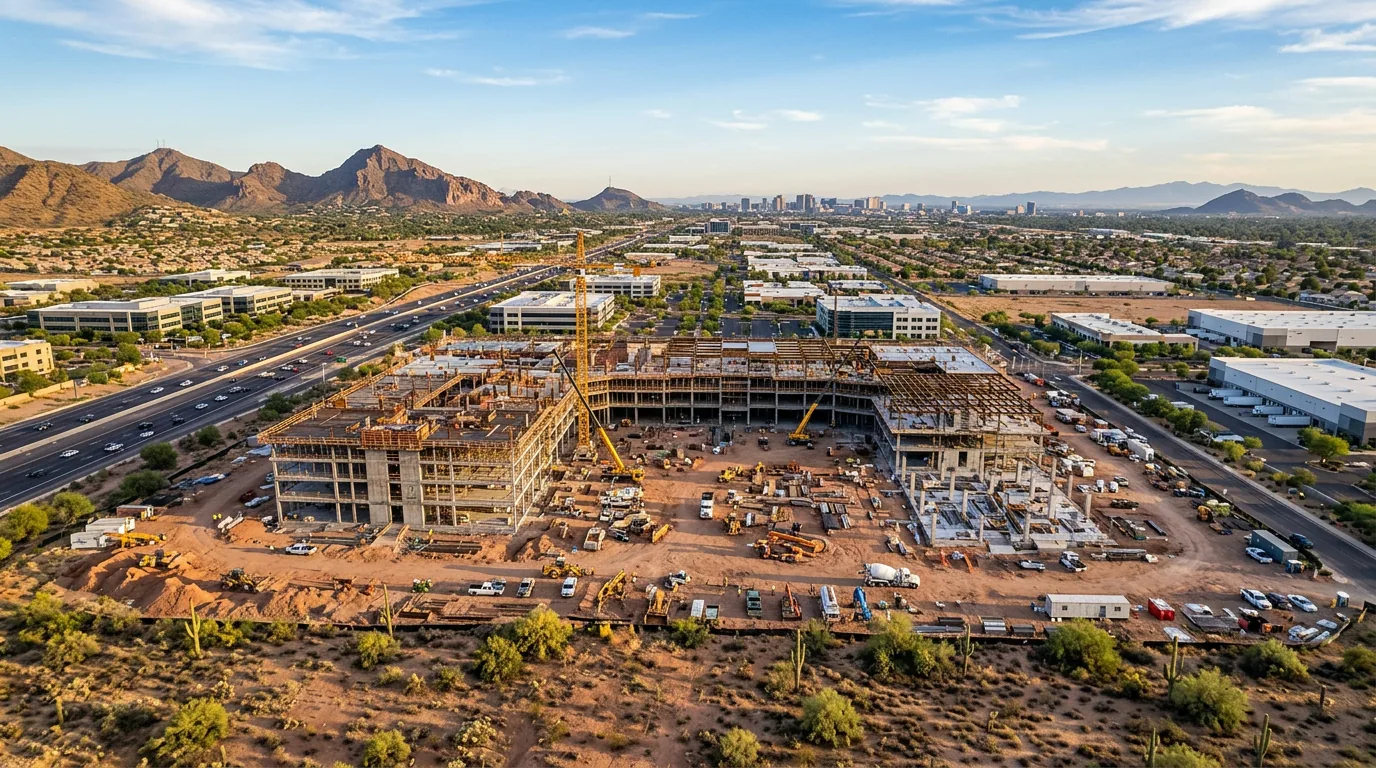
Roof scopes, tie-in details, schedules and closeout records for general contractors building or renovating in North Las Vegas, NV, coordinated with every trade.
A roof scope that reads "install roofing per plans" leaves a general contractor holding three open questions: who flashes the new curbs, who owns the tie-in at the existing wall and who signs the closeout. For general contractors building, expanding or renovating in North Las Vegas, NV, we answer those in writing before the roof is bid. The scope names the roof zones, the details, the trade handoffs and the records the owner will expect at turnover.
The city's planning framework labels broad areas such as the Northern Development Area, the Cheyenne Technology Corridor and Industrial Lands, and the state has adopted the 2024 International Energy Conservation Code. Neither tells a contractor what a particular project needs. A project's roof is defined by its drawings, its jurisdiction and its building use, and we work from those. Our role is to make the roof a predictable line in the schedule and not the late item that holds up the certificate of occupancy.

Scope: write the roof so trades know their edges
Roof scopes fail at the edges between trades. Mechanical sets curbs, electrical runs conduit, plumbing places vents, and the roofer flashes all of it after the fact. If the penetration schedule is late, the roof is late. We ask for the equipment submittals and the penetration plan early, check curb heights and spacing against the insulation thickness and flag conflicts before the deck is set.
In the proposal, we list what is included, what is excluded and what is an allowance. We state the assumptions on deck condition, access, crane use, temporary power and hoisting, so no one discovers them in a change order. For tenant improvement work, we confirm which penetrations are new, which are existing and who flashes each one. A written scope that matches the drawings makes the roofing line in the schedule dependable.
Commercial Roofing Questions
What belongs in a roofing subcontract so the schedule holds?
The penetration plan, the equipment submittal dates, the access and hoisting arrangements, the temporary protection responsibilities and the weather-hold language. If those are written, the roof can start when the deck is ready.
Who flashes a curb that the mechanical trade sets?
The roofer flashes it, so the curb height and the flashing detail must be agreed before the unit is ordered. We check the submittal against the insulation thickness and report conflicts the same week.
How do you handle a tie-in to an old roof with unknown condition?
We inspect and photograph before demolition, probe for moisture and price a tie-in detail that works with the old membrane or an alternate that replaces it. The existing-condition record protects both the contractor and the owner.
What if the permit reviewer changes the insulation requirement?
We revise the detail and the price within days, and the proposal marks permit-dependent items as allowances. Confirming the adopted code with the jurisdiction early cuts the odds of a late change.
Do you support punch-list and warranty items after turnover?
Yes. We close punch-list items and, with the owner's permission, return for warranty inspections. Emergency response runs around the clock if a leak appears after occupancy.
How do you keep other trades from damaging the membrane?
We post an access route, install walk pads where traffic is expected and ask each trade to report damage the same day. A final walk with the superintendent records any damage, and we repair it before the owner's inspection.
More Roofing Detail
COMMERCIAL ROOFING IN NORTH LAS VEGAS, NEVADA
Tie-ins: settle the existing-roof questions first
Additions and renovations connect new roof to old, and the old roof sets the rules. We inspect the existing membrane at the tie-in: its type, its condition, its attachment and the height of the wall or curb it terminates at. Incompatible materials, wet insulation and low flashing heights are three conditions that change the detail.
We record the existing condition with photographs before demolition, so any later leak at the tie-in can be traced to the new work or the old. If the old roof has little life left, we price the option of replacing it with the project, with the saving in mobilization and protection shown beside the cost. A commercial roof replacement done during construction avoids a second disruption and a second warranty process later.
Site coordination: keep the roof crew out of other trades' way
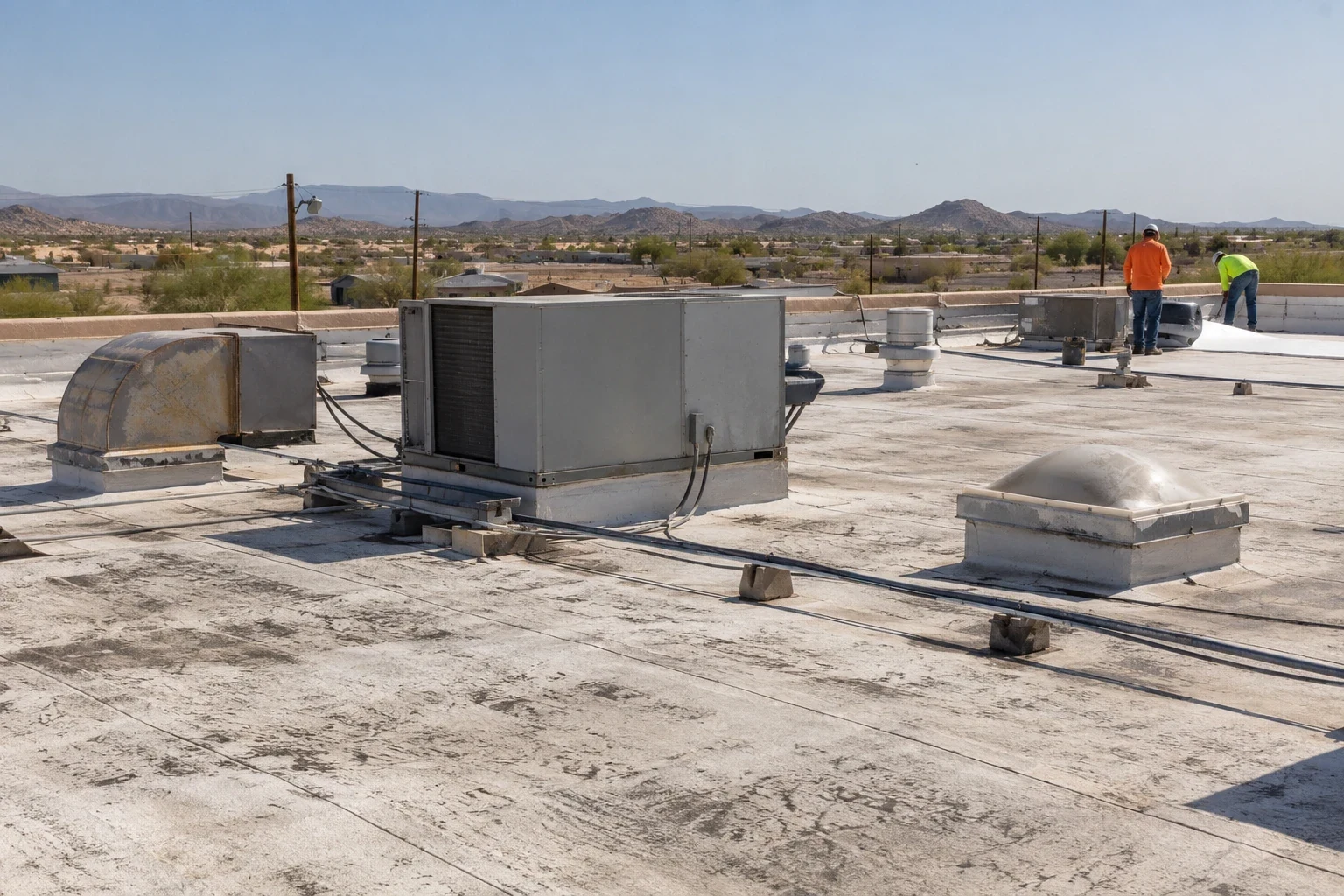
A roof is a shared workplace. Mechanical crews set units, electricians pull conduit, fire protection installs and glaziers work at the parapet, all in the same weeks. We attend the coordination meeting, mark roof areas that need to stay clear for hoisting or hot work and agree on who protects finished membrane from foot traffic. Walk pads, plywood protection and a posted access route cost little compared with a punctured membrane found at final inspection.
Fall protection, hoisting zones and material storage are planned with the superintendent. Heavy rooftop equipment arrives by crane on a set day, so the roof must be ready to receive it, with curbs flashed or temporarily sealed. After other trades finish, we walk the roof with the superintendent, photograph any damage and repair it before the owner's inspection. That walk, recorded with dates and photographs, settles who is responsible for what without argument.
Code and permits: confirm the edition before pricing insulation
The state has adopted the 2024 International Energy Conservation Code, and its public works division lists the 2024 IBC for projects under its authority. Municipal rules still govern, so the contractor confirms which building and energy requirements North Las Vegas applies before insulation thickness and fire ratings go into the price.
Insulation thickness and cover board are the line items that move most with code. We carry the confirmed requirement into the proposal and mark anything pending permit review as an allowance with its basis stated. Our insulation and cover board scope states R-value, board type and attachment, so the plan reviewer and the owner read the same thing. If the permit reviewer asks for changes, we respond quickly with revised details.
Schedule: sequence the roof against weather and trades
Summer storms are the schedule risk: July and August monsoon moisture brings thunderstorms with heavy rain and gusty wind, and low areas can flood fast. Spring and fall wind events are more common than at other times, and winds above 50 mph are infrequent but can carry dust and sand.
Those patterns shape the roof schedule. We aim to dry in the building before the monsoon weeks, plan sections that can be closed the same day, keep temporary protection on site and build weather holds into the baseline. Heat narrows the working hours on the surface, so crews start early and material is staged in shade. We give the superintendent a two-week look-ahead each Friday and flag any item that could move the dry-in date. On a flex industrial roof, large areas can be released to the following trades in sequence.
Closeout: deliver the records the owner asked for
A roof is not finished until the paperwork is. We assemble the as-built roof sketch, photographs of each stage, material documentation, test results, inspection sign-offs and warranty paperwork in the format the owner's team needs. Gaps in the record are listed rather than hidden, so the contractor can close them before final payment.
For owners who will manage the building long term, roof warranty management explains which repairs and attachments are allowed under the warranty and how to document future work. We hand the file to the owner or the property management company and stay available for punch-list items. On work for a manufacturer or a similar owner, we add the penetration log and equipment curb schedule, because equipment changes after turnover are the usual source of new penetrations.
Send the drawings and the schedule
Share roof plans, equipment submittals, the permit status and the milestone dates. We will return a scope that names every handoff, so the roof stays a predictable line in your schedule.