
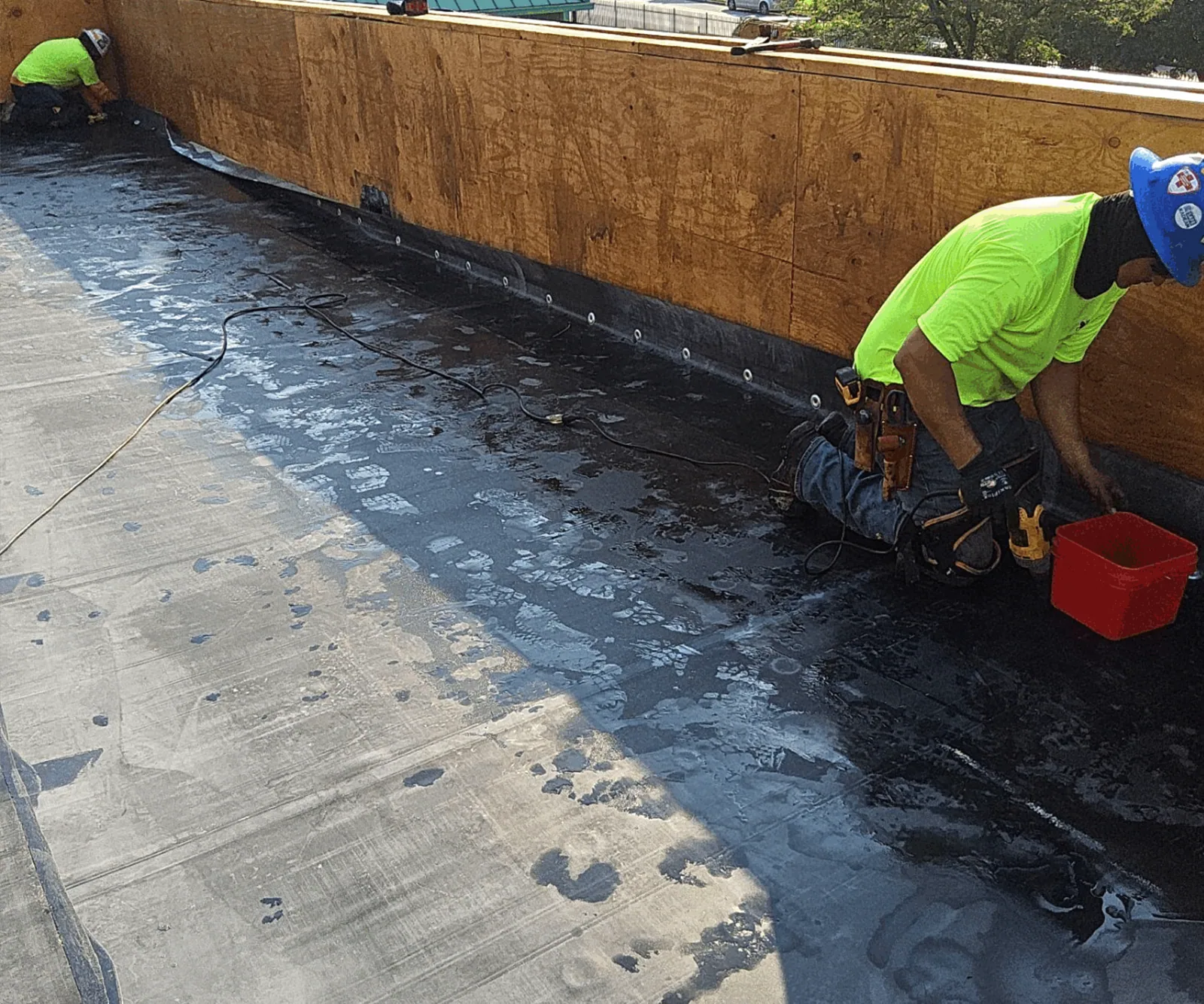
EPDM roofing in North Las Vegas, NV: rubber membrane seams, flashing shrinkage, heat and UV wear, punctures, and repair or coating decisions.
An EPDM roof that starts leaking at a wall often has a membrane that is not torn at all. Rubber shrinks slightly as it ages, and the sheet can pull away from the base of a parapet or a curb, leaving the flashing in tension and a gap behind it. The building manager can verify this: press the flashing at the wall, look for a bridged corner, and see whether the sheet has moved off its cant strip. That finding changes the repair from a patch to a rework of the flashing.
EPDM is a cured synthetic rubber membrane, black or white, installed fully adhered, mechanically attached, or ballasted, with seams joined by tape or adhesive. On a North Las Vegas building, the inspection establishes the attachment, the seam type, the condition of every flashing and the dryness of the insulation below before anyone says repair, coating or replacement.
Seam Type: Tape, Splice, and Where They Open
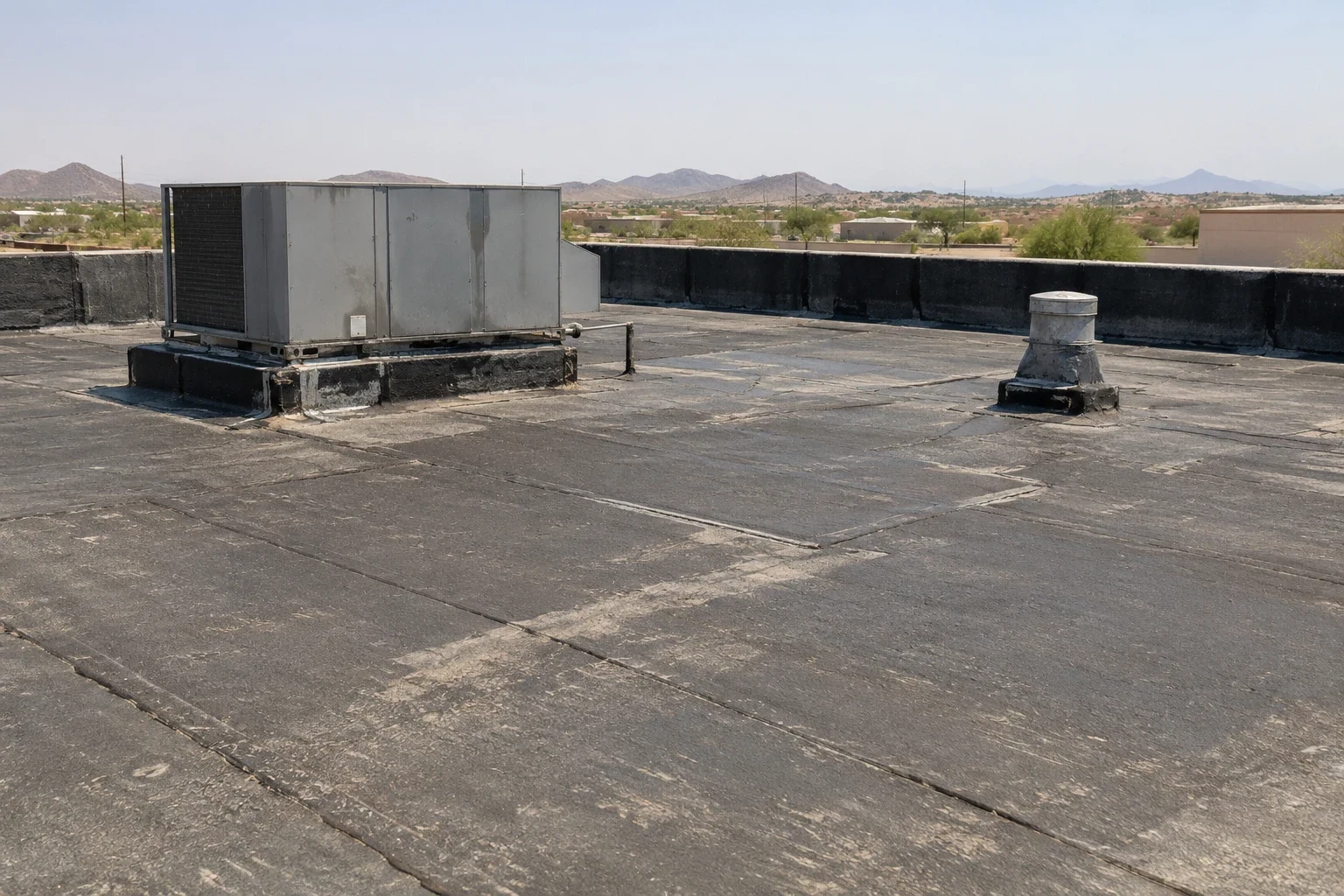
EPDM seams are not welded. Older roofs often carry adhesive splices, and many newer ones use factory or field tape. A seam fails when the bond lets go: at the edge of tape that has lifted, at a splice that has dried and peeled, or at a T-joint where several layers collide. We run a blunt probe along seam edges and look for lifting, fishmouths, and dirt tracks that show where water has entered.
Seam repair follows the cause. A lifted edge on a clean seam can be cleaned, primed, and re-taped. A seam that has opened across a long run suggests movement in the deck or insulation, so the substrate is inspected before the repair is made. A bead of sealant along a lifted seam is recorded as temporary because it rarely lasts through a hot season.
Ballast and walkways complicate the picture. Seams under stone cannot be seen without moving it, and a seam that opens beneath a walk pad can hide for years. For each roof we note where stone, pavers, or pads cover seams and plan sample openings where the leak path points there.
Commercial Roofing Questions
Why does EPDM flashing pull away from walls?
Rubber shrinks slightly with age and heat, and a flashing that was installed tight is then held in tension. Over time the pull stresses the adhesive and the termination bar, and the flashing can bridge across the corner. We press the flashing at corners, look for gaps behind it, and either reseal and refasten it or replace the piece. A patch over a bridged flashing usually fails.
Is seam tape reliable on a hot roof?
Tape bonds well on clean, primed surfaces and is common on EPDM roofs. Heat softens adhesives and thermal movement pulls at laps, so edges are where failure begins. We probe tape edges for lifting. If an edge is lifting, the repair is a cleaned, primed cover strip rather than sealant, which tends to release again in the next hot season.
Can EPDM be coated to extend its life?
Possibly, if the sheet is still flexible, the seams are sound, and the insulation is dry. The coating chemistry must bond to rubber, which usually needs a primer. A hard, cracking sheet cannot be saved by coating. We test adhesion on a small area, repair seams and flashings, and survey for moisture before recommending a coating over replacement.
How can ballasted EPDM be inspected without moving the stone?
Only partly. The perimeter, flashings, and drains can be inspected at the surface, and interior leak reports can be traced. To check the membrane under the ballast, stone is moved in sample areas and replaced afterward. If the leak path is unclear, a larger section is cleared. We record where stone was moved so the ballast layer is restored to its original depth.
More Roofing Detail
COMMERCIAL ROOFING IN NORTH LAS VEGAS, NEVADA
Flashing Tension: Parapets, Curbs, and Pipe Boots
Flashing is where EPDM roofs wear out first. Base flashings can shrink and pull, cured flashing pieces can crack at corners, and pipe boots can split where the rubber meets the pipe. At walls, the termination bar may have lost its sealant, which lets water run behind the flashing. At curbs, the corners are formed folds that take movement from the equipment above.
Our inspection logs each flashing by roof zone, with a photograph and a note on tension, cracks, and termination condition. A flashing that is still supple but has lost its sealant gets resealed and refastened. One that is cracked or bridged is replaced with a new piece lapped into the field sheet. Where flashing trouble clusters around equipment, the flashing failure repair scope is combined with a check of the curb heights.
Pipe boots are the cheapest item on the roof and one of the most common leak points. A split boot is replaced, not taped, and the replacement is lapped and sealed to the field sheet so the water path is closed on every side. Photograph each seam and flashing termination at the time of inspection, so the next visit can show whether a condition is stable or moving.
Heat and UV: Black Rubber in a Desert Climate
Sun is the constant exposure here. Black EPDM absorbs that sun, so surface temperatures run high and thermal movement is steady, while white EPDM reflects more and runs cooler. Chalking, fine surface cracking and hardening are the signs of sun exposure, and the inspection records where each one appears.
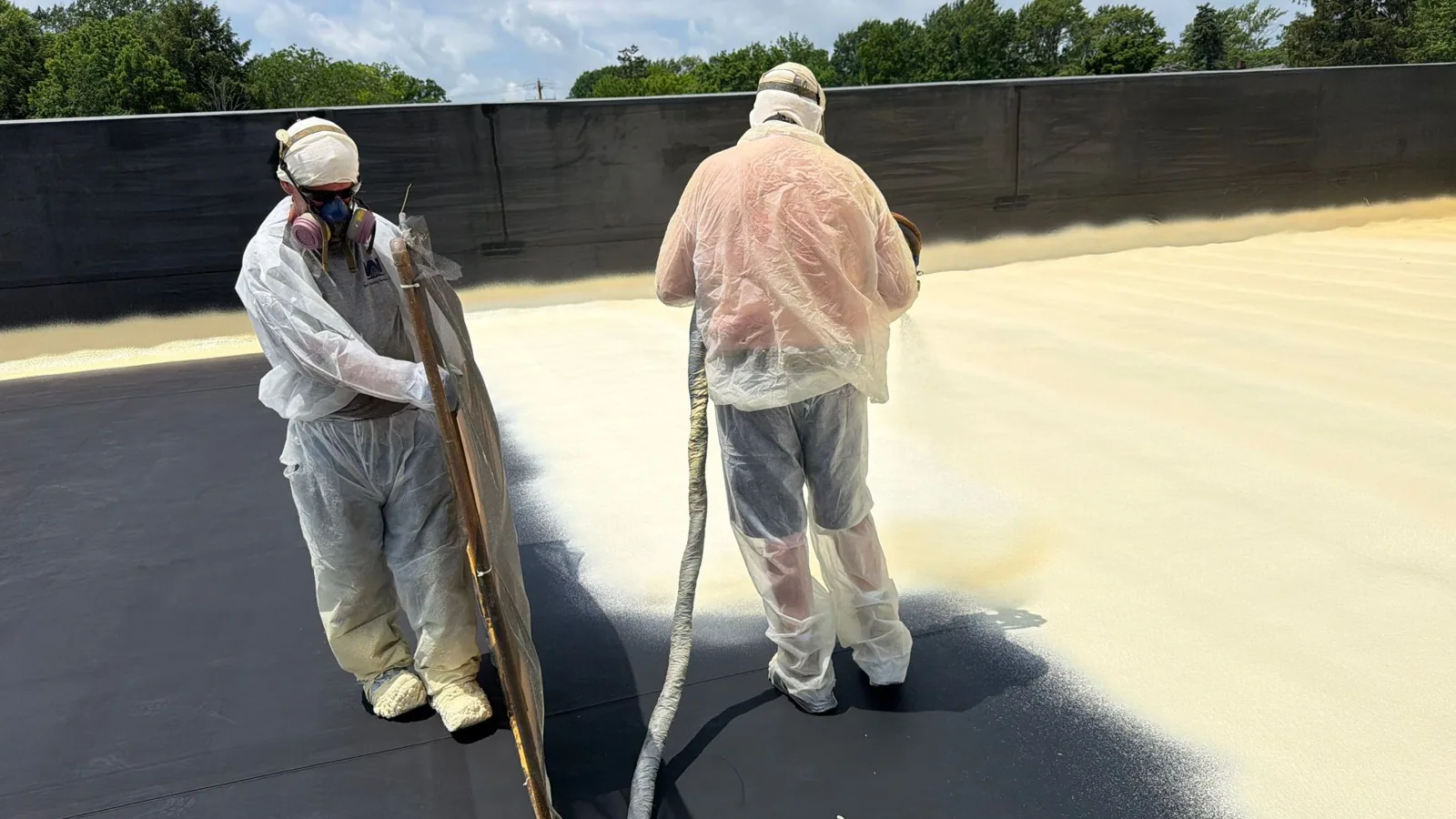
We compare the sheet in shaded and exposed areas, press at folds, and look at cut edges. EPDM that is chalky but flexible may take a coating. EPDM that has hardened and cracks when flexed is near the end of its life. Where a coating is considered, a coating restoration plan begins with adhesion tests, since few coatings bond to rubber without the right primer and surface preparation.
The coating family matters. Silicone and acrylic systems have different primer needs and different tolerance for standing water, so the choice follows what the roof does after rain, not a preference for one product.
Punctures and Ponding: Small Damage, Large Consequences
EPDM is soft underfoot and easy to puncture. Dropped tools, rack feet, and service traffic around equipment leave small holes that can admit water into insulation. A membrane puncture repair starts by finding every hole near the leak, since one visible puncture often has neighbors, then cleaning and patching with compatible material.
Ponding is the other recurring problem. Water that stands for long periods softens seams and accelerates debris buildup. We measure where water stays after rain, check drains and scuppers, and trace the low area to its cause. Heavy rain from July and August monsoon storms can overwhelm drainage, so the best time to clear drains is before those months.
Setting: Cheyenne North and the Sandstone District
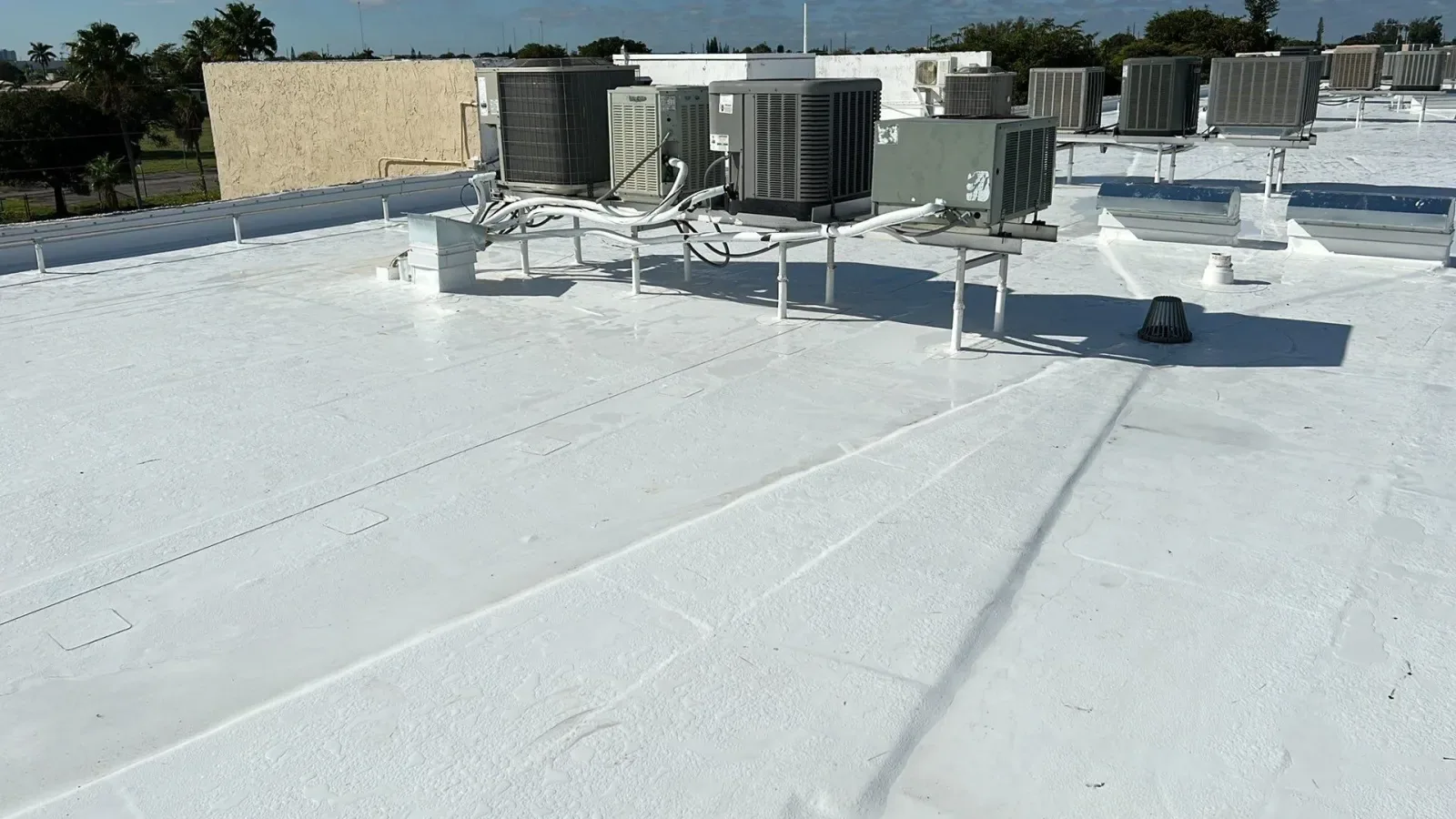
The city's planning map lists Cheyenne North as an existing master-planned community and the Sandstone District as a broad planning area. Both labels come from a 2006 map, so the current mix of buildings must be checked on the ground. In practice, the roof tells the story. We note whether the building has a ballasted, adhered, or attached EPDM roof, what equipment it carries, and how it drains, and the planning label does not change that checklist.
If the roof is near the end of its service life, a switch to TPO or a coating system may be proposed, and the owner sees the reasons in writing: seam condition, flashing condition, insulation moisture, and the pattern of repairs. Property managers in Cheyenne North or the Sandstone District can use that record when they plan the next budget.
Send the Roof Plan and Flashing Concerns
Share roof plans, access rules, leak dates, repair history, equipment changes, and operating-hour constraints. We will inspect the EPDM roof and return a defined scope for repair, coating, or replacement.