

Membrane puncture and foot-traffic damage repair in North Las Vegas, NV: find every hole, test the insulation below and patch with compatible material.
A worn lane from the roof hatch to a rooftop unit tells a facilities lead more than most inspection reports, because it shows exactly where the membrane is being asked to carry traffic it was not built for. On commercial roofs in North Las Vegas, NV, punctures come from dropped tools, service visits, blown debris, ladder feet and equipment dragged across the surface, and the visible hole is usually the smaller half of the problem. The inspection has to find every cut, establish where water traveled afterward and decide whether the surrounding insulation is still serviceable.
Winds over 50 mph are uncommon in the valley, but when they come they carry blowing dust and sand across the roof, and spring and fall bring those wind events most often. Wind-borne debris is one of several ways a membrane gets cut, and we treat that as regional context. The cause on any given roof is read from the roof: the shape of the damage, its location and what is nearby.
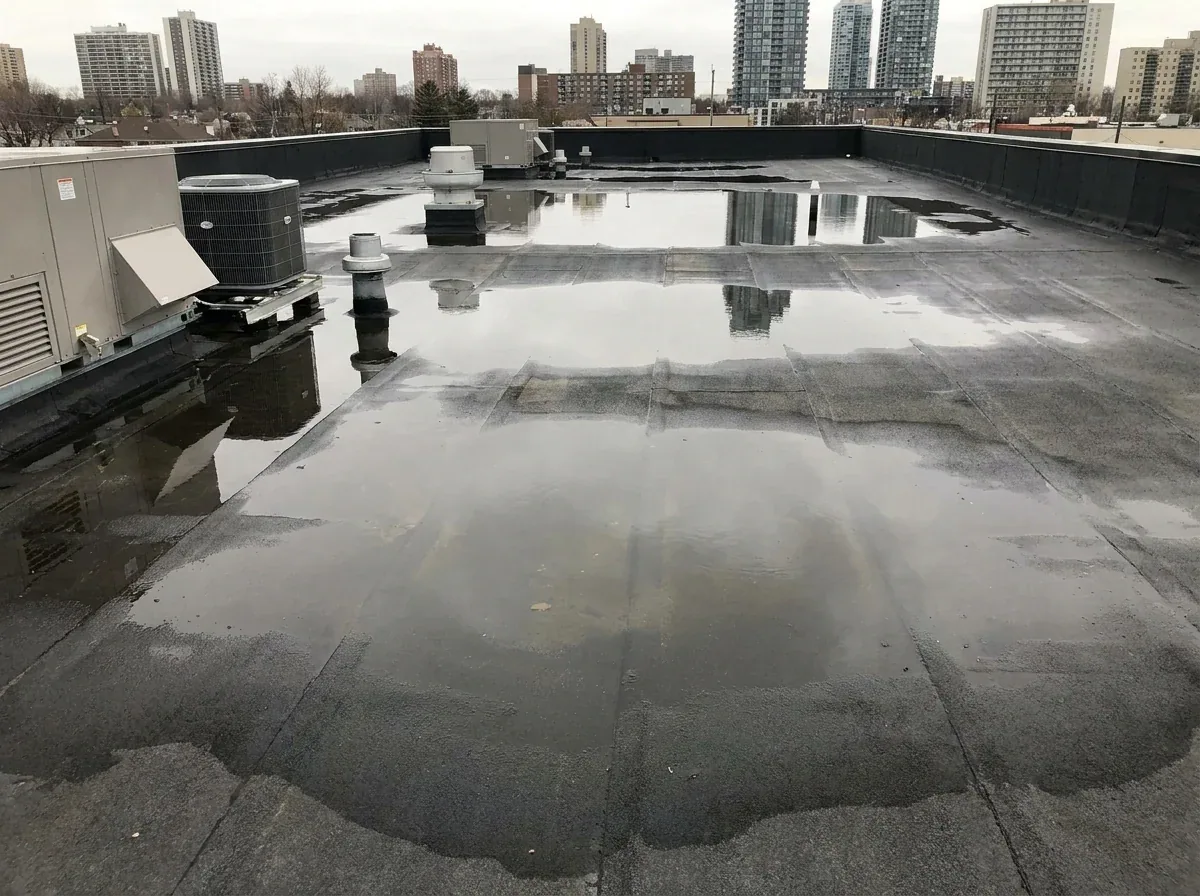
Find: walk the roof in a grid and mark every defect
Punctures hide in dirt, in shadow and at the edges of patches. We walk the roof in overlapping lanes, look at the surface from a low angle and press suspect areas to feel for softness. Each defect gets a photograph and a position mark on the roof plan. We look especially at hatch landings, paths to equipment, areas around service panels, ladder placement points and spots where debris collects.
Foot-traffic damage shows as scuffing, abrasion, crushed insulation under the membrane and broken seams along the usual routes. The pattern of wear tells us where walk pads belong. We also look for old patches, since a patch with lifted edges is a defect of its own, and a cluster of patches in one area points to a repeated cause.
Night and low light hide defects, so we schedule the walk for daylight with the sun at an angle that shows ridges and dents. On a dark membrane in strong sun, glare can conceal a cut that a cloudy morning shows plainly, and we adjust the hours of the walk to match.
Commercial Roofing Questions
How big does a patch need to be?
Large enough to extend several inches past the damage on every side, with rounded corners and sealed edges, on a clean dry surface. The exact size depends on the membrane and the damage. We use a test of the bond before closing the area.
What if the insulation under the hole is wet?
Cut out the wet section, replace it with new insulation and patch or replace the membrane over it. Patching over wet insulation traps moisture and leads to a bigger repair later.
Do walk pads really cut repair calls?
They reduce scuffing and punctures by spreading loads and marking a route. They work best along the path from the hatch to equipment. We place them after reviewing the wear pattern.
Who should be responsible for damage caused by service visits?
The service company or the owner under the contract, depending on the agreement. Before-and-after photographs make that easy to settle. We recommend a written access rule for all rooftop trades.
Can you respond to a punctured roof at night?
Emergency crews are available around the clock, holidays included. They cover the opening, protect the space below and plan the permanent patch.
How can we tell a puncture from a hail bruise?
A puncture shows a cut, tear or broken surface with a clear point of origin, often near a walk path or equipment. Hail leaves clusters of round marks across exposed areas. We photograph both and describe the pattern in the report.
More Roofing Detail
COMMERCIAL ROOFING IN NORTH LAS VEGAS, NEVADA
Trace: follow the water from the hole to the insulation
A hole in the membrane lets water into the assembly, and from there it moves along the top of the insulation, through board joints and along the deck. The wet area can be far larger than the visible damage. Before patching, we test around each puncture with a moisture meter or an infrared scan and, where the owner allows it, a small test cut to confirm what the readings suggest.
The infrared moisture survey helps on roofs with many defects, since it shows which ones have let water in. Dry insulation under a recent puncture means a patch will do. Wet insulation means the damaged section has to be cut out and replaced, or the patch will seal in moisture. We record the findings and the test locations so the repair boundary is measured, not assumed.
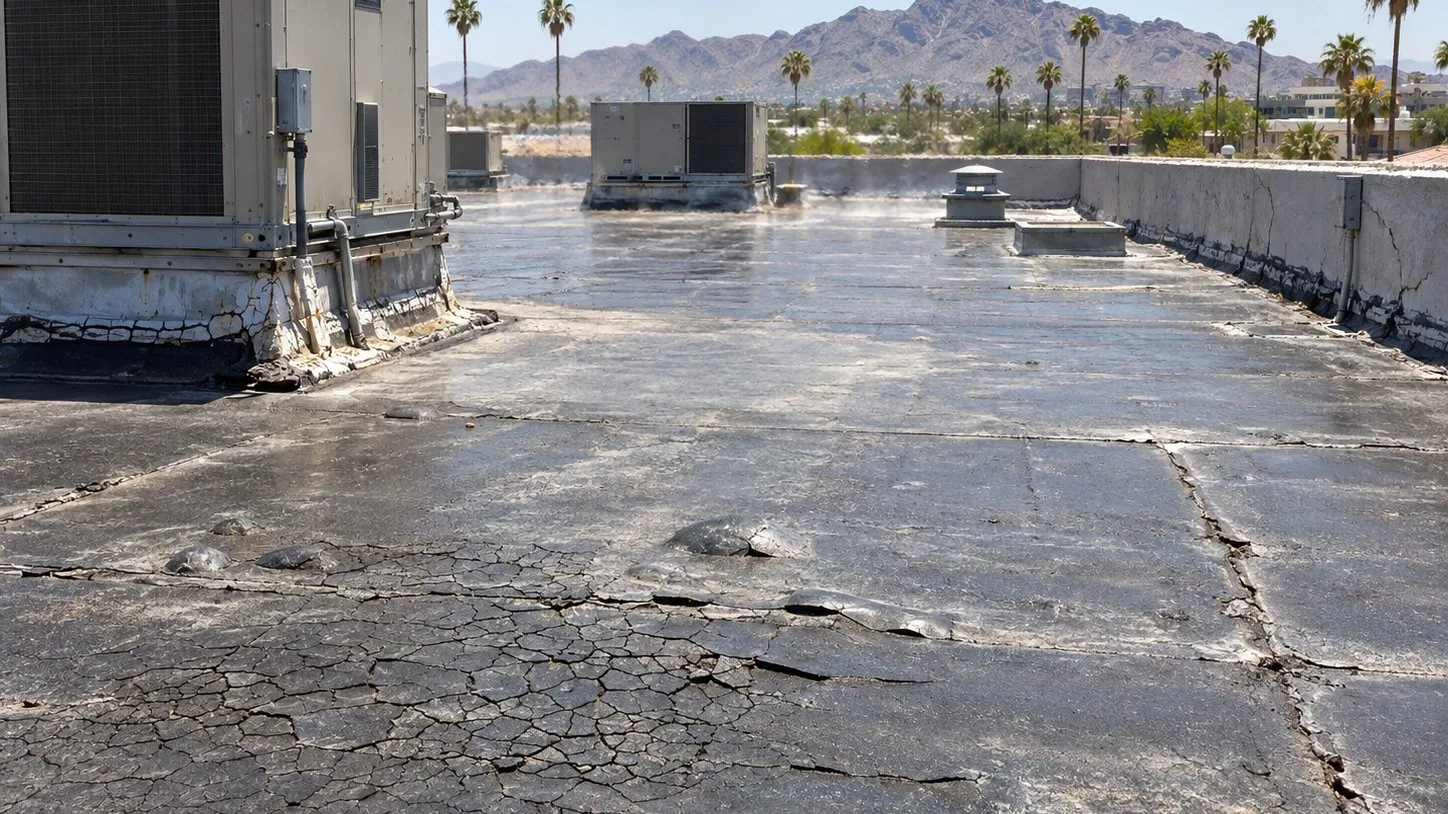
Patch: choose the method that suits the membrane
The method follows the roof system. Thermoplastic membranes take heat-welded patches with rounded corners, EPDM takes cleaned, primed and adhered patches, and modified bitumen takes compatible cold-applied or heat-applied patches. A patch should extend well beyond the hole in every direction, sit on a clean, dry surface and have its edges sealed.
Where the damage is a slice or tear, we often add a reinforcement strip. For a cluster of small punctures, a larger patch or a section replacement may be more reliable than many small ones. We never patch over wet insulation, and we never use a patch material that is incompatible with the membrane. After the work, we photograph each repair and note it on the roof plan, which turns a loose collection of fixes into a record.
On adhered systems, a patch needs time to cure before foot traffic returns, and the schedule leaves that time. Where a repair sits on a walk route, we add a protective pad over it so the same path does not undo the work.
Traffic control: protect the roof from the next visit
The cheapest repair is the puncture that never happens. Walk pads along regular routes spread loads and mark a path. Protective boards under ladder feet, mats under tools and a rule that anyone who works on the roof reports damage the same day all reduce risk. A rooftop equipment curb and support scope can also place units where service can happen without crossing sensitive areas.
We recommend a short access protocol for service companies: where to walk, what to carry, how to protect the membrane and whom to call if something is damaged. A building manager who posts it at the roof hatch and enforces it reduces repair calls. Repeated damage at the same place also tells us to look for a systemic cause, such as a unit located too far from the hatch.
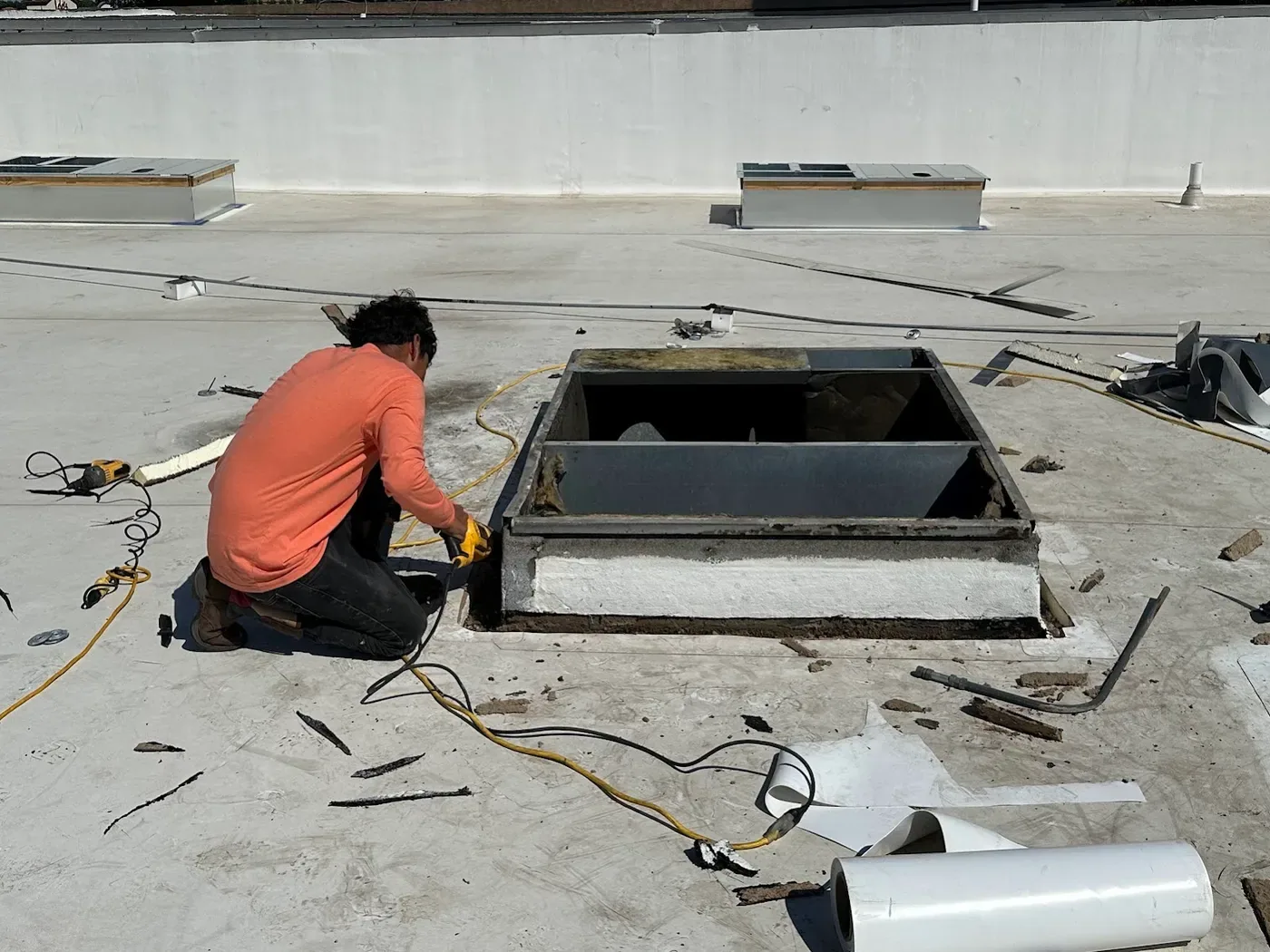
Debris and weather: clear what can cut the roof
Loose gravel, metal scraps, tie wire, fasteners and tree branches can cut membranes when wind moves them or when foot traffic grinds them in. A routine clearing pass after wind events and construction work prevents many punctures. Where a tree overhangs the roof, trimming it reduces leaves and branches that clog drains and abrade the surface.
Hail can also puncture or bruise membranes, and when damage looks storm related, a hail damage roof repair assessment separates impact marks from traffic wear. Where a dropped load has also opened a lap, the seam failure repair follows the puncture work in the same visit. For roofs in areas such as Craig Ranch or Downtown North Las Vegas, the same debris and traffic checks apply.
Cost and timing: small holes, wide consequences
A single patch on a dry roof is among the least expensive repairs. Cost climbs when many punctures need individual attention, when wet insulation must be replaced and when access is difficult. Timing is short for patching, since it can be done in a single visit when the weather allows, but replacement of wet sections adds material lead time and scheduling.
Our proposal lists each repair location, the method and the allowance for insulation replacement, so the owner sees the difference between the base repair and the conditional items. A ponding water repair may follow if testing shows a puncture sat in a low area.
Tell us where the damage is
Send photographs of the holes or worn lanes, roof plans and the dates of recent service work. We will find every defect and repair the cause.