
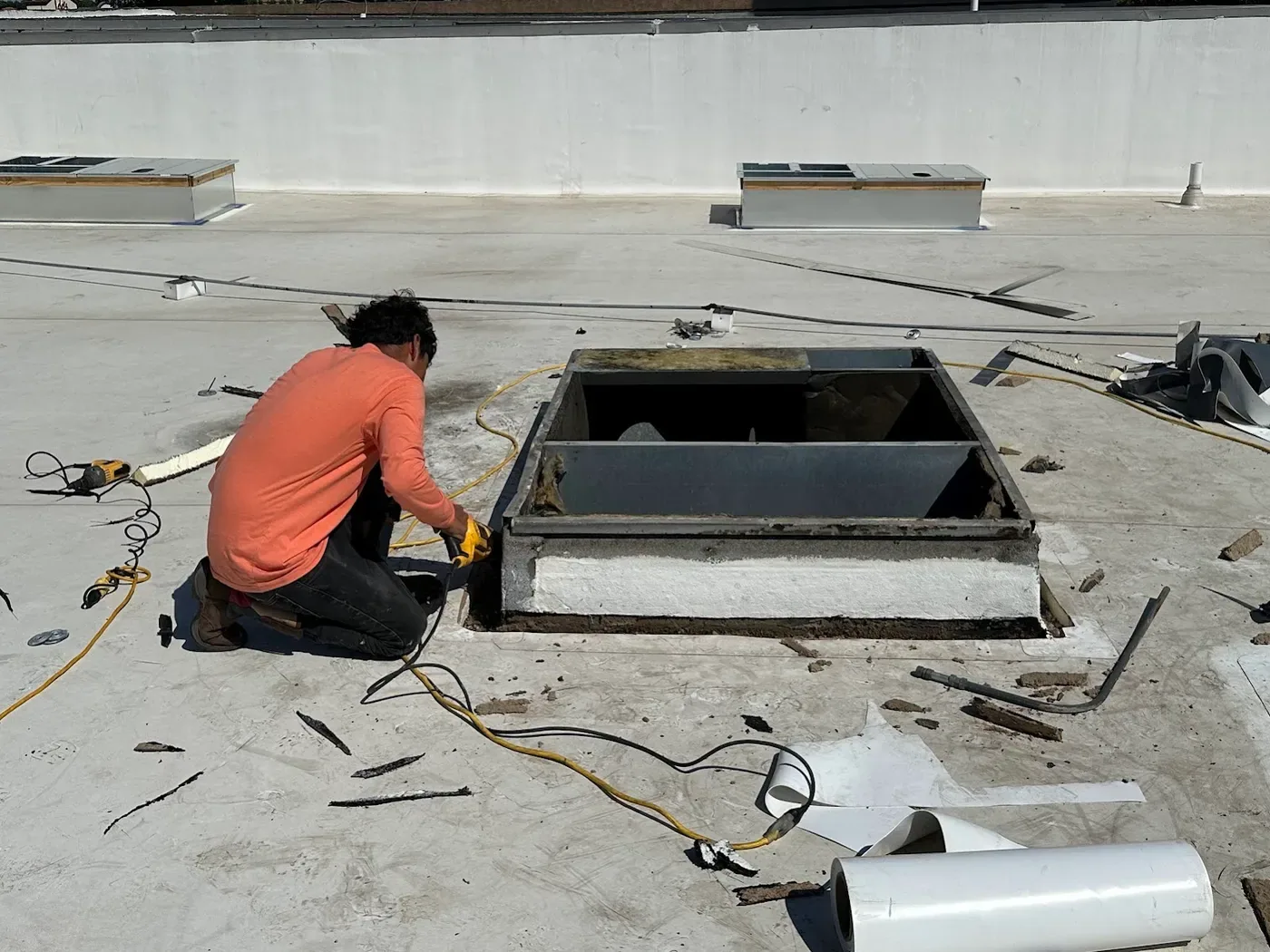
Seam failure repair for split and open roof seams in North Las Vegas, NV, with cause diagnosis, compatible welding or adhesion and moisture checks.
A seam that has opened a quarter inch along a roof run can be probed with a blunt tool in seconds, and what the probe finds under the lap decides whether the repair is a strip of new material or a conversation about the whole roof. On commercial roofs in North Las Vegas, NV, seams join one sheet of membrane to the next, and they are the long lines on which most field leaks begin. Our inspection traces each open seam to its cause, measures how far it runs and tests the insulation below for moisture before anyone seals it.
Sun and heat work on seams all year in the Las Vegas Valley, where the annual mean temperature runs above 70 degrees Fahrenheit. Those are regional values, not measurements on a specific roof, but they explain why seams are inspected for heat movement: membranes expand through a hot afternoon and contract overnight, and the lap takes the stress. What the roof shows decides the finding.
Causes: sort installation, movement and aging
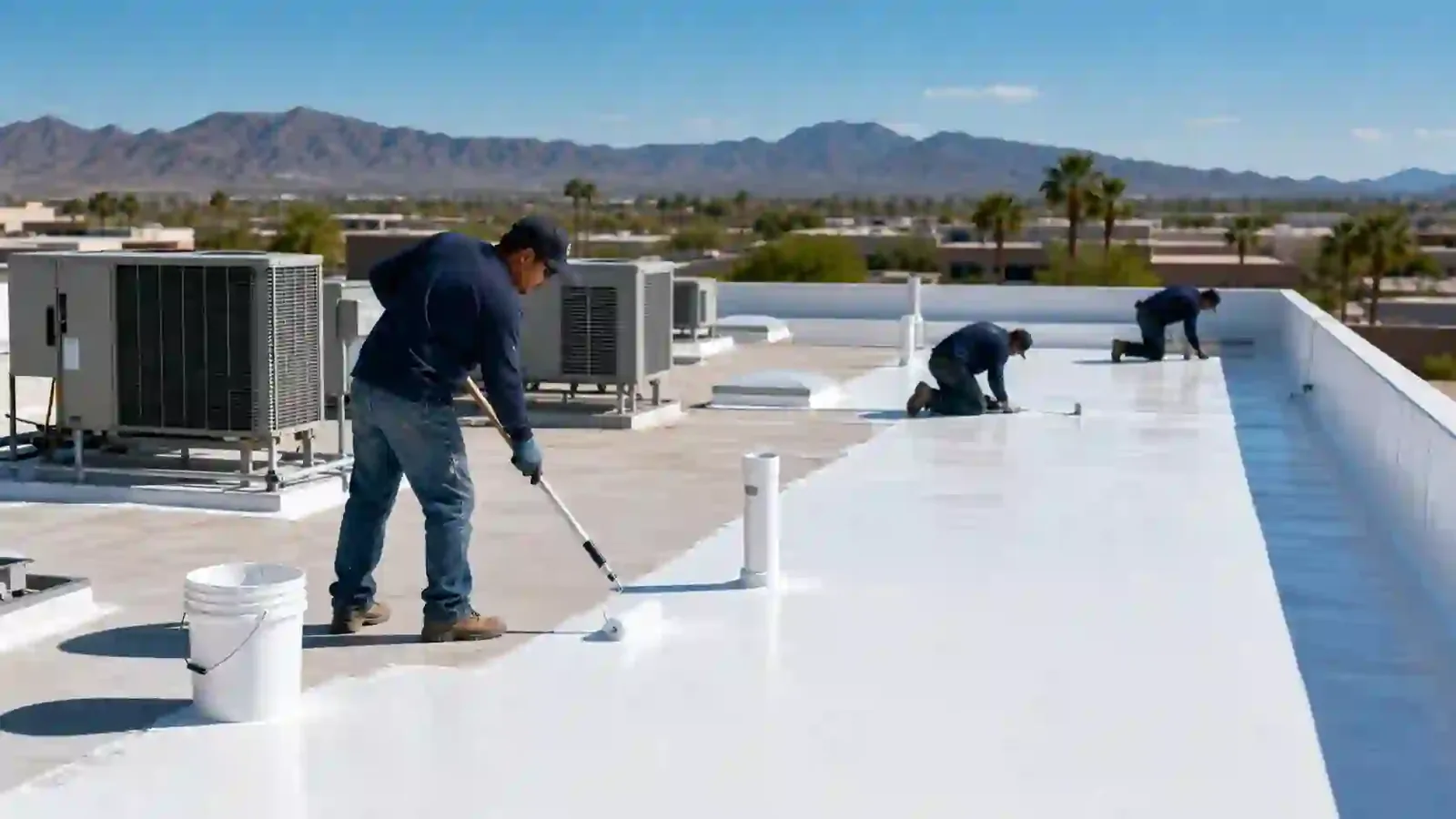
Seams fail for reasons that look alike from a few feet away. A weld that never fully fused, a lap contaminated with dirt or moisture at installation, an adhesive that cured poorly, thermal movement beyond what the lap can absorb, repeated ponding that stresses the seam and aging that has made the membrane brittle each leave different evidence.
We check the location, the length, the direction relative to the slope and the neighbors. An early failure along one seam line suggests installation. Scattered openings at stress points suggest movement. A pattern of failure in a ponded area suggests water exposure, and widespread edge cracking suggests aging. A photograph of the exposed lap shows whether the weld or adhesive bonded at all, which separates a defective seam from a stressed one.
Commercial Roofing Questions
Can a seam simply be re-sealed with caulk?
Caulk is a temporary measure on most membranes. The lasting repair is a weld, adhesive splice or compatible strip applied over a clean surface. We use caulk-type materials only to hold an area until the real repair can be done.
Why do seams open on a roof that is not old?
Early failures usually come from installation: contamination, a cold weld or a poorly cured adhesive. We expose a section of the lap, examine the bond and explain what happened before repairing it.
How do we know the insulation under a seam is dry?
We test with a meter, an infrared scan or a small cut. If readings indicate moisture, the wet area is confirmed by cut and replaced. Sealing over wet insulation only traps the problem.
When is it better to coat or replace than to repair seams?
When failures are widespread and the membrane is aging, repairing seam by seam rarely holds. Coating suits a sound membrane, and replacement suits a brittle or wet one. The report shows the count and the reasoning.
Do you take emergency seam leaks after hours?
Yes, any hour, any holiday. A crew can cover the opening, protect the space below and plan permanent repair.
Why inspect the flashing when the problem is a seam?
Seams that run into a wall or curb often open where the two details meet. Repairing the seam and leaving a weak termination lets water enter at the junction. We inspect both and repair them together.
More Roofing Detail
COMMERCIAL ROOFING IN NORTH LAS VEGAS, NEVADA
Systems: thermoplastic welds, EPDM splices and modified laps
The repair depends on the membrane. On thermoplastic roofs such as TPO and PVC, a seam is a heat weld, and the repair is a new weld with a cover strip when the lap is wide enough, or a reinforced patch where it is not. On EPDM, seams are adhered or taped, and the repair is a cleaned, primed and re-taped splice. On modified bitumen, laps are heated or adhered and are repaired with compatible material.
Welding aged thermoplastic can be harder than welding new sheet, since the surface carries dirt and plasticizer loss. We clean, test-weld on a scrap or an inconspicuous lap and probe the result, then record it. A seam repaired without checking the surface often reopens, so surface preparation is the first line of the work description.
Moisture: find out whether water got in before sealing it
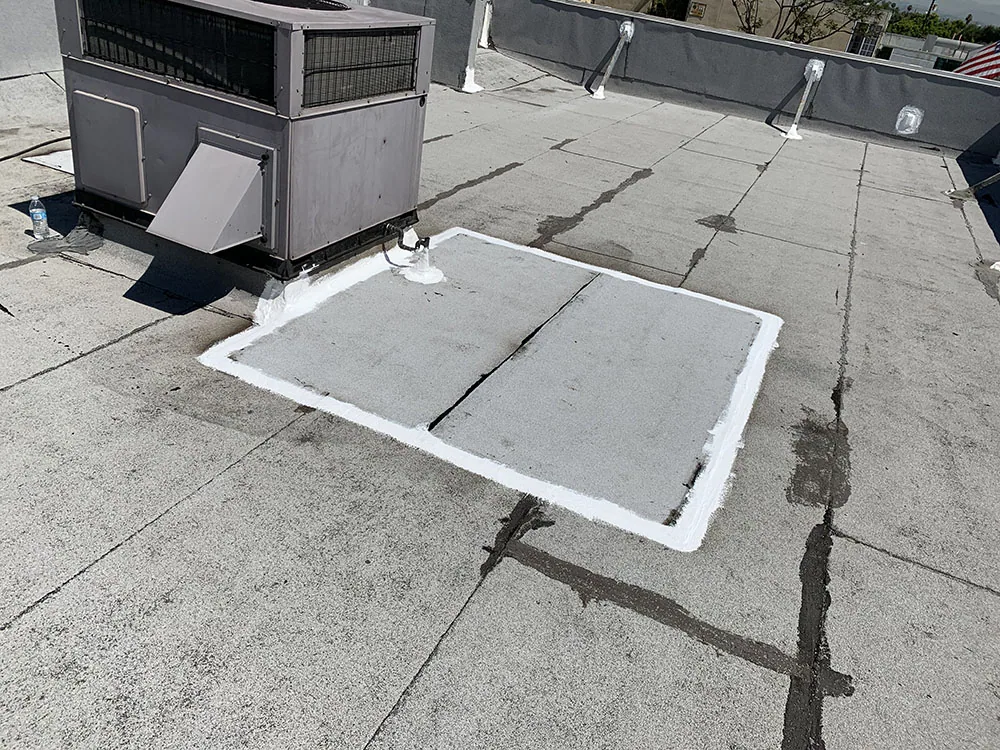
An open seam is an entry point, and water that has entered does not leave on its own. Before repairing, we test the insulation beneath the seam with a moisture meter, an infrared scan where conditions allow or a small test cut. If the insulation is dry, the repair is simple. If it is wet, the wet insulation has to come out, or the seam will be sealed over a trapped problem.
The infrared moisture survey is useful on larger roofs where several seams may have opened. It maps temperature patterns that suggest trapped water and tells us where to cut. The commercial roof leak repair then targets the confirmed path. We record the readings and the cuts on the roof plan.
Scope: decide between spot repair and wider work
One open seam on a young roof is a spot repair. Many open seams on an older roof are a signal. We count and map the failures, check adjacent seams for early signs and compare the pattern with the roof's age and exposure. If seams are failing across a large share of the roof, repairing them one at a time may cost more than a coating or replacement, and the report says so with the numbers.
When the membrane is sound, a restoration coating over repaired seams can extend service. When the membrane is brittle, the seams fail again beside the repair. A heat and UV damage repair review addresses the aging side. The owner chooses with the evidence in hand, and the choice depends on moisture, remaining life and budget.
Where it shows: large roofs and long runs
Long seam runs on wide roofs concentrate movement, and the farther a roof is from its drains the more a failed seam can spread water. In planning areas like the Apex Industrial Area and Cheyenne North the routine is the same: probe the seams, map every failure, and test for moisture before choosing a repair.
After repair, a follow-up visit after the first significant heat swing or storm confirms that the new welds held. Seam repairs should be logged by roof zone and date, since a roof that keeps opening in the same area points to a cause the repair did not reach. The log also supports warranty claims where the roof is covered.
Seams and flashings often fail together, since the field lap and the wall termination share the same movement. When we find an open seam running into a wall or curb, we inspect the flashing at that junction as well, because repairing only one of them leaves the other to let water in. The report lists both and treats the junction as a single repair zone, with the sequence of work stated so that the weld and the flashing are completed in the same visit.
Cost and timing: price by length and by cause
Seam repair is priced by length, access and surface condition, with added cost where wet insulation must be replaced. A short run on an accessible roof is inexpensive; a long run on a roof with brittle membrane and moisture is not. Weather matters because welds and adhesives need appropriate temperature and dry conditions.
We schedule in morning hours during summer heat, avoid repairs before expected rain and provide temporary protection if a leak is active. The proposal lists the lengths, the method, the assumptions about moisture and the price for added insulation if testing shows it is needed.
Show us the open seam
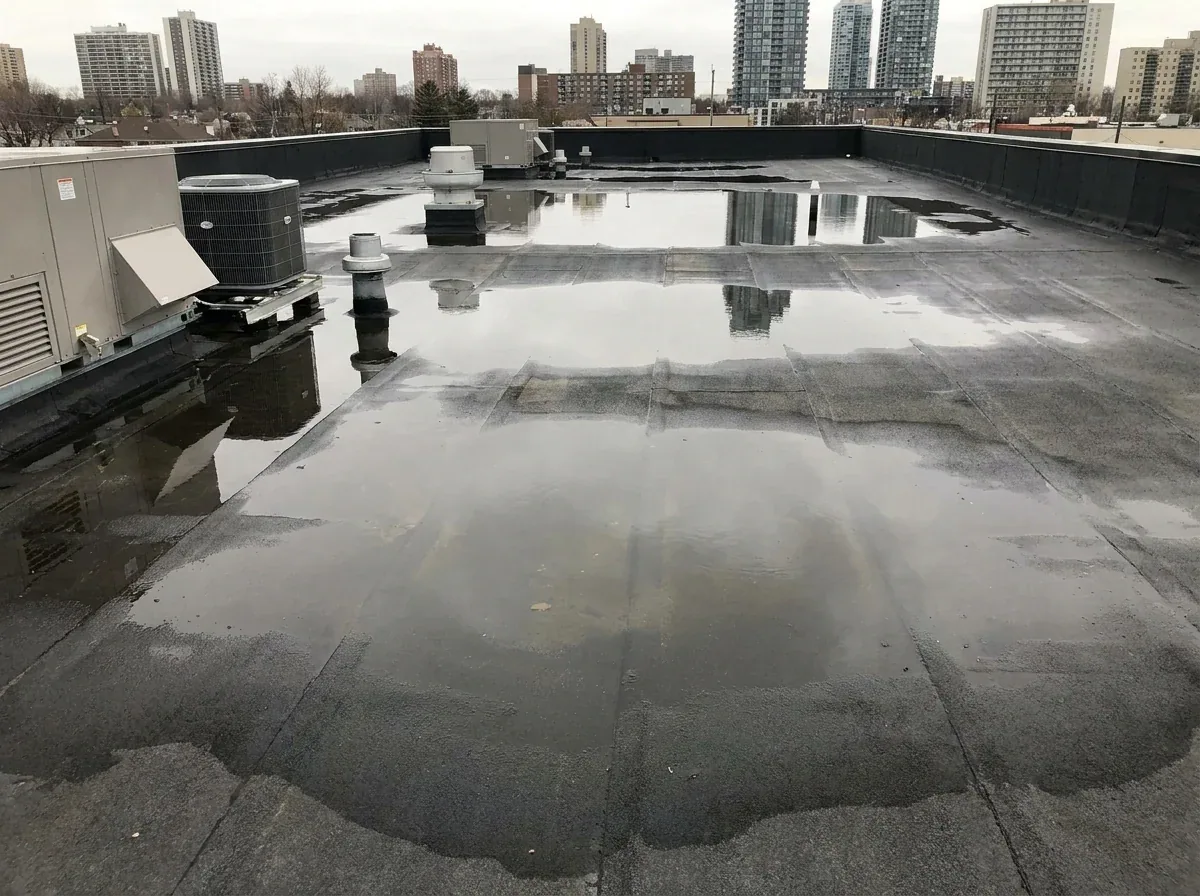
Send photographs of the seam, roof plans, the membrane type if known and the date the leak began. We will probe, test and repair the cause.