
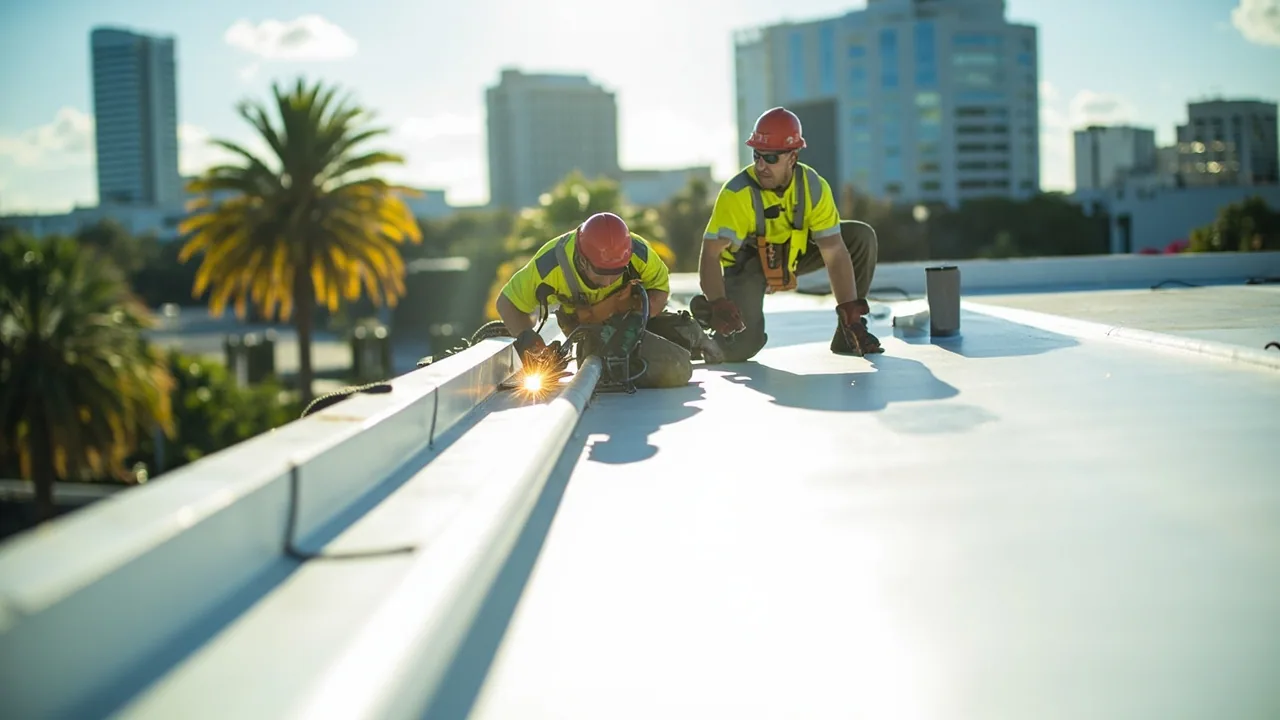
PVC roofing in North Las Vegas, NV: welded seams, grease and chemical exposure, plasticizer wear, and repair methods for aged thermoplastic membranes.
A PVC roof that is stained in a fan-shaped pattern downwind of a kitchen exhaust is showing a building manager where the exposure is, and it is the first place to press and probe. Grease and process vapor attack some membranes faster than others, and a PVC sheet is often chosen because it resists them. The staining does not say the sheet has failed. It says the inspection should start there and establish how the surface is holding.
PVC is a thermoplastic single-ply membrane with hot-air welded seams and a reinforcing scrim. On commercial buildings in North Las Vegas, NV, we install, repair, and maintain PVC systems. Inspection looks at how flexible the sheet still is, how the welds hold, the flashing details and what vents and equipment put on the surface, and only then settles on cleaning, a weld repair, a coating or a replacement plan.
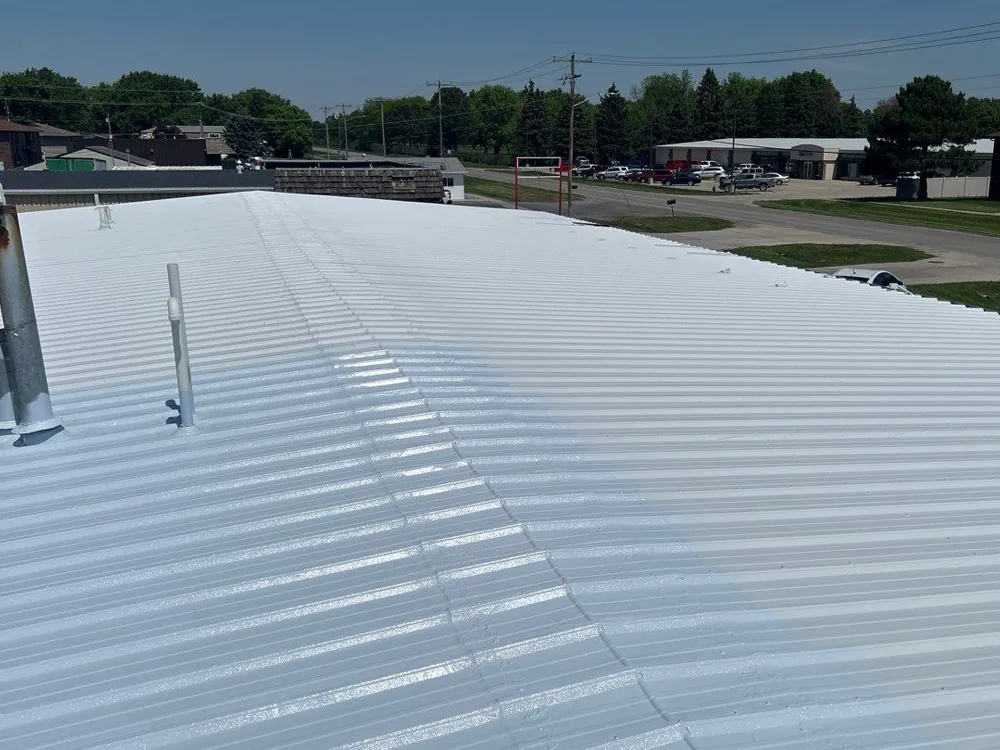
Vent Exposure: Grease, Chemicals, and Exhaust Residue
PVC is chosen for roofs where exhaust carries grease, oils, or chemical vapor, because the sheet resists those materials better than some alternatives. Resistance is not immunity. Grease that collects at a kitchen exhaust, especially where it pools or is never cleaned, can stain the surface and, over time, work at seams and flashing laps.
We map every vent and exhaust on the roof, note what each discharges, and inspect the downwind surface. Walk pads at service points, grease containment on exhaust fans, and a cleaning schedule all belong in the plan. Census data reports $794.934 million in accommodation and food-services sales for North Las Vegas in 2022, which is citywide context for restaurant and hospitality property and not a count of roofs. On a restaurant roof the exhaust map is the first page of the inspection record.
Commercial Roofing Questions
How can I tell whether a PVC roof is aging or just dirty?
Wash a test patch and press the sheet at a fold. If color returns and the sheet flexes without cracking, the surface was dirty. If it stays dull, feels stiff, or shows fine cracks at folds and corners, the sheet is aging. Photograph the test area beside the untouched roof so you can compare, and probe nearby seams, since dirt can hide a weld that is starting to open.
Why do some PVC roofs fail near kitchen exhausts and others do not?
Exposure and maintenance differ. Exhaust that is filtered and cleaned discharges less grease, and a roof with walk pads and containment trays sees less direct contact. Where grease pools on the membrane for months, the surface softens and seams suffer. We check the downwind area of every vent and recommend containment and cleaning intervals for the equipment that produces the residue.
Can a PVC roof be coated instead of replaced?
Sometimes. The sheet must be flexible, the seams sound, the insulation dry, and the coating compatible with PVC. A coating cannot restore a brittle sheet or weld an open seam, so we run a moisture survey, test adhesion on a small area, and repair seams first. If the sheet is cracking across the field, coating hides the problem briefly and replacement remains the sound path.
What records should I keep after a PVC repair?
Keep dated photographs showing the repair area before and after, the roof zone number, the material used, and the probe results along the new weld. Add the cause if it was found. These records let the next inspector see whether a repair has moved and tell the property manager when a pattern of repairs in one zone is growing into a bigger problem.
More Roofing Detail
COMMERCIAL ROOFING IN NORTH LAS VEGAS, NEVADA
Weld Quality: Probing Seams and Flashings
A good PVC weld is continuous, with a small bead of melted material at the edge. We probe seams along their length, concentrating on T-joints, seams near drains, and welds at flashing terminations. A probe that slides under the edge marks an open weld. A seam that holds but shows dull, powdery residue at the edge may have been welded over dirt, which can fail later even if it looks tight today.
At penetrations and curbs, PVC uses prefabricated flashing pieces or hand-formed flashing welded to the field sheet. Hand work is where most leaks begin. We look for wrinkles, thin spots, and unsealed ends, and for termination bars that have lifted. The photographs are tied to roof zones, so a later inspection can show whether a flashing has moved since the last visit.
Temperature affects the welding itself. On a hot afternoon the sheet is soft and the welder runs differently than on a cool morning, so crews adjust speed and heat and test-weld a sample before each shift. The test strips are pulled and examined, and the results go into the daily log with the time and conditions.
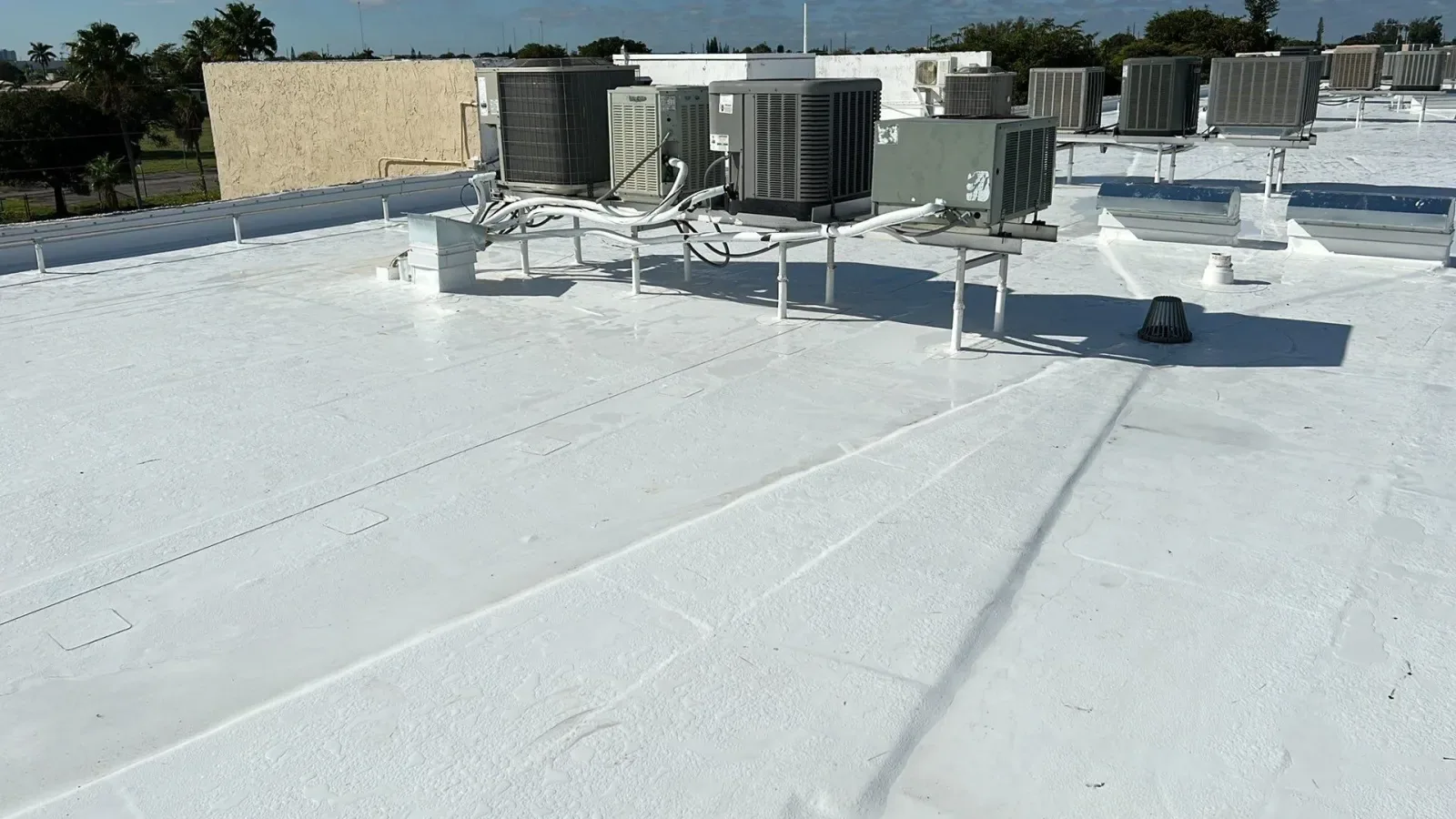
Aging: Stiffness, Cracking, and Plasticizer Loss
Flexible PVC relies on plasticizers, and long heat exposure can reduce them near the surface. An aged sheet feels stiffer, crazes at folds, and cracks at corners and flashing bends. A hot, sunny desert puts the surface in front of the sun on every visit, though regional observations are not measurements of any single roof.
We press the sheet at folds, look at cut edges for scrim exposure, and compare the sheet in shaded areas with sheet in full sun. If cracking is limited to a corner, the repair is local. If stiffness and crazing cover the field, the sheet is near the end of its service life, and the plan shifts to a coating review where the sheet is still sound, or replacement where it is not.
Walk traffic accelerates the damage. A stiff sheet that is stepped on repeatedly at an access path will crack along the path first. Walk pads at the hatch and service points protect it, and we add them where traffic wears a visible line.
Repair Method: Cleaning Before Welding
Welding to aged PVC takes preparation. Surface dirt, grease, and oxidation block fusion, so the area is cleaned and prepared, and the patch is cut with rounded corners that extend past the damaged zone. After welding, the edge is probed along its full length. If the old sheet is too stiff to take a weld, the repair needs a different method or a larger area of replacement.
Where welding is impractical, such as at a crowded cluster of pipes, a compatible liquid-applied flashing can seal the shape. Neighboring thermoplastic roofs, such as TPO or KEE, share welding logic with PVC but not materials, so each roof zone is identified before a patch is cut. A patch from the wrong family looks fine for a season and then peels at its edge.
Emergency leaks on PVC are stopped with a temporary seal that leaves the weld area clean, and our crews respond at any hour. The permanent weld waits until the cause is traced and the surface is prepared, so the temporary measure never becomes the permanent one by default.
Setting: Master-Planned and Central Districts
The city's planning framework identifies Craig Ranch as an existing master-planned community, in a map that reflects a 2006 snapshot, so current conditions need checking with the city. A commercial building in such a community may carry restaurant, retail, or office uses, each with different rooftop equipment. The roof inspection follows the building's actual use and not the label on the map.
The same map names the Central District among its planning areas. Whatever the district, July and August monsoon moisture can bring heavy rain and flash flooding in low areas. We clear drains and check ponding before those months, because standing water over a PVC seam stresses the weld, and then again after major storms.
Send the Exhaust Map and Roof Plan
Share roof plans, access rules, leak dates, repair history, equipment changes, and operating-hour constraints. We will inspect the PVC membrane and return a defined scope for cleaning, repair, or replacement.