Roof inspection, repair, recover and replacement for manufacturing plants in North Las Vegas, NV, planned around process exhaust, shifts and shutdown windows.
Discoloration in a pattern downwind of an exhaust stack is the first thing we look for on a plant roof, because it can mean the membrane is being attacked by what the building sends out of it. For manufacturers in North Las Vegas, NV, the roof is part of the process envelope: it carries exhaust, intake, piping and sometimes heavy equipment, and it sits above lines that cost real money when they stop. Our inspection starts with what the plant emits, what it runs under the roof and when it can tolerate a crew above it.
The city's planning framework labels the Apex Industrial Area, the Cheyenne Technology Corridor and Industrial Lands as broad employment and planning districts, and we take nothing more from it. A plant's roof is known only from the roof. We confirm the membrane, the insulation, the load-bearing limits and the penetration layout on site, then write down what the evidence supports and what needs testing before anyone commits to a scope.
Exhaust and chemistry: read the membrane near stacks and fans
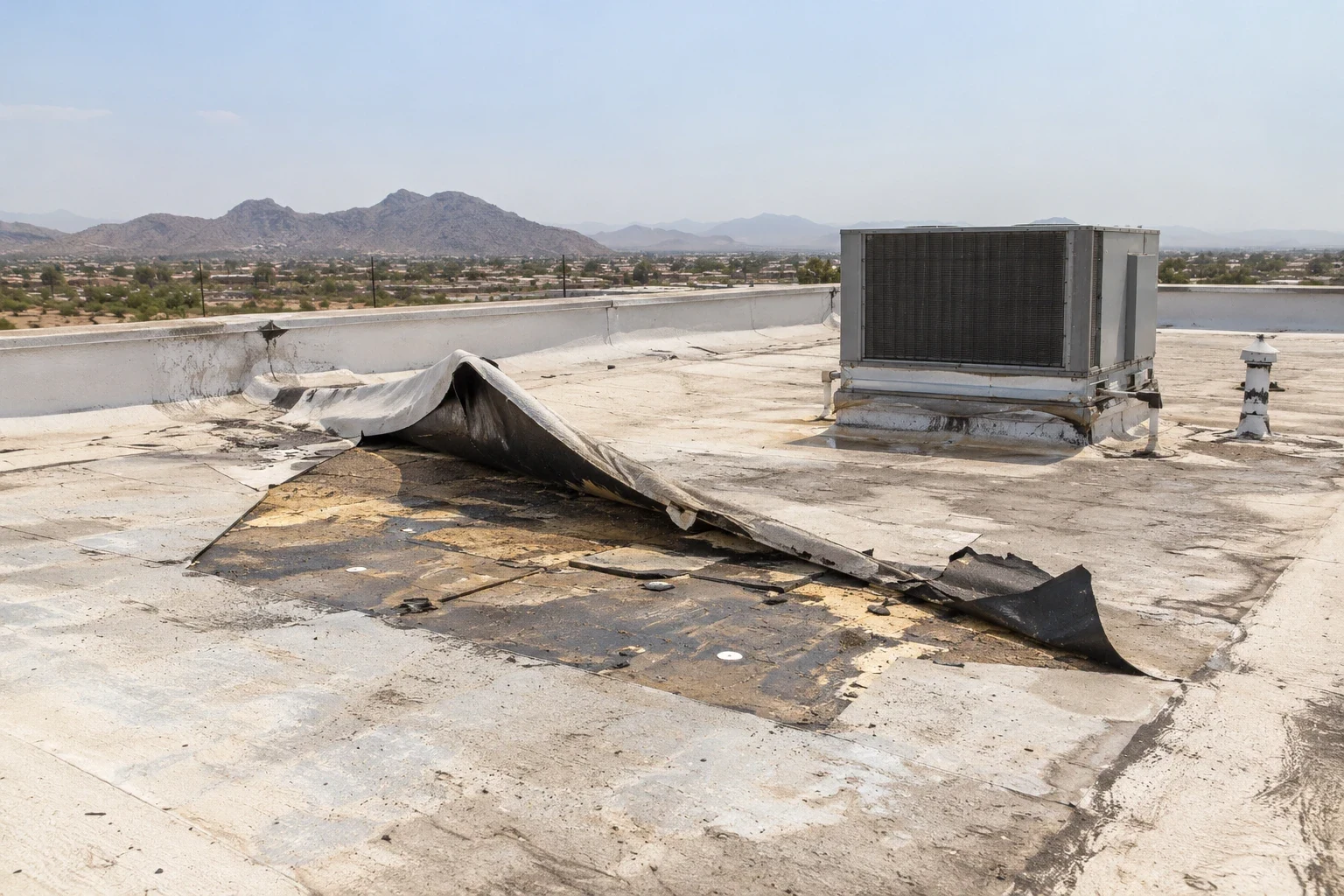
Process exhaust can carry oils, solvents, acids, heat and particulates, and different membranes tolerate different exposures. Softening, blistering, chalking or a tacky surface around a discharge points to chemical or thermal attack, and the fix depends on what is leaving the stack. We walk the downwind zones, photograph the pattern and ask plant engineering what the exhaust contains and how often it runs.
That answer drives the system choice. A PVC roof is often considered where oils and greases are present because of how the membrane resists them, while other systems fit different exposures. We recommend a protected pad or a different membrane in affected zones, and we avoid repairs that use patch material incompatible with the exposure. The inspection record shows each affected zone, the symptom and the material recommendation.
Commercial Roofing Questions
How do you protect a membrane near process exhaust?
Start by learning what the exhaust carries and where it lands. Then choose a membrane or protective pad that suits that exposure, clean accumulated residue and repair damaged areas with compatible material. Ongoing inspection of downwind zones catches change early.
Who confirms that the structure can take new roof equipment?
The owner's structural engineer does. We report ponding, deflection and flashing conditions we can see, but load capacity is an engineering decision. The roofing scope follows the engineer's conclusion.
Can roof work continue during production?
Most roof work can, with phased sections, noise controls and clear traffic plans. Hot work, crane lifts and equipment shutdowns need scheduling with plant staff. Tasks that need a process offline wait for the planned shutdown.
Does a cool roof help a manufacturing building?
It helps when the building has conditioned space and the roof gains heat. Plants with large exhaust heat loads or unconditioned production areas may see less benefit. We review the building's use before recommending it.
Do you handle roof emergencies at industrial plants?
Yes, on every shift and every holiday. We secure the opening, protect equipment below and coordinate with plant safety staff.
What makes a roof tie-in to a plant addition fail?
Differential movement and mismatched materials are the usual causes, along with flashing set too low against a wall. We settle height, membrane compatibility and drainage with the builder before construction, then inspect the tie-in after the first heavy rain.
More Roofing Detail
COMMERCIAL ROOFING IN NORTH LAS VEGAS, NEVADA
Loads and penetrations: count what the roof now carries
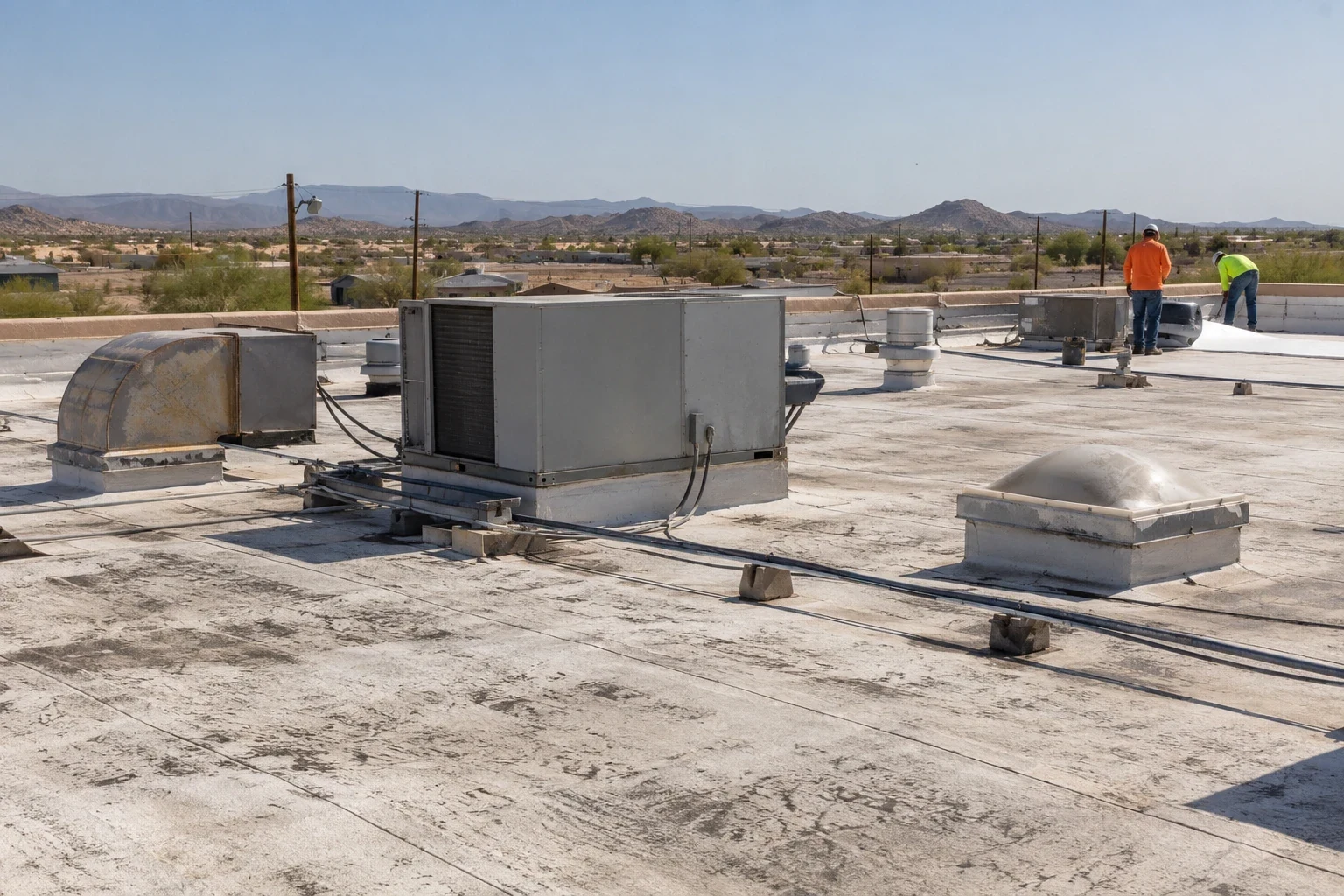
Plants add equipment over time, and each addition changes the roof. A new fan, a conduit run, a piping rack or a skylight replacement may have added a penetration or a point load that the original design did not include. We compare the roof against the plan, count penetrations, check each flashing and look for deflection, ponding near supports and membrane damage from equipment movement.
When loads have grown, the question is whether supports are properly flashed and whether drainage still works. A rooftop equipment curb and support scope can raise units above standing water, replace failed flashing and add protection for service paths. We do not make structural judgments; if deflection or overload is suspected, the owner's structural engineer is brought in before work proceeds, and the roofing scope waits for the engineer's findings.
Shutdown windows: sequence work around production
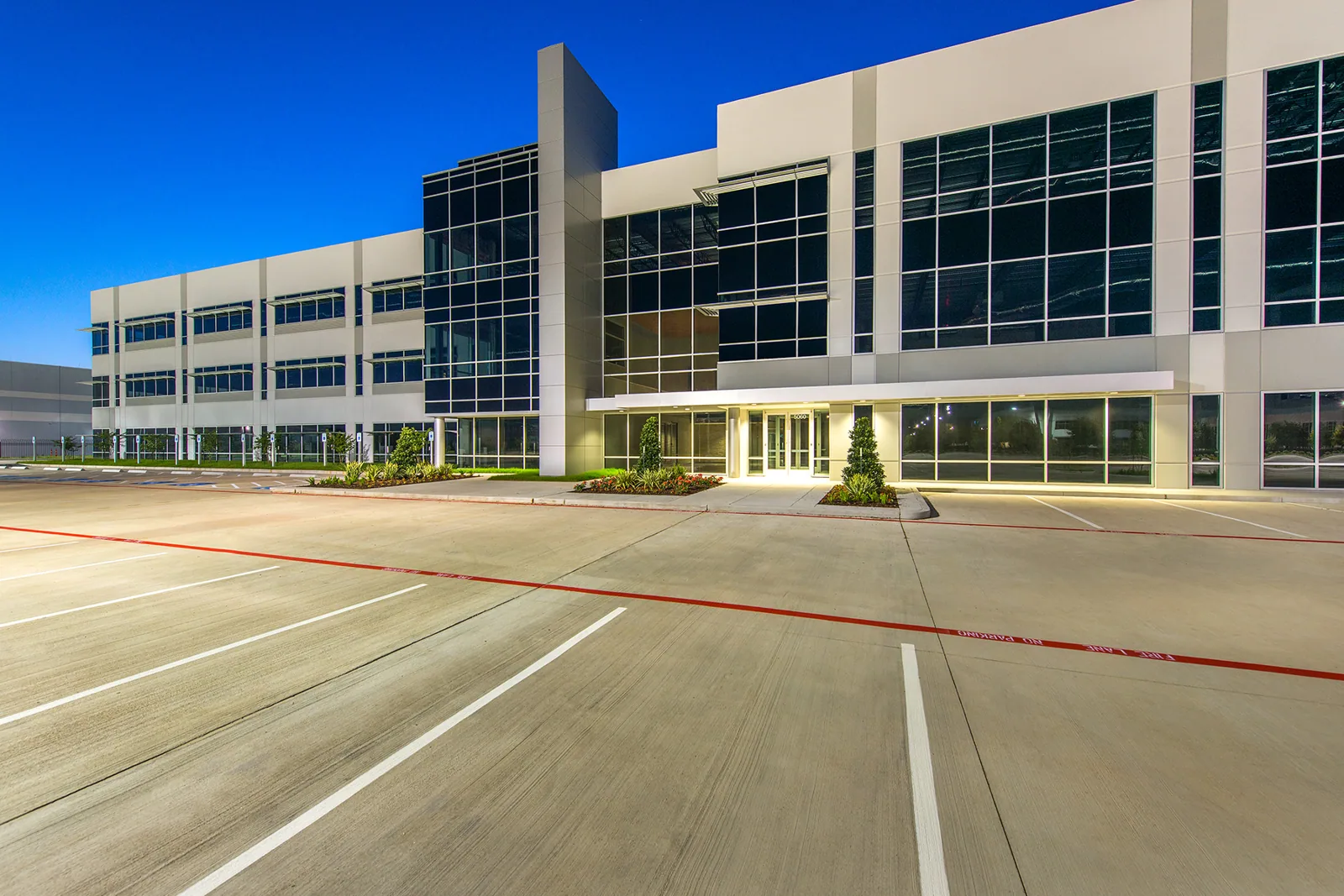
Manufacturing schedules rarely allow a roof crew to work wherever and whenever. We ask for planned outages, shift patterns, noise limits and areas where hot work is restricted, then build the roof sequence around them. Large roofs are divided into phases, each dried in before the shift ends, and crane lifts are coordinated with plant traffic.
If a plant has a scheduled maintenance shutdown, that is the time to tackle penetrations that need process equipment offline. A commercial roof replacement plan identifies which tasks must wait for the shutdown and which can proceed while the plant runs. The plan also names the person on the plant side who can stop the work if conditions change, which keeps surprises from turning into incidents.
Heat and weather: protect the interior and the roof
July and August monsoon moisture brings flash flooding to dry washes and low areas, and a hot, sunny desert sets the roof's exposure the rest of the year. Heat builds under a dark roof, so a cool roof installation may reduce load on interior cooling where plants run conditioned space. We discuss that against the plant's actual use, since not every process benefits.
Monsoon storms are an operations risk too. A blocked drain over a production line is a bigger problem than the same drain over a storage bay. We clear and test drains before the season, add overflow protection where needed and keep temporary protection on site for any section that stays open. A plant in the Apex Industrial Area or the industrial lands would follow the same checklist as one elsewhere in the city.
Expansion: coordinate roofs with plant additions
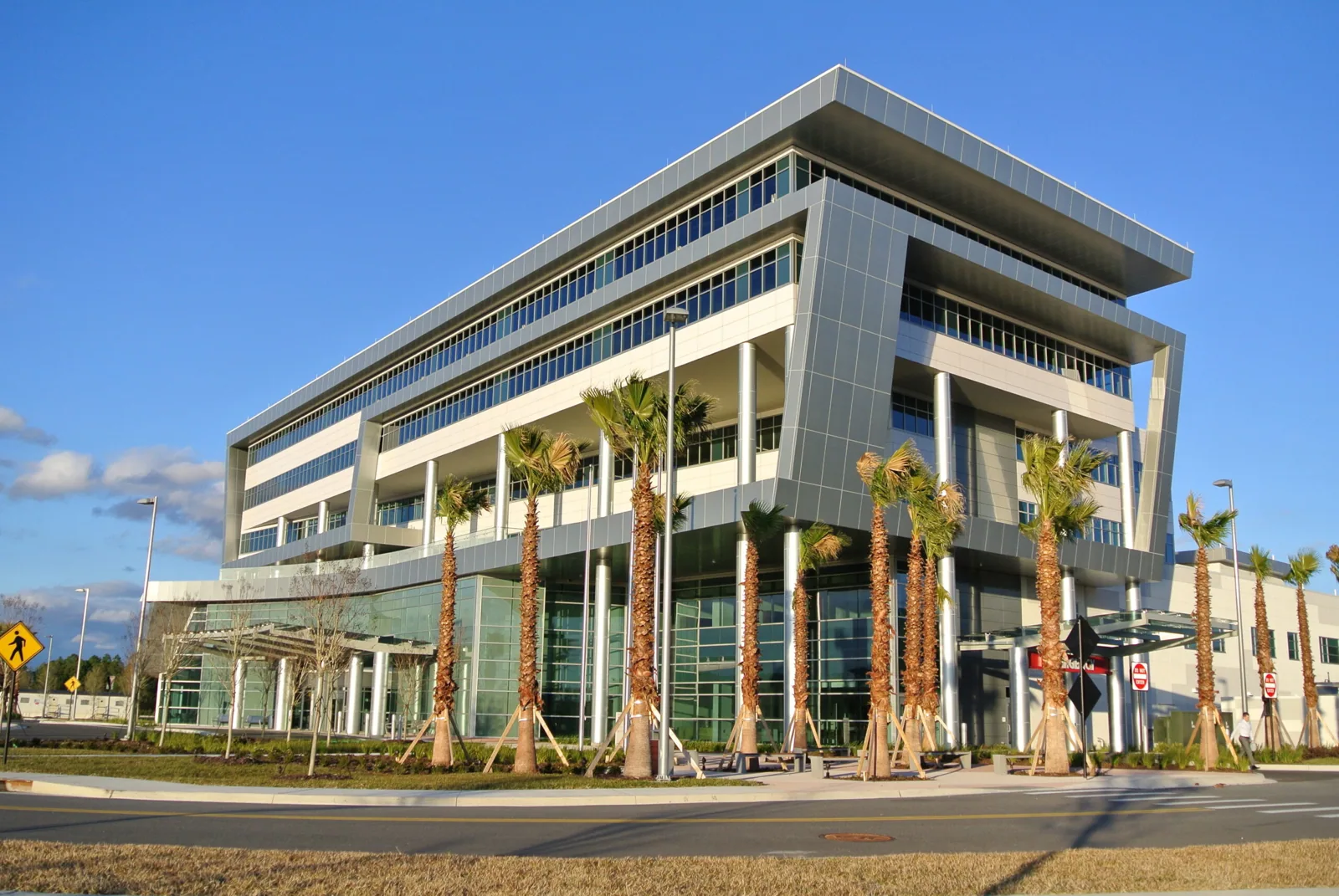
When a plant adds a bay, a line or a new set of rooftop units, the roof tie-in is where problems begin. The new work meets the old membrane at a wall, a parapet or an expansion joint, and the two roofs rarely move the same way. We review the tie-in detail with the general contractor before the wall goes up, so flashing heights, drainage and membrane compatibility are settled on paper and not discovered on the roof.
If the old roof is near the end of its life, it may make sense to replace it as part of the expansion rather than tie new work to a roof that will be torn off in a few years. The inspection record gives the plant the evidence for that call, and the cost comparison shows what a combined scope saves in mobilization, protection and disruption. After the work, we add the new penetrations and details to the roof file so the next crew starts from an accurate drawing.
Records: tie the roof to the asset plan
Plant owners track equipment closely and often leave the roof out of the asset register. We add it: plan, photographs, penetration log, repair history, warranty terms and remaining-life estimate for each zone. When a roof leak threatens a line, the engineering team can see whether the location has a history.
For companies that also lease space to logistics operators or hold buildings for sale, the same record supports lease discussions and valuation. Owners comparing a repair with a recover see the testing behind each option, and a manufacturing plant roof program can be spread across years, with the most exposed zones first.
Share the plant's operating profile
Send roof plans, equipment lists, exhaust information, shutdown dates and safety rules for contractors. We will build the inspection around what the plant needs to protect.