
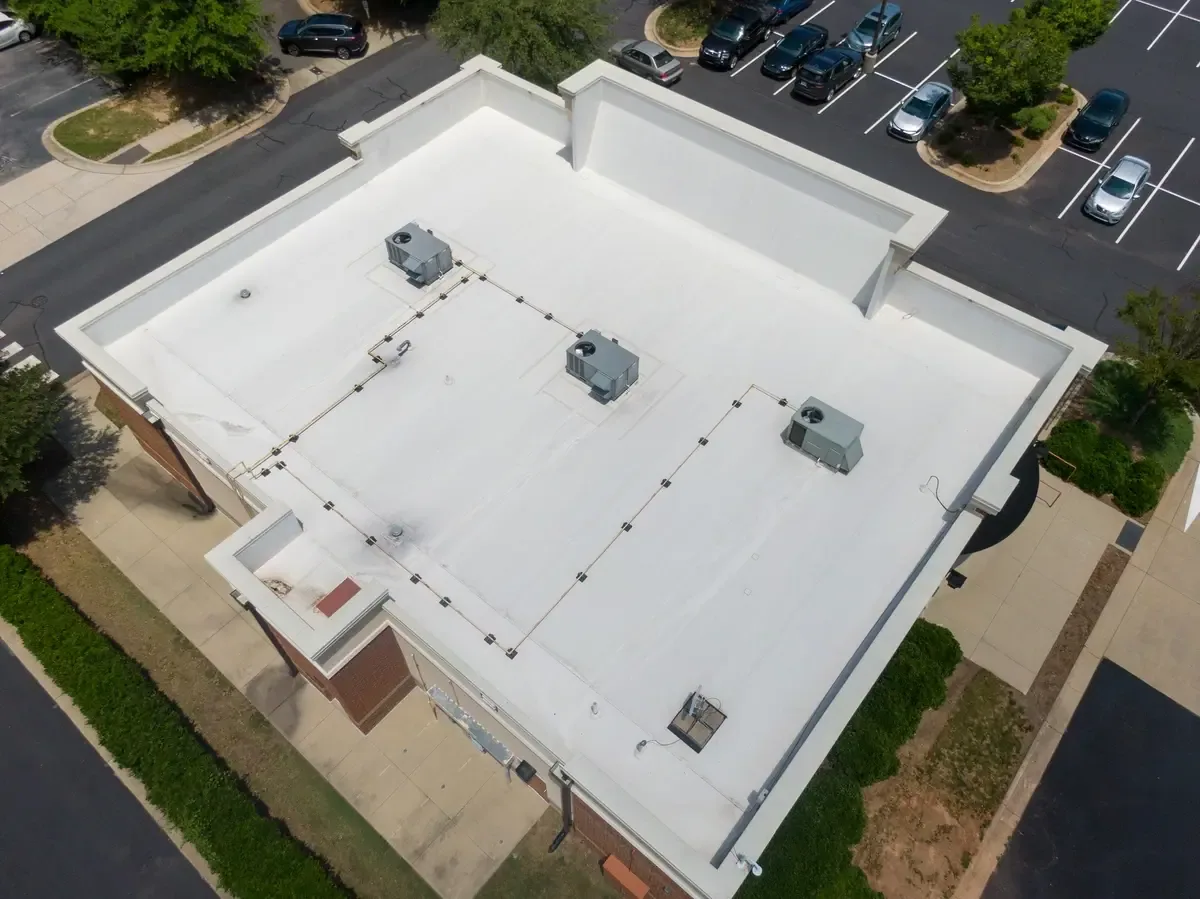
Cool roof installation in North Las Vegas, NV: reflective membranes and coatings, substrate checks, dirt control, and code review for desert heat load.
The first number to check on a cool roof project is not reflectivity. It is what sits under the existing roof. A reflective surface cannot dry wet insulation, flatten a deformed deck, or seal an open seam, and a manager who orders a white finish over a roof with those conditions pays for a bright surface on a failing assembly. The inspection has to establish the substrate, the moisture condition, and the drainage path before a reflective system is chosen.
The reason to consider a reflective roof on a North Las Vegas building is plain: the valley is a hot, sunny desert, and a roof surface in full sun absorbs and gives up heat all day. A reflective membrane or coating lowers the surface temperature and reduces the thermal cycling on seams and flashings. Whether it also lowers cooling cost depends on the building, and we do not promise a figure.
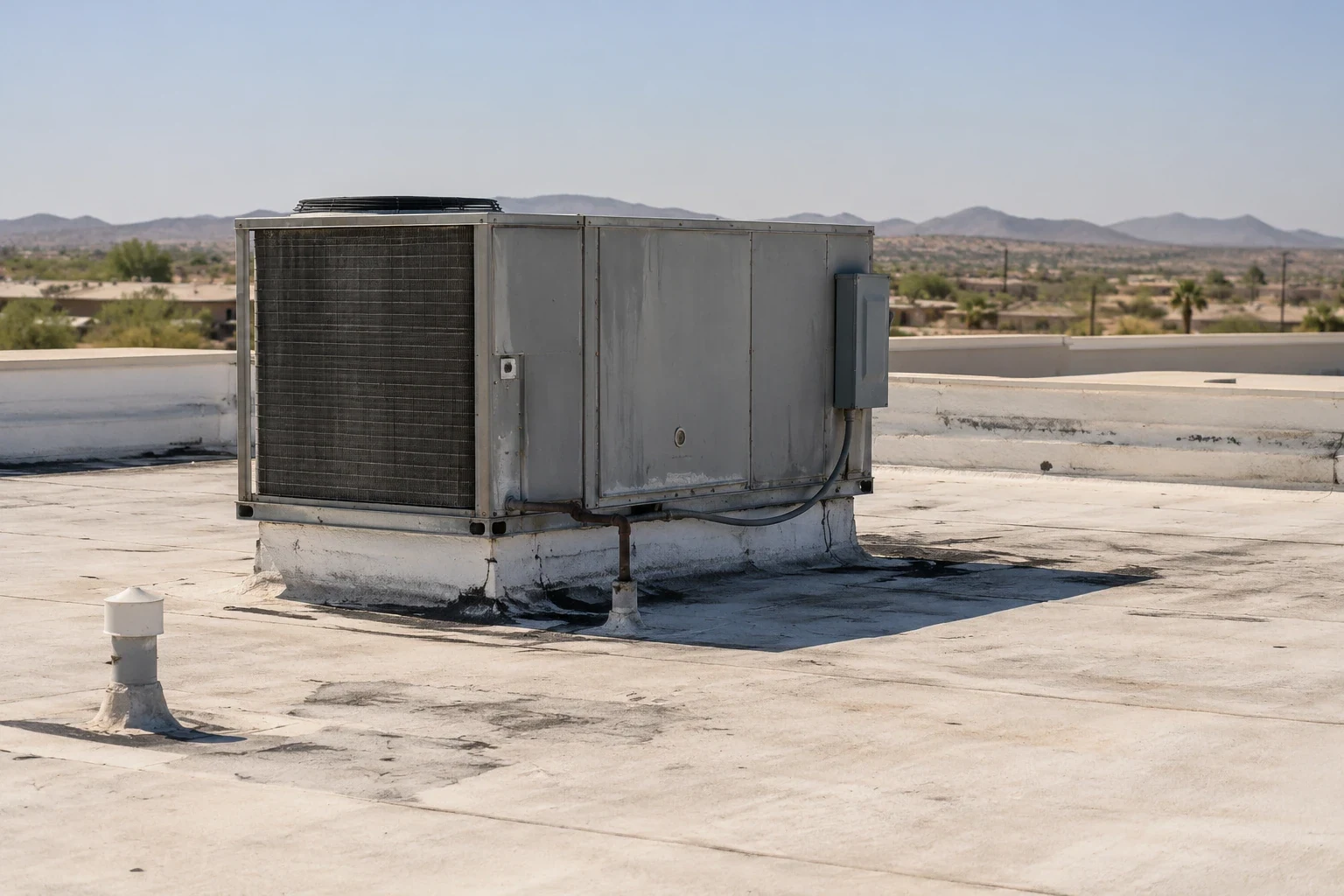
Heat Exposure: What a Reflective Surface Changes
A dark membrane in direct sun gets much hotter than the air, and the daily swing from cool night to hot afternoon is what works the seams. A reflective surface cuts the peak and narrows the swing, which reduces the movement at laps, fasteners, and flashing terminations. That is the part of a cool roof the owner can count on for the roof itself.
The energy effect is a second question. It depends on the insulation level, the type of cooling equipment, the hours the building runs, and how much of the roof area is shaded by equipment or parapets. Regional station values are only background: NOAA's 1991 to 2020 normals for the Las Vegas station list a 70.1°F annual mean temperature, and that figure describes the station, not an individual roof in North Las Vegas. We measure what the building has and describe the result in terms the owner can check.
Rooftop equipment changes the picture too. Units cast shade that varies through the day, and exhaust discharge can heat a patch of membrane well above its neighbors. We note those spots on the roof-zone map so the reflective finish and the walk pads are placed where they will work.
Commercial Roofing Questions
Coating or a new white membrane: which makes the better cool roof?
Start from the roof you have. A sound membrane with dry insulation and tight seams can take a coating and keep its service life. A roof with wet insulation, open laps across much of the field, or a failing deck needs a new membrane. We confirm the condition with a moisture survey and test cuts, then write the choice with its reasons so it can be reviewed.
Will a reflective roof lower the cooling bill?
It can, but the amount depends on the insulation, equipment efficiency, operating hours, and the amount of roof area exposed to the sun. We do not publish a savings figure because the building's own data is needed to estimate one. What the reflective surface reliably does is lower roof surface temperature and reduce thermal movement, which helps the roof itself last.
How often does a reflective surface need cleaning?
Dust load, wind, and surface texture set the cleaning cycle. Roofs with parapets, low spots, or nearby unpaved areas collect more dirt. We inspect at set intervals, and the record shows when the surface has dulled enough to affect performance. A wash and a drain clearing often restore most of the brightness, and a recoat is needed only when the coating itself has thinned.
Can a reflective coating be applied over a roof that has been patched many times?
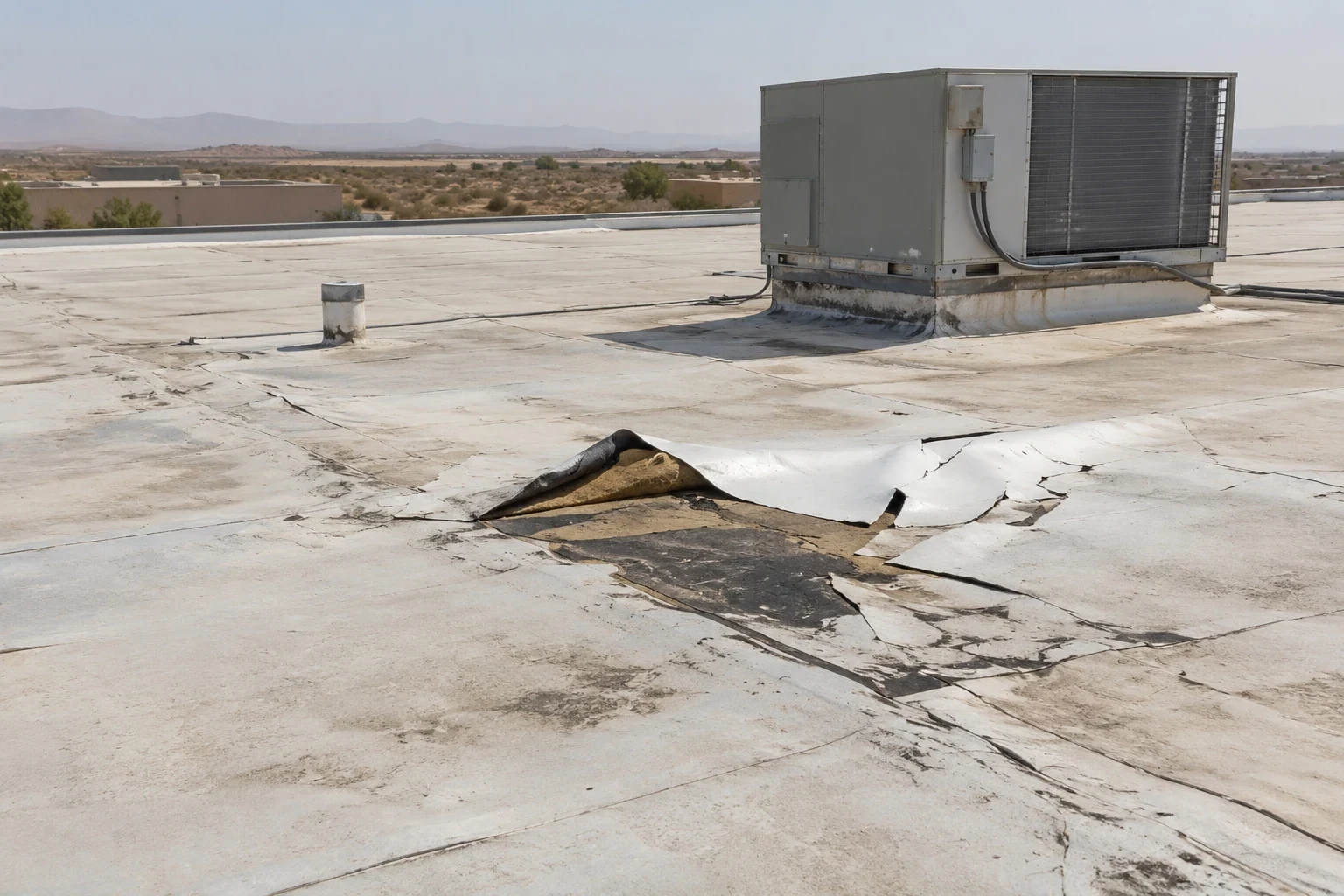
Possibly, if the patches are compatible and well bonded. Mixed repair materials, such as roofing cement under or around patches, can interfere with adhesion. We test adhesion on a small area, remove failed patches, and repair seams before coating. If the roof is a patchwork of incompatible materials and the insulation is wet, replacement is the better path and the coating would only hide the problem.
More Roofing Detail
COMMERCIAL ROOFING IN NORTH LAS VEGAS, NEVADA
Assembly Choice: White Membrane, Coating, or Metal Finish
There are three common routes to a reflective roof. A new white TPO membrane installed over insulation gives a reflective surface and a new waterproofing layer together. A fluid-applied acrylic or silicone coating applied to a sound existing roof adds reflectivity and a protective skin without a tear-off. A metal roof can take a reflective factory finish or a field-applied coating if the panels and fasteners are in good order.
Each route has its own requirements. A coating needs a clean, sound, dry substrate and compatible chemistry with what is already there, which is why roof coating restoration begins with adhesion tests and seam repairs. A new membrane needs a deck that can accept it and a plan for the insulation and cover board. We pick among the three by condition, not by what is cheapest to describe.
Edges and flashings need the same finish treatment as the field. A reflective field with dark, cracked flashing at the curbs leaves the most movement-prone details unprotected, so the scope names every flashing and termination that will be recoated or replaced.
Substrate Evidence: Moisture Before Reflectivity
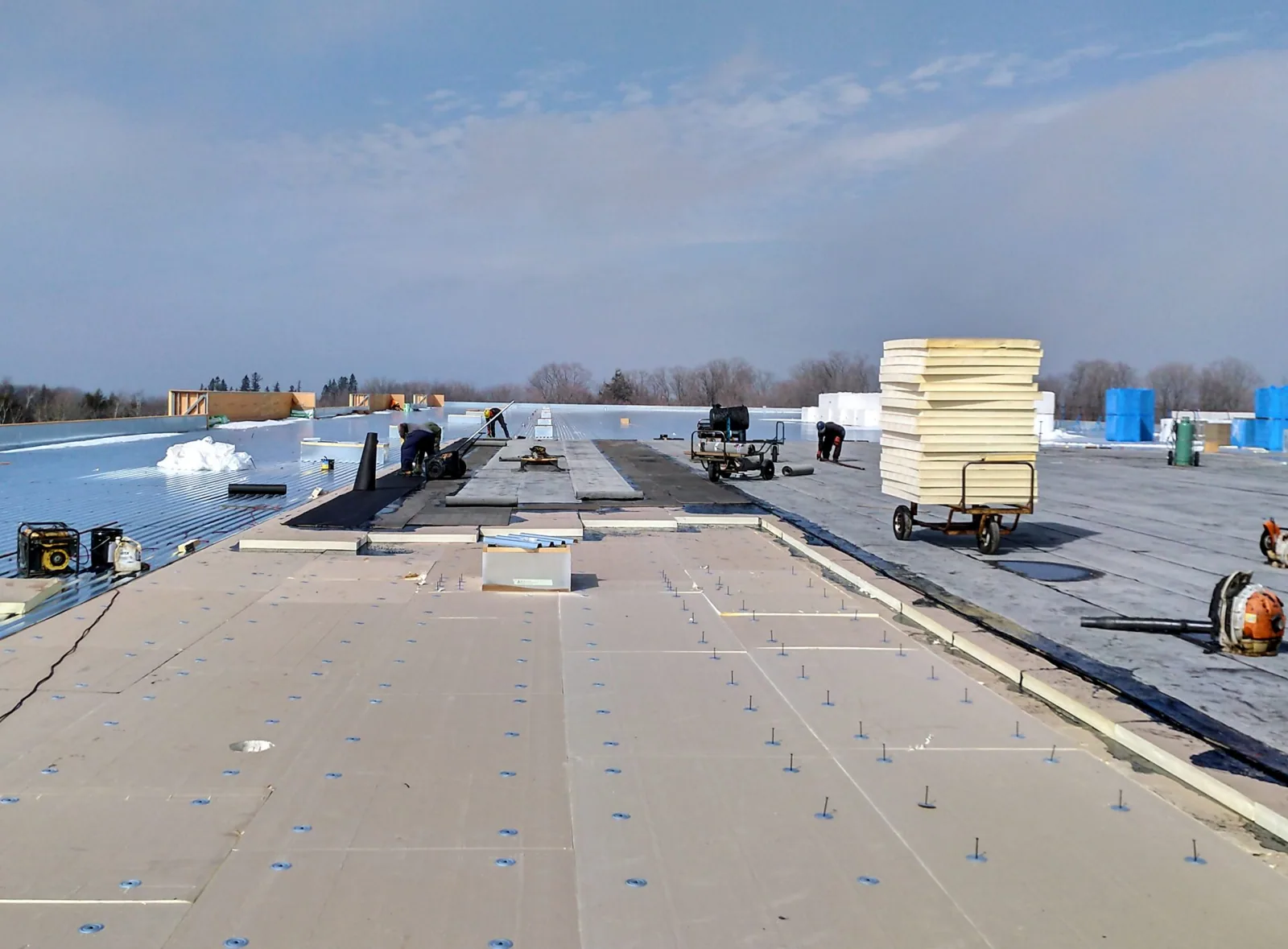
Before anything reflective goes down, we check for water in the assembly. An infrared moisture survey flags suspect areas, and cores or test cuts confirm them. Wet insulation under a coating or a new membrane will keep the roof soft, can blister coatings, and sets up a leak that is hard to trace afterward. If the insulation is wet, the answer is to remove and replace the affected sections first.
We also check how the roof drains. A reflective surface does nothing for a pond. Where water stands after rain, we look at the drain, the slope, and the deck, and correct the path with tapered insulation or added drains before the surface is finished. Upgrades to insulation and cover board often fit into the same project and raise the energy performance beyond the surface alone.
Dirt and Chalking: Keeping the Surface Reflective
Reflective surfaces lose performance as they dirty. The Weather Service notes that winds above 50 mph are infrequent in the valley but can carry blowing dust and sand, and spring and fall wind events are more common than in other seasons. Dust settles in low spots and along parapets, and over time the surface chalks and discolors. A roof that looked white at installation will not stay that way without care.
We schedule cleaning and inspection as part of a preventive maintenance plan: wash the surface, clear the drains, check seams and edges, and note surface chalking by roof zone. Where a coating has thinned, a maintenance recoat may extend its life. The inspection record keeps those dates, so the owner can see how fast the surface is aging and plan the recoat before the base layer is exposed.
Code and Energy Review: Confirm Before You Design
Nevada's Governor's Office of Energy adopted the 2024 International Energy Conservation Code for the state under NAC 701.185, and the Public Works Division lists the 2024 IBC, IEBC, and IECC for projects under its authority. Those state references do not replace the City of North Las Vegas requirements, so the owner or designer should confirm the adopted building and energy provisions with the city before a roof is designed or permitted.
That review shapes the reflective scope in practice: insulation levels, roof recover limits, and any reflectivity or emittance requirements are all checked against the adopted provisions. For a building in the Industrial Lands employment district or in Downtown North Las Vegas, we put the code review in writing before the product is ordered.
Share the Roof Before Choosing the Finish
Send roof plans, access rules, leak dates, repair history, equipment changes, and operating-hour constraints. We will inspect the substrate and tell you whether a reflective coating, a new membrane, or repairs first is the sound path.