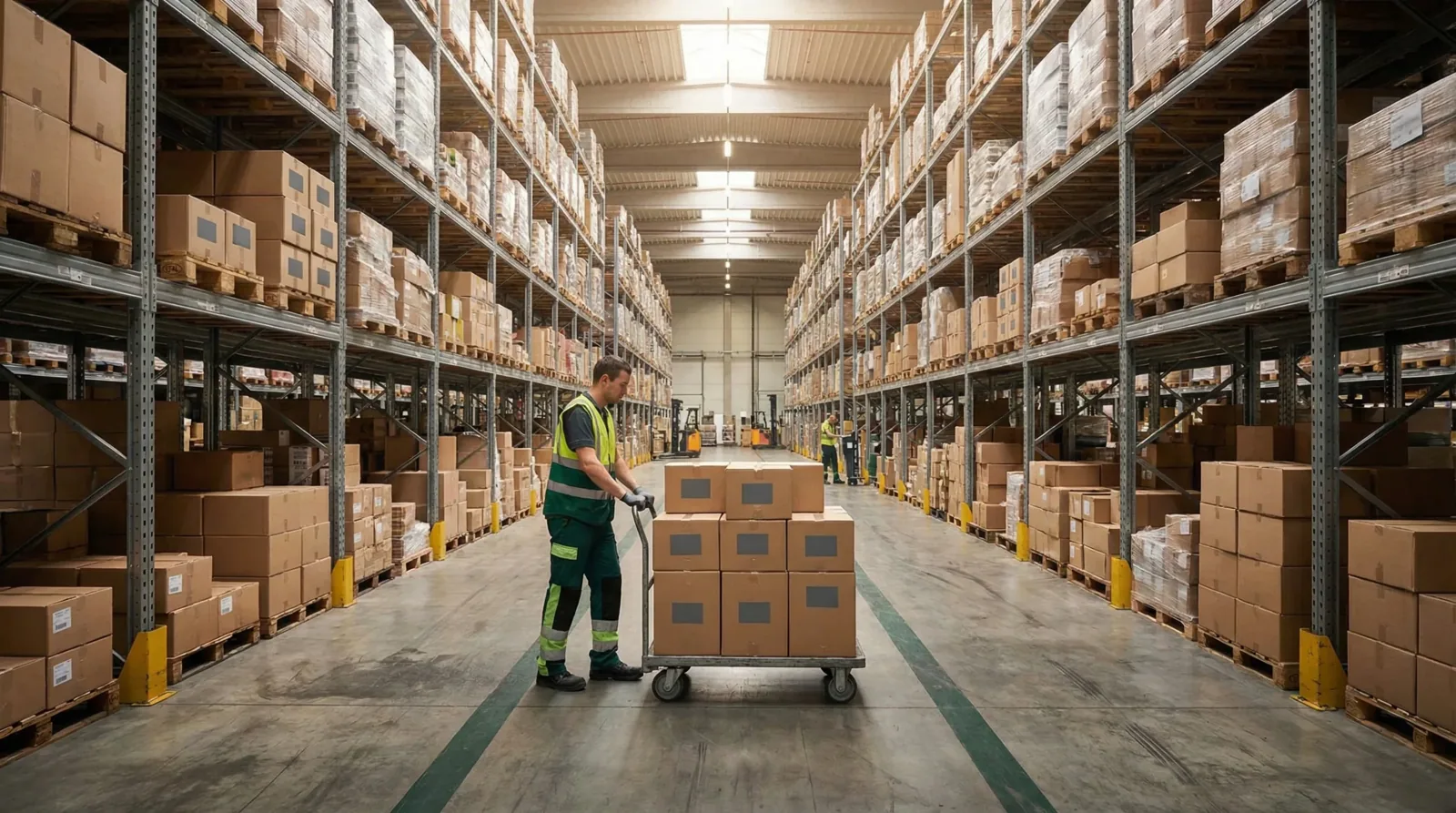
Roof inspection, repair and replacement for logistics and 3PL operators in North Las Vegas, NV, planned around dock schedules, inventory and peak periods.
Pallets stacked under a roof leak do not wait for a repair schedule, so the first question on a distribution roof is where water is landing relative to racking, product and dock doors. For logistics and 3PL operators in North Las Vegas, NV, a roof problem is an inventory problem, a claims problem and a customer problem all at once. We begin the inspection with that exposure in mind and decide what the walk must establish before anyone picks a repair or a replacement.
The Census Bureau reports $704.951 million in transportation and warehousing receipts for North Las Vegas in 2022, which gives city-level context for logistics property without identifying any facility, and the city's planning framework labels the Apex Industrial Area, Industrial Lands and Future Industrial Lands as broad planning areas. That is the extent of what we take from public figures. The roof over a given building is learned from the roof: its membrane, drainage, penetrations and repair history.
Inventory exposure: map leaks to the floor plan
On a large building, an interior leak report should be tied to a rack position and a roof zone. We ask for the floor plan or aisle numbers, mark reported drips on the roof plan, then trace each one upslope to its likely entry: a seam, a penetration, a drain or a wall flashing. Water often runs along the deck or insulation before it falls, so the drip location and the entry point may be many feet apart.
While we investigate, we advise on temporary protection: covers over product, relocation of the most exposed pallets and containment under active drips. A commercial roof leak repair goes after the confirmed entry point, and we record what remains uncertain. A clear record also helps the operator document the event for insurers and clients if product is affected.
Commercial Roofing Questions
How do you tie a drip over racking to a roof defect?
We mark the drip on the floor plan, locate the matching roof zone and trace upslope through seams, penetrations, drains and wall flashings. Moisture readings and a test cut confirm the entry point. The result goes into a repair plan and the inventory incident file.
What should we protect first when a leak starts?
Move or cover the product and equipment directly below, then contain the drip with a catch system. Report the location and time to us, so a crew can protect the roof opening. Document the event with photographs for insurers and clients.
Can roof work happen during peak shipping periods?
It can, if the sequence keeps dock lanes clear and interior protection is in place. Operators with strict blackout windows can have the heavy phases moved. We agree on the schedule before mobilizing and update it as conditions change.
Is a cool roof worth it for a warehouse?
Benefit rises with conditioned space and heat-sensitive inventory. An unconditioned building may see less. We review the use, insulation and equipment loads, then show the owner what a reflective system would and would not change.
Do you take emergency calls at distribution buildings?
Emergency service runs around the clock, holidays included. A crew protects the opening, documents conditions and plans the permanent repair with the operator.
Why does a large roof need overflow scuppers?
If primary drains clog during a heavy storm, water rises on the roof until it finds a way off. Overflow openings set at the right height let it leave before the load grows. We check their height, condition and clearance as part of every pre-season walk.
More Roofing Detail
COMMERCIAL ROOFING IN NORTH LAS VEGAS, NEVADA
Roof field: check the long runs and the loading edges
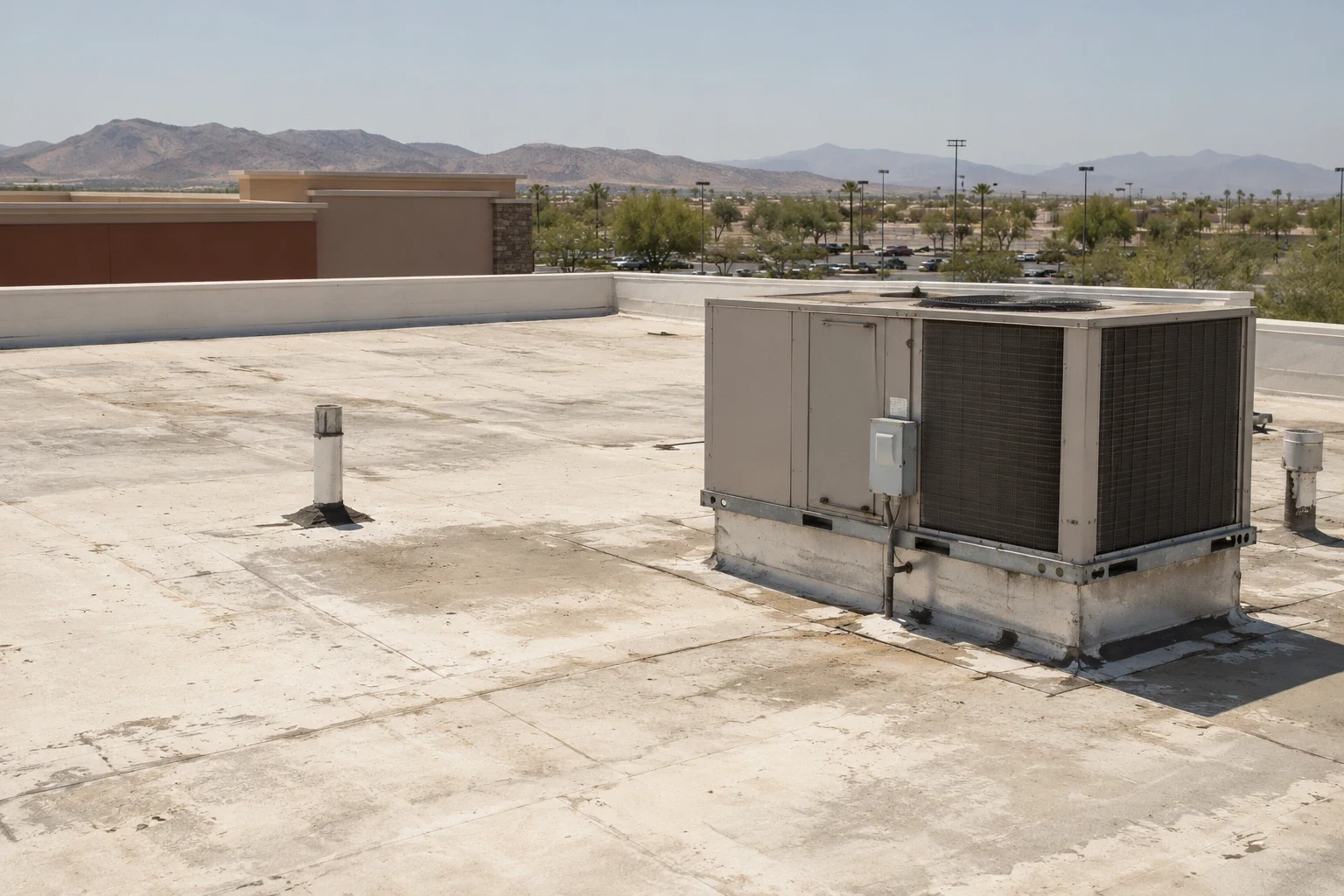
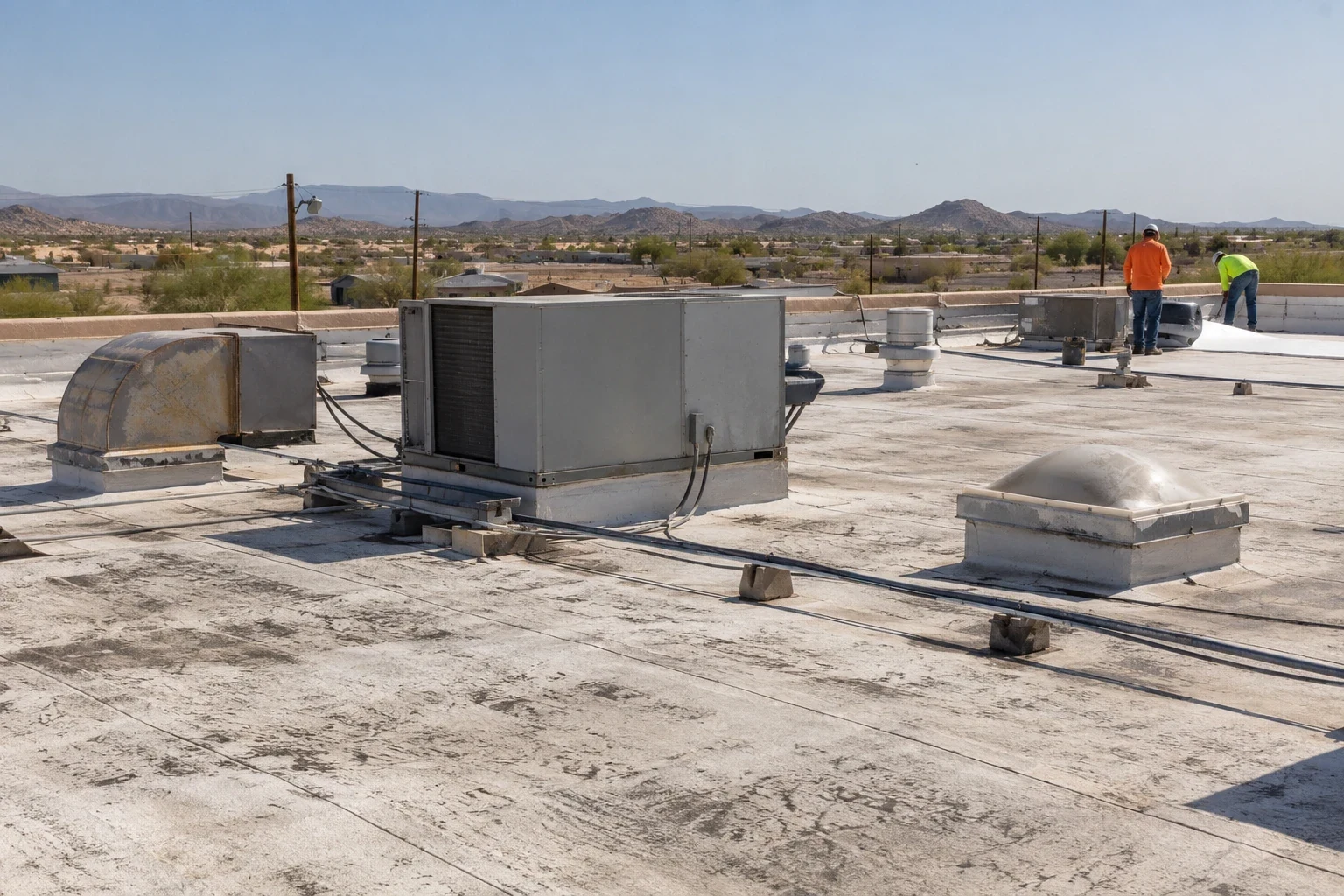
A warehouse roof is mostly open field with a long perimeter. The field fails slowly: shallow ponding, backed-out fasteners, opened laps and traffic wear near hatches and units. The perimeter fails faster, because edge metal, gutters and dock-side walls take wind and impact. We walk both and photograph each defect with a position mark.
Spring and fall wind events are more common in the Las Vegas Valley than in other seasons, according to the National Weather Service, and winds above 50 mph are infrequent but can carry blowing dust and sand. Edge metal and perimeter flashing are the first details to check after one. For a warehouse roof or a distribution center roof, we also check skylights and roof hatches, where a loose cover or cracked lens lets water in quickly.
Drainage: test the outlets before July
July and August monsoon moisture in the Mojave Desert means thunderstorms with heavy rain and gusts, and flash flooding in normally dry washes and low areas can reach dock aprons. On a roof with a very large catchment, a few outlets carry all of that water, and a single blocked drain can load a section of roof within minutes.
We clear strainers, confirm that drain bowls are sealed to the membrane, check the height of overflow scuppers and look for debris in downspouts and interior leaders. Where a roof shows chronic ponding, we compare the options: added drains, tapered insulation or a re-slope at the low area. Each has a different cost and a different level of disruption to the operation below, and the report gives the operator both. Doing this in late spring costs far less than responding to a flooded aisle after the first heavy storm.
Peak periods: schedule around throughput, not the calendar
A distribution building has its own busy and slow periods, and the operator knows them better than we do. We ask for blackout windows, dock-door traffic patterns and the hours when forklift traffic is lightest at the roof edge. Crane lifts, material staging and truck routes are agreed in advance, and crews stay clear of active dock lanes.
Most roof work can proceed above a working warehouse if interior protection is in place and dust and debris are controlled. When the work involves hot-applied or torch materials, the operator's fire safety rules apply, and we coordinate with the safety lead. A written sequence lists each phase, the area open at that time and the person who can pause the work. Operators get a short daily update so their shift supervisors know what to expect.
Heat and cool roofs: weigh the cooling benefit against the use
The National Weather Service describes the valley as a hot, sunny desert, and warehouse interiors can build heat under a dark roof. A cool roof installation uses a reflective membrane or coating to reduce the heat a roof absorbs. Whether it matters to the operator depends on how the building is used: conditioned space, temperature-sensitive inventory and worker comfort all count, while an unconditioned storage building may see a smaller benefit.
We explain the trade-off with the building's use in mind, and we check that insulation, vapor control and rooftop equipment loads fit the choice. If the plan includes rooftop solar, the roof needs to be sound first, since a membrane that fails under panels is expensive to reach. A solar-ready roofing review locates drains and penetrations before the array layout is final.
Leases and turnover: separate tenant damage from age
Logistics space turns over between tenants, and the roof is often a point of dispute. A baseline inspection at move-in and a closing inspection at move-out show which conditions predate the tenancy and which came from tenant equipment, racking changes or traffic. Photographs with dates and roof-zone references make that case without argument.
For owners and operators in the Apex Industrial Area or on industrial lands elsewhere in the city, the same method applies. Investors and owners use these records to set reserves, and property managers use them to administer repair responsibilities fairly.
Send the floor plan and the roof records
Share roof plans, rack or aisle layouts, leak locations, blackout windows and dock schedules. We will organize the inspection around protecting inventory and keeping the building shipping.