
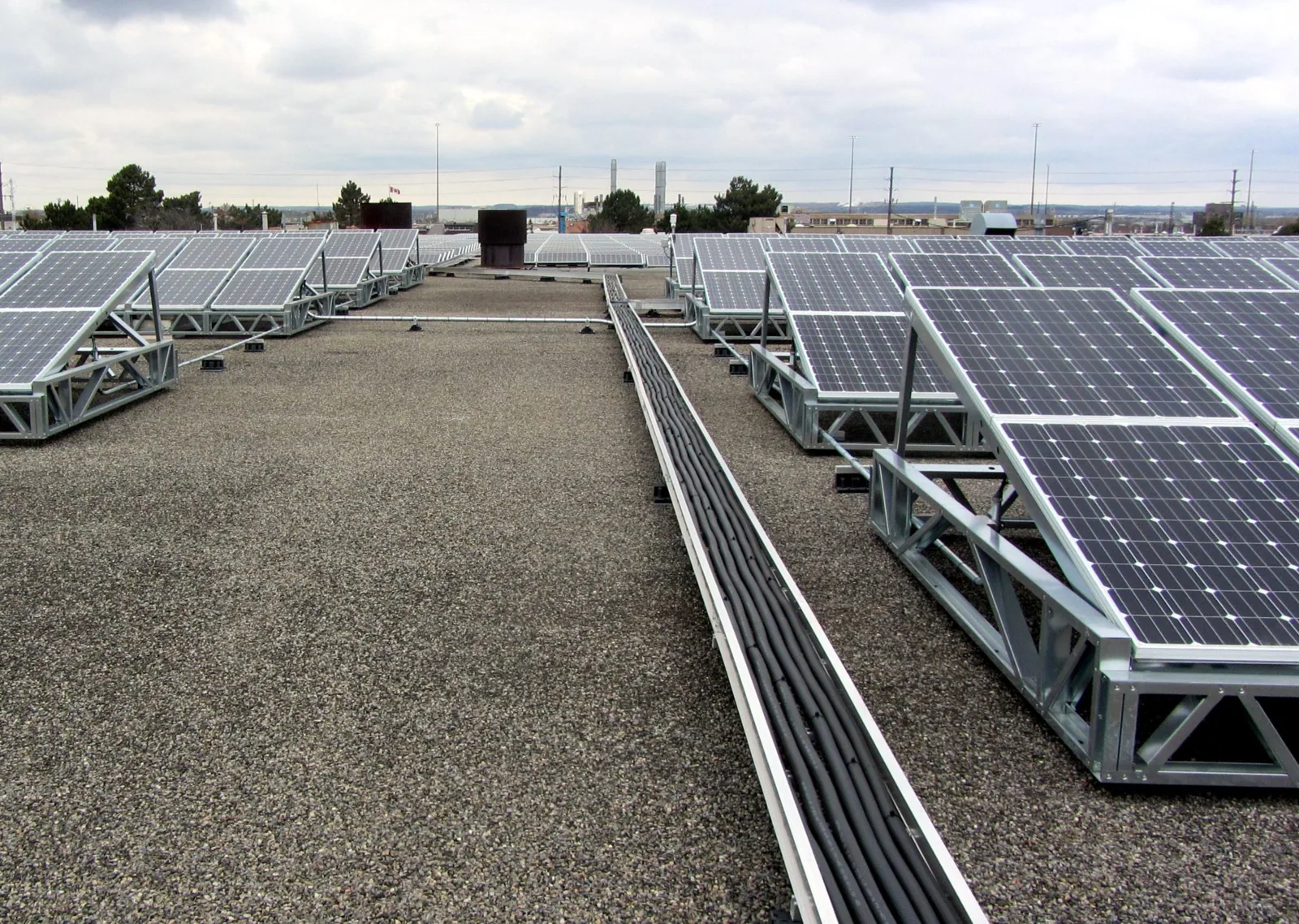
Solar-ready roofing in North Las Vegas, NV: roof condition checks, attachment and ballast planning, and detach-and-reset coordination around solar arrays.
An array installed over a roof with a few years of service left creates a problem on a schedule: the roof will need replacement while the panels still have many years to run, and every panel, rack, and conduit run will have to come off and go back on. The cost of that detach and reset is a roof cost nobody planned. The simplest question to put to a building manager before any solar contract is signed is how much service life the membrane has beneath the array footprint.
For commercial buildings in North Las Vegas, NV, solar-ready roofing means answering that question with evidence. The inspection documents the membrane, the insulation, the deck, the drainage path, and the existing penetrations. Then the roof is repaired or replaced to a condition that matches the life of the array, and the layout is set so the roofing trade and the solar trade can each reach what they need without damaging the other's work.
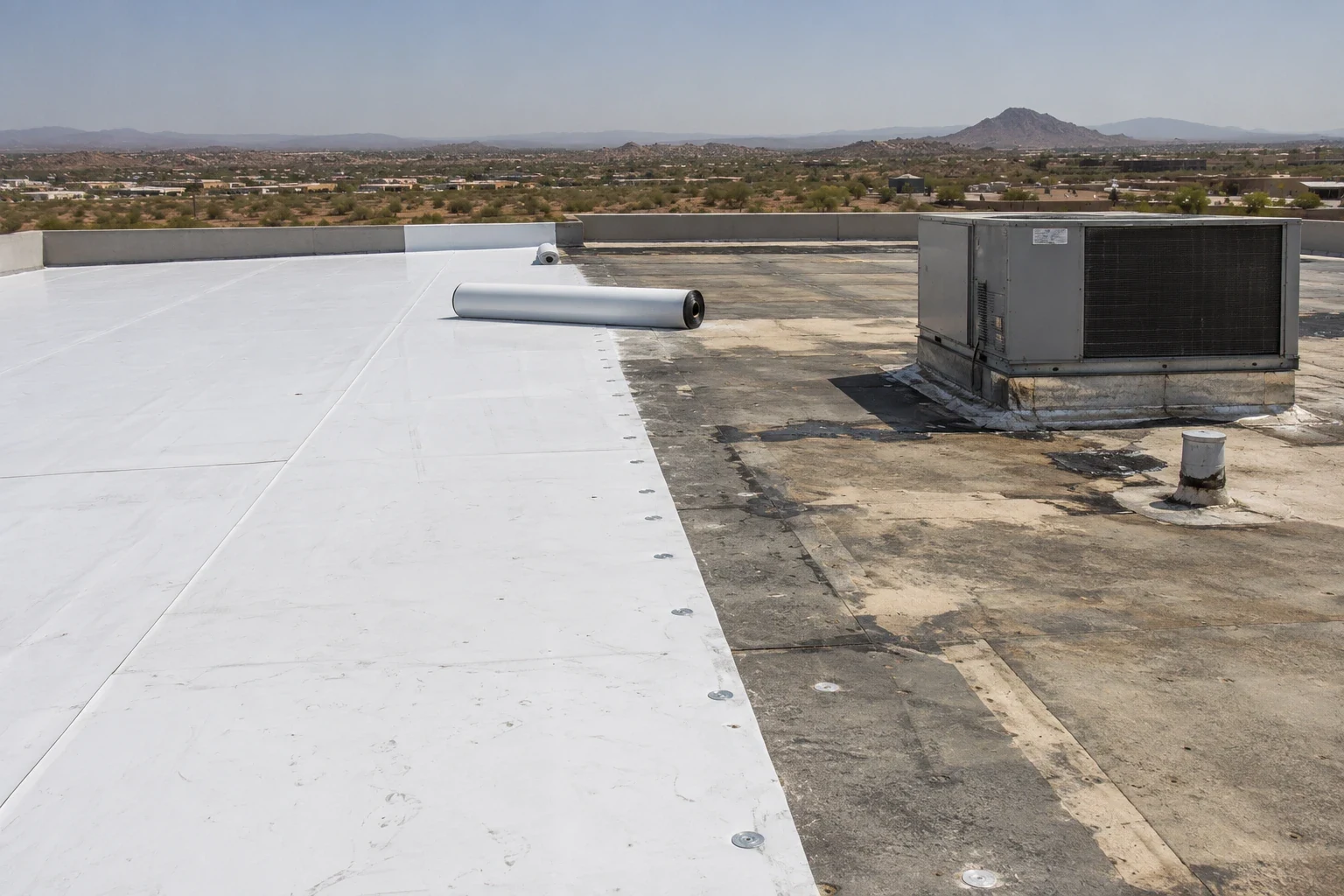
Condition and Decision: Roof Life Versus Array Life
We rate the roof by zone and place it in one of three groups. A roof with many years left and dry insulation can accept an array with limited preparation. A roof with limited life left can be repaired or recoated for the period the owner wants, though the cost must be weighed against a fresh roof. A roof near the end of its life should be replaced before the array goes on, because the cheapest time to replace it is when nothing sits on it.
The decision turns on evidence, not age. A moisture survey and test cuts show whether insulation under the footprint is wet. Seam probes and photographs show the membrane condition. Where the owner is leaning toward a full commercial roof replacement, the array layout can be fixed before the roof is designed, which lets the roofing scope and the electrical scope share one set of drawings.
Insulation level is part of the same decision. If the roof will be rebuilt anyway, this is the moment to review insulation and cover board under the footprint, since a firm cover board spreads rack loads and protects the membrane from foot traffic during installation and service.
Commercial Roofing Questions
How much service life should a roof have before an array goes on?
It should have at least as much as the owner expects to leave the array in place, unless the owner accepts a detach-and-reset cost midway. A roof with limited life can be repaired or recoated to extend it, but the cost and result should be compared with replacing it first. We give the owner a condition range and the repair history so the solar decision rests on the roof's actual state.
Which attachment method puts the least strain on the membrane?
Standing seam clamps avoid new holes on compatible metal roofs. On membrane roofs, ballasted racks avoid fasteners but add weight, and attached racks add penetrations. The deck and the insulation determine which works. A structural review for the load comes first, and the roofing review confirms protection pads, drainage, and flashing. Whichever method is chosen, each rack foot and penetration is photographed and logged.
Who is responsible for a leak that appears after solar installation?
Responsibility follows the evidence. The baseline inspection before installation and the walk-through after it show what existed and what changed. A leak at a new conduit penetration points to the solar trade's flashing, while a leak at an old seam points back to the roof. Without the two records, the owner has to argue the point. With them, the repair can usually proceed first and the cost be settled afterward.
Can the roof be inspected for moisture once panels cover it?
Only partly. Infrared and visual methods cannot see under panels, so a survey before installation is the cleanest check. Afterward, exposed areas, drains, and edges can be inspected, and interior leak reports can be traced. If wet insulation is suspected under an array, the panels near it may need to be lifted for access, which is why the baseline survey saves cost later.
More Roofing Detail
COMMERCIAL ROOFING IN NORTH LAS VEGAS, NEVADA
Assembly and Roof Zones: Ballast, Clamps, and Penetrations
Arrays attach in three ways. Ballasted racks sit on the membrane and rely on weight, which puts load on the deck and insulation and requires protection pads under every foot. Mechanically attached racks use fasteners through the membrane, and every fastener is a penetration with its own flashing. On standing seam metal, clamps can grip the seams without piercing the panel, which avoids new holes if the panel profile and seam are suited to it.
The structural engineer confirms what the deck can carry. We confirm what the roofing needs: protection layers, walkways, clearances for drains and edges, and flashing details at conduit penetrations. Each penetration flashing detail is selected for the membrane in place. We also leave service paths around the array, so later roof inspections can reach drains, seams, and curbs without walking on panels.
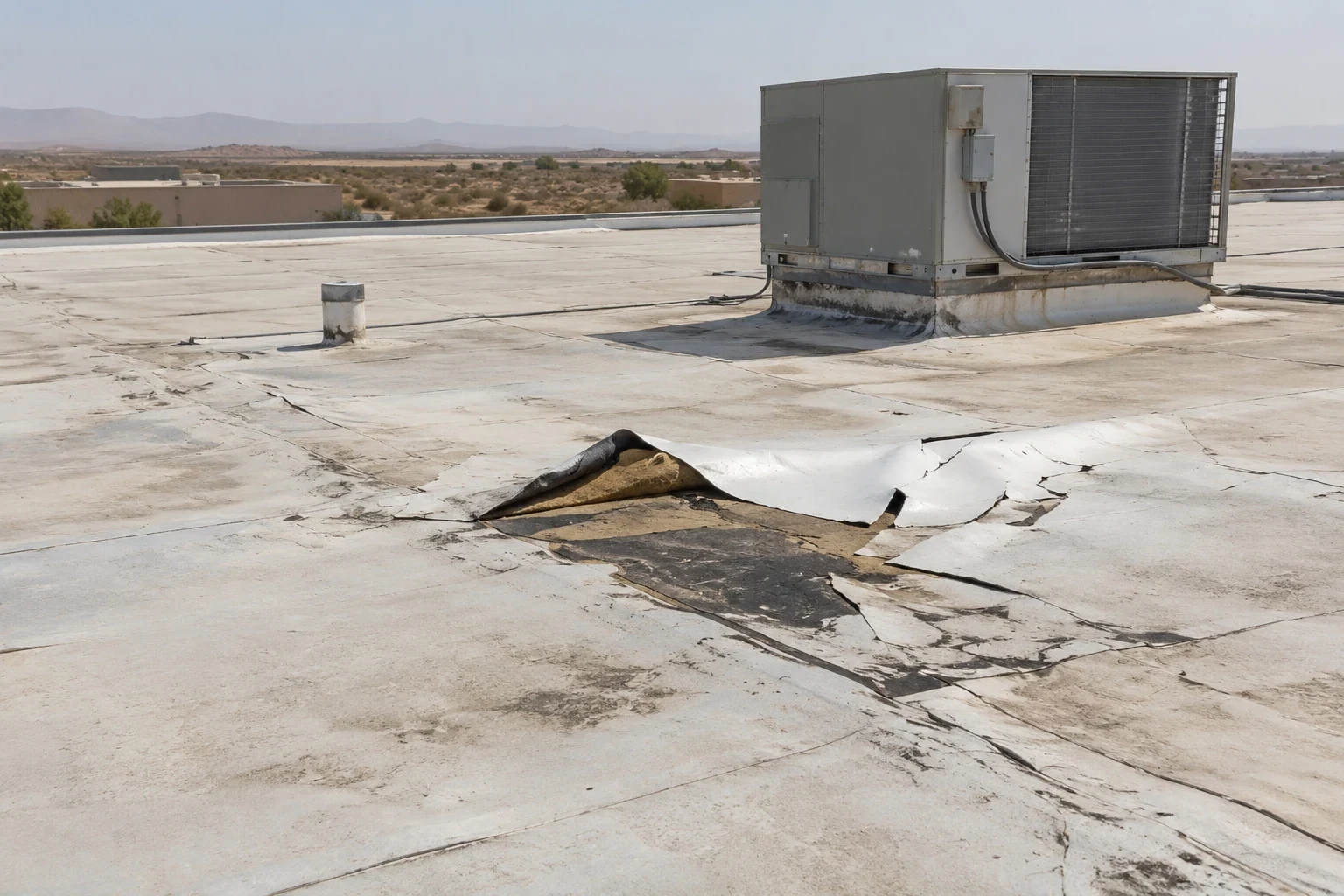
Inspection Sequence: Before Install and After
A baseline inspection comes first. We photograph each roof zone, log seams, drains, and flashings, and record any existing leak history. That record matters when a leak appears later and the parties disagree about whether it began before or after the solar work. Where a moisture survey is warranted, we scan before the array goes on, because infrared methods cannot see under panels afterward.
After installation we walk the roof again with the same positions and checklist. We look for membrane abrasion at rack feet, punctures from dropped tools, conduit strapped to the membrane, sealant at new penetrations, and ponding created by new load. If damage is found, it is documented with photographs and handled under the trade responsible. The two inspection records, side by side, give the owner a clear history of the roof at the moment the solar work was finished.
Conduit routing gets particular attention. Runs that cross the field should sit on supports that lift them off the membrane, with protection where they pass over seams. Runs that enter the building should do so through a flashed curb or penetration that the roofing trade has inspected, not through a hole sealed with whatever material was on the truck.
Access and Operations: Roofing Around Panels
When roof work is needed under an existing array, the sequence is fixed. The electrical trade de-energizes and disconnects the circuits and the panels and racks are lifted and staged. The roofing crew then repairs or replaces the membrane in the cleared area, and the solar trade resets the array and reconnects it. The roofing trade does not touch live equipment, and the solar trade does not work on the open roof.
That sequence depends on a shared schedule, a staging area that does not load the roof beyond its limit, and a clear line of authority on the roof. For tenant-occupied buildings, the same scheduling rules apply as for occupied building reroofing, with noise and access limits set before the first panel is lifted. We confirm each hold point in writing with the general contractor.
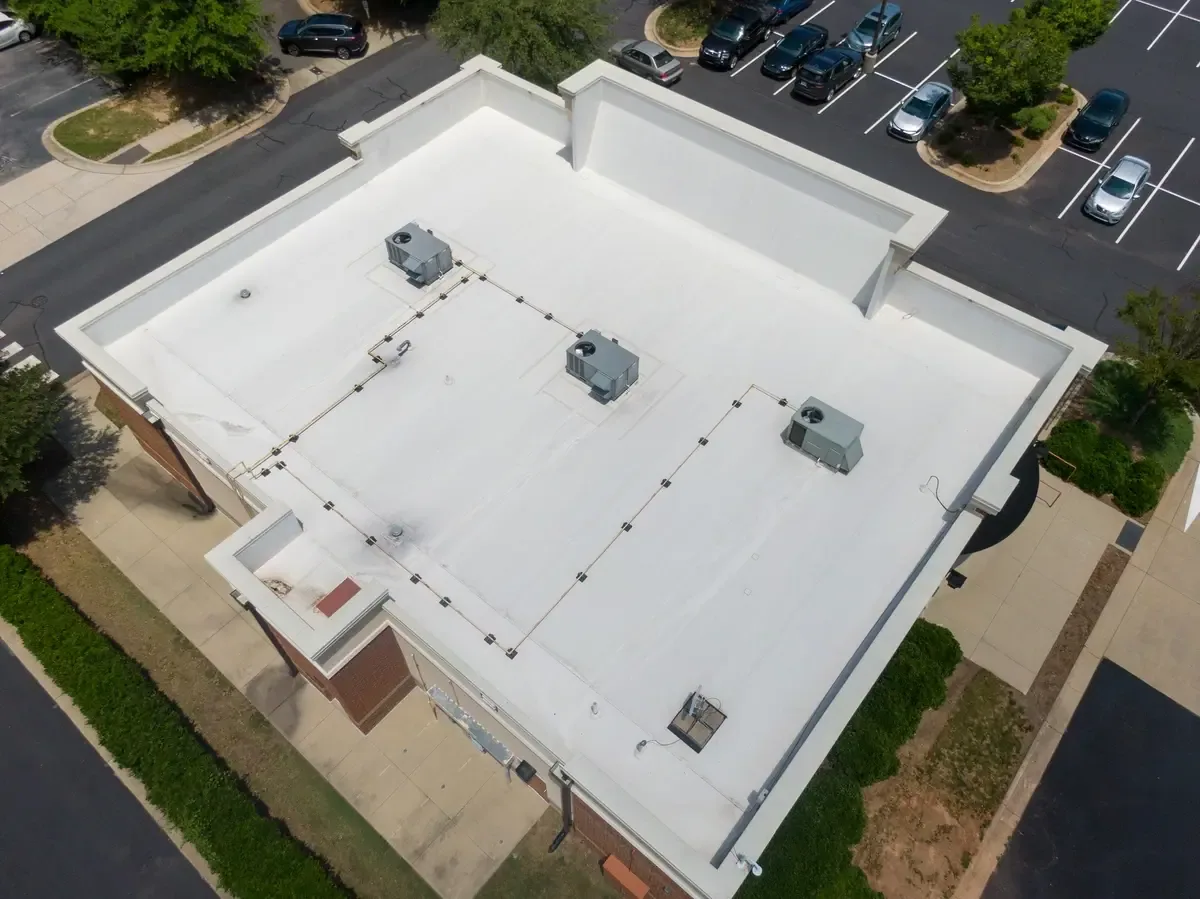
Heat, Wind, and Water: Exposure Around Arrays
The National Weather Service describes the Las Vegas Valley as hot and sunny, with monsoon moisture commonly arriving in July and August and bringing gusty winds and heavy rain. Arrays shade the membrane and shed water in concentrated lines at their edges, so membrane under a panel sees less sun while membrane at the drip line sees more water. Dust and sand carried by spring and fall wind events collect at rack feet and can block small drains.
For new buildings in planning areas like the Northern Development Area or the Future Industrial Lands label on the city's framework map, the roof can be designed for solar from the start. Current zoning and codes must be confirmed with the city, but a roof designed for an array avoids most of the retrofit problems listed above.
Check the Roof Before the Array Goes On
Share roof plans, access rules, leak dates, repair history, equipment changes, and operating-hour constraints along with the proposed array layout. We will inspect the roof and report what it can carry and what should be done first.