
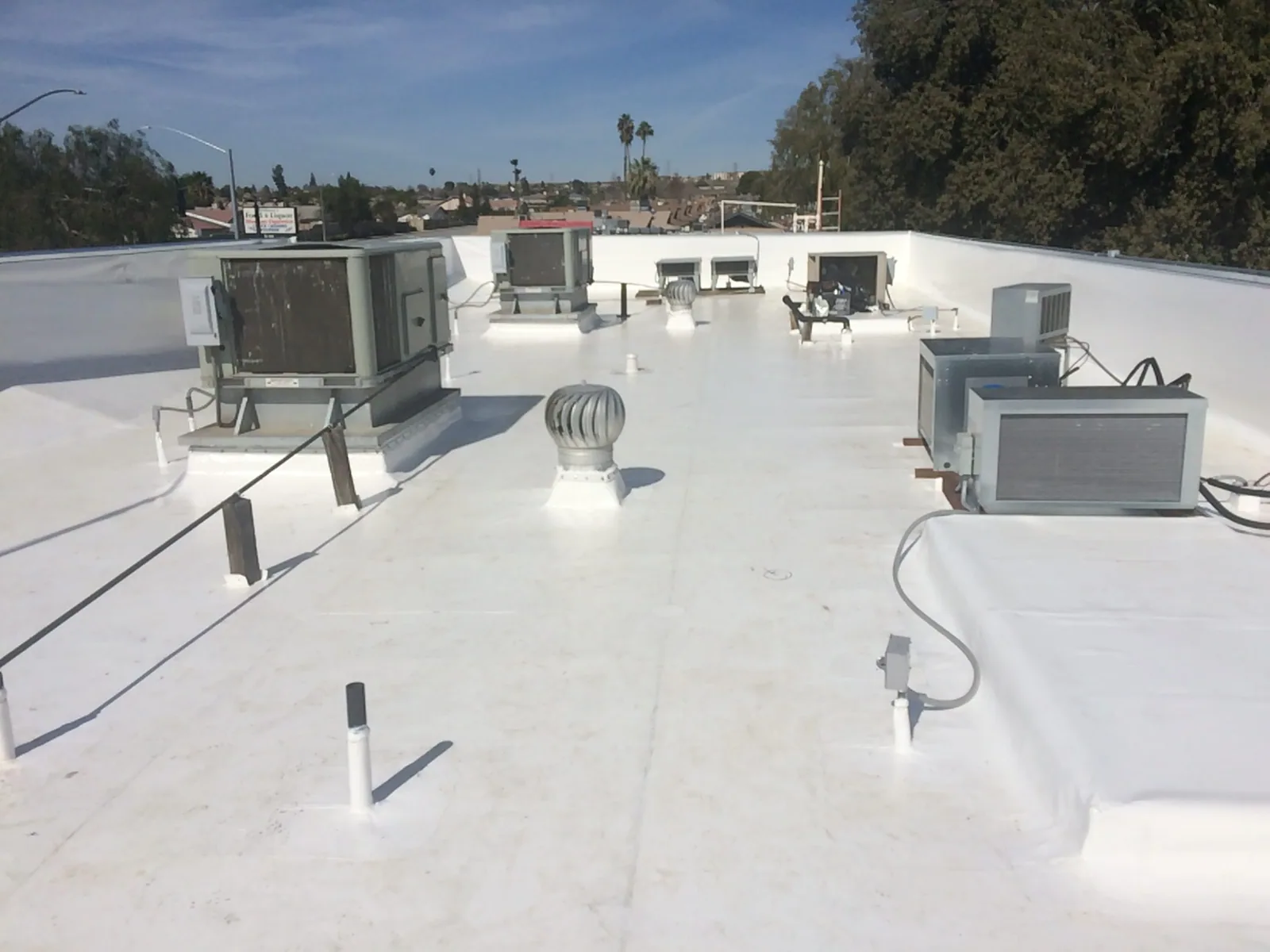
Occupied building reroofing in North Las Vegas, NV: phased tear-off, daily dry-in, tenant access rules, and interior protection while operations stay open.
Before a tear-off starts over an occupied floor, the building manager can verify three things from the ground: what sits directly beneath each roof zone, who works there and when, and where a single drip would do the most harm. A server closet, a food prep line, a classroom, and an empty storage bay all share a roof, and they do not tolerate the same risk. The reroofing plan has to be written zone by zone.
On occupied commercial buildings in North Las Vegas, NV, the inspection must establish the existing assembly, the roof access points, the interior spaces below each zone, and the tenant constraints before the scope is set. Then the work is sequenced so that no more roof is open at the end of a day than the crew can close, and interior protection is in place before the first cut.
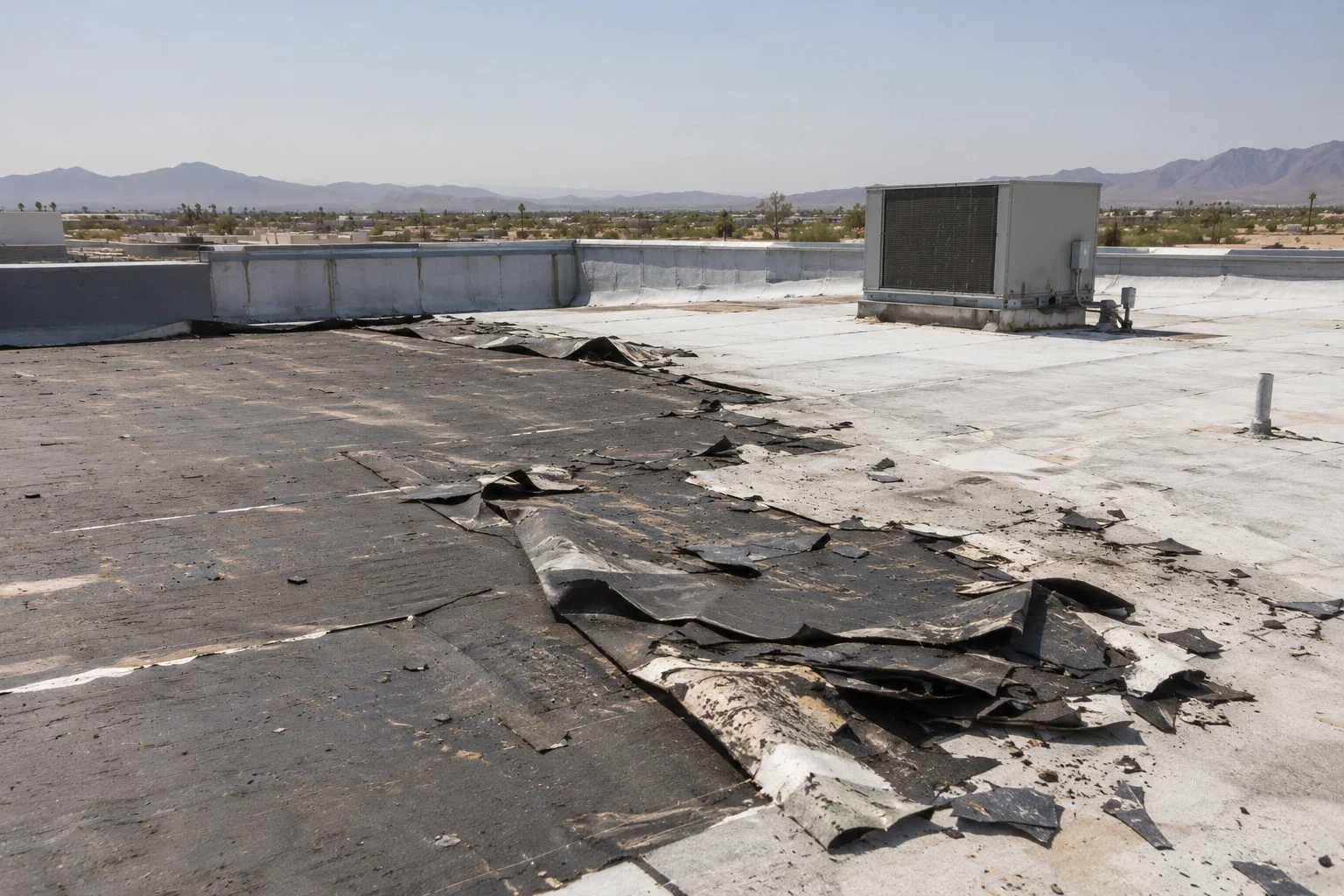
Condition and Decision: Replace, Recover, or Phase
Three routes keep a building running. A recover overlay adds a new membrane over a dry, sound roof and avoids tear-off debris, which reduces noise and dust inside. A phased replacement removes and rebuilds the roof in sections, with each section closed before the next opens. A repair-first approach holds the roof while the owner arranges a vacant window for the larger work.
The choice rests on substrate evidence. A moisture survey and test cuts tell us whether the insulation is dry enough to recover over and how many layers are present. If the deck below is sound and the insulation dry, a recover is often the quietest path. If wet insulation spreads across the field, a tear-off cannot be avoided and the plan shifts to controlling the open area and the interior protection.
Cost drivers follow the same logic. Debris hauling, crane time, interior protection, off-hour labor, and the number of phases all add to an occupied project, and they are the items to compare when a vacant-window bid and a phased bid sit side by side. The comparison should include the cost of lost tenant hours, which is an owner's number, not a roofer's.
Commercial Roofing Questions
How much roof can be open at one time on an occupied building?
Only the area the crew can finish and seal in the same shift, with a margin for weather. That usually means a defined zone, not a fraction of the roof. We size the zone from crew output, the forecast, and what lies below. The plan names the zone for each day, so the property manager knows which interior areas carry risk and can arrange protection ahead of time.
What should a tenant be told before reroofing starts?
Tenants need the dates, the working hours, the noisy phases, the areas where access may be limited, and a contact for questions or leak reports. They also need to know about intake shutdowns or odor-producing steps. A short notice posted at entrances and sent by the property manager a week ahead works well, with a reminder the day before each noisy phase.
Is a recover always the quieter option for an occupied building?
Usually quieter, but not always possible. A recover avoids tear-off noise and debris, yet it requires dry insulation and a deck that can carry the added layer. If the survey finds wet insulation or too many existing layers, a tear-off is required, and the plan then relies on smaller zones and stronger interior protection. We confirm the options with a moisture survey before promising either path.
Who coordinates with the mechanical and electrical trades?
The general contractor owns the schedule, and we supply the roofing sequence and the hold points. Shutdowns, crane lifts, and curb work need the HVAC and electrical trades at set times. A joint walk before work starts confirms which units come off, which stay, and who closes each penetration. Written hold points keep the roofing, equipment, and tenant schedules from colliding.
More Roofing Detail
COMMERCIAL ROOFING IN NORTH LAS VEGAS, NEVADA
Roof Zone Sequence: Open Only What Can Be Closed
The sequence is the plan. We divide the roof into zones that match the crew's daily output and the interior spaces below, then work each zone from tear-off to a finished, watertight edge in one shift. Temporary tie-ins join the new sheet to the existing roof when the shift ends, and they are checked at the start of the next shift. No zone is left with exposed insulation overnight.
Weather moves the plan. July and August monsoon moisture brings thunderstorms with gusty wind and heavy rain, and flash flooding can follow in dry washes and low areas. During those months we watch the forecast, shorten the open area, and keep tarps, sealant, and temporary drains staged on the roof. If a storm opens a seam while the building is occupied, emergency roof repair crews respond at any hour.
Access and Operations: Tenant Hours, Noise, and Routes
Tenants set the working window. Quiet-hour limits, delivery times, shift changes, and parking all enter the schedule, and the general contractor gets a one-page plan listing the roof access point, the material staging area, the crane or hoist time, and the hours when noisy work is allowed. Heavy tear-off tools can be scheduled for hours when interior use is lowest.
Routes matter as much as hours. Material goes up and debris comes down along a path that avoids main entrances, loading docks in use, and fire lanes. Rooftop equipment may need to be shut down or protected during work, which needs coordination with the mechanical trade and the property manager. The equipment curbs on the roof are often the points where roof work and building systems meet, so they get their own hold point.
Interior Protection: Overhead Hazards and Water
Cutting and fastening through a roof sends vibration and sometimes debris into the ceiling below. Where sensitive equipment, food, records, or inventory sit below, we recommend protection that fits the risk: plastic and plywood over equipment, temporary partitions, or relocation of items for the duration. If the ceiling tile grid is old, we note it before work begins so existing damage is not blamed on the project.
Odor and fumes are a second concern. Some adhesives and hot-applied materials produce smell that moves through air intakes. We identify the intakes, choose methods that suit the building's use, and schedule intake shutdown or covers where needed. Hot work, such as torch application on modified bitumen, needs a fire plan and a watch period afterward, and where tenants are present a cold-applied or welded method can be the safer choice.
Daily housekeeping closes each shift: magnets sweep the work area for fasteners, debris is bagged and lowered, and drains are covered during tear-off and uncovered after. A dropped screw in a parking area or a plugged drain after dust settles causes a call the next morning, and both are avoidable.
Heat Exposure, Wind, and the Building Setting
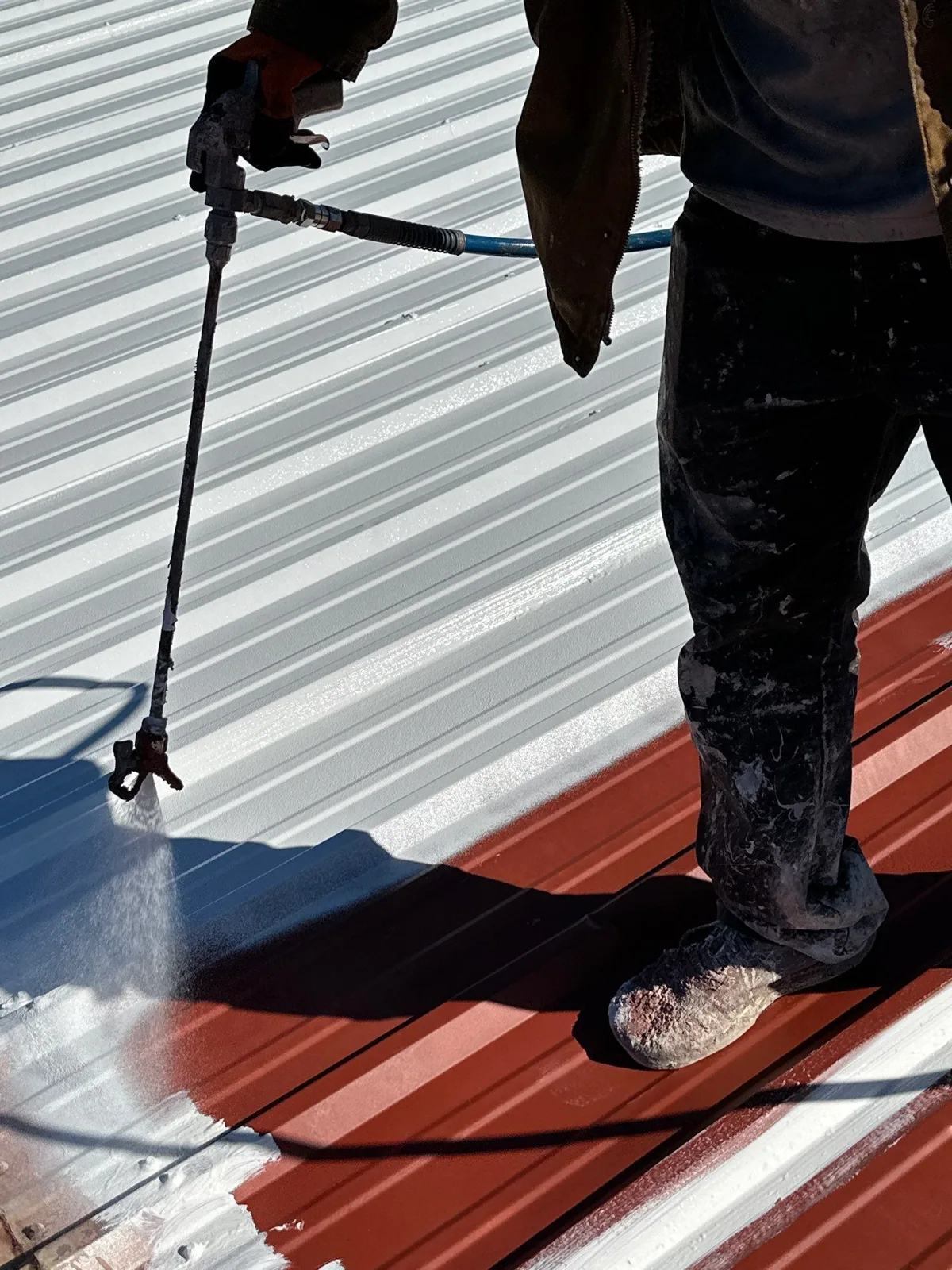
Heat sets the pace of the day. Crews start early, rotate in shifts and keep membrane off surfaces that have heated beyond what the product allows, because the valley is a hot, sunny desert. Spring and fall wind events affect sheet handling and temporary ballast.
The building setting adds its own constraints. The city's planning map names the North 5th Transit Corridor as a transportation and main-street area, and a building on a main street may need pedestrian protection and sidewalk coordination. In Downtown North Las Vegas, which the same map labels as a planning area, the access plan should check street closures and neighboring work before crane days are set.
Plan the Work Around Your Tenants
Share roof plans, access rules, leak dates, repair history, equipment changes, and operating-hour constraints. We will inspect the roof and return a phased plan with zones, hold points, and protection measures.