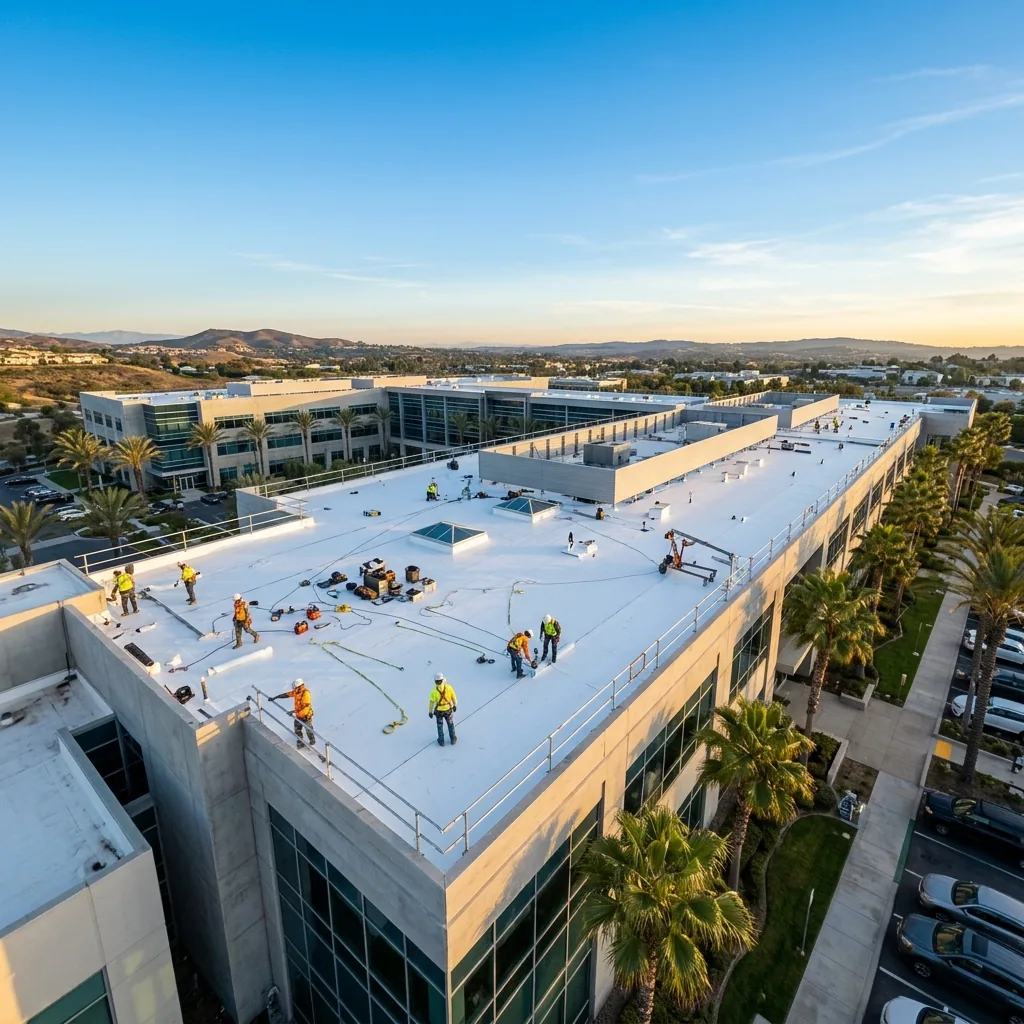
TPO roofing in North Las Vegas, NV: seam welds, attachment, insulation, and drainage checks for white single-ply membranes on warehouse and commercial roofs.
A white TPO roof that shows a thin dark line along a seam is telling the building manager something that can be checked with a probe: either the weld is open, or dirt has collected in a seam that is still fused. The two look the same from the roof hatch and call for different work. Before a repair is priced, the line has to be traced, opened with a probe where safe, and compared with the roof plan.
TPO is a single-ply thermoplastic membrane, heat-welded at the seams and available fully adhered, mechanically attached, or ballasted. We install, repair and maintain it on North Las Vegas commercial buildings. The inspection must establish which attachment is in place, what sits under the membrane, how the seams and flashings are holding, and where water goes after rain, so the scope matches the roof that exists and not the one on the drawings.
Seam Welds: Reading What the Probe Finds
Hot-air welds fuse two sheets into one, and a continuous weld has a consistent flow-out at the edge. We probe a sample of seams on each roof zone, starting with the T-joints where three layers meet and the seams nearest the drains. A probe that slides under the edge marks a cold weld or a fused seam that has been pulled apart by movement.
When a weld is open, the question is how far. We follow the seam until the probe stops finding gaps, photograph the length, and mark the repair boundary. A short open stretch gets cleaned and re-welded or covered with a compatible strip. Repeated openings in the same seam direction point to movement in the deck or the insulation, which means the repair has to address the substrate as well as the weld.
Flashing seams get the same treatment. Wall flashings, curb wraps, and pipe boots are welded to the field sheet, and the corners are where thermal movement tears them first. We check inside corners for stress wrinkles and outside corners for thin spots, and note whether prefabricated corner pieces or hand-cut folds were used, because a hand-cut fold is the more likely place for a leak path to start.
Commercial Roofing Questions
What separates a dirty seam from an open one on a white TPO roof?
A probe settles it. Dirt sits on the surface and the weld edge stays tight under the probe, while an open seam lets the probe slide under the edge. Photograph the line before and after cleaning so you can compare. If cleaning removes the line and the probe finds no gap, no repair is needed beyond routine washing. If a gap remains, the seam is marked and repaired.
Which TPO attachment is better for a large warehouse roof?
Neither wins on every roof. Mechanically attached sheets install quickly and suit decks that accept fasteners, while fully adhered sheets bond to the substrate and resist flutter. Ballasted systems add weight the structure must carry. The wind exposure at the building, the deck type, and the insulation all enter the choice, and we state the reasoning in the scope with the uplift requirements checked.
Can TPO be installed over an old built-up roof?
Sometimes, if the old roof is dry and stable. A moisture survey and test cuts show whether the old insulation and felts can carry a new layer, and a cover board is often placed between old and new. Gravel is removed or covered. If the old roof is wet or deteriorated in places, those areas come out first, because a new sheet over wet material will trap the water.
How long should I wait after a repair before walking the area?
A welded patch can take foot traffic once it cools, though it should not be stepped on while hot. Adhesive repairs need cure time that varies with temperature and product. We mark new repairs on the roof plan, tell the property manager which areas to keep clear, and recheck the work on the next visit to confirm the seams are still tight.
More Roofing Detail
COMMERCIAL ROOFING IN NORTH LAS VEGAS, NEVADA
Attachment: Adhered, Fastened, or Ballasted
The attachment decides how the roof behaves in wind and how a leak travels. A fully adhered TPO sheet is bonded to the substrate, so water usually shows at or near the entry point. A mechanically attached sheet is fastened through the seams at set intervals, and a loose sheet between fasteners can flutter in wind and wear at the plates. A ballasted roof relies on stone or pavers for weight, which adds load and hides the membrane.
Winds above 50 mph are infrequent in the valley, but spring and fall wind events are common and carry dust and sand across the sheet. We check the perimeter and corners first, since uplift concentrates there, and we verify that edge metal is fastened and sealed. If plates are backing out or the sheet is billowing, the fix may include added fasteners or a change to a fully adhered detail.
Substrate Evidence: Insulation, Cover Board, and Moisture
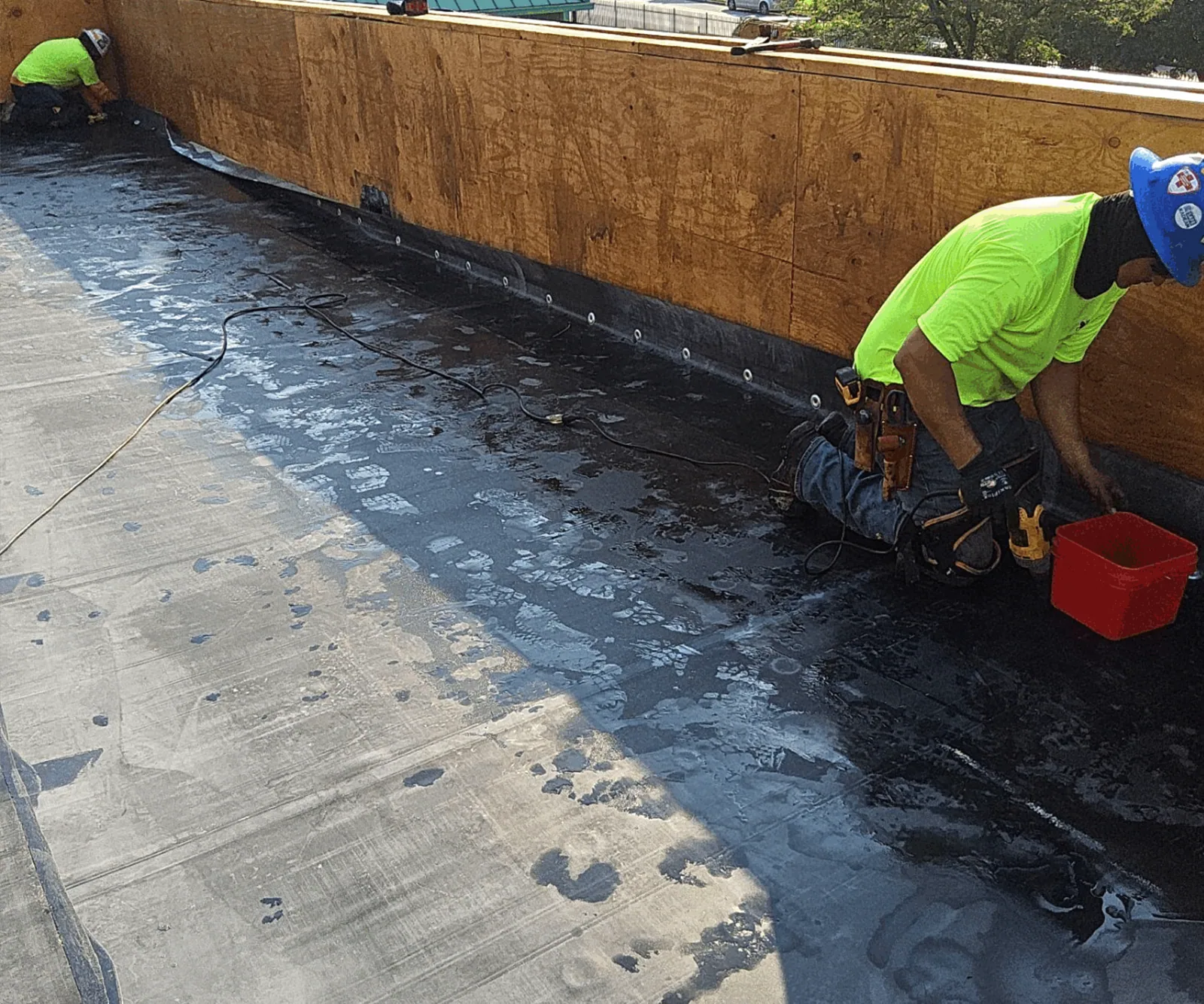
The sheet is only the top of the assembly. Under it sit insulation, often polyiso, a cover board in some roofs, and the deck. We confirm the layers with a test cut taken at an approved location and patched the same day. The cut shows thickness, attachment, and any moisture in the board. An infrared moisture survey maps wet areas across the field, and cores verify them.
Wet insulation changes the plan. A recover overlay on top of wet board traps the water, and a patch over a wet spot only moves the leak. Where the board is dry and sound, a new TPO sheet can go over it. Where it is wet, the affected sections are removed and replaced first. Findings on the insulation and cover board go into the record with locations so the next visit starts from facts.
Heat Exposure and Warehouse Roofs in Industrial Areas
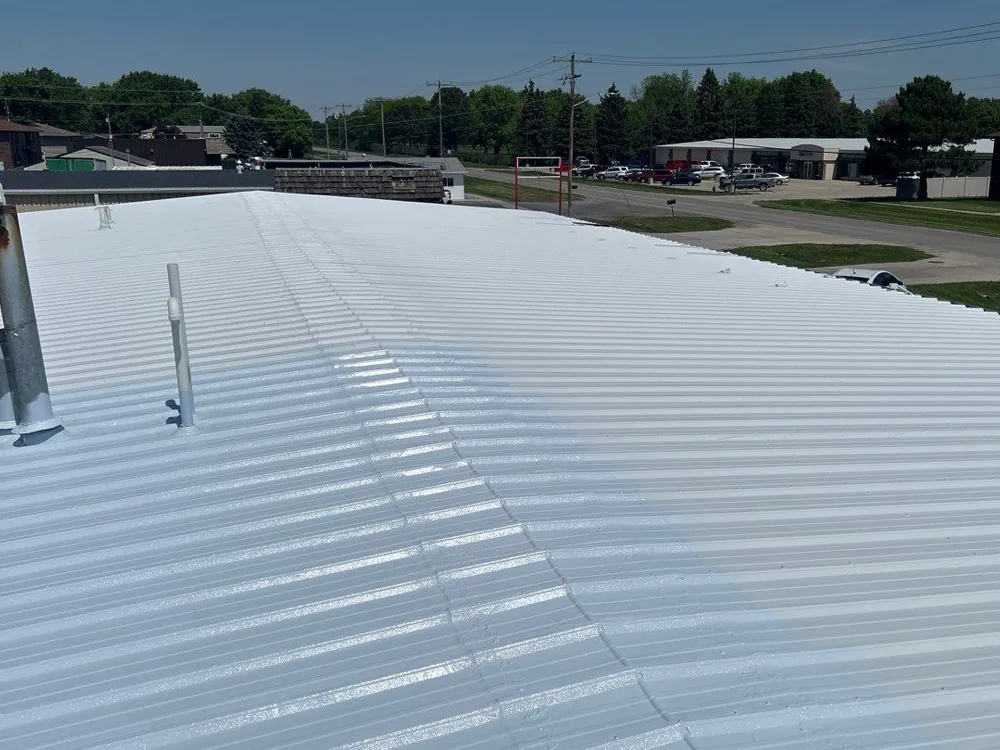
The valley is a hot, sunny desert, and heat-welded seams on a TPO sheet are checked for ultraviolet wear at each visit. A white TPO surface reflects much of that sun, but seams, flashings, and fasteners still cycle with the temperature. Chalking, dirt pickup, and sealant hardening are the surface items to log on each visit.
The city's planning map labels the Apex Industrial Area and the Industrial Lands as industrial and employment areas, and the Census Bureau reports $704.951 million in North Las Vegas transportation and warehousing receipts for 2022. That is city-level context for logistics property, not a count of roofs. Where a TPO-roofed building does sit in such an area, drainage and edge securement deserve the earliest look on the inspection route.
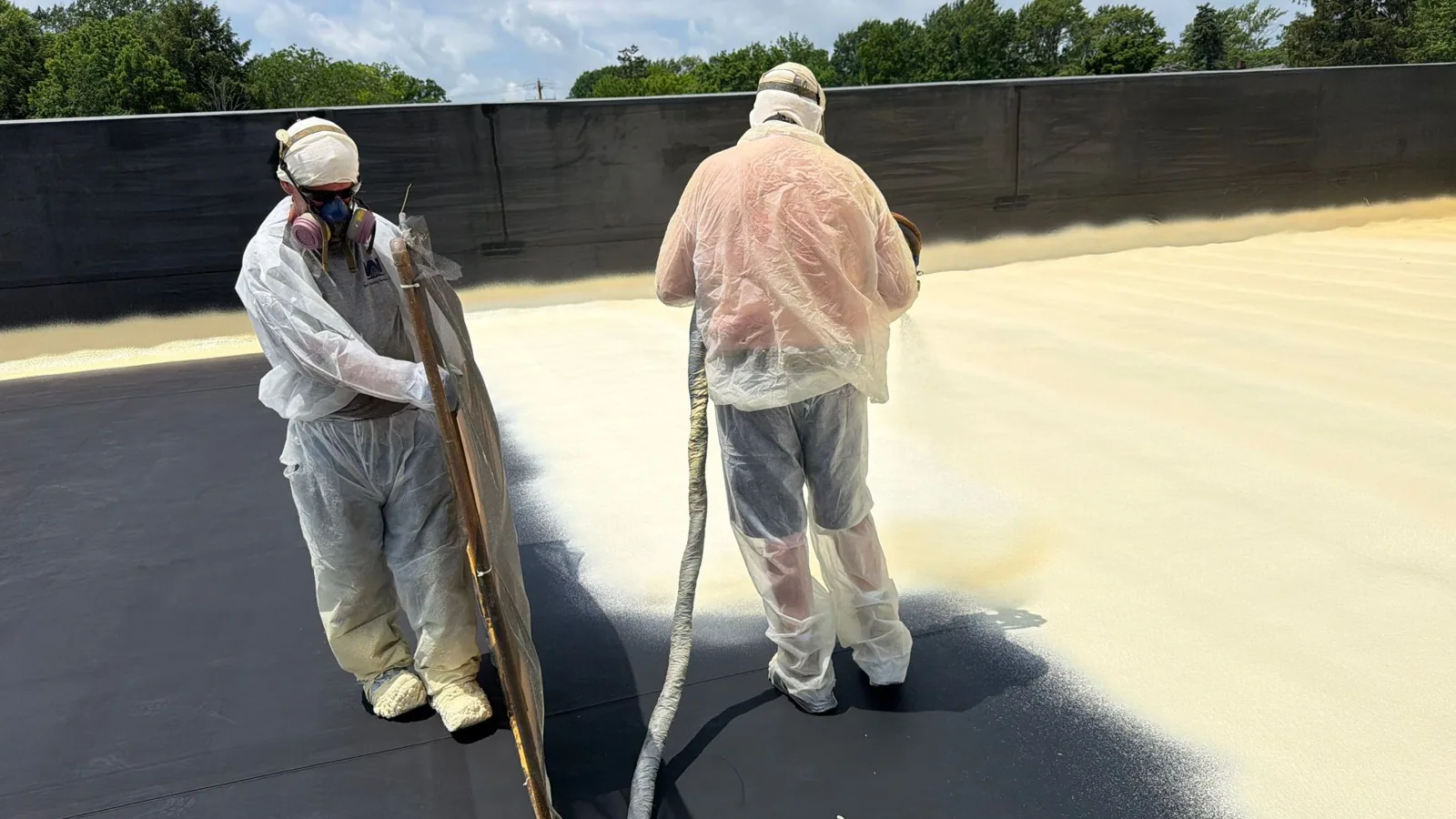
Repair Boundary: Patch, Restore, or Replace
Once the evidence is in, the choice is usually clear. A sound sheet with dry insulation and isolated defects gets repairs at seams, flashings, and punctures, and a seam failure repair is scoped from the probe results. A roof with worn surface but sound seams may take a compatible coating. A roof with extensive open seams, wet insulation, and a brittle sheet is a candidate for a new TPO system or a different membrane.
We write the boundary into the scope so the owner sees what is covered. After repairs, the same photograph positions are used at the next maintenance visit, and a PVC or EPDM option is raised only when the evidence shows TPO is the wrong fit for the building's exposure.
Emergency leaks follow the same sequence in shorter form: stop the water with a temporary seal that does not contaminate the weld area, photograph the location, and schedule the permanent repair after the surface is cleaned and the cause is traced. Crews respond at any hour, so a storm that opens a seam over a stocked bay does not wait for the next business day.
Send the Roof Plan and Leak History
Share roof plans, access rules, leak dates, repair history, equipment changes, and operating-hour constraints. We will inspect the TPO assembly and return a defined scope for repair, restoration, or replacement.