Use infrared roof imaging as a screening tool, confirm suspect zones, and set a defensible repair boundary for North Las Vegas properties.
An infrared survey can highlight roof areas that release heat differently from neighboring surfaces. That pattern can help select locations for follow-up testing, but it does not prove that insulation is wet. Solar gain, shade, stored heat, membrane type, moisture, and the timing of the scan all influence the image. We plan the survey for the assembly and decision at hand, then pair suspect areas with confirmation before they define removal or repair limits.
The National Weather Service describes the Las Vegas Valley's summer monsoon conditions as including gusty winds and brief heavy rain. That regional context helps place reported water events on a timeline; it is not a property diagnosis. For a facility in the broad North Las Vegas Industrial Lands planning area, map any suspect image to a roof zone and compare it with interior observations. If an active leak is involved, a water-path investigation should connect the scan to the room report.
Choose the question the scan must answer
Infrared work is most useful when the owner needs a screening map before opening a roof, comparing several zones, or locating areas for a controlled test. Define the building, roof level, recent weather, operating schedule, and records available. Note whether the objective is a leak investigation, a planned repair, due diligence, or a broader condition review. A scan designed for one decision may not support another; say what evidence the next step requires before collecting data.
Confirm the roof construction and the method planned for capture. A membrane over multiple layers can retain heat differently from a single-ply assembly. Reflective metal, coatings, rooftop equipment, and shaded areas create their own patterns. If system records are missing, make that uncertainty part of the scope. The scan should identify candidate zones and the reason they were selected, not imply that an image alone found a defect.
COMMERCIAL ROOFING IN NORTH LAS VEGAS, NEVADA
Set the survey window
Thermal contrast depends on heat entering and leaving the roof. A scan may be scheduled after a suitable period of solar loading and cooling, with the exact window determined by the roof, weather, and instrument method. Cloud cover, wind, recent rain, interior heat, and equipment operation can change the result. Record the conditions and time so a reviewer understands why one zone appears different from another.
Summer heat exposure in North Las Vegas makes safe access and instrument limits part of the plan. Avoid assumptions based on a calendar alone; verify current conditions and roof-surface temperature. A scan should not proceed if wind, lightning, glare, or access restrictions make it unsafe or unreliable. The work lead can choose another date or use a different inspection method when thermal contrast is not adequate.
Map each image to a roof zone
Divide the roof into zones tied to plans, grid lines, drains, parapets, curbs, and equipment. Capture a reference view for each area and preserve location labels with the thermal images. A color pattern without a roof-plan reference is hard to test later. Mark exclusions such as shadows, reflective transitions, exhaust discharge, or standing water, and note any roof area that could not be seen.
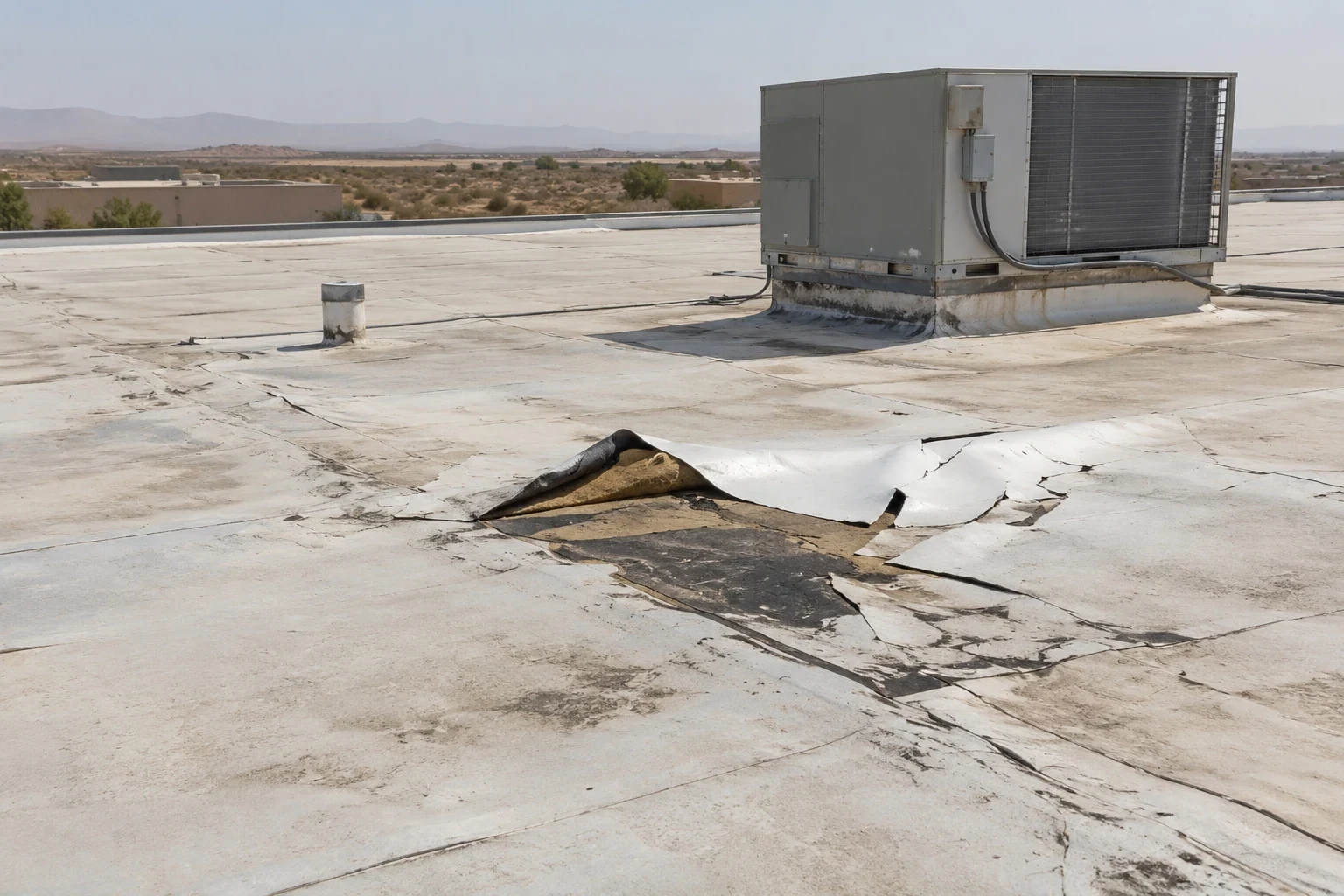
Compare thermal images with visible-light photographs and the building's reported leak locations. A suspected warm or cool region may be caused by moisture, a change in construction, stored heat, or an obstruction. Inspect the surrounding seams, penetrations, and drainage path before selecting a confirmation point. For a roof near Cheyenne Technology Corridor, use the site contact's building IDs and access rules rather than assuming a common roof layout across neighboring properties.
Confirm before setting a repair boundary
Choose confirmation points where the scan pattern and other evidence meet. A controlled test cut can expose the layers and allow direct observation or moisture measurement, but only when the owner authorizes the opening and the repair detail is planned. Record the exact roof zone, dimensions, observed material, and what was found beneath the surface. If testing does not confirm moisture, revise the map instead of carrying the initial interpretation into a removal scope.
Other methods may suit the roof better. Capacitance readings, core samples, visual review, or an interior leak trace answer different questions. The assembly, substrate, coatings, and conditions affect selection. A hands-on roof inspection can verify visible conditions around a candidate area. The owner should understand which findings are confirmed, which remain probable, and what additional access or test is needed before approving work.
Use local weather as context, not diagnosis
Monsoon rain in the broader valley can arrive in short bursts with gusty winds. When a property reports water after one of these events, record the time, affected rooms, and whether the roof was scanned before or after rain. Wet surfaces, wind-driven water, and retained heat can affect image interpretation. A regional climate description helps plan and qualify the survey, while the roof assembly and confirmed test points establish the finding.
The city's 2006 comprehensive-plan framework names Downtown as a broad planning area inside North Las Vegas. That historic map is not current zoning. The Downtown service area and other districts describe broad coverage only. A property's access, roof construction, and operations must be confirmed with its own records and facilities contact before an infrared visit.
Write the result so another reviewer can follow it
The report should include the question, capture method, date and conditions, roof plan, zone labels, visible-light and thermal imagery, excluded areas, and confirmation results. Mark each candidate zone as untested, tested with moisture confirmed, or tested without confirmation. Describe how the survey affected the next decision and identify records or access still needed. Avoid a single red or blue image without the scale, reference view, or explanation that supports its interpretation.
Show where a test opening was closed and photograph the tie-in. If water entry is ongoing, identify any temporary control separately from permanent repair. Connect the survey record to the work order so later staff can compare recurring symptoms with the same roof zone. A condition report can carry the verified findings into maintenance and capital planning without converting unconfirmed scan patterns into repair facts.
Prepare the roof and records
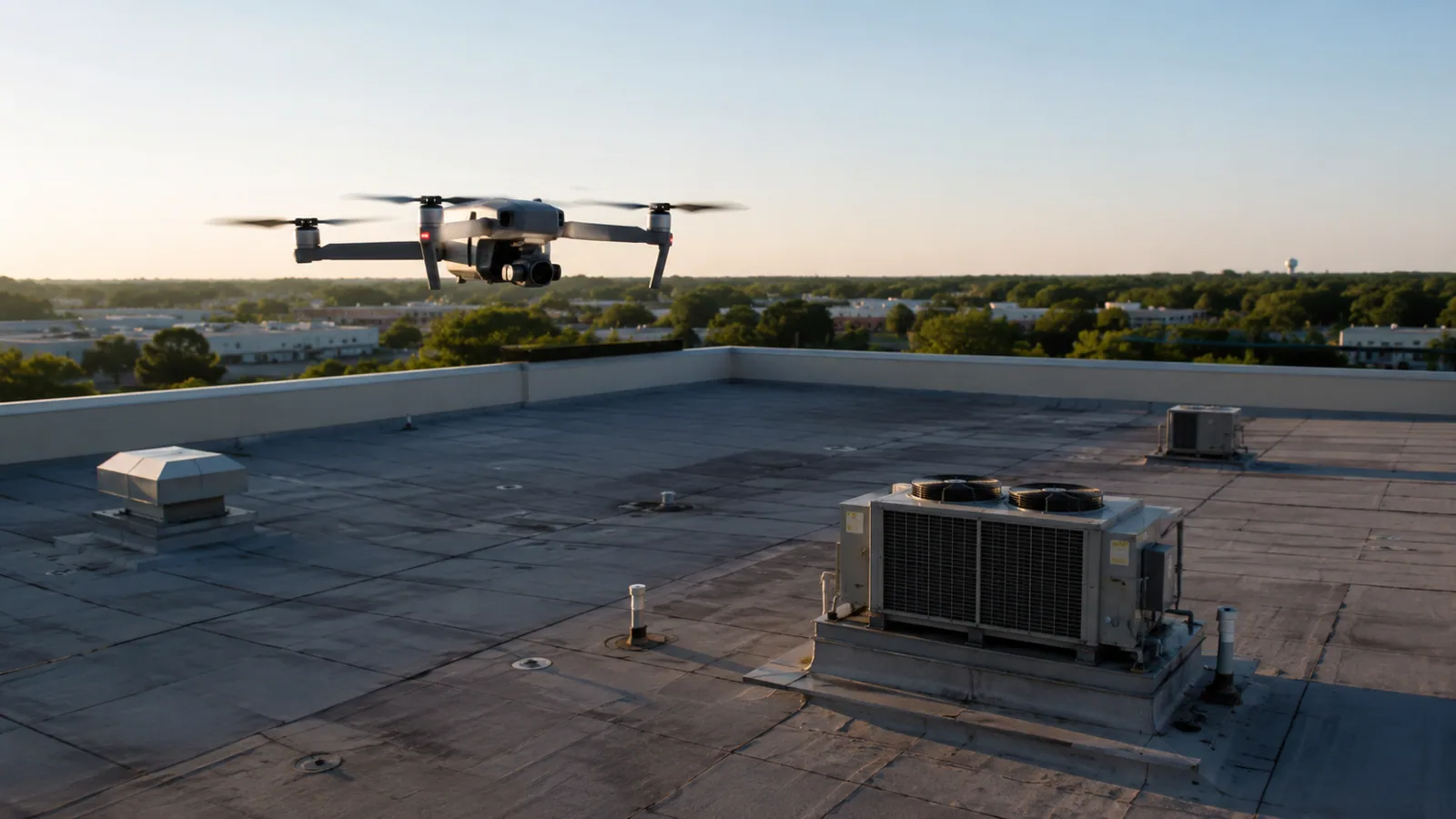
Share roof drawings, known system layers, coating history, leak dates, interior photographs, access rules, and the purpose of the survey. Identify the person who can approve a test opening and the areas where operations cannot stop. If roof records are incomplete, tell us what is unknown before the visit. We can decide whether infrared is suitable or whether a hands-on review, aerial imagery, or another method better fits the question.
Commercial roofs in the wider North Las Vegas area include varied assemblies and operating conditions. We coordinate access, document the survey window, and connect each candidate zone to a confirmation plan. The report will state what the scan can support, what a test verified, and where the owner should direct follow-up. For urgent water entry, our emergency response is available around the clock, every day and on holidays; an infrared scan can follow when the roof and conditions are suitable.
Commercial Roofing Questions
Does an infrared roof survey prove insulation is wet?
A thermal pattern can identify a candidate area, but shade, stored heat, roof construction, surface condition, and weather can create similar differences. Confirm suspect zones with a method suited to the assembly before setting a removal boundary.
When should infrared roof imaging be scheduled?
The survey window depends on solar loading, cooling, wind, cloud cover, rain, and roof construction. The inspector records capture conditions and may reschedule if the expected thermal contrast or safe access is not present.
What roof types can be surveyed?
Many roof types may be candidates, but assembly layers, reflective surfaces, coatings, equipment, and prior overlays affect interpretation. Provide system records when available so the survey method and limits can be selected before capture.
What confirms a suspect infrared area?
A controlled opening, moisture measurement, or another suitable test can check the layers directly. The owner should authorize the method and repair closure in advance. The report records the exact zone and whether the test confirmed the scan interpretation.
Can a survey locate every commercial roof leak?
No. A leak can travel beneath the surface or come through a flashing, wall, or penetration that does not create a distinct thermal pattern. Compare images with interior reports and field observations, then use the right test to trace the source.
More Roofing Detail
Request a qualified infrared survey
Send roof plans, system records, leak dates, and the decision the scan should support. We will confirm suitable timing, safe access, and the test plan for suspect areas.