
Wind Damage Roof Repair
Wind damage roof repair in North Las Vegas, NV: edge metal, lifted membrane and fastener checks, with documented findings and storm-ready repairs.
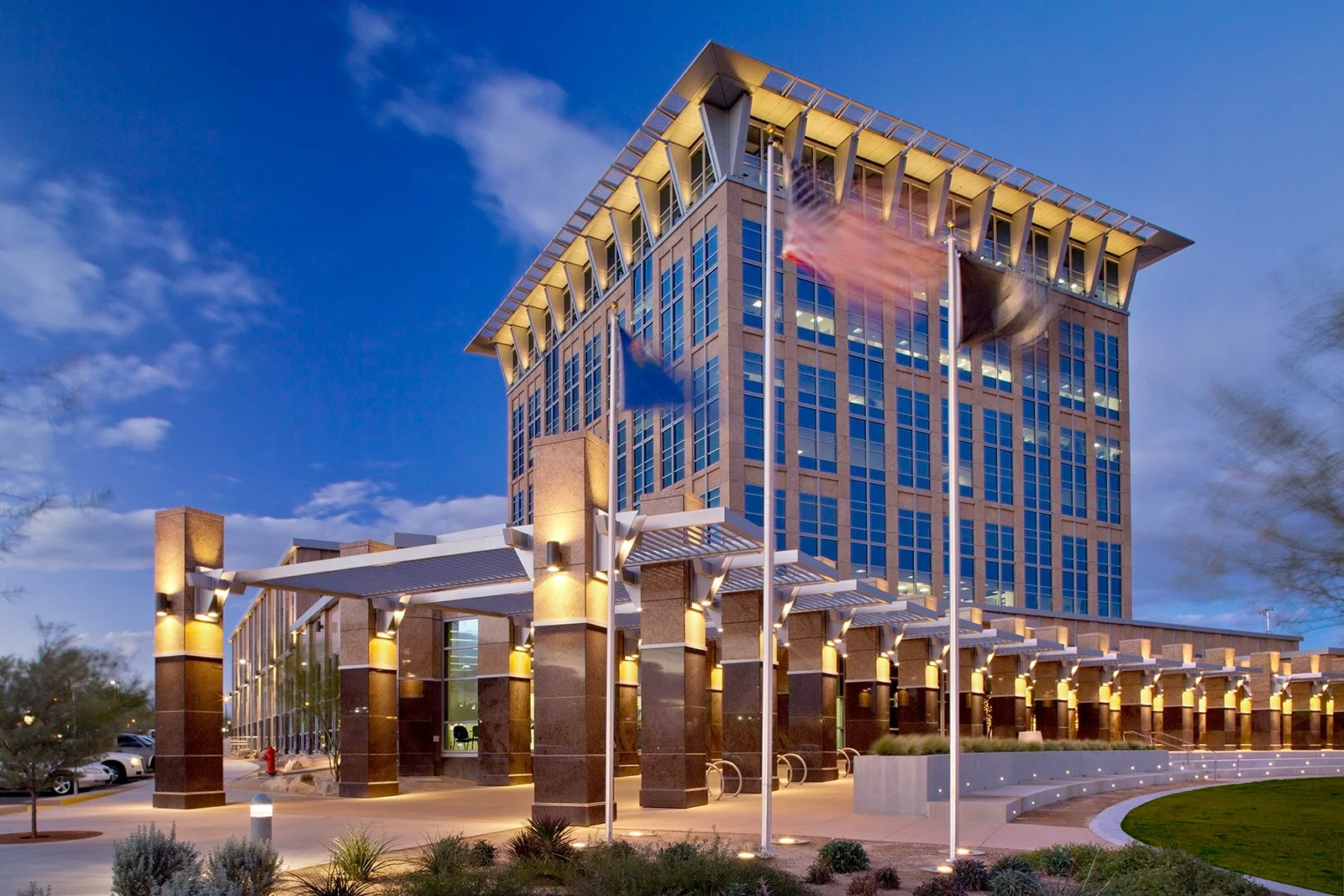
Damage on a roof can be fresh, old or both, and the repair depends on telling them apart. A torn edge after a gust, a seam that opened over several summers and a puncture left by an equipment visit can look alike from the ground. In North Las Vegas, NV the first step is to document where the damage sits, what surrounds it, and what has to be proved before a repair boundary is drawn.
Select a page for scope, materials and local conditions.
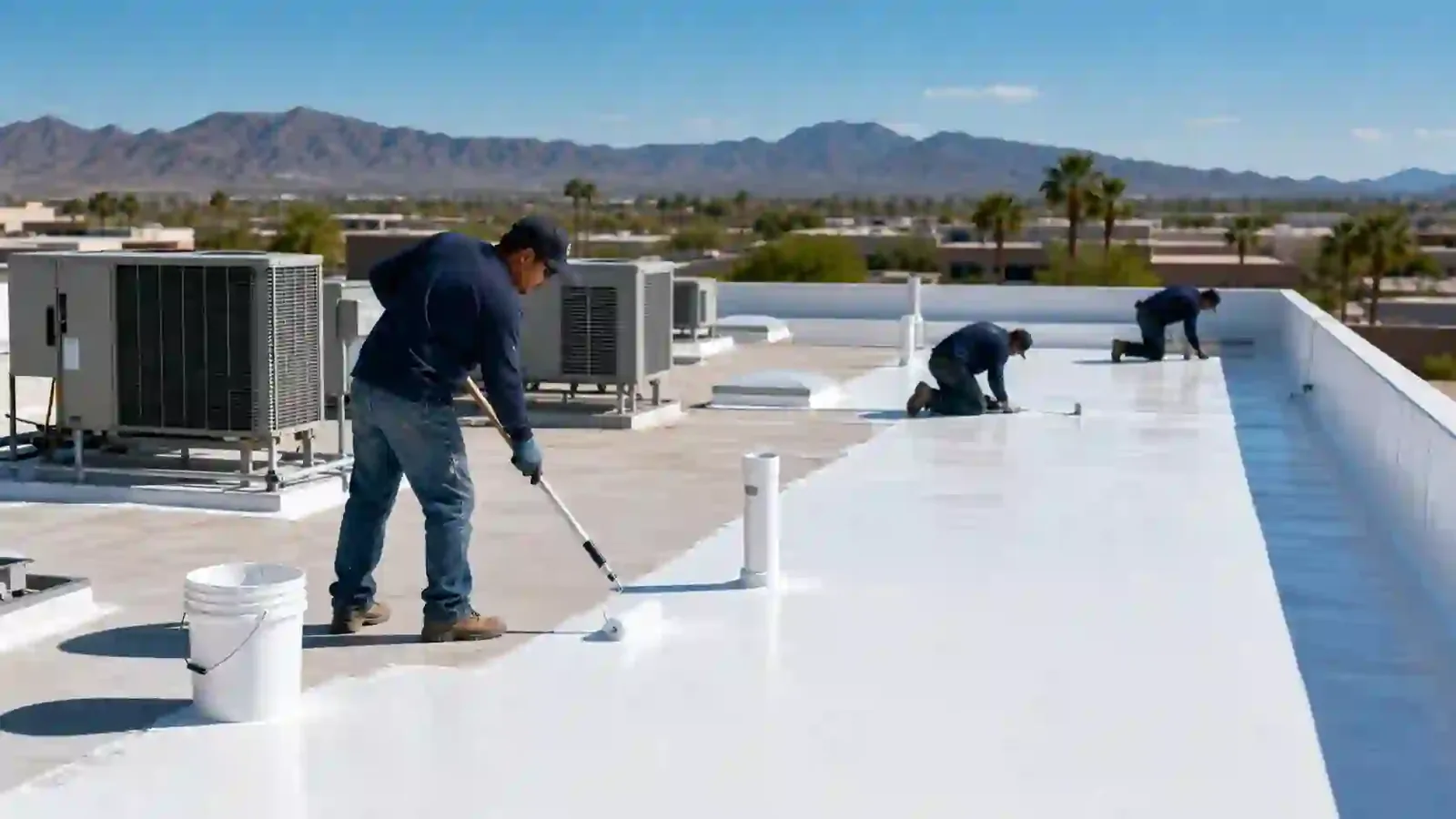
Wind damage roof repair in North Las Vegas, NV: edge metal, lifted membrane and fastener checks, with documented findings and storm-ready repairs.
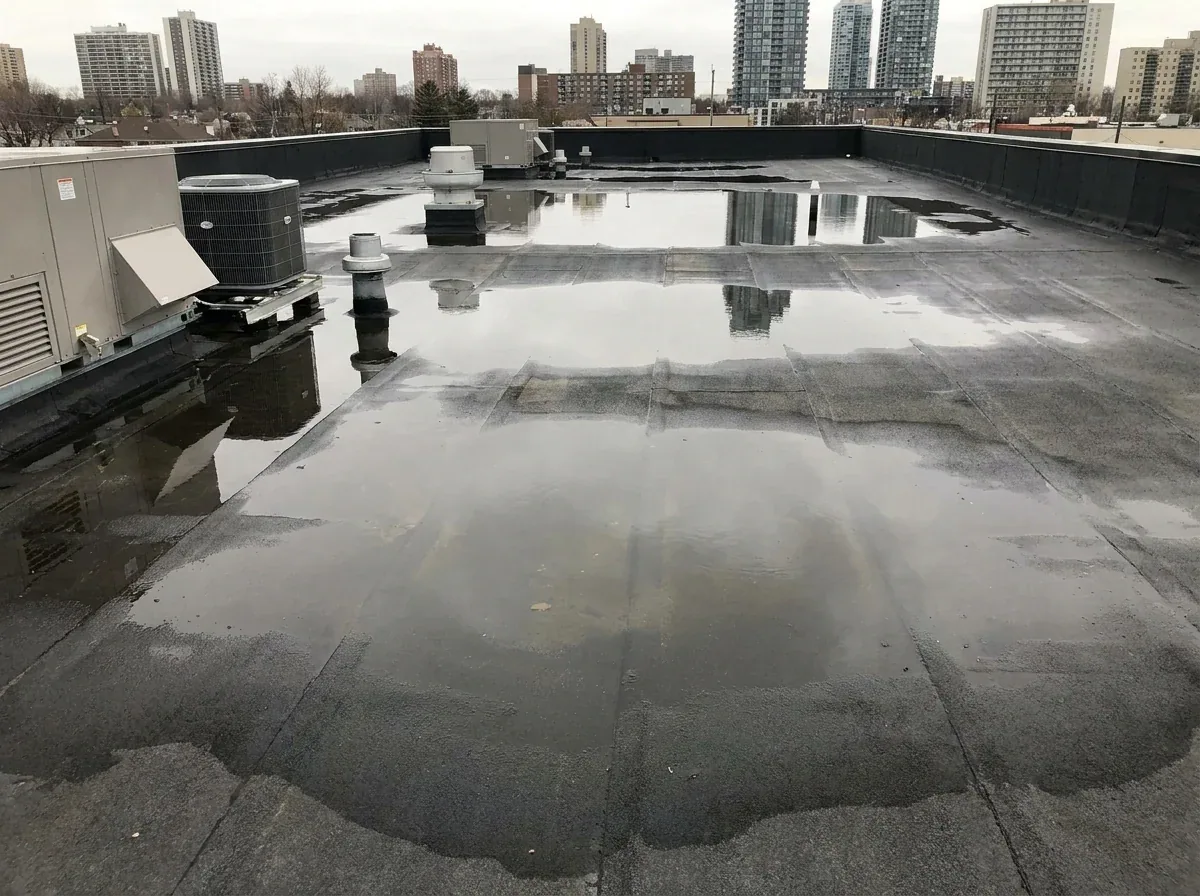
Ponding water roof repair in North Las Vegas, NV: find the cause, correct drainage and protect the membrane before the next monsoon storm.
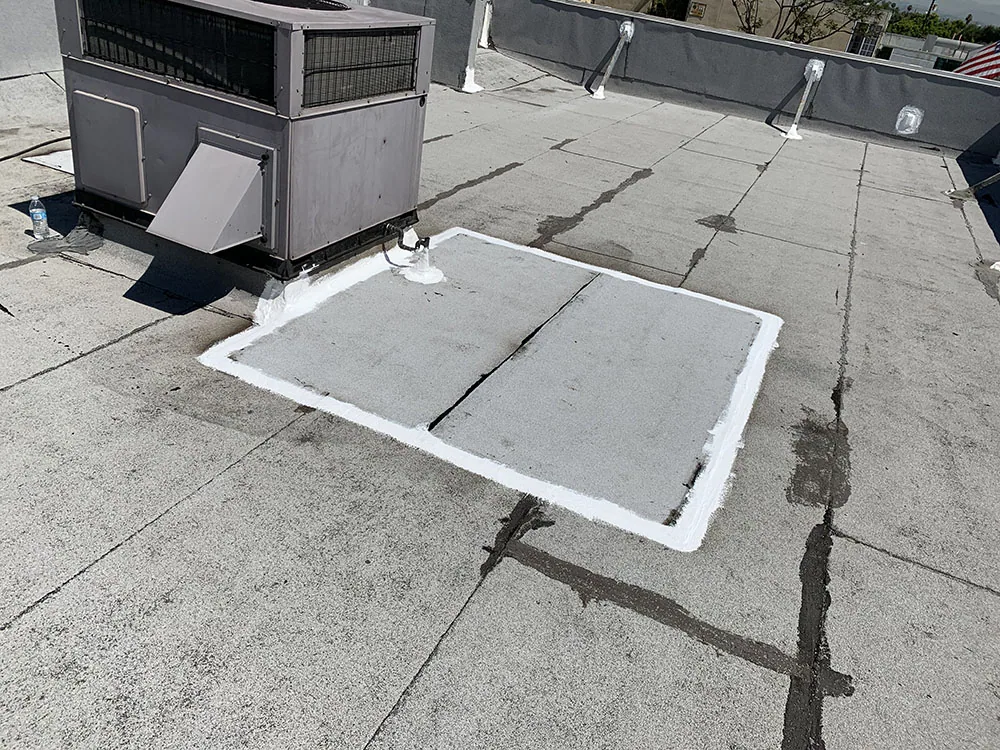
Flashing failure repair in North Las Vegas, NV: curbs, parapets, pipes and skylights diagnosed by cause, then rebuilt with compatible details.
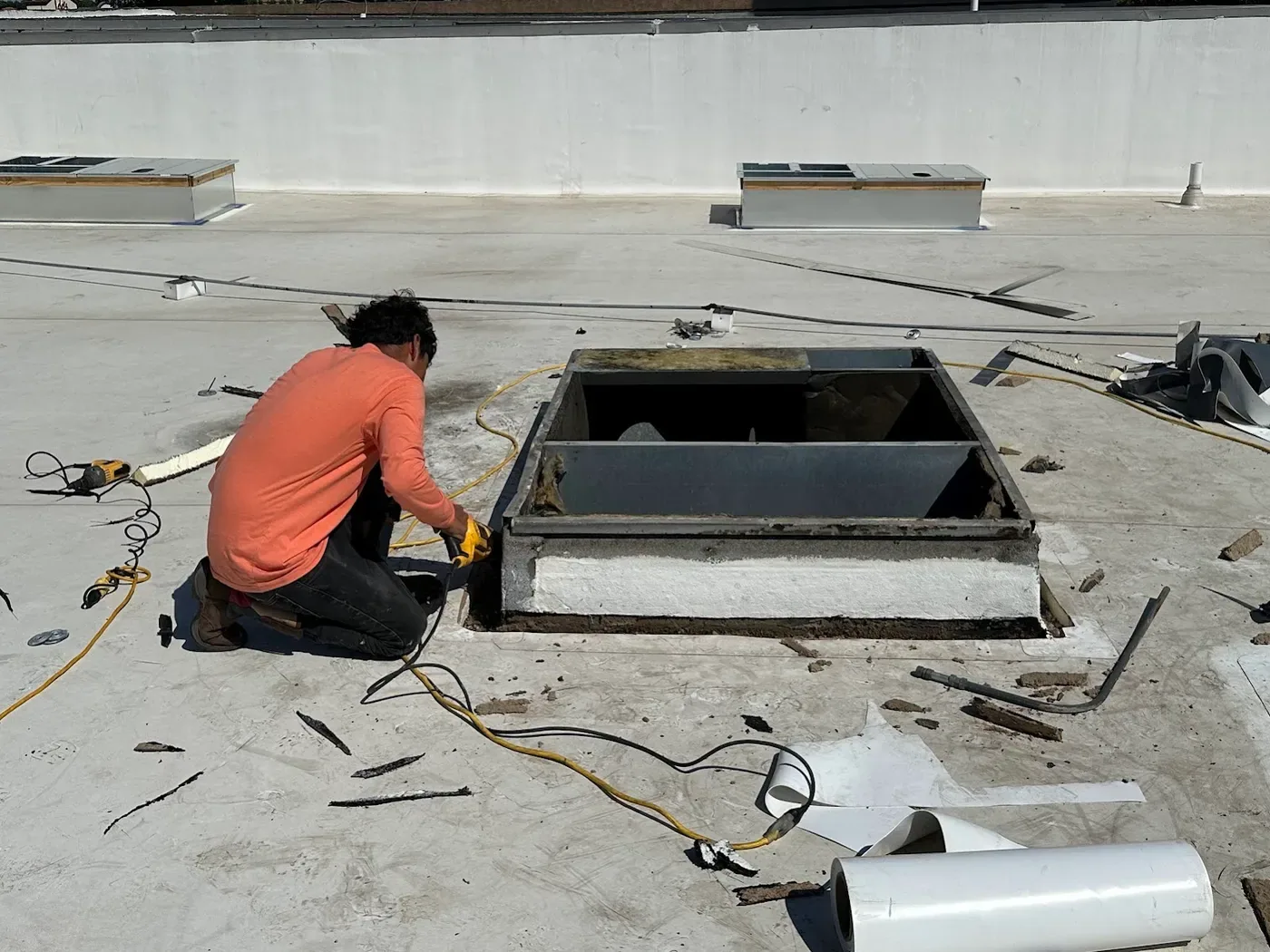
Seam failure repair for split and open roof seams in North Las Vegas, NV, with cause diagnosis, compatible welding or adhesion and moisture checks.
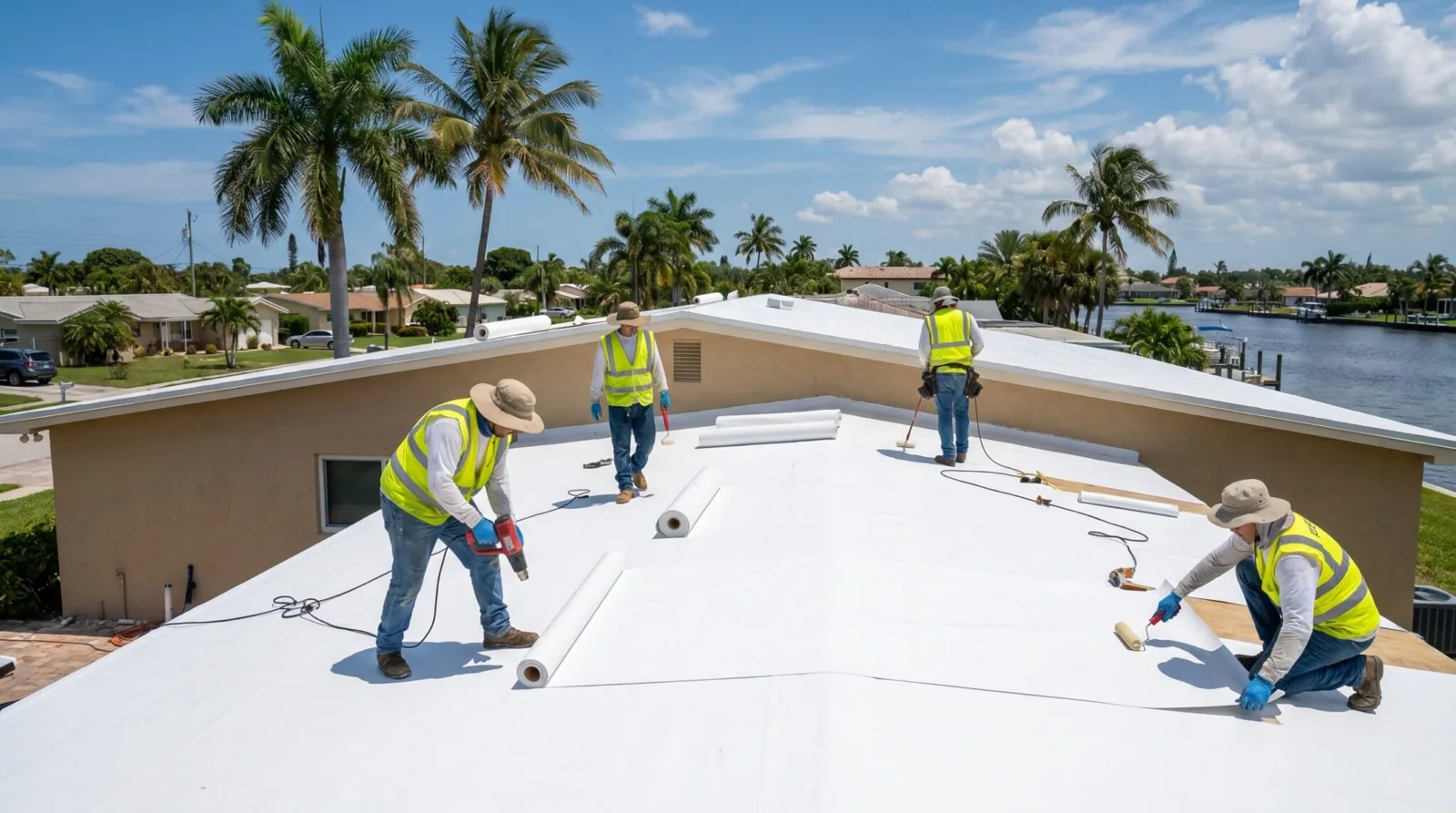
Membrane puncture and foot-traffic damage repair in North Las Vegas, NV: find every hole, test the insulation below and patch with compatible material.
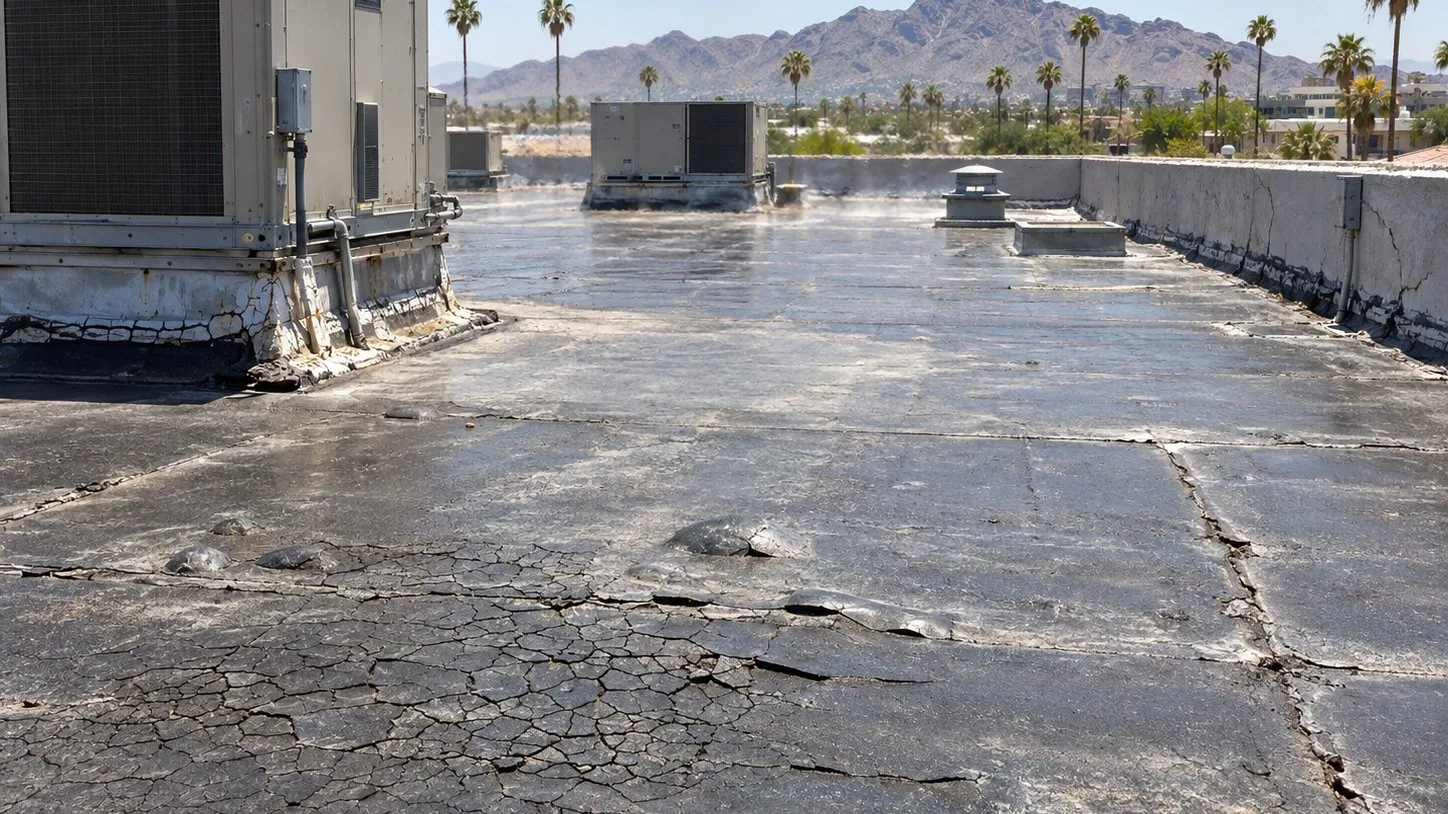
Fire and smoke damage roof repair in North Las Vegas, NV: safe access, deck and insulation checks, temporary dry-in and documented rebuild scopes.
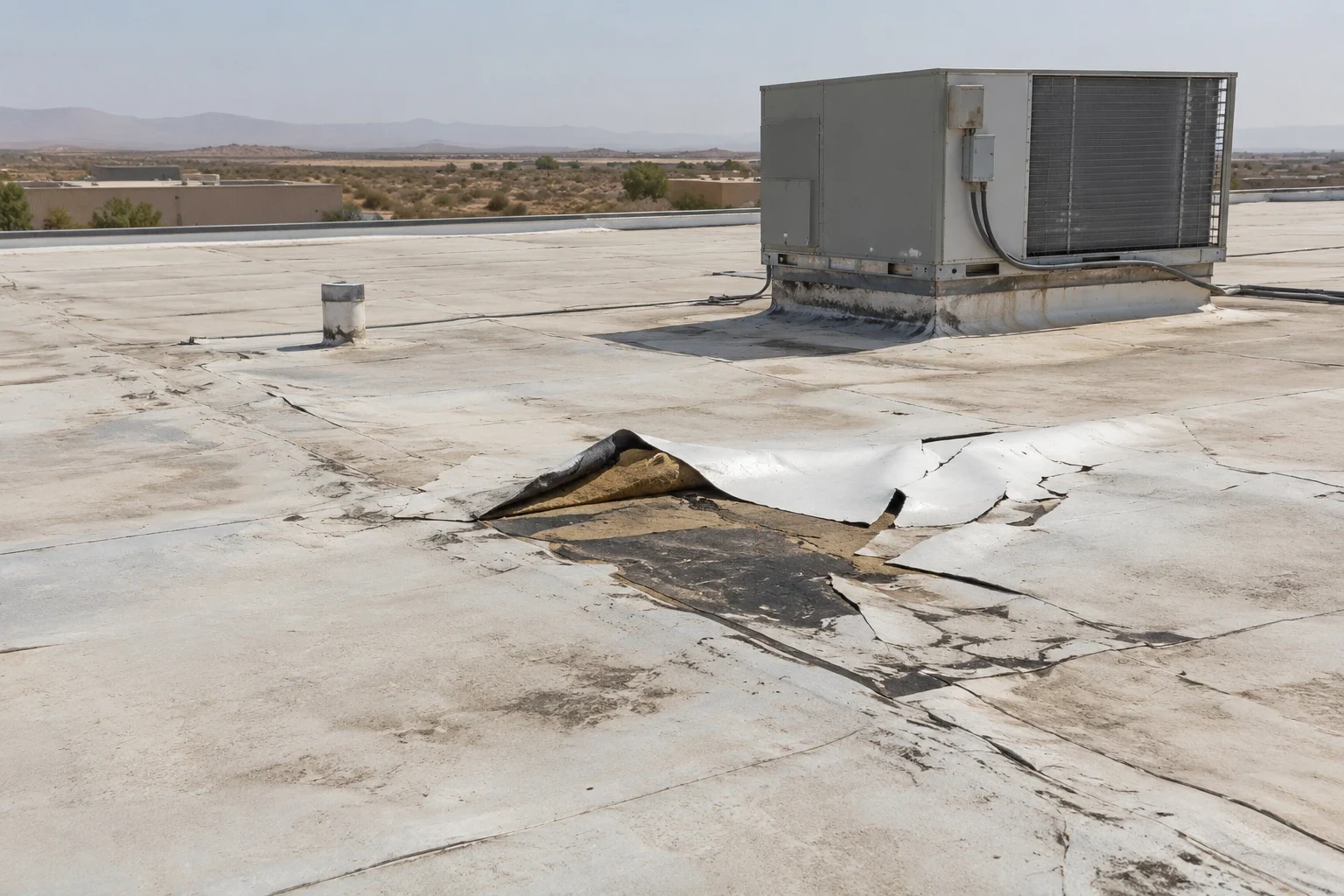
Hail damage roof repair in North Las Vegas, NV: documented impact evidence, moisture checks and repair scopes separated from ordinary wear.
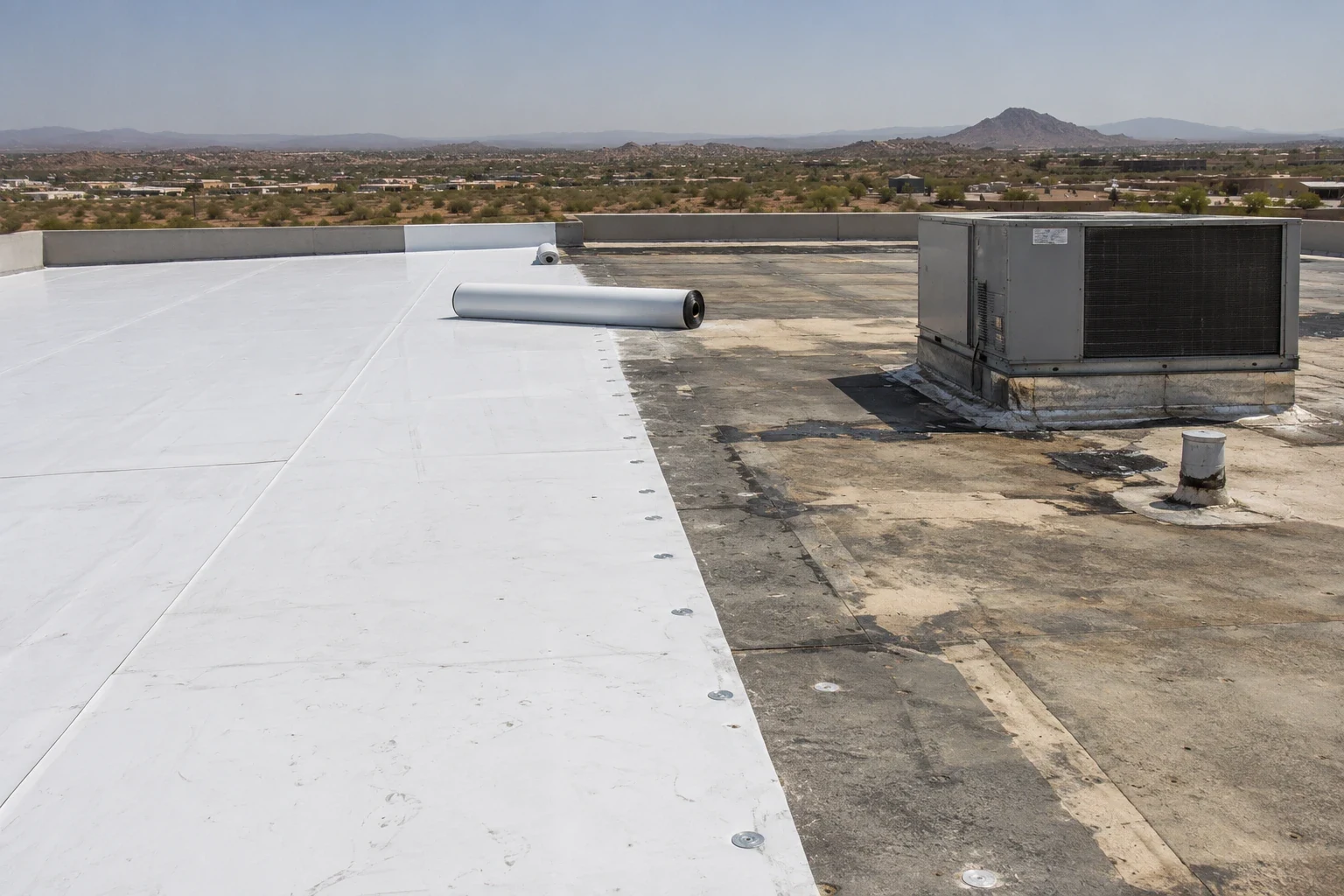
Heat and UV roof damage repair in North Las Vegas, NV: chalking, cracking and shrinkage diagnosed by testing, then restored or replaced on evidence.
Monsoon thunderstorms arrive in July and August, with gusts and heavy rain, and the valley also sees more wind events in spring and fall, the National Weather Service reports. Wind damage roof repair begins at edges, corners and equipment. Sustained sun is its own stressor, and heat and UV roof damage repair records chalking, cracking and shrinkage. Hail is judged from impact evidence on the roof, never assumed, before any hail damage roof repair is scoped.
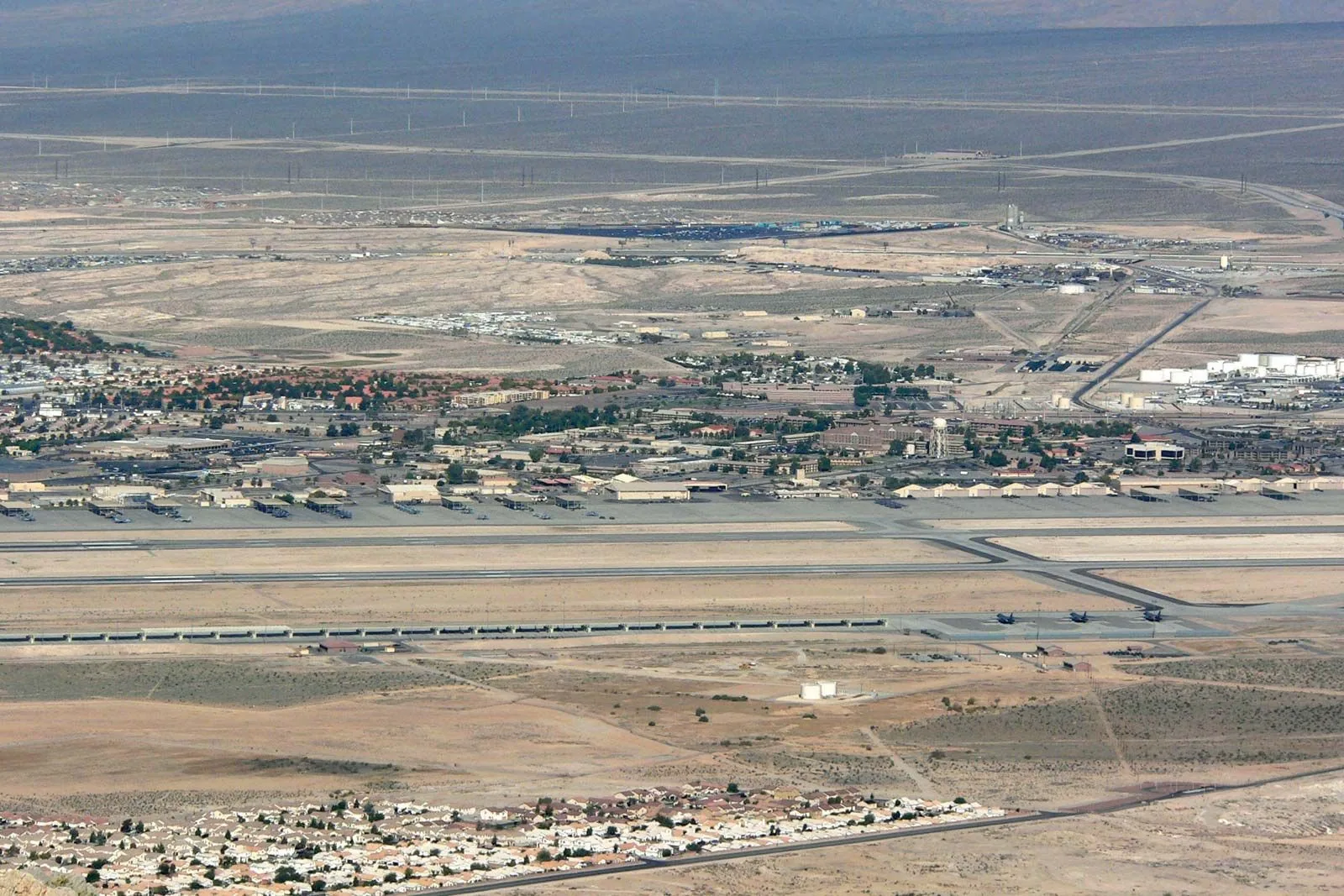
Short, heavy storms leave water on any roof that cannot drain. Ponding water roof repair traces the low point to a drain, a deck deflection or an added curb. Seam failure repair and flashing failure repair address the joints where most entry paths begin, with the surface cleaned and tested before any patch material is set.
Membrane puncture repair covers damage from dropped tools, foot traffic and equipment work, and it checks the insulation below the hole for moisture. Fire damage roof repair starts with a structural and material review before any surface work, because heat can affect the deck and insulation well beyond the visible char.
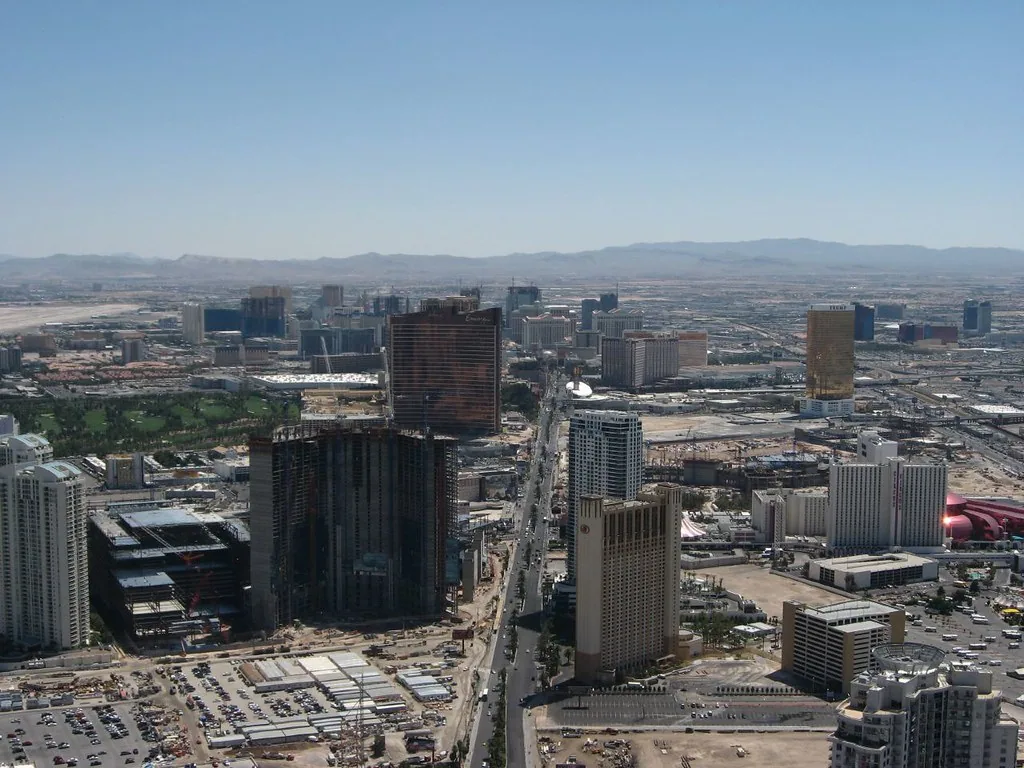
Each repair has a marked boundary on the roof plan, photographs of the exposed layers and a note on any area that could not be inspected. If the same defect appears in several zones, the record compares them before calling it a single failure. Where the evidence points past a local repair, the report says so and recommends a commercial roof inspection or a larger review, and an emergency roof repair secures the roof in the meantime.
Damage calls come from across the valley, including the North Las Vegas Industrial Lands and the Cheyenne Technology Corridor, which are broad planning areas and not a claim about any roof.
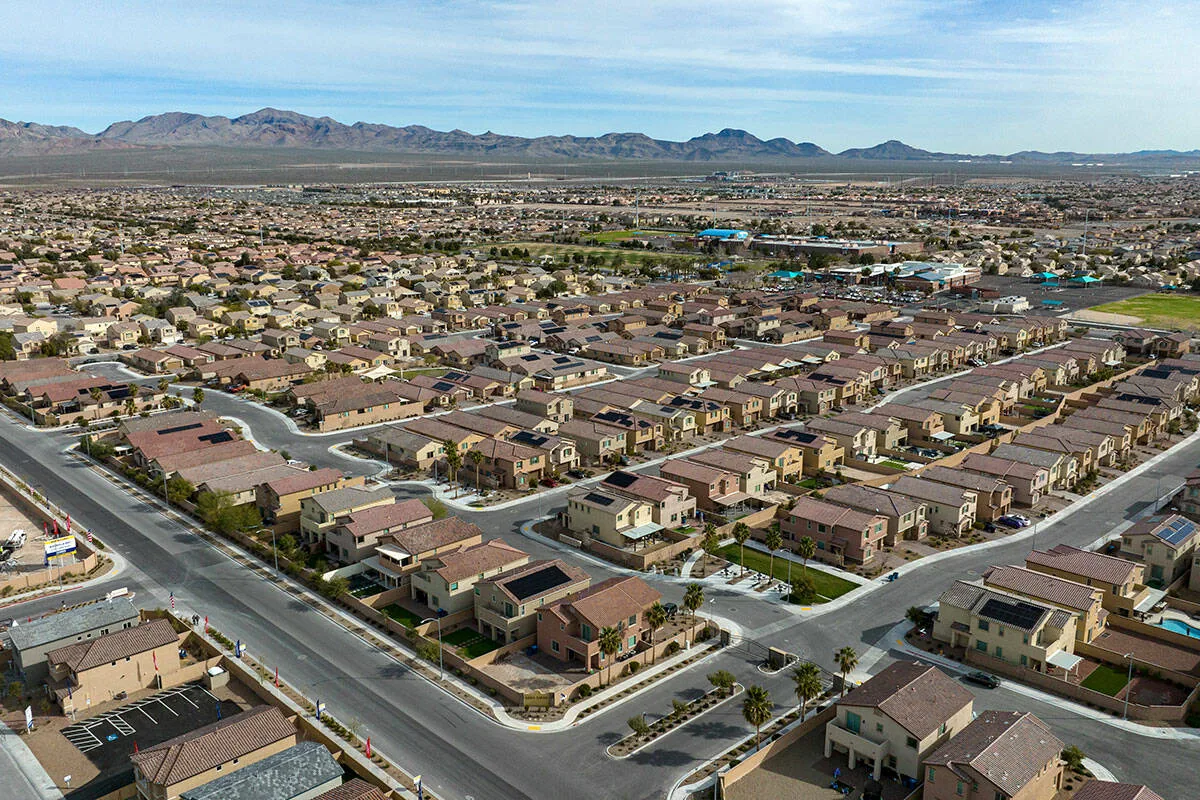
Fresh damage usually has clean edges, a direction and debris nearby, while age shows as chalking, hardened sealant or corrosion. We photograph both and list them separately so the repair and any claim stay accurate.
No. Insulation below the membrane can hold water after the surface dries. An infrared or core check shows whether a repair needs to open the roof.
When wet insulation or deck damage covers a large share of a roof zone, or when the same defect recurs across zones. The report lays out the evidence and the cost drivers for each path.
The open area is sized to what can be sealed the same day, and temporary protection is staged on the roof. If a storm is forecast, the crew leader decides whether to close or hold the section.
Share roof plans, leak dates, photographs and any repair history. We will document the damage and mark a repair boundary the crew can verify.