
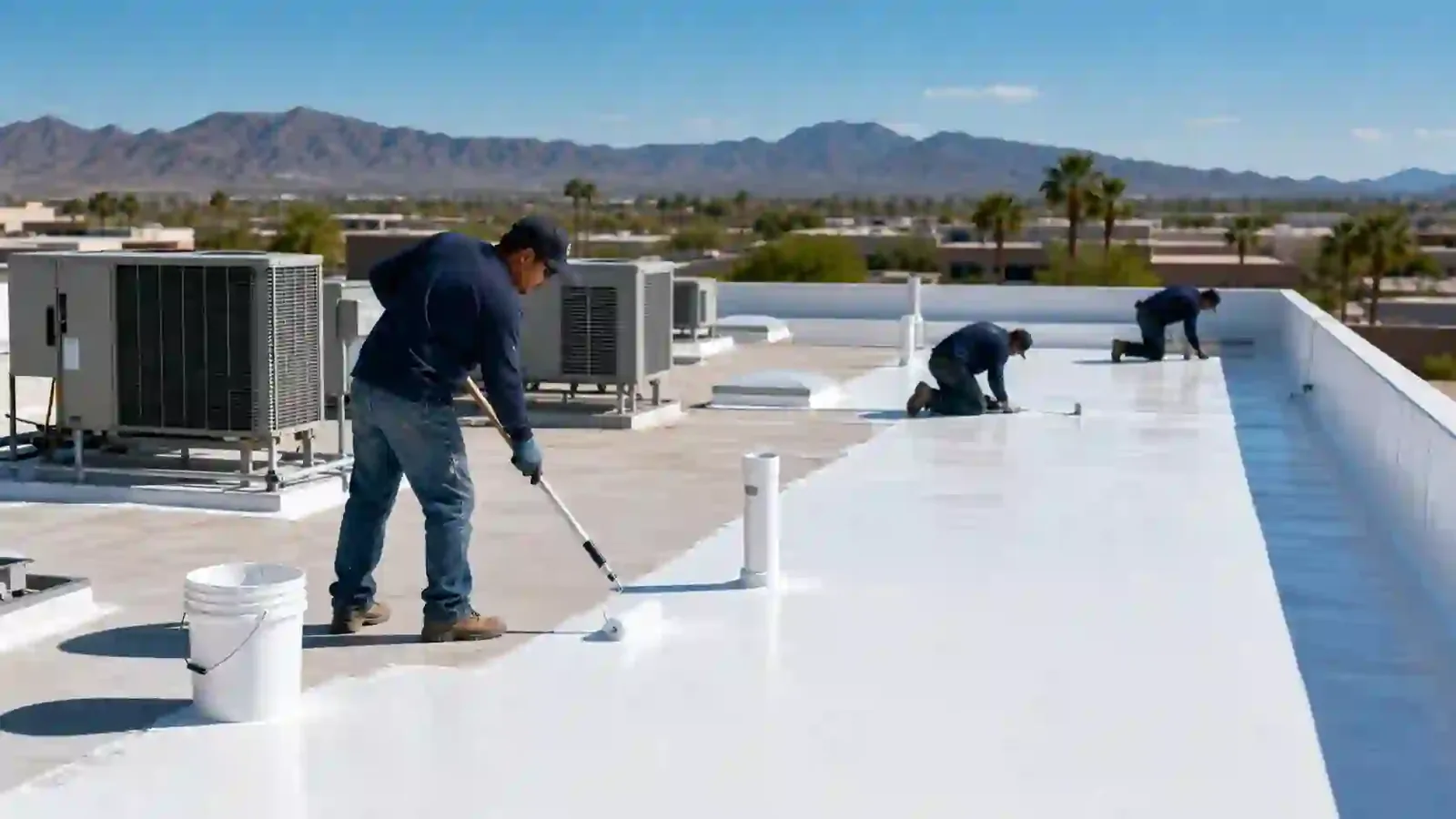
Wind damage roof repair in North Las Vegas, NV: edge metal, lifted membrane and fastener checks, with documented findings and storm-ready repairs.
A strip of edge metal hanging off a parapet and a ripple in the membrane beside it are usually the same event seen in two places, and the repair has to address both. After a wind event on a North Las Vegas, NV roof, the first thing we establish is how far the movement went: whether the perimeter lost its grip, whether the field membrane lifted and whether water has entered along the path. That decides whether the repair is a reset, a replacement of damaged sections or a broader review of the attachment.
Spring and fall are when wind events show up most in the valley, and gusts over 50 mph, though uncommon, drive blowing dust and sand across the deck. We treat that as regional exposure context. It does not tell us whether a particular roof was damaged, so every repair starts with what the roof shows: displaced metal, torn laps, loosened fasteners and debris pinned against walls.
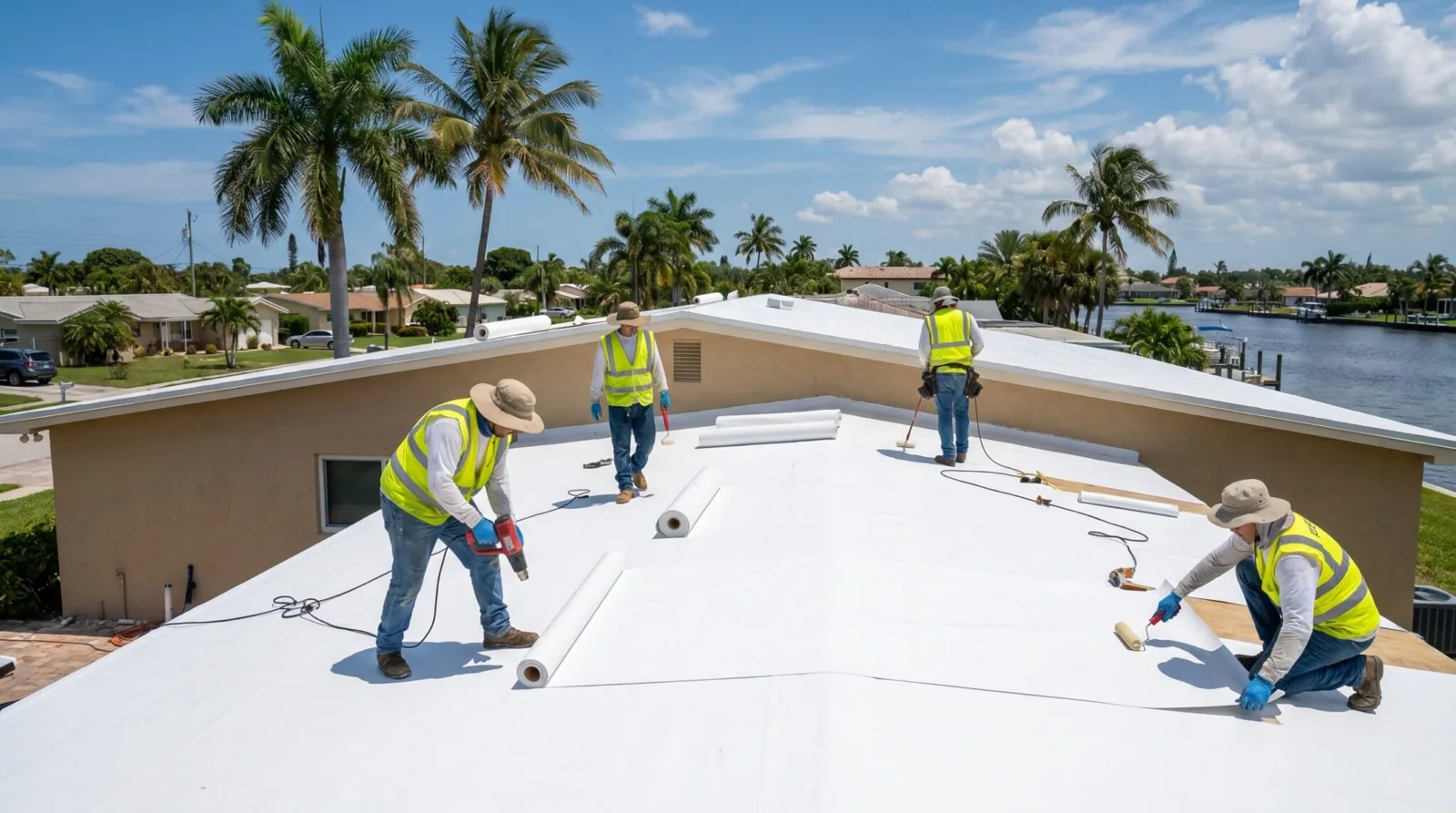
First hour: make the roof safe and weathertight
Loose edge metal, torn membrane and lifted flashing are hazards below as well as water paths. We secure what can move, cover open areas with temporary protection and photograph conditions before and after. Debris on the roof is cleared from drains so a rain on top of a wind event does not add a second problem.
If occupied space sits below, we check ceilings and walls for water and report findings to the building contact. An emergency roof repair visit can happen at any hour, holidays included, and the temporary measures go into the record with materials and areas covered. Permanent repair is scheduled once the extent of damage is known and the weather window allows.
Commercial Roofing Questions
What decides whether wind-lifted membrane can be reattached?
Whether the membrane is intact, the insulation is dry and the attachment can be restored to a sound state. Torn or stretched membrane and wet insulation push the repair toward replacement of the affected section. Moisture testing and a pull test confirm the case.
Why replace edge metal instead of re-fastening it?
Bent or cracked metal does not seat properly, and re-fastening into a loosened substrate rarely holds. We replace damaged sections, add cleats where the original detail was light and reseal the joints. That protects the membrane termination.
How soon after a wind event should the roof be inspected?
Soon, because debris, loose metal and open edges can allow water entry with the next rain. A quick walk secures hazards and records conditions. A fuller inspection follows once the first protection is in place.
Can wind damage show up months later?
Sometimes. A loosened edge or partially lifted seam can fail under a later storm or heat cycle. If you suspect an earlier event, we compare current conditions with prior photographs, where they exist, and report what the roof shows.
Do you handle wind emergencies at night?
Yes, night calls and holiday calls get the same crew response. They secure the roof, document damage and plan the permanent repair with the owner.
What drives the price of a wind repair most?
Linear feet of damaged edge metal, area of torn membrane and whether insulation beneath is wet. Access and temporary protection add cost. We price each element separately so the owner sees where the money goes.
More Roofing Detail
COMMERCIAL ROOFING IN NORTH LAS VEGAS, NEVADA
Perimeter: check the edge metal and its attachment
Wind lifts hardest at corners and edges, where air separates from the building and pulls upward on whatever is fastened there. The perimeter metal is the roof's first line: coping, drip edge, gutters and fascia. We look at joints that have opened, cleats that have bent or pulled out, fasteners that have backed out, sealant that has split and any gap between the metal and the wall.
When metal has moved, the membrane beneath it is at risk, since flapping tears the termination and lets water behind. Our edge metal, coping and gutter work replaces damaged sections, restores or adds cleats and resets the membrane termination so water sheds off the edge. If the original attachment was light for the exposure, we recommend a heavier detail rather than putting back what failed. Photograph edge metal, loose fasteners and displaced membrane before temporary securement, so the permanent repair scope starts from a dated record.
Field: look for lifted membrane, torn laps and fastener failure
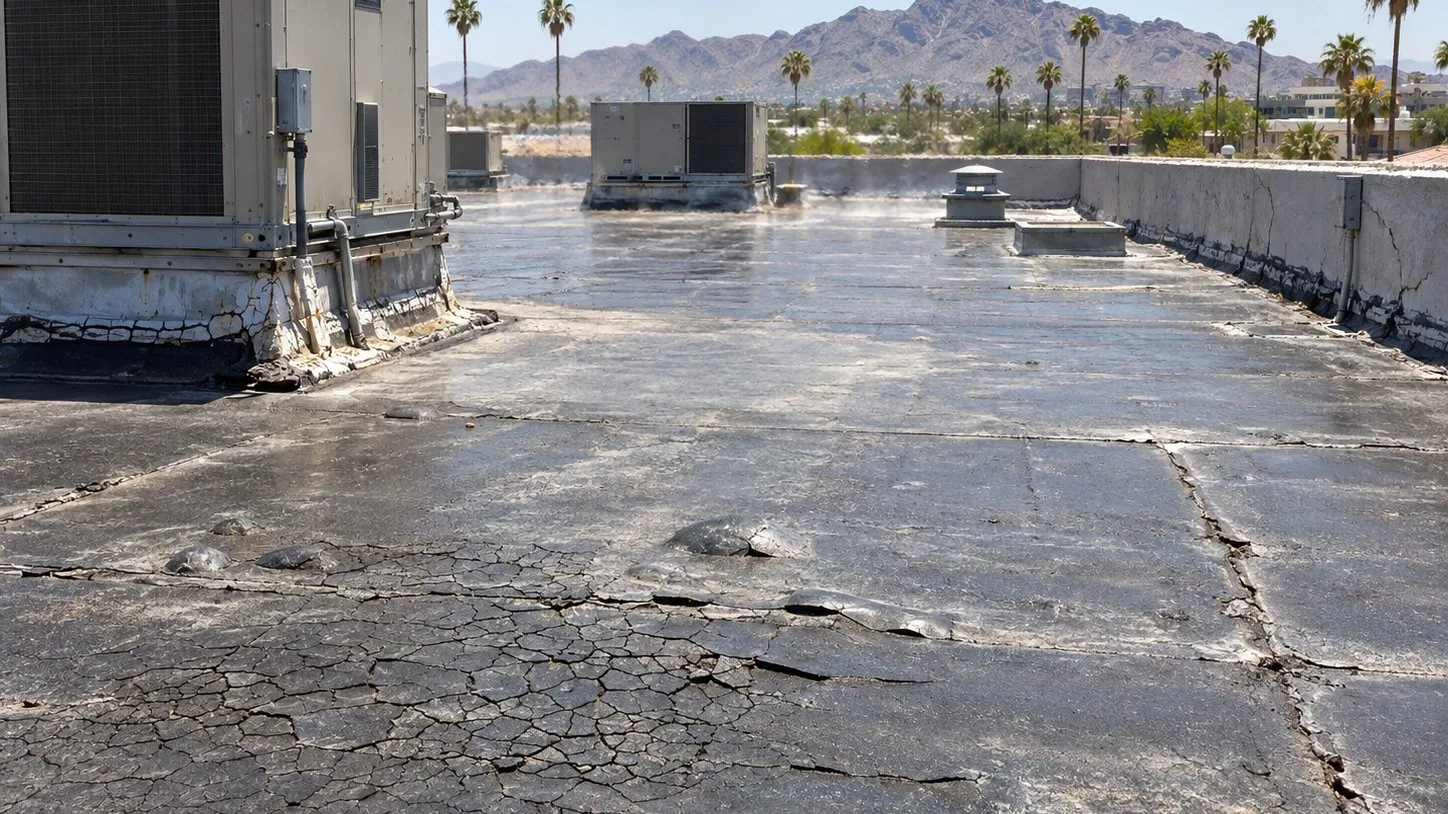
Inside the perimeter, wind damage appears as billowing or ripples, torn seams, sheared fasteners and areas where the membrane has peeled back from its attachment. We walk the field in a grid, probe suspect laps and check fastener rows for backing out or pull-through. On ballasted roofs, we look for displaced stone and scoured areas; on adhered roofs, we look for blisters that have opened.
Wind often finds the weakest earlier repair, so old patches and previous seams are worth special attention. We photograph each defect with a position mark and test suspect areas for wet insulation. A lifted section that has not leaked can sometimes be re-secured, while one that has been torn and has taken water needs replacement of the membrane and wet insulation beneath it. The report states which case applies to each zone.
Penetrations and rooftop equipment: confirm nothing shifted
Wind can move lightweight equipment covers, vent caps, skylight domes and unsecured stacks. We inspect curbs, flashing at pipe penetrations, equipment panels and any item that has shifted from its original position. A displaced cover can leave an opening that rain enters hours later, so these checks matter even when the field looks sound.
Where flashing has been pulled or sealant disturbed, a flashing failure repair restores the termination. Where the membrane has torn near a support, a membrane puncture repair may be the right size of fix. We keep the repair boundary tight to the confirmed damage and say so when a wider review is justified by the pattern.
Cost and timing: what moves the repair
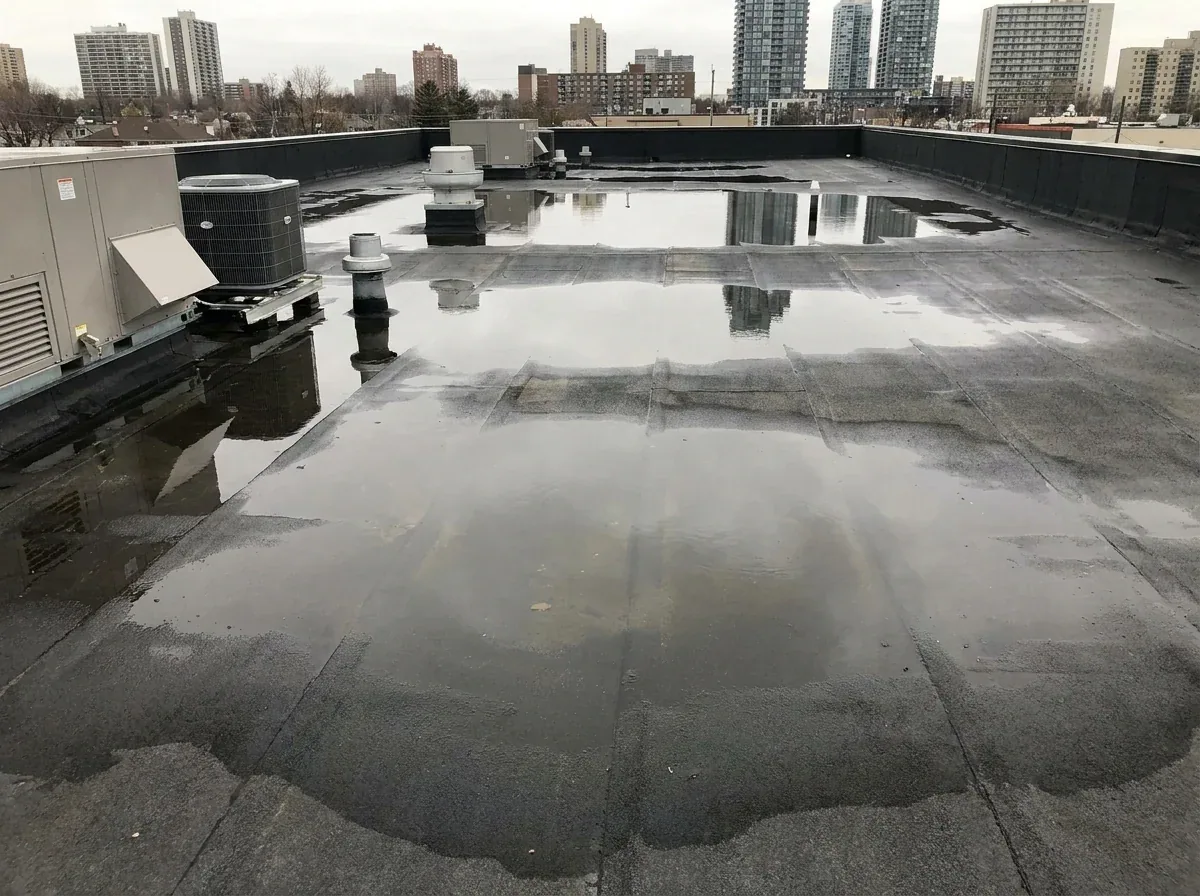
Wind repairs range from a few feet of reset coping to replacement of a torn field section, and the price follows the confirmed damage. The main drivers are the length of perimeter metal affected, the area of membrane that must be replaced, whether insulation is wet, the height and access of the damaged areas and the cost of temporary protection while materials are on order. A single large tear on a clean, dry roof is usually simpler than scattered small tears across a roof with old patches.
Timing depends on weather, material lead times, permits where required and the approval path. Dry-in comes first, since a roof with open edges is exposed to the next storm. We schedule permanent work in sections that can be closed the same day and keep temporary protection on site until the final section is done. Where the carrier or owner needs a scope before work starts, we deliver the findings and pricing as separate items, so approvals can move quickly.
After the repair: reduce the chance of a repeat
Repair restores the roof; prevention changes the next event. A review of the attachment pattern, the edge detail and the condition of older fasteners shows whether a stronger perimeter, additional fasteners or a different edge profile would help. Dust and sand carried by high winds also clog drains, so we add a post-wind drain check to the maintenance routine.
For buildings in planning areas such as the Apex Industrial Area or the Northern Development Area, the same inspection applies, and the walk records how the building and its surroundings affect exposure. A preventive roof maintenance plan adds seasonal checks before the spring and fall wind periods.
Tell us what moved
Describe the loose metal or lifted membrane and send roof plans, the date of the event and photographs if you have them. We will secure the roof and document what the wind did.