
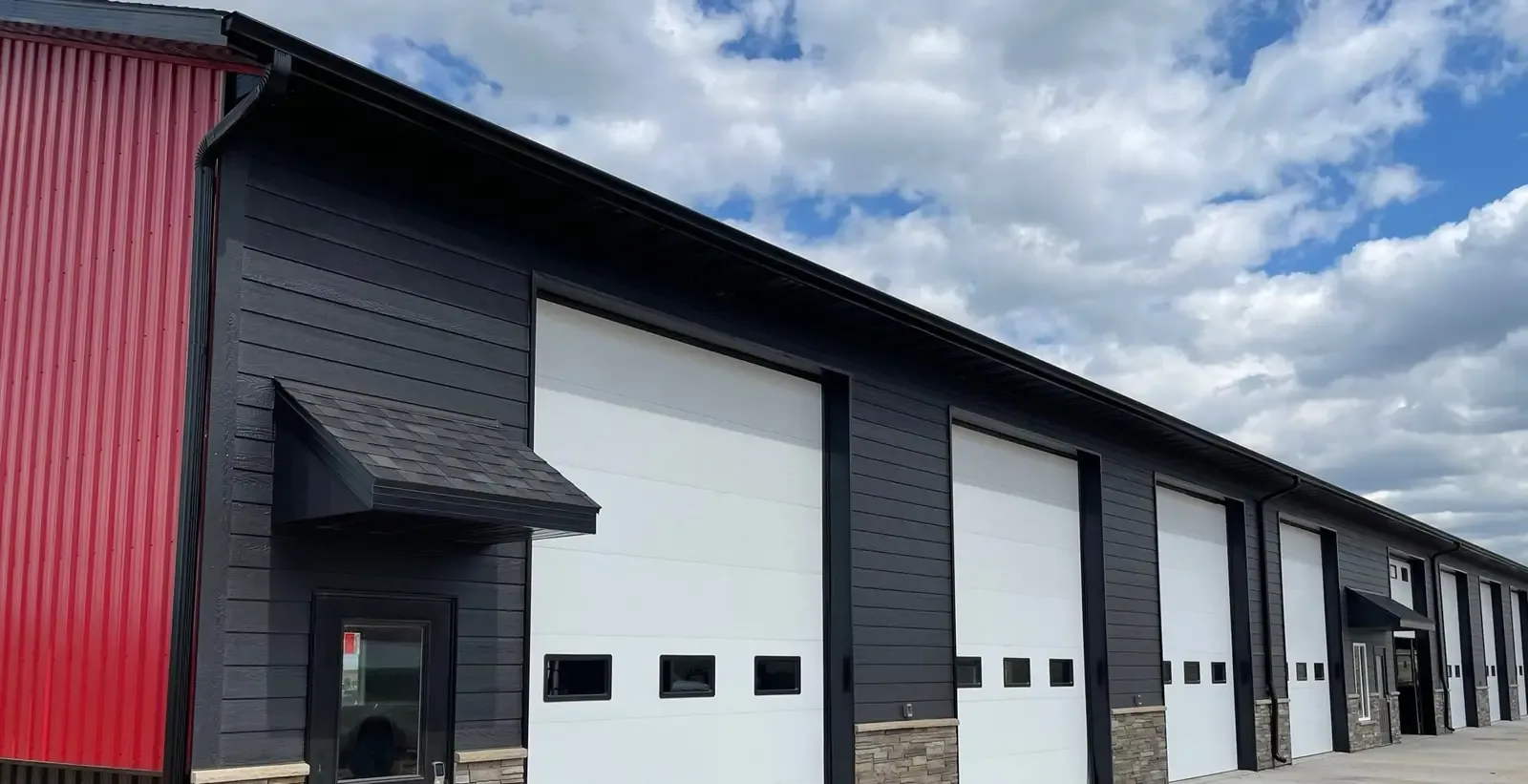
Edge metal, coping, fascia, gutter and downspout repair and replacement for North Las Vegas, NV commercial roofs exposed to desert heat and gusty wind.
Wind finds the roof edge first, and a loose piece of edge metal is the cheapest failure on a commercial building to catch early. Spring and fall bring the valley's more frequent wind events, per the Weather Service. Gusts beyond 50 mph are uncommon, though they can throw dust and sand. Even ordinary gusts load the perimeter, because uplift concentrates where the air turns over the parapet. In North Las Vegas, NV, we walk the whole edge of the roof: coping caps, fascia, drip edge, gravel stop, gutters, downspouts and the membrane that terminates under them. The goal is to find the joint that has opened before the wind finds it. When an edge has already failed, a wind-damaged roof repair starts with securing the perimeter.
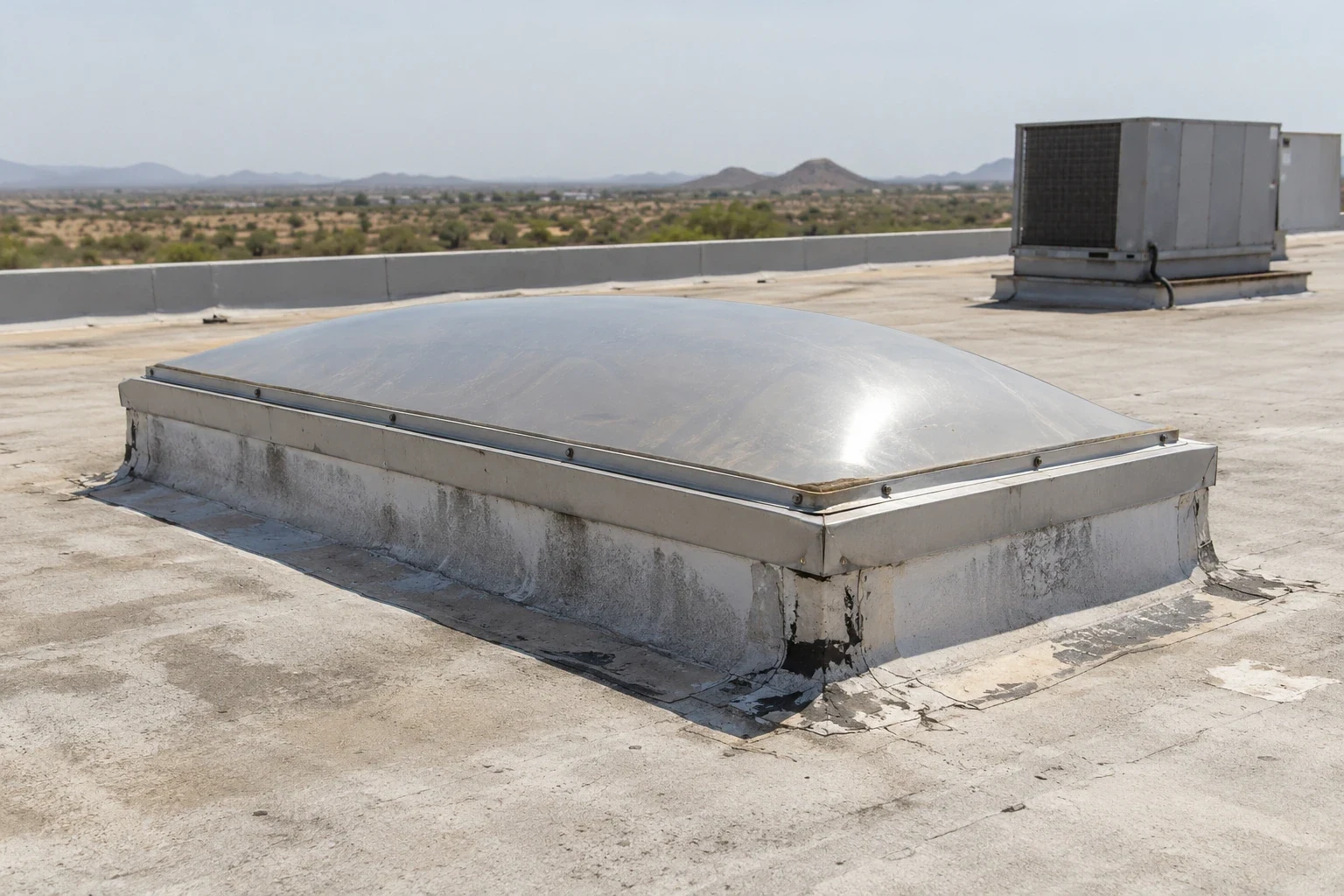
Perimeter: Where the Roof Ends and the Wall Begins
The edge is a system with three jobs: hold the membrane down, shed water away from the wall and give wind a smooth path over the top. A roof can have any of several edge types. A parapet wall usually carries a coping cap. A low-slope roof without a parapet may have a metal fascia or a gravel stop. A roof that drains outward may have a gutter hung at the eave.
Each type fails in its own way. Coping can lift if its cleats are missing or the fasteners have backed out. Fascia can bow when the cleat does not hold. Gravel stop can separate from the membrane flange when the sealant dries. Gutters can pull away from their hangers when heavy water or debris loads them. We identify the type, check how it is attached and note the condition of its joints, ends and corners.
Behind the metal, we look at the membrane termination. A reglet, a counterflashing or a surface-mounted termination bar all depend on the substrate being sound. If the substrate has crumbled or the sealant has failed, the edge metal alone cannot protect the roof.
Commercial Roofing Questions
Why does edge metal fail before the rest of the roof?
Wind uplift concentrates at perimeters and corners, and heat cycles work on joints and sealant every day. The edge takes the highest load with the smallest fasteners, so it shows wear first.
Can loose coping be re-fastened, or must it be replaced?
If the metal is straight and the cleats or substrate are sound, re-securing works. If the metal is bent, corroded or the substrate is damaged, replacement is the lasting fix.
What does sealant failure at an edge joint lead to?
Water gets behind the metal, wets the substrate and reaches the membrane termination. Over time that can open a leak path along the wall. Resealing on a clean joint prevents it.
How do you size a gutter for a monsoon storm?
By the roof area it serves, the slope of the run and the number and size of downspouts. We compare those with the roof and recommend added downspouts or a larger section where the capacity is short.
Does edge metal work require a permit?
It can, depending on scope and the jurisdiction. Owners should confirm local requirements before work. We provide the details and materials list needed for that conversation.
More Roofing Detail
COMMERCIAL ROOFING IN NORTH LAS VEGAS, NEVADA
Wind: Uplift at Corners and Joints
Air pressure on a roof is not uniform. Corners and perimeters take the highest uplift, which is why edge metal and the membrane near it get the most scrutiny after a wind event. A coping joint that has opened by even a fraction of an inch can let wind get underneath, and sustained flutter fatigues fasteners and sealant.
We check three things on every edge after wind. First, the metal itself: dents, bends, missing sections and fasteners that have pulled through. Second, the attachment: cleats, continuous bars and fastener spacing. Third, the membrane below: peel at the edge, loose laps and seams and flashing that has lifted. Where the existing detail is undersized, we describe an upgrade to a system tested to a recognized edge standard such as ANSI/SPRI ES-1.
Wind-borne sand and dust abrade surfaces over time, wearing paint and finish from exposed metal. Bare metal then corrodes or chalks, and sealant that has lost its finish weathers quickly. We note finish condition so the owner can plan replacement before the metal fails.
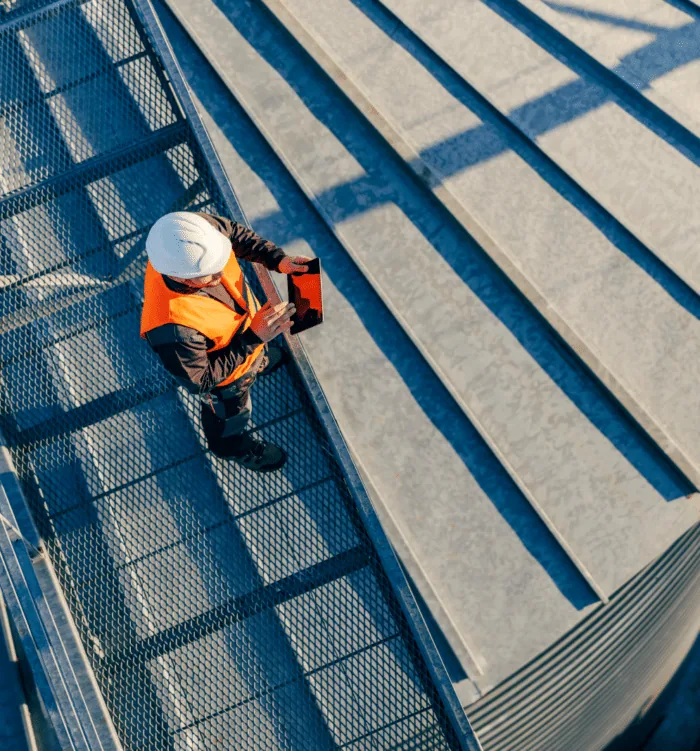
Heat: Expansion, Sealant and Finish
Metal moves with temperature. In a hot desert environment, a long run of coping or fascia expands in the afternoon and contracts overnight, and each cycle works on the joints and fasteners. Joints need room to move. Where a run is fastened rigidly without expansion allowance, the metal buckles, splits at a joint or pulls fasteners loose.
Sealant is the weak link. It dries, shrinks and cracks under sustained heat and ultraviolet exposure. We probe sealant at joints, laps and terminations to see whether it still holds and whether it bonds to the metal. Replacing sealant without removing the old, failed material gives a short-lived result, so we cut out what is loose and reseal on a clean surface.
Finish matters too. Coated metal fades and chalks. Bare galvanized or aluminum surfaces weather differently. Where the finish has failed, we recommend recoating or replacement according to how much metal is left and what the budget can support.
Gutters and Downspouts: Moving Water Off the Edge
When a roof drains to its edge, the gutter is the outlet. A gutter that sags, leaks at a joint or fills with sand holds water against the fascia and the membrane edge. A downspout that discharges against a wall face, or one that has separated at an elbow, sends water where it was never meant to go.
Monsoon season runs through July and August across the Mojave Desert, and its thunderstorms can drop heavy rain. A gutter sized for ordinary rain can be overwhelmed by a monsoon burst, so we check the capacity against the roof area it serves, the number of downspouts and the slope of the run. Where scuppers or interior drains share the load, we coordinate with the drain and scupper work so the whole drainage path is reviewed together.
We also check where the water goes after it leaves the building. A downspout that dumps onto a sidewalk, a loading apron or a planting bed can create a safety or erosion problem.
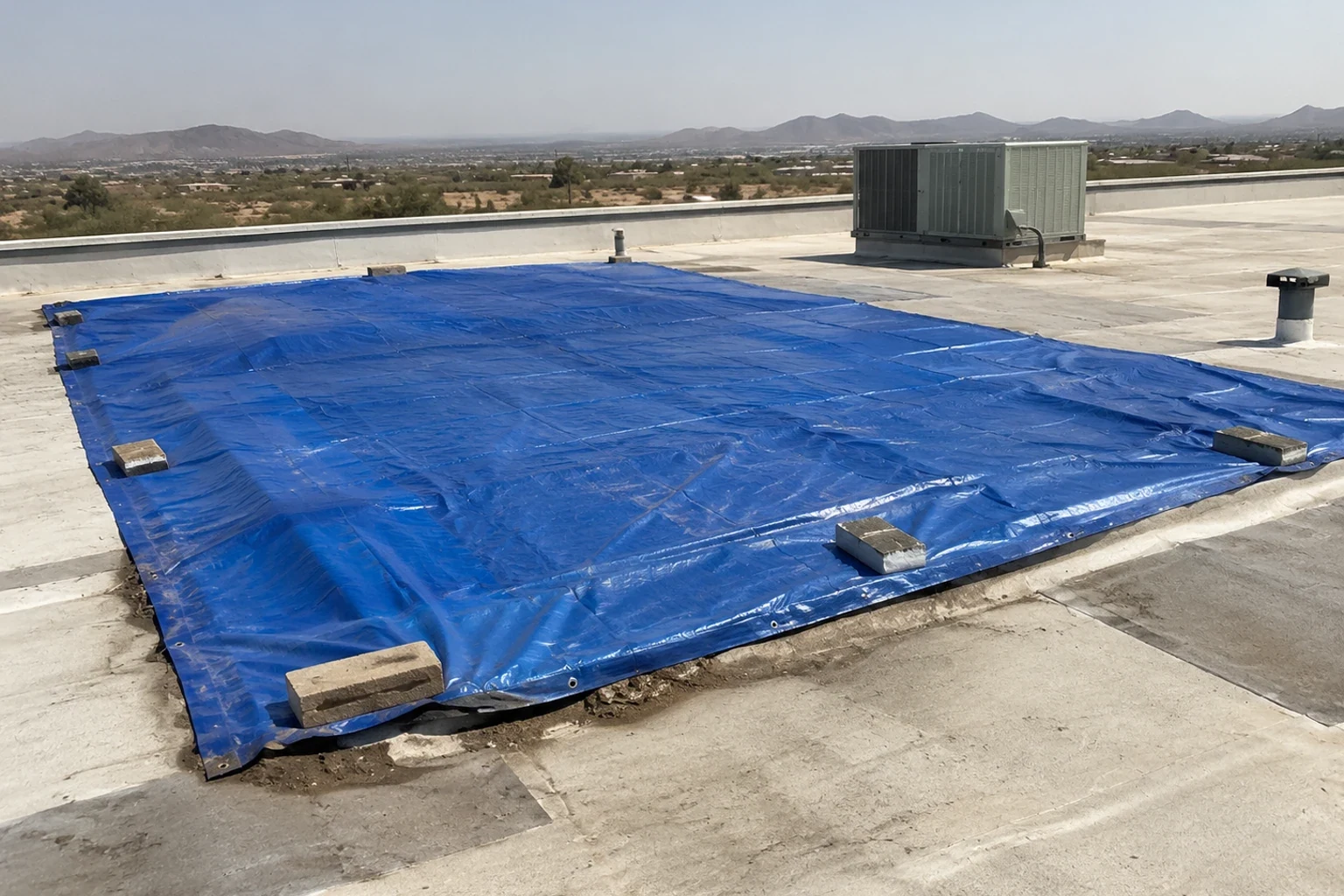
Repair or Replace: Matching the Fix to the Condition
Not every edge needs new metal. A single loose coping section can be re-secured with new cleats and sealed. A damaged corner can be replaced with a matching piece. A run with widespread fatigue, corrosion or poor attachment is better replaced as a unit, with new cleats, fastener patterns and sealant.
When the roof is also due for a membrane project, the edge is best handled with it. A new commercial roof replacement terminates against new edge metal, which gives a cleaner detail than tying new membrane into old, weathered metal. If the membrane is staying, we select edge metal that fits its termination and is compatible with the existing flashing.
For code, the Nevada Public Works Division lists the 2024 IBC, IEBC, IECC and related model codes for projects under its authority. That list does not replace the North Las Vegas requirements, so we advise owners to confirm local adoption before edge details are designed or permitted.
Access: Working Along the Building Edge
Edge work puts crews at the roof perimeter, which brings fall protection and ground safety requirements. We plan the access path, tie-off points and ground protection before work starts, and we coordinate with tenants where sidewalks, entrances or loading docks lie below the work zone. Lifts and scaffolds need space, and we confirm the staging area before mobilizing.
The North 5th Street Transit Corridor and Downtown North Las Vegas describe wide parts of the service area, never a single building. Each roof still needs its own plan, repair history and inspection record before a scope is final.
Share the roof plan, leak dates, photographs of the affected edge and any access rules. We will walk the full perimeter and record each run by roof-plan reference.
Schedule an Edge Metal Walk
Send the roof plan, any photographs of loose or damaged edge metal and the access rules. We will walk the full perimeter, mark each run and give your team a repair or replacement scope.