
Roof drain, scupper, cricket and ponding correction for North Las Vegas, NV commercial roofs, with a drainage path that handles monsoon-rate rainfall.
The Las Vegas Valley receives little rain over a year. NOAA normals for the Las Vegas station list about 4.18 inches of annual precipitation, and the Weather Service says July and August monsoon moisture can bring heavy rain in short bursts. That station sits at Harry Reid International Airport in the south valley, so the numbers are regional context and not a North Las Vegas, NV measurement. For a roof, the lesson is practical: a drainage path that stays dry for months has to move a large volume of water in minutes. We inspect drains, scuppers, crickets and slopes to confirm that the path works, and we correct the parts that do not. Where water is already standing, a ponding water repair begins with the drainage, not the membrane.
Path: Trace Water From the High Point to the Outlet
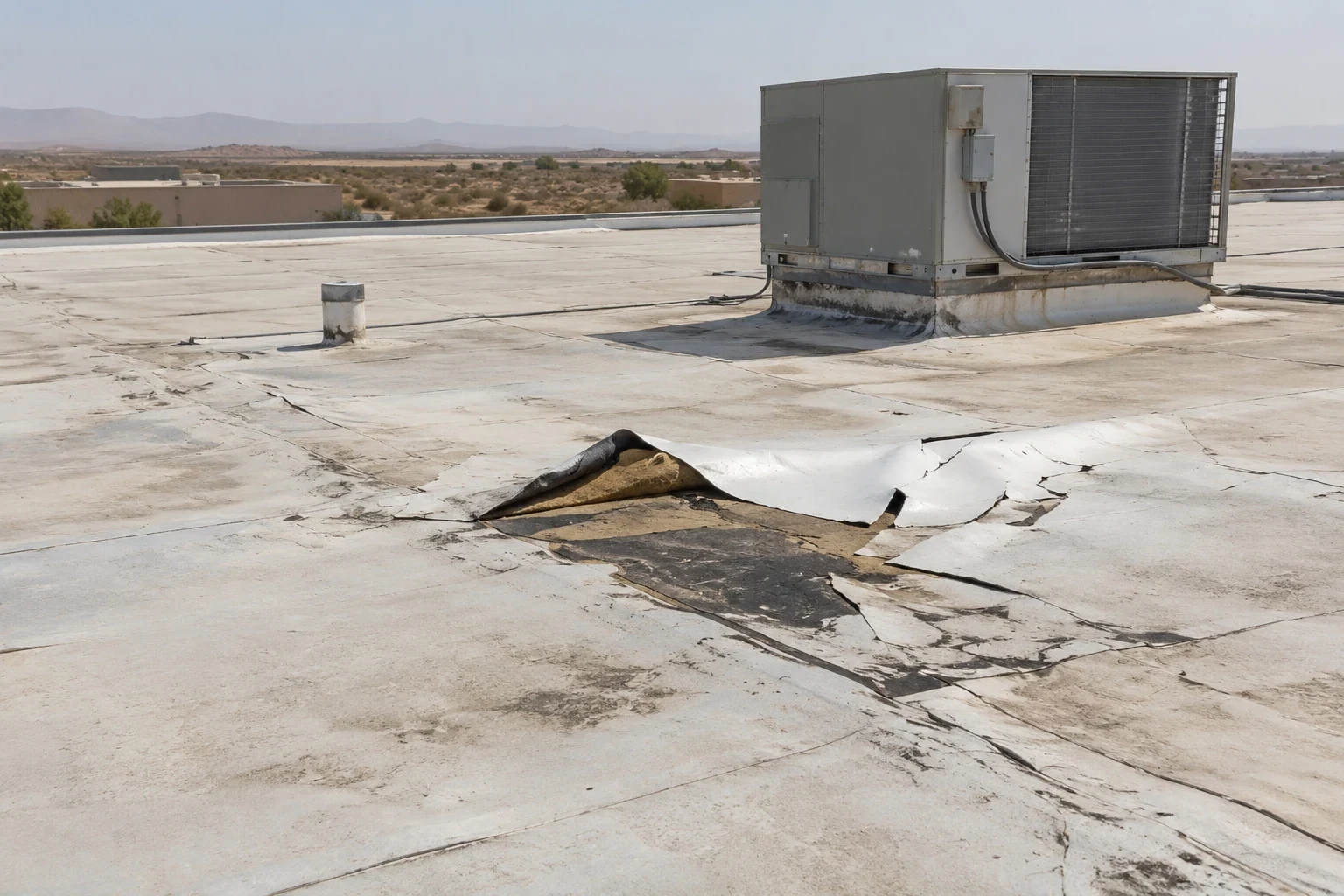
Start at the roof's high point and follow the flow. Where does water leave each section? Does it reach a drain, a scupper, a gutter or only a low spot? We mark the intended path on the roof plan and compare it with what the surface shows: debris lines, stained membrane, algae or dirt trails, and dry rings where ponds have evaporated. Those marks are evidence of where water has stood, even when the roof is dry on the day of the visit.
Slope matters as much as the outlet. A roof designed to drain can lose that ability through deck deflection, added equipment, repeated patching or insulation that has compressed. Crickets and tapered insulation redirect water around curbs and toward outlets, and a cricket that has settled or been covered by a patch stops doing its job.
We also check that each roof level has a way out. A small upper roof that spills onto a lower one needs a splash pad or a leader, otherwise the lower membrane takes repeated impact from a fixed point.
Commercial Roofing Questions
How can a roof that rarely sees rain still need drainage work?
Rain in this valley arrives in short, hard bursts, and the drainage path has to handle the burst. Between storms, sand and debris collect in bowls and behind curbs. The first heavy rain then finds a clogged path.
What separates a ponding problem from a blocked drain?
Where water stands relative to the outlet tells the story. Water pooled right at a drain points to a blockage or a lifted bowl. Water pooled away from any outlet points to slope or deflection. We check both and measure.
Do all roofs need overflow scuppers?
Roofs with parapets on all sides and interior drains only need an overflow route, because a blocked drain has no other exit. We verify what the roof has and recommend an overflow scupper or secondary drain where the route is missing.
Can tapered insulation fix a ponding roof without a full replacement?
Sometimes, as part of a recover. The added height has to work at curbs, terminations and doors, and the existing roof has to be dry. If either condition fails, a cricket or an added drain may be the better move.
What should be on the roof plan for a drainage review?
Drain and scuppers locations, roof levels, slope direction, equipment positions and past leak points. If the building has no plan, we sketch the roof during the walk and add it to the record.
More Roofing Detail
COMMERCIAL ROOFING IN NORTH LAS VEGAS, NEVADA
Drains: Bowls, Strainers, Clamping Rings and Leaders
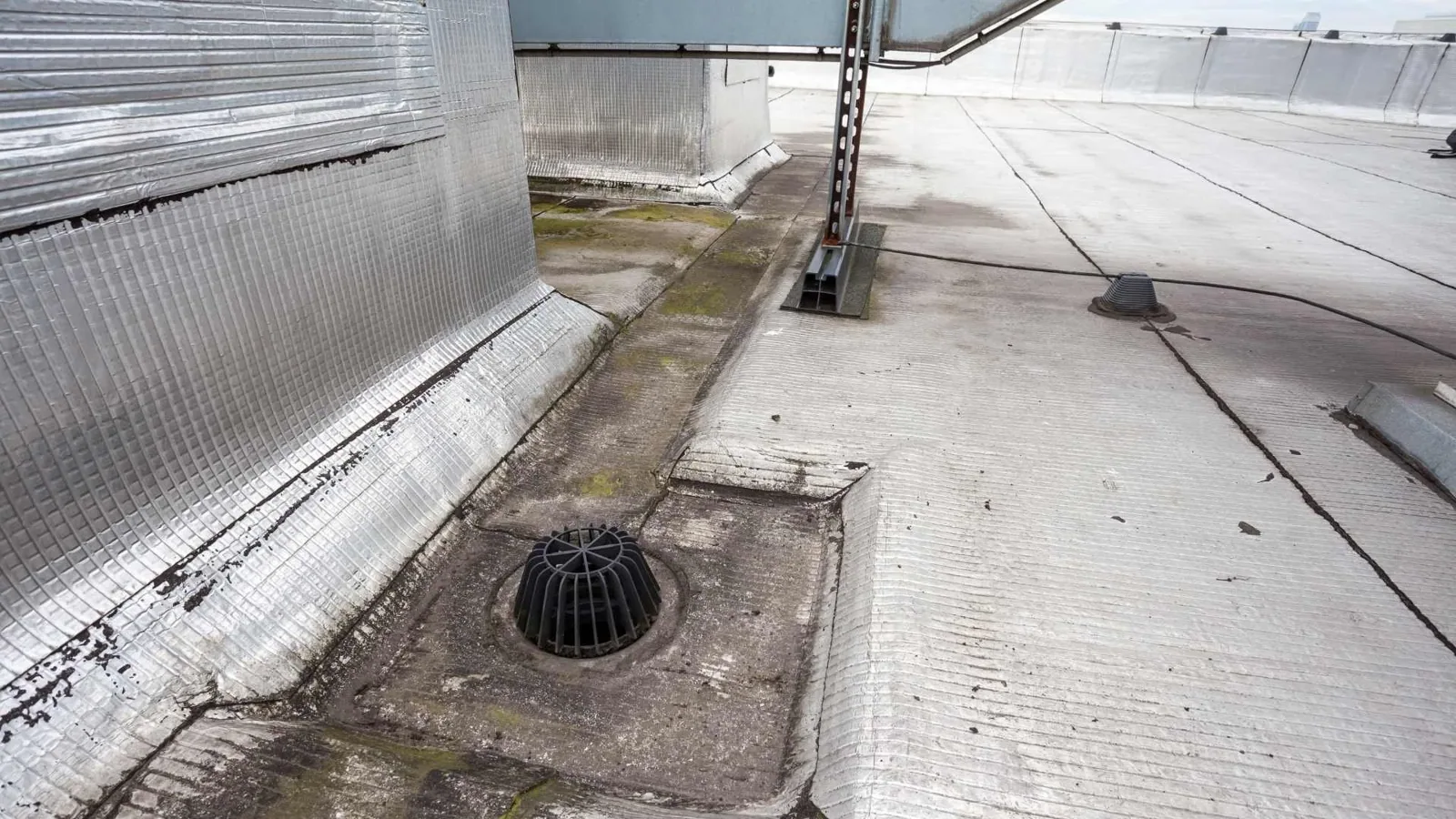
Interior drains look simple from above and fail in several ways. The strainer can clog. The bowl can lift or crack. The clamping ring can loosen, letting water run under the membrane at the lowest point of the roof. The membrane around the bowl can wrinkle or pull, and the flashing at the bowl can open at its edge.
We clear debris first, then test flow with water where the building allows it. A drain that backs up slowly may have a blockage in the leader below the roof. We note where the blockage sits and whether it can be reached from the roof or needs a plumber. We do not run tools into building plumbing we have not been asked to service, but we document what we found and tell the facilities lead what to call.
Blowing sand and dust are part of the local picture. The Weather Service notes that winds above 50 mph are infrequent, but they can carry sand and dust, and even ordinary gusts move fine debris into drain bowls and behind curbs. A drain that is clear in spring can hold a mat of fines by midsummer.
Scuppers: Openings, Overflow and Edge Details
A scupper is an opening through a parapet or wall that lets water leave the roof edge. It works only if the opening sits at the right height, the roof slopes toward it and the flashing around it is sound. We check each scupper for debris, flashing at the inside and outside faces, sealant at the metal-to-membrane joint, and the discharge point outside.
Overflow is the safety net. If a primary drain clogs during a heavy burst, an overflow scupper set slightly higher lets water leave before it rises above the flashing height. A roof with no overflow route can store water until it finds a weak point, and that point is usually a wall termination or a penetration. Adding an overflow scupper is a defined job with a clear cost, and it is often cheaper than repairing the interior after a blockage.
Where scuppers drain to downspouts or gutters, the edge metal, coping and gutter condition matters too. A discharge that hits a wall face, or soaks a footing, creates a second problem outside the building.
Ponding: What Standing Water Does to the Assembly
Standing water on a low-slope roof adds weight, accelerates wear and gives every small defect time to leak. Water that stays on the surface for a long period after rain also supports algae and dirt buildup that degrade the membrane. On thermoplastic and rubber sheets, long-term ponding can concentrate stress at seams. On built-up and modified bitumen roofs, it can speed blistering and surface loss.
A pond does not by itself prove the membrane failed. The inspection separates three conditions: water that stands because the slope is wrong, water that stands because a drain is blocked and water that stands because the membrane has deflected under equipment. Each has a different fix. A blocked drain needs cleaning. A slope problem needs a cricket, tapered insulation or a new drain at the low point. Deflection may involve the deck and needs structural review.
Where ponding is confirmed, we measure its extent and depth and record it on the roof plan. Those numbers show whether a correction made a difference at the next inspection.
Correction: Options and Sequence
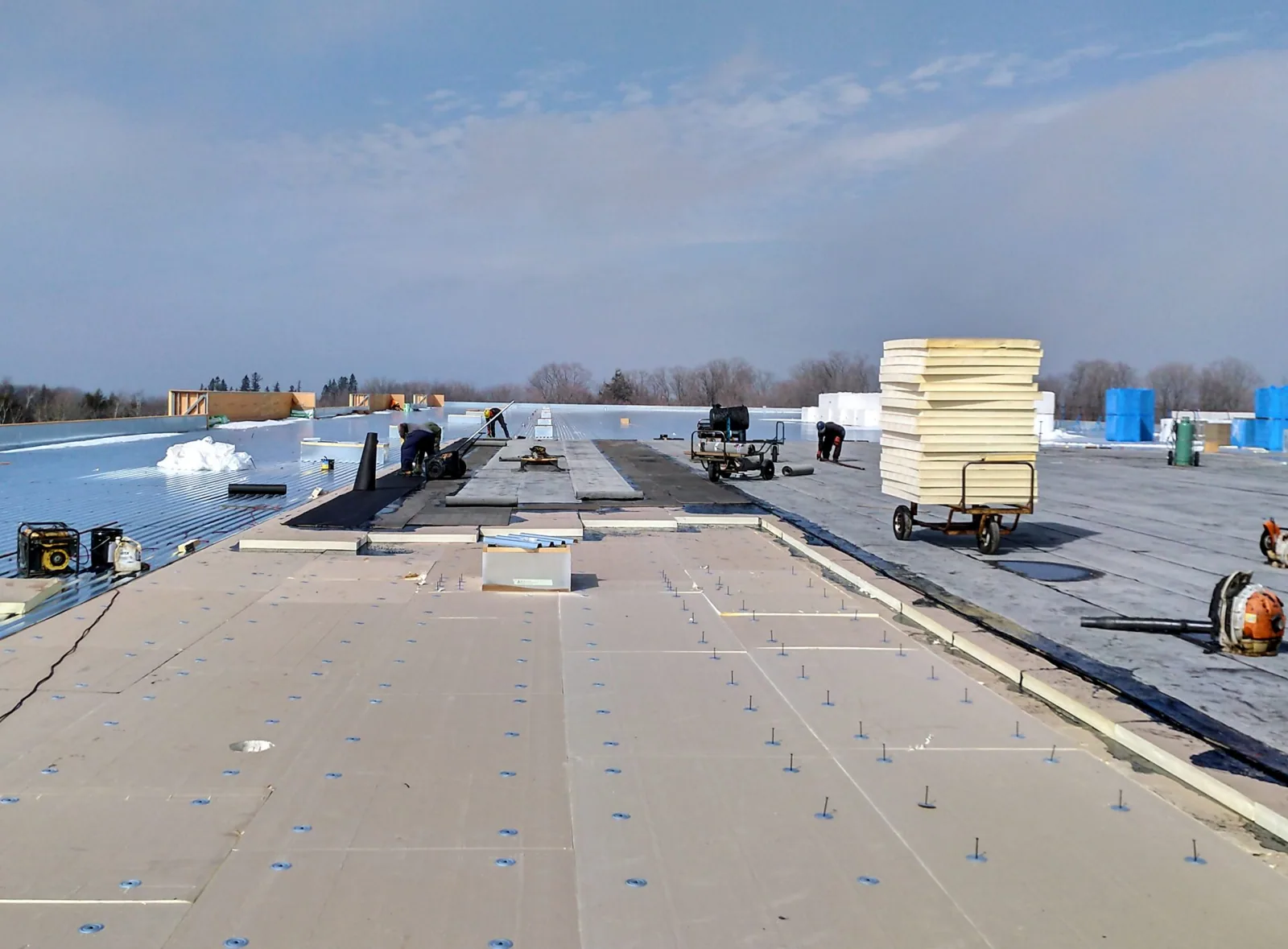
Corrections range from cleaning to re-sloping. Cleaning, resetting strainers and replacing clamping rings are quick. Adding crickets, sumps or extra drains is a defined scope. Tapered insulation and cover board can reshape a large area, but it usually happens in a recover or replacement because it changes roof height at terminations and curbs.
Sequence matters. Drainage correction should come before membrane repair or coating, because a new surface over a low spot inherits the same ponding. On a roof coating restoration project, we address drains and low areas first, then prepare the surface.
We also coordinate with other trades. Mechanical contractors, roof-mounted solar installers and signage crews all change drainage when they add equipment. Before new equipment goes on the roof, we ask for the planned location and check it against the drainage path. A support placed across a flow line acts like a dam.
Maintenance: Keep the Path Open
Drains do not stay clear on their own. A maintenance visit before the monsoon season and another in the fall catches sand, leaves, paper and debris. For buildings in the Industrial Lands or near Craig Ranch, the same schedule applies, since the roof, not the address, sets the drainage need.
Each visit records drain condition, standing water marks, scupper flashing and any change since the last inspection. Photographs go into the roof file. When the facilities lead shares the roof plan, leak dates and repair history, we can compare conditions over time and point to the exact detail that changed.
Book a Roof Drainage Review
Share the roof plan, any ponding photographs, leak dates and access rules. We will trace the drainage path, test the outlets and give your team a correction scope in a clear sequence.