
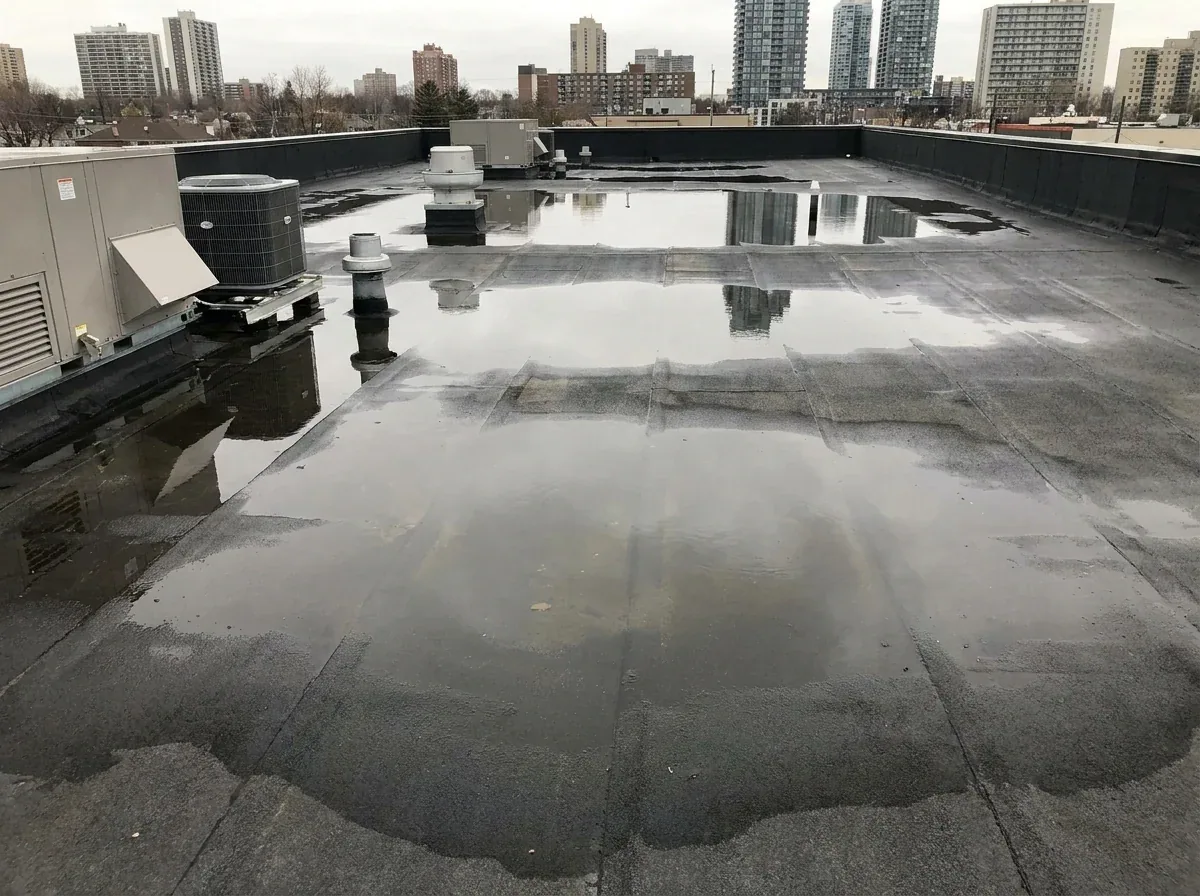
Ponding water roof repair in North Las Vegas, NV: find the cause, correct drainage and protect the membrane before the next monsoon storm.
Water still standing on a low-slope roof forty-eight hours after a storm is a condition a building manager can verify from the roof hatch, and it deserves an explanation before anyone prices a repair. On commercial roofs in North Las Vegas, NV, the cause may be a blocked drain, a deflected deck, a membrane that has stretched, an outlet set too high or a roof that was never sloped enough to shed water. The inspection must establish which, because each cause has a different fix and a different cost.
NOAA's 1991 to 2020 normals for the Las Vegas station list 4.18 inches of annual precipitation. The low total hides the pattern that matters: heavy rain comes in bursts during the July and August monsoon, and a roof with a low spot has little time to shed it. A drainage fault that stays invisible through dry months shows itself in one storm, which is why we look for it before the season starts.
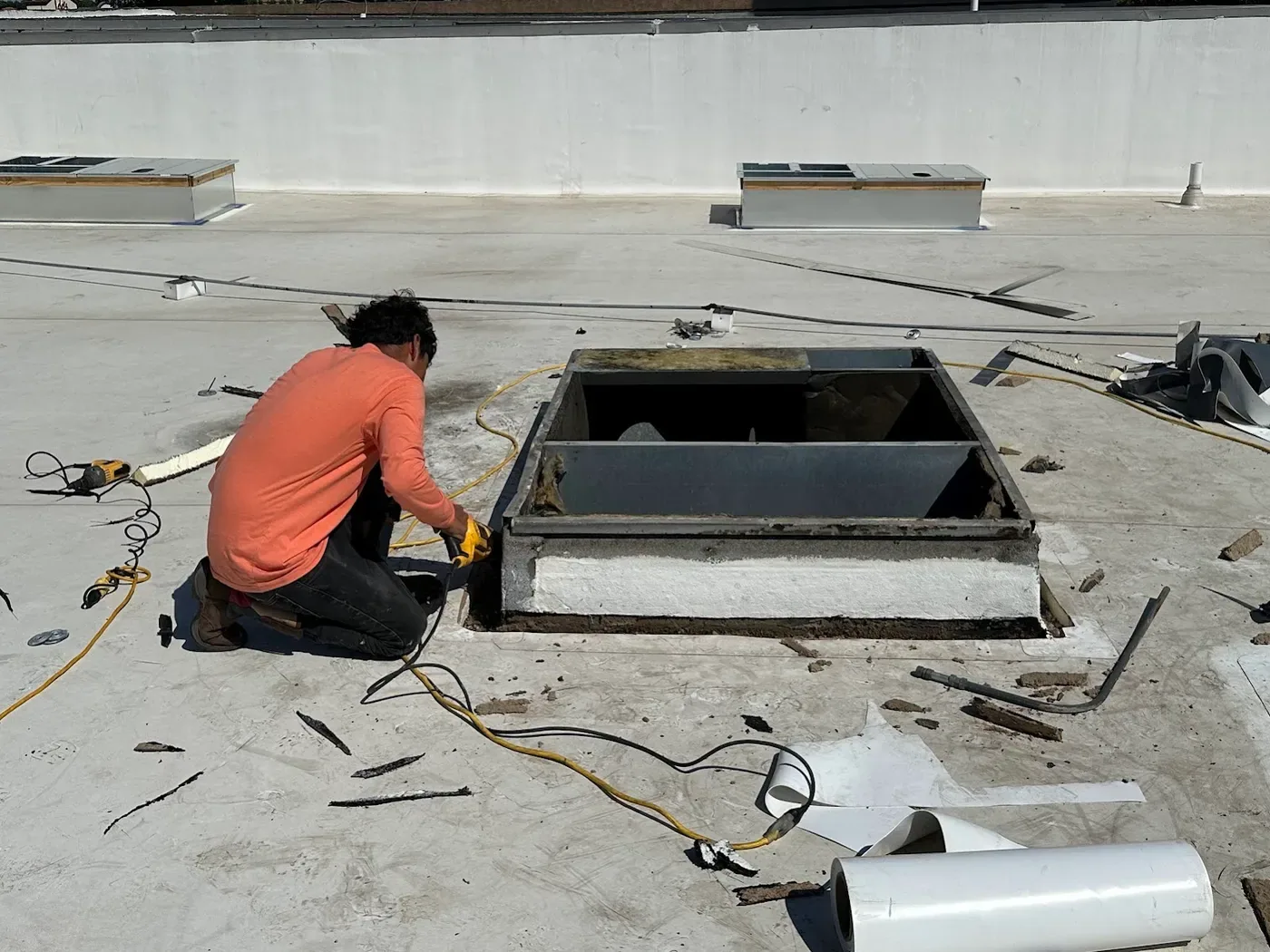
Measure: record where water stands and how long it stays
The first step is evidence. After rain, or after a controlled water test where the owner allows it, we mark the edge of each pond, measure its depth and note how long it holds. Stains, dirt rings and algae marks show where water has stood on earlier days, which helps when we arrive after the water is gone.
We then compare the location of each pond with the drains, the roof slope, structural supports and equipment. A pond at a low point between two drains suggests slope. A pond near a single drain suggests a blockage or a high outlet. A pond under a rooftop unit suggests deflection or a support settled. Photographs and a marked roof plan carry these observations into the report so the owner can see the pattern, not just a single image of a puddle.
Commercial Roofing Questions
How long can water stand on a roof before it is a concern?
A shallow pond that clears within a day or two is common on many low-slope roofs. Water that stays longer, grows or stains the surface warrants attention. We record depth and duration, then judge by the membrane and the cause.
Is a coating the fix for a roof that ponds?
Not by itself. A coating protects the surface but does not change slope or clear an outlet. We correct drainage first, then consider silicone or another coating for the membrane where testing supports it.
What if the structure has deflected?
A structural engineer should review it before any added weight. We document the deflection, ponding and membrane condition, share it with the engineer and wait for conclusions before scoping slope correction.
Can added drains solve ponding?
They can when the pond is limited and the structure allows a new outlet. Plumbing routes and interior clearances matter. We compare an added drain with tapered insulation and show the cost drivers for each.
Do you respond to ponding during an active storm?
Emergency crews are available around the clock, holidays included. They can clear blocked outlets, pump standing water where safe and protect interior spaces.
What should we do about ponding between now and the repair?
Keep drains and scuppers clear, remove debris after wind and storms, and avoid foot traffic through ponded areas. Photograph the pond after each rain so the pattern is clear. We can add temporary measures if water is near equipment.
More Roofing Detail
COMMERCIAL ROOFING IN NORTH LAS VEGAS, NEVADA
Drains: clear, test and confirm the outlet works
A drain that looks clear can still fail to carry water. We remove debris from the strainer, check that the drain bowl is sealed to the membrane, make sure the outlet is not set above the surrounding surface and test flow with water. For interior drains, we ask the facility staff to flush the line or arrange a camera check when a back-up is suspected.
Overflow scuppers matter too, since they set the maximum depth water can reach before leaving the roof. Our roof drain and scupper work replaces damaged drain bodies, reconnects the membrane to the bowl, cleans or enlarges scupper openings and adds overflow protection where it is missing. Debris on a roof comes from trees, wind-blown dust and sand, and tenant activity, so a cleaning schedule is part of the repair plan.
Slope and structure: decide whether the roof can be re-sloped
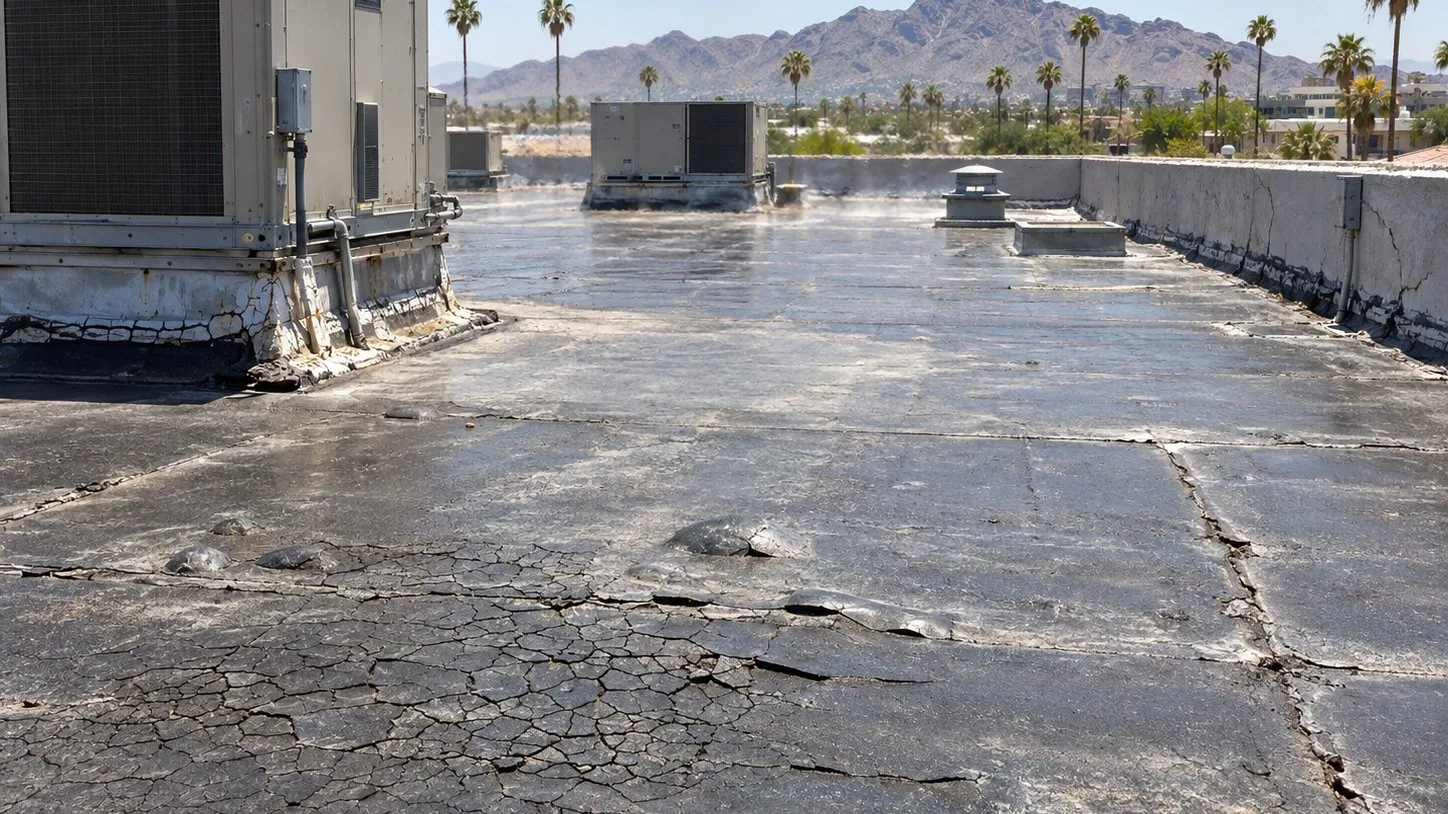
If drains work and water still stands, the roof surface itself is the problem. Causes include insufficient original slope, deck deflection, settled supports, compressed insulation and membrane that has sagged between fasteners. Structure is the engineer's decision, so when deflection is suspected we report what we see and recommend a structural review before any scope that adds weight.
Where the structure is sound, the options are tapered insulation to build slope, added drains or scuppers at the low points, crickets behind equipment and localized fill at depressions. Each has different cost and disruption. A tapered insulation and cover board scope adds slope during a replacement or recover, while an added drain can be a smaller fix when the pond is limited. The report shows the options side by side with the evidence behind each.
Membrane: judge what long exposure to standing water has done
Standing water speeds the aging of many membranes. Algae and mineral deposits can collect, ultraviolet light is concentrated at the edge of the pond and seams under water face more stress. We look for softened seams, blistering, surface cracking, debris-stained rings and signs that water has entered laps. Where the membrane is intact, cleaning and a drainage fix may be enough.
If seams have opened, a seam failure repair restores the lap, and if flashing near the pond has lifted, a flashing failure repair closes that path. When the area has been wet for a long time, we test for moisture below. A silicone roof coating tolerates ponding better than many other coatings, but coating a roof that still ponds is not a substitute for fixing the drainage, and we say so in the proposal.
Cost and timing: what separates a cheap fix from a big one
Clearing a blocked drain costs little, while re-sloping a large roof costs a great deal, and the evidence is what tells them apart. Price drivers include the number and size of ponded areas, the access to drains and interior leaders, whether the membrane can be saved, the thickness of tapered insulation needed to move water, the number of added drains and the need for structural review. Wet insulation under a long-standing pond adds replacement area, and equipment that must be lifted and reset adds labor.
Timing follows the same chain. Drain work can happen the same week. Seam and flashing repairs follow once the area is dry. Slope correction usually pairs with a recover or replacement, so it waits for a project window, material lead times and permit review where required. We write these dependencies into the proposal and flag items that could move the date. If the owner can only fund part of the work now, we rank the pieces so the items that reduce risk most are done first.
Plan: sequence repairs ahead of the monsoon
Repair order matters. We start with drains and obvious blockages, which cost little and often reduce ponding immediately. Next come seam and flashing repairs near ponded areas, then slope corrections. Larger structural or re-slope work is scheduled in the dry window, ideally before July.
For buildings in planning areas such as the Cheyenne Technology Corridor or Industrial Lands, the same sequence applies to any low-slope roof. After the work, we recheck after the first significant rain and record whether ponding has resolved. Ongoing maintenance keeps strainers clear and watches for new low spots.
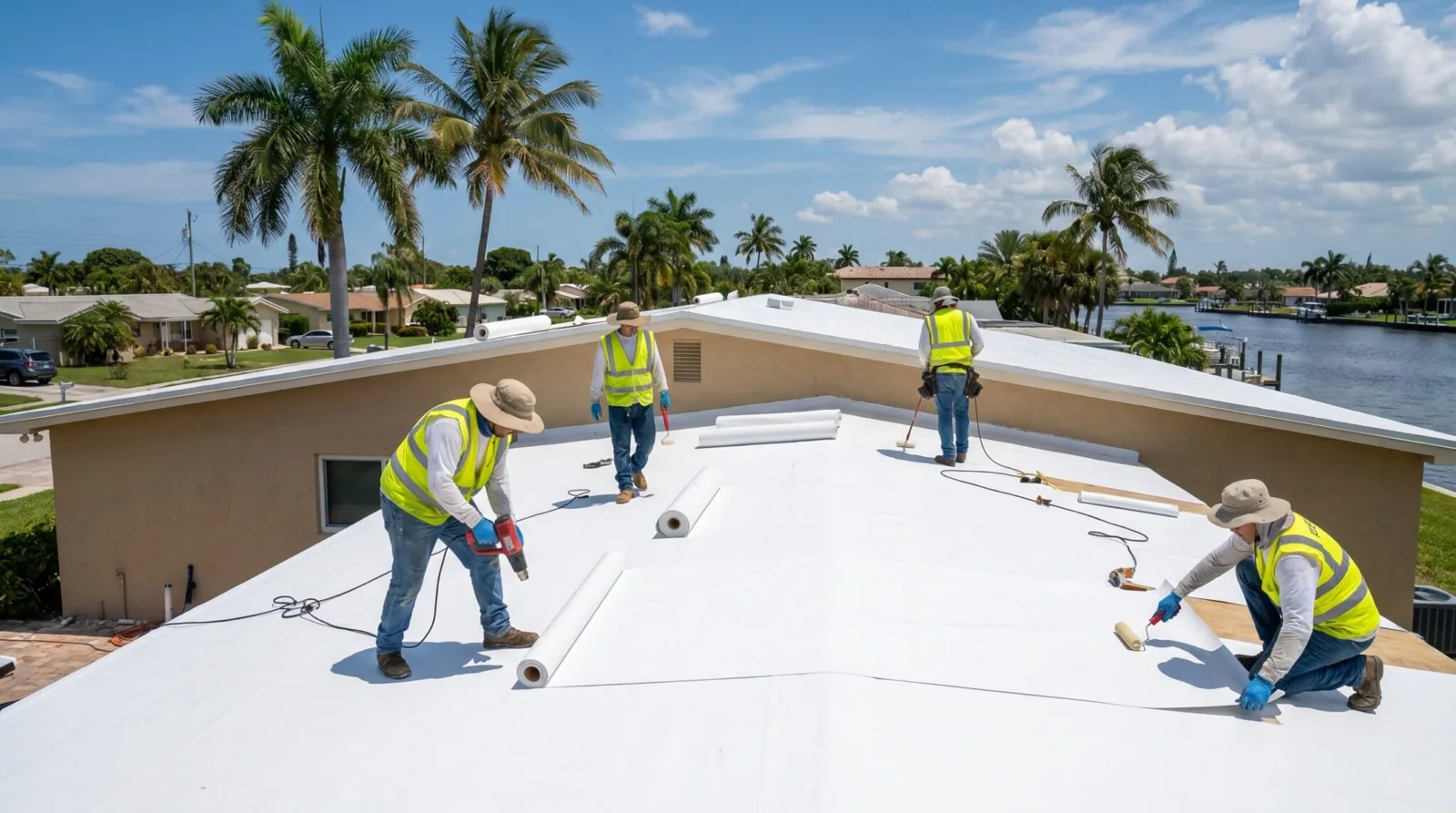
Show us where it stands
Send photographs of the ponded areas, roof plans, drain locations and the dates of recent storms. We will measure, trace the cause and recommend the smallest repair that fixes it.