
Silicone roof coatings in North Las Vegas, NV: eligibility checks, adhesion testing, surface prep, ponding tolerance, dirt pickup, and recoat planning.
The first test of a silicone coating job happens before any coating is opened: a small area of the roof is cleaned, primed if needed, coated, and pulled after cure to see whether the coating holds. Silicone sticks poorly to some surfaces and well to others, and no brochure can say which one the roof in front of us is. The manager can ask to see the adhesion test, and the inspection record should include its location and result.
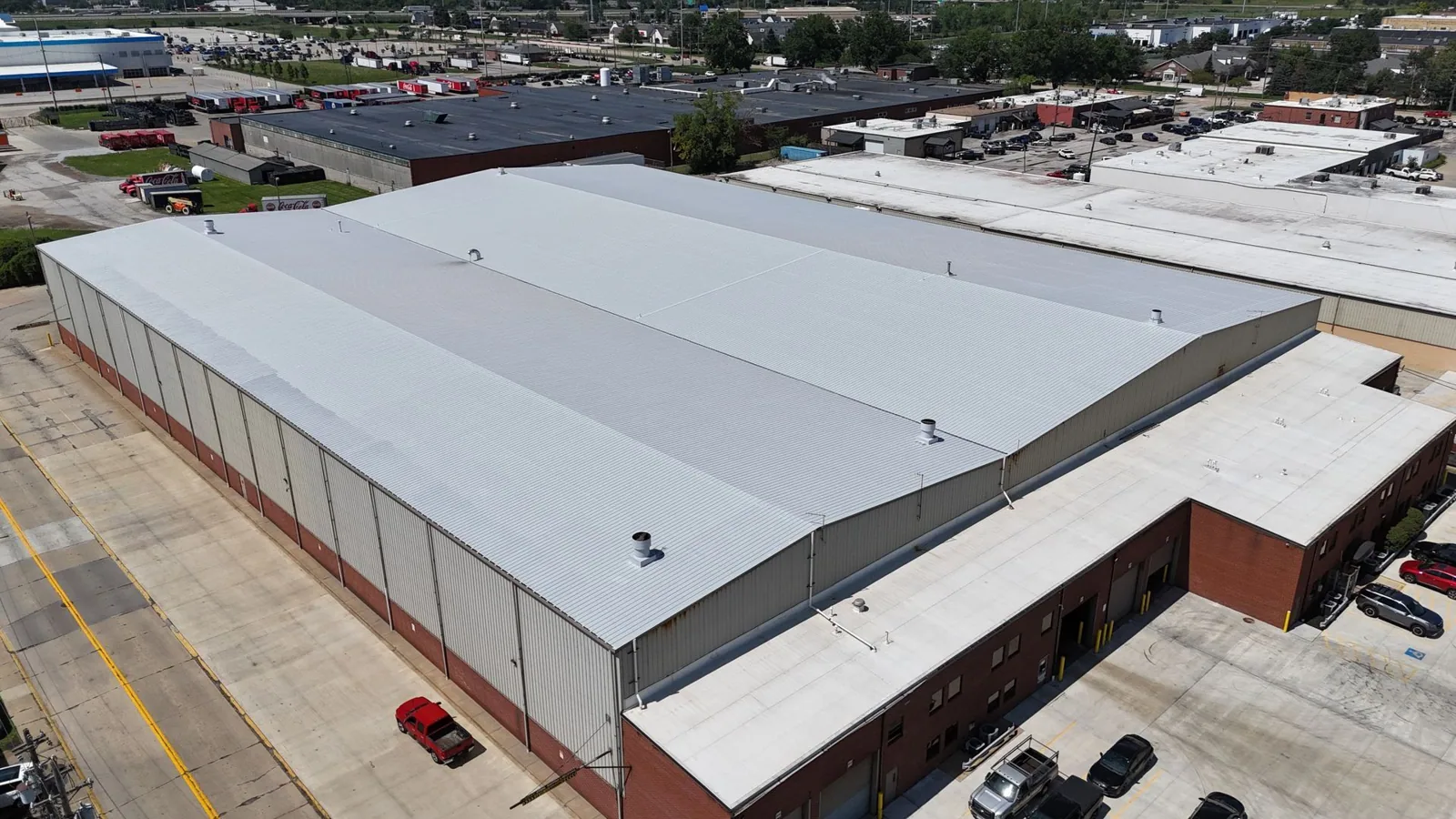
Silicone coating is a liquid-applied, moisture-curing system that forms a flexible, water-resistant skin over a prepared roof. For commercial buildings in North Las Vegas, NV, it is a restoration option for roofs that are still watertight enough to hold a coating. The inspection has to establish the existing membrane, the insulation moisture, the condition of seams and flashings, and the drainage before silicone is recommended over repair, another coating, or replacement.
Eligibility: Which Roofs Can Take Silicone
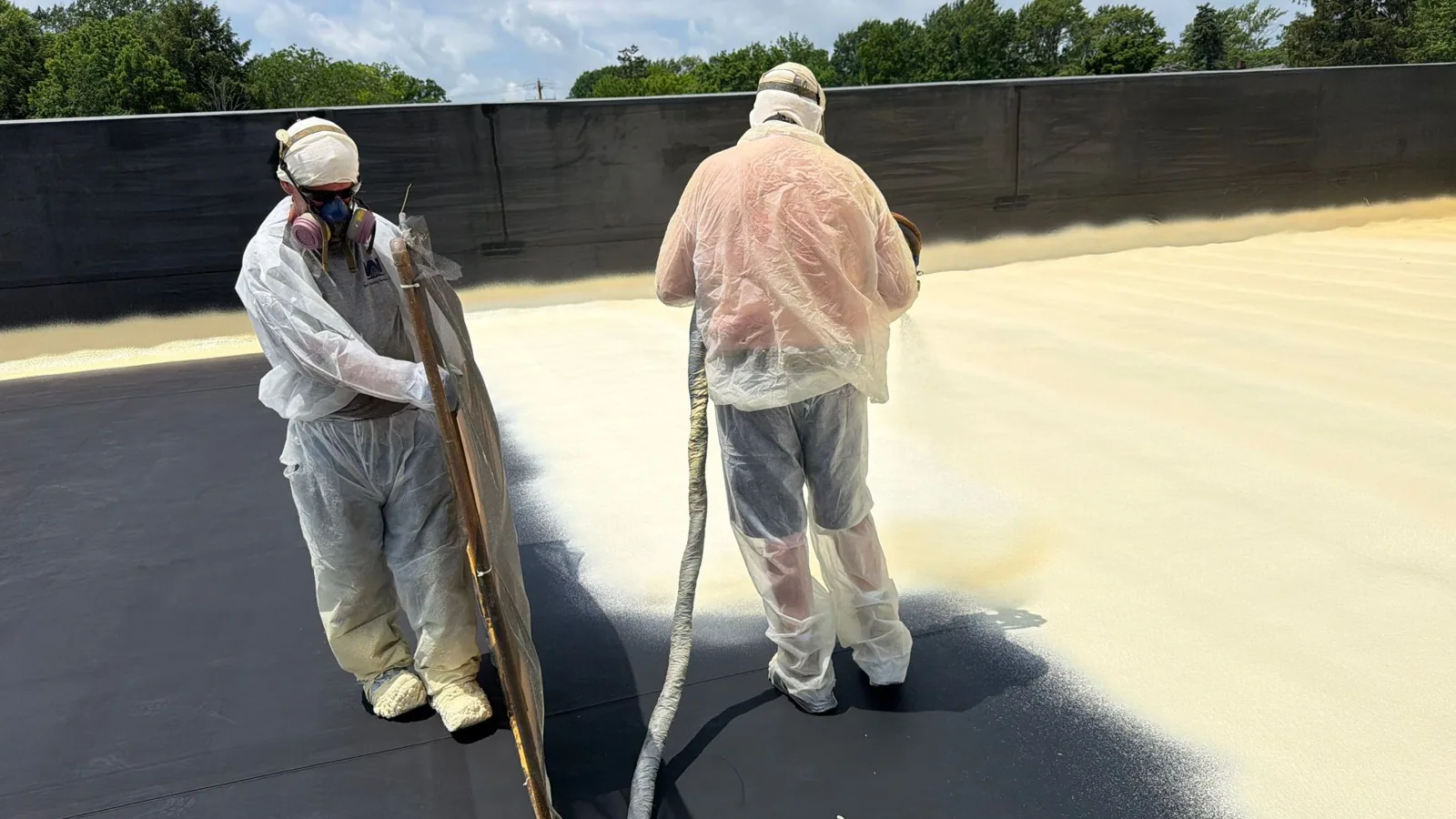
Silicone works over many substrates, including metal, modified bitumen, built-up roofing, spray foam, and some single-ply membranes, when they are clean, sound, and dry. It does not repair a roof with wet insulation, open seams across the field, or a deck that deflects. A coating over those conditions hides the problem for a season and then blisters or peels.
We screen eligibility with a short list: moisture survey results, seam condition, remaining sheet strength, number of existing coating layers, and drainage. An infrared moisture survey and test cores check for wet insulation. Seams are probed. Where more than a small percentage of the field fails those checks, the better answer is a tear-off or recover, and we state that in writing.
Existing coatings are part of the screen. A roof with several old coating layers may be heavy, peeling in places, or bonded poorly to the layer below, and a new coat over a failing old one inherits the failure. We cut small samples through the layers, note how many are present, and test whether they hold together before we propose adding another.
Commercial Roofing Questions
Can silicone be applied over any existing roof?
No. It needs a sound, dry, clean substrate and a test showing the coating will bond. Wet insulation, open seams across the field, brittle membranes, and incompatible old coatings all rule it out or require prep first. Before recommending it, we survey for moisture, test adhesion on a small area and repair the seams, and a roof that fails those checks is not coated.
Why do silicone roofs get dirty?
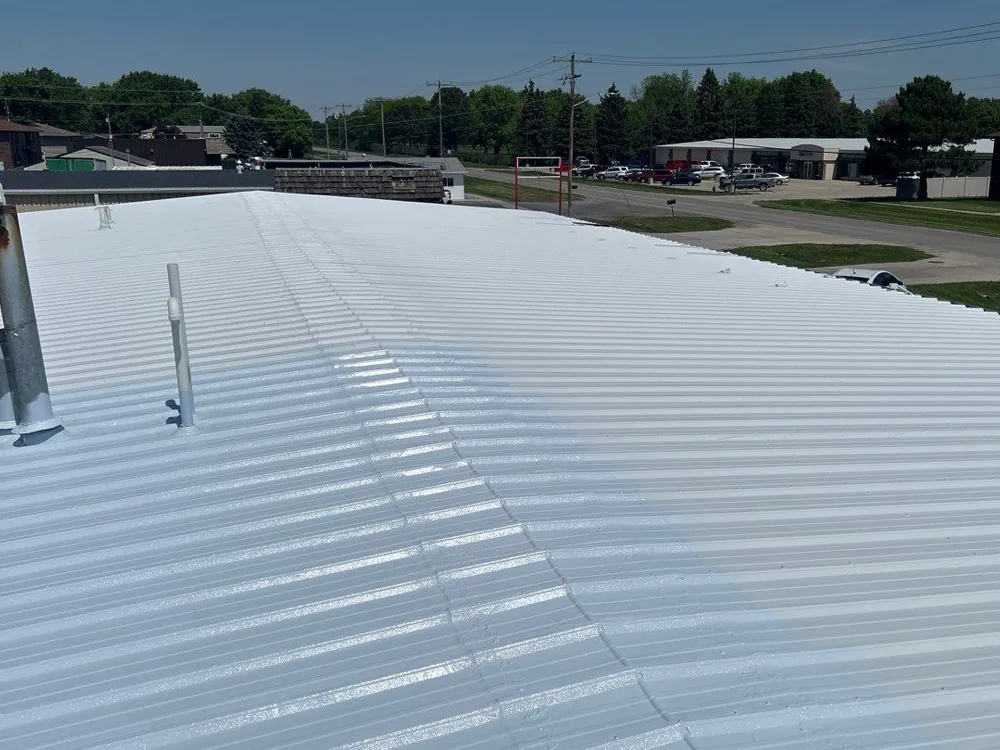
Silicone stays slightly tacky, so dust sticks to it. Windy seasons and nearby bare ground increase the load. The dirt reduces reflectivity and can hide coating wear. A wash restores much of the brightness, and the schedule follows how fast the roof gets dirty, not a fixed date. We record dirt pickup by zone so the owner can plan cleaning.
Can another coating be applied over silicone later?
Usually not without special primer or full prep, since most coatings do not bond to cured silicone. If a recoat is planned, silicone over silicone is the simplest route. That is worth knowing at the start: choosing silicone commits the roof to silicone or to removal. We note this in the scope so the owner can weigh it against acrylic or a membrane replacement.
How thick should the coating be?
Thickness follows the manufacturer's data for the product and the roof's condition. Thin spots fail first, so we measure wet film as it is applied and check coverage at laps, seams, and details. We do not quote a figure without the product data in hand, and the scope records the coverage plan by zone with the measured results.
More Roofing Detail
COMMERCIAL ROOFING IN NORTH LAS VEGAS, NEVADA
Surface Prep: Where Coating Jobs Succeed or Fail
Preparation takes more labor than the coating itself. The roof is washed, loose material is removed, rust is treated, seams and flashings are repaired, and penetrations are detailed with reinforcing fabric and base coat. Any previous coating that is peeling or incompatible is stripped back. Silicone does not accept many other coatings under or over it without primer, and acrylic residue can block adhesion.
Then comes the adhesion test. We apply the coating to a small area, let it cure, and pull it. A bond that holds under pull means the process works for this roof. A coating that lifts means the prep or the primer must change. The test results are logged by roof zone, since a roof with several old repairs may need different prep in different places.
Weather controls the schedule. Silicone cures by absorbing moisture from the air, and rain or heavy dew before cure can ruin a fresh coat. Application days are chosen against the forecast, and the monsoon months, when the Weather Service says thunderstorms commonly reach the Mojave Desert in July and August, are planned with shorter areas and a covered staging plan.
Ponding Tolerance and Dirt Pickup
Silicone tolerates standing water better than most coatings, which is why it is chosen for roofs with shallow ponds. That tolerance does not fix the cause. Ponded water still stresses seams, collects debris, and shortens service life, so we measure where water stays and check the drains. A ponding water repair that adds drainage or builds up a low area comes before the coating where it can.
The tradeoff is dirt. Silicone surfaces stay tacky enough to attract dust, and spring and fall wind events in the valley carry plenty of dust and sand. A dirty silicone roof reflects less sun, and dirt can mask the coating condition. We schedule cleaning and note dirt pickup by roof zone, and the owner decides how much brightness loss to accept before washing.
Drain details deserve a closer look than the field. A coating that stops short of a drain bowl, or leaves a lip at the sump, creates a place where water pools against the edge. We reinforce and terminate at drains so the coating flows into the bowl, and we check after cure that water runs where it should.
Heat Exposure, Movement, and Coating Wear
The valley is a hot, sunny desert, so the coating's reflectivity and adhesion both get re-checked on a schedule. A silicone coating handles ultraviolet exposure well, and thermal movement in the roof below can still crack it at laps and flashings. We watch those places first.
Wear shows as thinning, chalking, cracking at details, and dirt-embedded patches. A thin coating over a movement joint will crack. A recoat adds thickness where it is needed, and the surface is cleaned before it goes on. Compare silicone with an acrylic coating when drainage is good and the owner prefers a surface that can be recoated with other chemistries.
Plan and Setting: Employment Areas and Unincorporated Towns
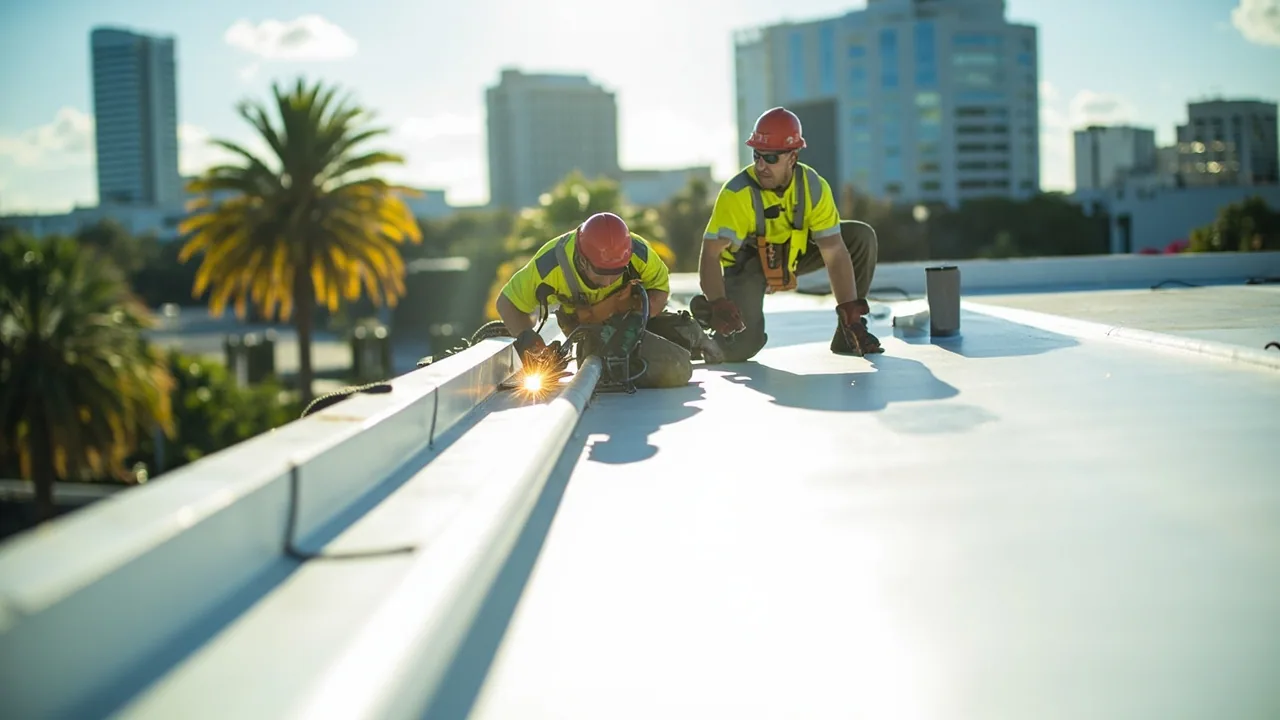
The city's planning map lists Industrial Lands as an employment district, and Clark County identifies Spring Valley as an unincorporated town in the western valley covering about 36 square miles. City and county rules differ, so code and permit requirements are confirmed for each address.
Nevada has adopted the 2024 International Energy Conservation Code, and the owner or designer should confirm the local requirements before the coating is specified, particularly if insulation is added. The scope lists the prep, the coating thickness, the primer, the details, and the recoat plan, and our coating restoration work includes a follow-up inspection so the owner can see the coating age.
Emergency leaks on a coated roof are handled with a temporary seal compatible with the coating, placed at any hour, and the permanent repair follows once the cause is traced. A leak that appears after coating is a prompt to check the details, since a coating over a missed penetration can move the entry point and not remove it.
Send the Roof Plan and Coating History
Share roof plans, access rules, leak dates, repair history, equipment changes, and operating-hour constraints. We will inspect the roof, test adhesion, and return a defined scope for coating or an alternative.