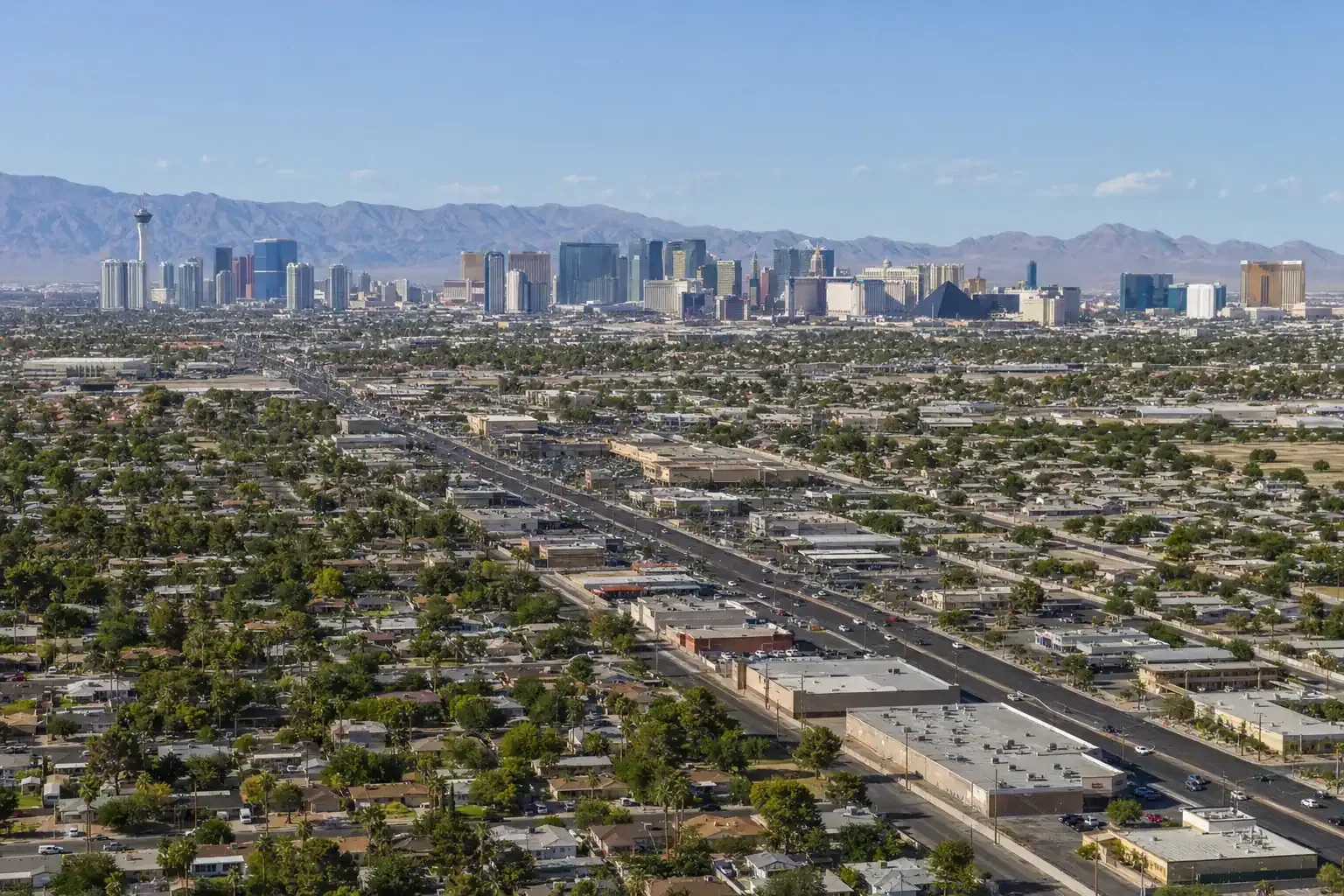
Set a roof repair or replacement scope for North Las Vegas Industrial Lands with assembly checks, drainage review, access planning, and clear findings.
Industrial Lands is an employment-district label in North Las Vegas's broad planning framework, not a count of operating businesses or a roof inventory. For a property request, we need the actual address, roof plan, and operating contact. We identify the visible assembly, map each roof zone, inspect penetrations and perimeter details, and trace any reported water entry toward its likely route. That field record gives the owner a repair boundary and shows where testing or a broader evaluation may be needed.
North Las Vegas shares the valley's desert heat, occasional monsoon storms, and gusty winds. Summer rain may arrive quickly, while regional wind events can carry dust; neither condition proves damage at a specific facility. Give us the date, leak location, and recent equipment changes so the inspection can focus on relevant zones. A commercial roof inspection can document the condition before a repair or capital decision is priced.
Map the roof assembly
Start by recording the membrane, coating, metal panels, visible laps, repair patches, and transitions. Mark system changes by zone. If insulation or deck layers are hidden, use available drawings and exposed edges, then keep unresolved layers marked unknown. Existing overlays can affect attachment, drainage, and removal. A proposal should not assume a new layer can be added until the current build-up and project requirements are checked.
Look at seams, curbs, expansion joints, penetrations, walls, and edge metal as separate details. Photograph fasteners, sealant, open laps, and areas where surface wear changes. A roof insulation review can record exposed conditions that affect repair or replacement. The assessment should show which detail failed, what adjacent material was checked, and whether the same assembly continues beyond the observed point.
Commercial Roofing Questions
Does Industrial Lands describe the roofs at a property?
No. It is a broad planning-area label. The building's address, drawings, visible assembly, and any approved testing establish the roof information used to scope work.
How should an owner prepare for a roof inspection at an active facility?
Provide access rules, safety requirements, escorts, operating hours, equipment constraints, loading limits, and the person who can approve interior access or testing. We use those details to plan the visit and work sequence.
Can a drain issue and membrane leak be handled in one proposal?
They can be documented together while keeping separate work items. We record outlet condition, membrane details, and the evidence linking each item to the report so the owner can approve the right scope.
When should a recover be compared with replacement?
Compare them after reviewing existing layers, attachment, moisture, drainage, load, and project requirements. We identify any test or record needed before recommending that another layer be considered.
What should the repair closeout include?
Keep dated photographs, roof-zone labels, materials, repair limits, access notes, and any open testing or approval item. Those details help the next inspection compare the same conditions and locate prior work.
More Roofing Detail
COMMERCIAL ROOFING IN NORTH LAS VEGAS, NEVADA
Follow the drainage path
Trace the slope from high areas to drains, scuppers, gutters, and roof edges. Note debris, standing water, low points, and places where runoff crosses a seam or flashing transition. A pond does not by itself establish membrane failure, and a blocked outlet is not the same scope as an open seam. Record each observation with a roof-zone reference and photograph the surrounding details so the owner can review what drove the recommendation.
After heavy rain, compare the interior report with the nearest roof outlet, penetration, curb, and wall transition. If the route remains unclear, identify whether infrared, capacitance readings, or an approved test opening could change the work boundary. A drainage inspection can address accessible outlet conditions, while a moisture survey may flag areas for confirmation when weather and roof conditions suit the method. Keep readings separate from confirmed wet material.
Check edges, curbs, and supports
Wind events occur more often in spring and fall across the valley, though stronger gusts remain infrequent. Stronger gusts are infrequent but may carry blowing dust and sand. When a facility reports wind exposure, inspect perimeter metal, terminations, seams, curb flashings, and equipment supports. Compare current observations with prior photos and maintenance notes. The event provides timing context; the condition at the property determines the repair or testing recommendation.
At each exposed detail, check the attachment and the substrate before deciding where a repair stops. Look for displaced metal, lifted flashing, open seams, or a path for water. A wind-damage review can record which zones were inspected and what remained inaccessible. Do not extend removal to adjacent areas unless the same condition is observed there or testing supports a wider boundary.
Coordinate active operations
Access rules can control the work window: escorts, safety orientation, hatch limits, loading routes, equipment shutdowns, and active production all need a site contact. Confirm where material can be staged and which roof zones must remain clear. If interior access is needed to trace a leak or protect inventory, name the contact who can authorize it. These operating details affect schedule and sequence, while the roof findings define technical scope.
Heat exposure, dust, wind, and product application limits also affect crew timing. Recheck the workday conditions and follow the selected system's instructions. For occupied facilities, phase the work so temporary protection and active routes are clear before a zone is opened. A phased reroof plan can set those boundaries and identify hold points for owner review. If concealed materials differ from records, stop at the agreed point and document the change before proceeding.

Set the repair or replacement scope
A defined puncture or failed flashing can support a local repair when surrounding materials remain sound. Repeated leaks, widespread moisture, unstable layers, poor attachment, or deck concerns may call for testing or a replacement review. A recover option depends on the existing assembly, attachment, drainage, added load, and project requirements. We compare options by roof zone and show the assumptions that affect cost, timing, and removal.
Include preparation, tie-ins, drains, curbs, edges, equipment protection, and exclusions in each scope. A recover evaluation should state what must be confirmed before work can begin. A roof condition report keeps photographs, observations, and recommendations together for approval. If code or energy requirements apply, verify the current jurisdictional requirements before design or permitting decisions rather than relying on a broad planning label.
Carry findings into the next visit
Closeout should preserve the roof map, dates, photographs, repair materials, and work limits. Identify areas not inspected, conditions that required testing, and any open item awaiting approval. If multiple buildings are included, keep each address and assembly separate. A future crew can then locate the repaired seam, drain, or curb without translating a vague note into a guess. For a large roof divided by production area, identify the safe access route and any equipment zone that cannot be crossed or shut down. Record where temporary protection begins and ends, who approved it, and which interior contact should be notified if water entry resumes. These details support a usable closeout and help the next inspection focus on the right roof area. The owner also has a record of what changed between visits.
Industrial Lands, Future Industrial Lands, and Apex Industrial Area are distinct place labels in the North Las Vegas framework. They do not establish present property use or roof type, so the building record remains the controlling reference for service. Schedule a maintenance visit after repairs or before the next capital review. Recheck drains, seams, penetrations, metal edges, and prior work, then update the condition history by zone.

Prepare the facility review
Send the property address, roof plan, leak dates, repair history, access rules, operating schedule, and equipment constraints. We will document the assembly and outline the next scope decision by roof zone.