
Built-up roofing in North Las Vegas, NV: ply and bitumen inspection, gravel checks, blister and alligatoring findings, and repair or replacement choices.
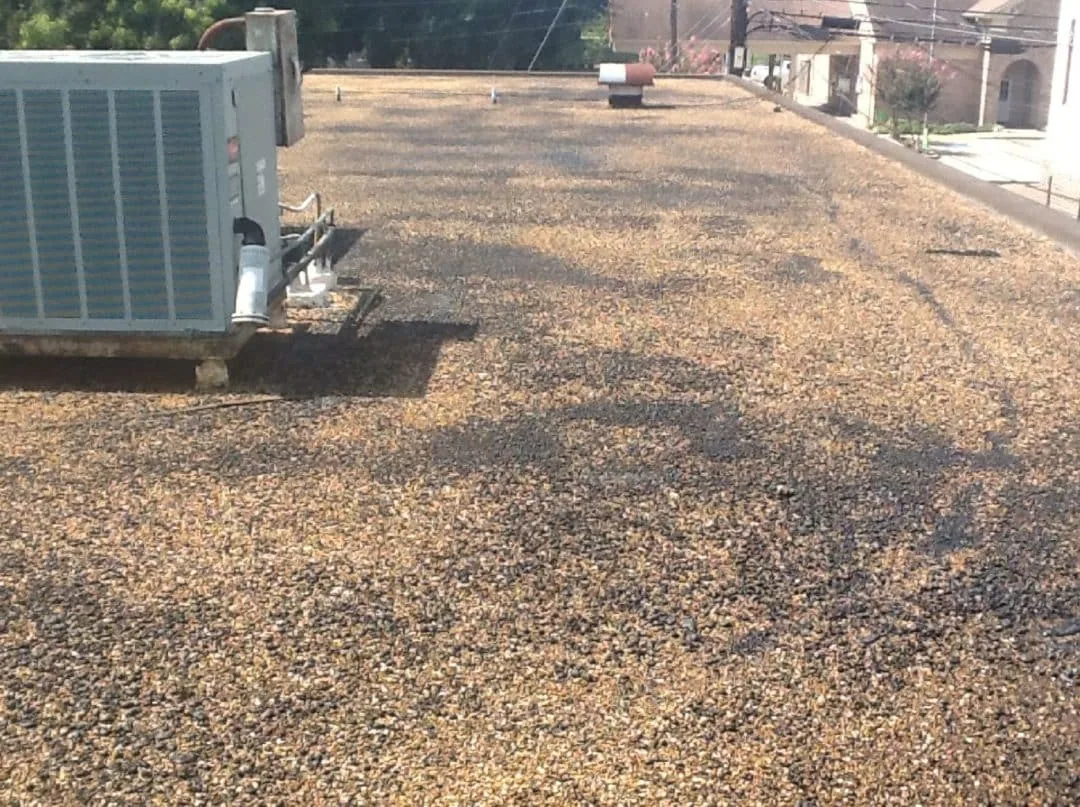
Gravel on a built-up roof is not decoration. It shields the asphalt below from sun and traffic, and when it migrates into a corner or washes toward a drain, it leaves bare asphalt behind. A manager can check this from the roof hatch: look for pale gravel piles at drains and parapets and dark, shiny asphalt where gravel should be. Those bare patches are the places to look first for cracking, because the surface protection is gone.
A built-up roof is a stack of reinforcing felts or sheets bonded with hot or cold-applied asphalt, topped with gravel, a cap sheet, or a coating. On commercial buildings in North Las Vegas, NV, we inspect, repair, and replace BUR. The inspection has to establish the number of plies, the surfacing, the moisture condition of the insulation, and the state of flashings and drains before the scope separates a repair from a recover or a tear-off.
Ply Count and Surface: Reading What Is Left
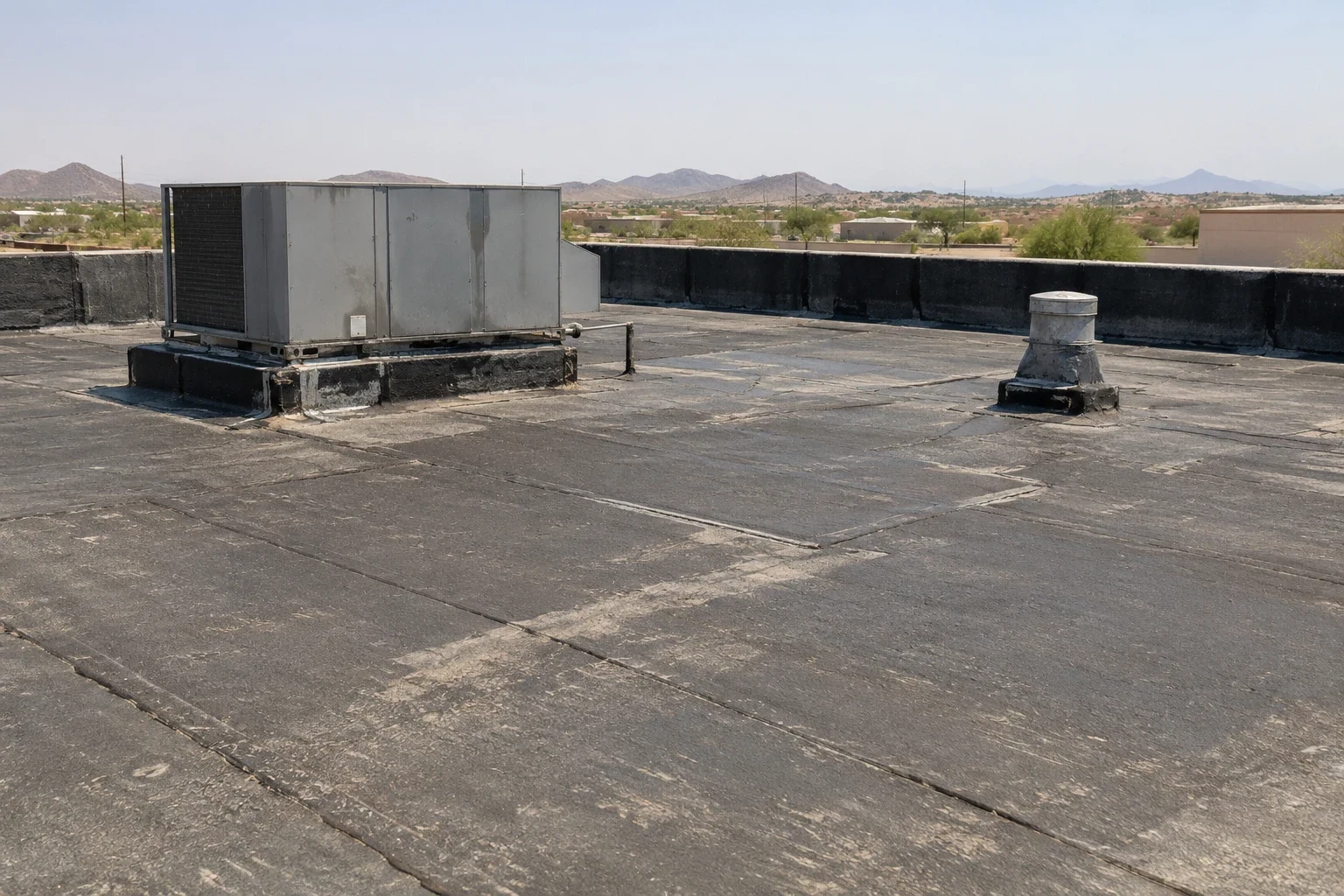
A test cut at an approved location reveals the plies, the asphalt between them, and the insulation below. We record the number of layers, the felt type, and whether the asphalt is still plastic or has turned brittle. A built-up roof with many plies and sound bitumen has margin. One with thin bitumen, exposed felts, or cut edges that crumble has little left.
The surface tells the same story from above. A gravel surface that is evenly spread protects the plies, while bare areas show where the surface has failed. A smooth-surfaced BUR with a coating shows chalking and cracking in the coat. We photograph the surface from the same positions on each visit and measure the size of bare areas, so the inspection record shows whether the loss is growing and how fast.
Weight is part of the record as well. A gravel BUR carries load on the deck, and tear-off or recover work has to account for it. We note the deck type and any signs of deflection near drains, because a low spot in a built-up roof is both a ponding point and a clue about the structure below.
Commercial Roofing Questions
Can gravel be put back on a built-up roof?
Yes, when the roof beneath is sound. The area is cleaned, a flood coat of asphalt is applied, and gravel is spread into it so the surface is bonded. Loose gravel dumped on bare asphalt will migrate. If the felts are exposed or the asphalt is cracked, re-graveling hides the damage, and a repair or cap sheet should come first.
What does alligatoring mean for the remaining life of a BUR roof?
It means the surface asphalt has aged and hardened, and that protection is thinning. It is not an immediate leak, but it is a signal to inspect plies and insulation. If the felts beneath are sound and dry, a coating or surfacing repair can extend service. If felts are exposed, wet, or brittle, the roof is closer to replacement than the surface suggests.
Is a built-up roof heavy enough to matter for a recover?
It can be. A BUR with gravel carries considerable weight, and adding a recover layer adds more. The structure and deck must be able to carry the combined load, and local code limits the number of roof layers in some cases. We review the existing assembly, check with the building department on requirements, and confirm the deck before recommending a recover.
How are leaks found on a gravel roof?
Interior stains give a starting point, but water travels between plies and across the deck before it appears. We trace from the stain to the high side, clear gravel at suspect flashing and drains, and use an infrared survey to map wet insulation. Core samples confirm the survey. Most leaks end up at a flashing, a drain, or a split, and not in the open field.
More Roofing Detail
COMMERCIAL ROOFING IN NORTH LAS VEGAS, NEVADA
Blisters, Alligatoring, and Splits
Blisters are raised pockets between plies, and a blister that is dry and small can be left alone or opened and sealed. A blister that fills with water or sits over wet insulation is a moisture problem. Alligatoring, a crazed pattern in the surface asphalt, shows that the asphalt has lost its oils and hardened. It is a warning of aging and not a leak in itself.
Splits and ridges follow the insulation joints and the deck seams, where movement concentrates. A split across the field can admit water directly into the plies and insulation. We probe splits to see their depth, check the felts under them for wetness, and mark a repair boundary beyond the visible crack. A ponding water repair may be needed when splits line up with the lowest part of the roof.
Flashings on a BUR are built from the same felts and bitumen, and they crack at corners and open at terminations. Base flashing repairs are made with compatible materials lapped into the field, and the old material is removed back to sound plies.
Moisture: What the Insulation Is Doing
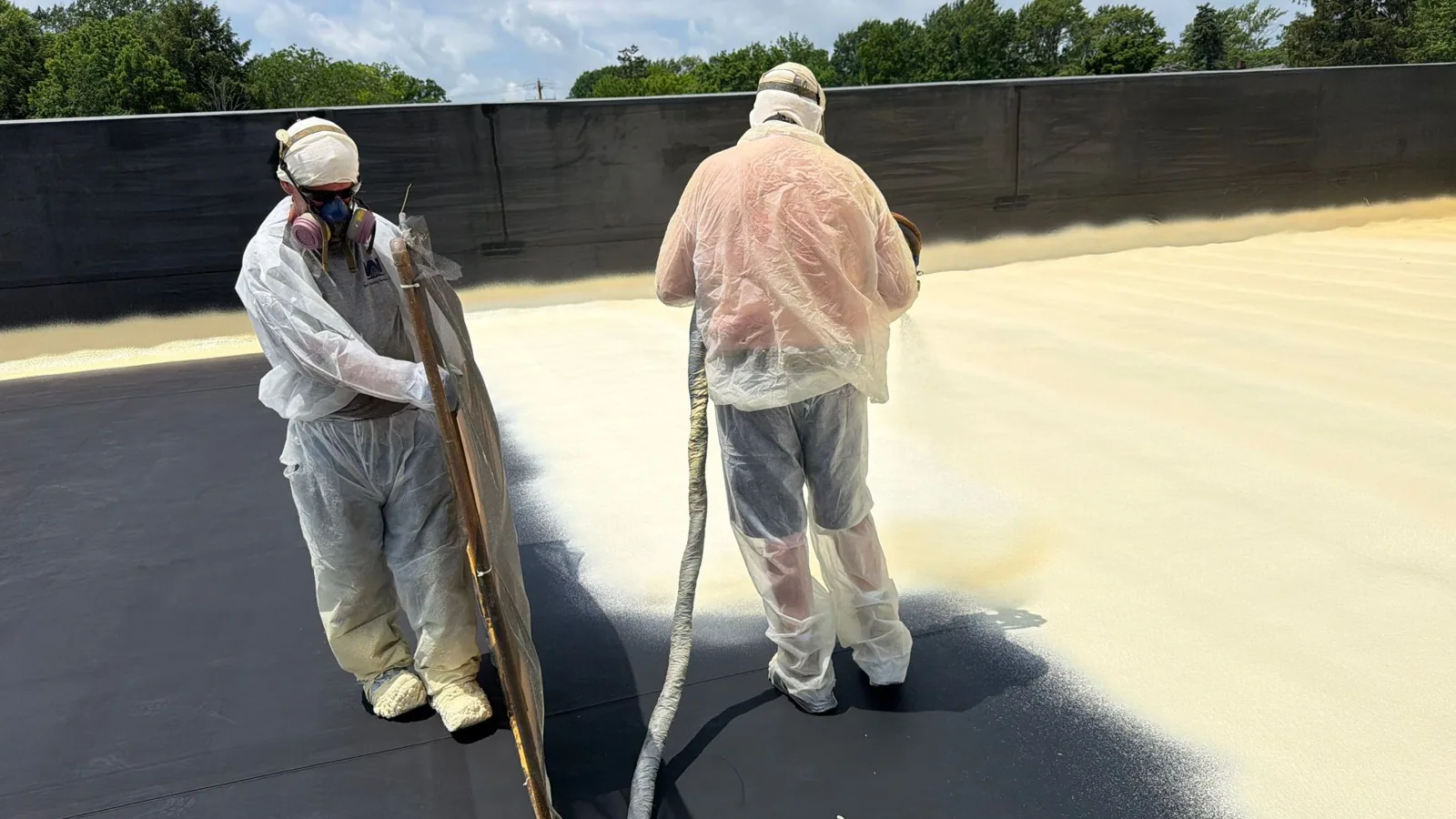
Water in a built-up roof travels through felts and insulation and appears far from where it entered. An infrared moisture survey maps the suspect zones, and cores confirm the finding. If the insulation is dry across most of the roof, targeted repairs make sense. If it is wet across large areas, patching becomes a cycle of leaks.
Flash flooding in dry washes and low areas follows heavy July and August thunderstorms, and the roof drainage on a built-up roof has to clear before then. A roof with weak drainage and exposed felts takes on water quickly in that setting. Drains are cleared and gravel guards or strainers checked before those months, so the water has a path off the roof and not into the plies.
Heat Exposure and Gravel Behavior
A hot, sunny desert bakes the surface, and spring and fall wind events carry dust and sand onto the gravel or cap sheet. Heat softens asphalt at the surface and moves the roof through daily cycles, and wind can push loose gravel toward edges and drains. Both are regional exposures, not findings about any one roof.
We check for gravel at edges and in drains, and for soft or flowing asphalt on slopes. Re-spreading gravel with a fresh flood coat may restore surface protection on a sound roof, while a roof with exposed felts may need a different approach. Where the plies are sound but the surface has worn, a coating or a new cap sheet can restore protection, and a modified bitumen cap sheet over a sound BUR base is one route.
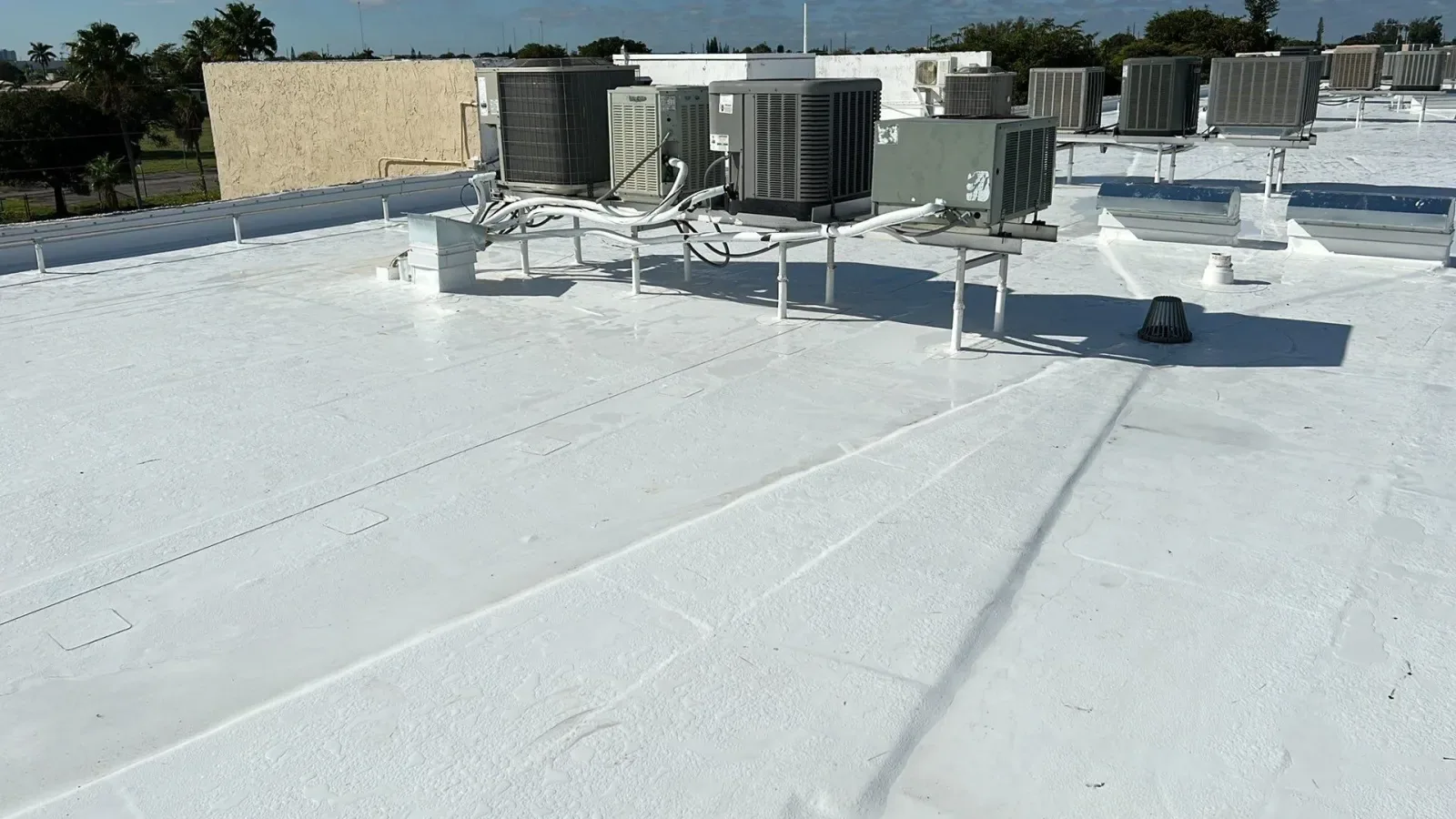
A fluid-applied coating, such as acrylic, can seal and reflect over a sound smooth-surfaced BUR once the gravel is removed or the roof is already smooth. It does not hide open plies, and the plan names the preparation: cleaning, repairs, and priming before the first coat goes.
Repair, Recover, or Replace: Setting the Boundary
The inspection ends in a decision. Isolated blisters and flashing defects on a roof with dry insulation get repaired. A roof with sound plies and dry insulation but a worn surface may take a coating or a cap sheet. A roof with wet insulation across much of the field, brittle bitumen, and recurring splits needs replacement. A recover overlay is possible when the existing roof is dry, stable, and able to carry the added layer.
Tear-off of a gravel BUR creates weight, dust, and debris, and we plan hauling and protection accordingly. On buildings in the Central District or Ranch Estates areas of the city's planning map, access and staging are confirmed before work, and the written scope marks the boundary so the owner can see what is fixed and what is left.
Send the Roof Plan and Leak Dates
Share roof plans, access rules, leak dates, repair history, equipment changes, and operating-hour constraints. We will inspect the built-up roof and return a defined scope for repair, recover, or replacement.