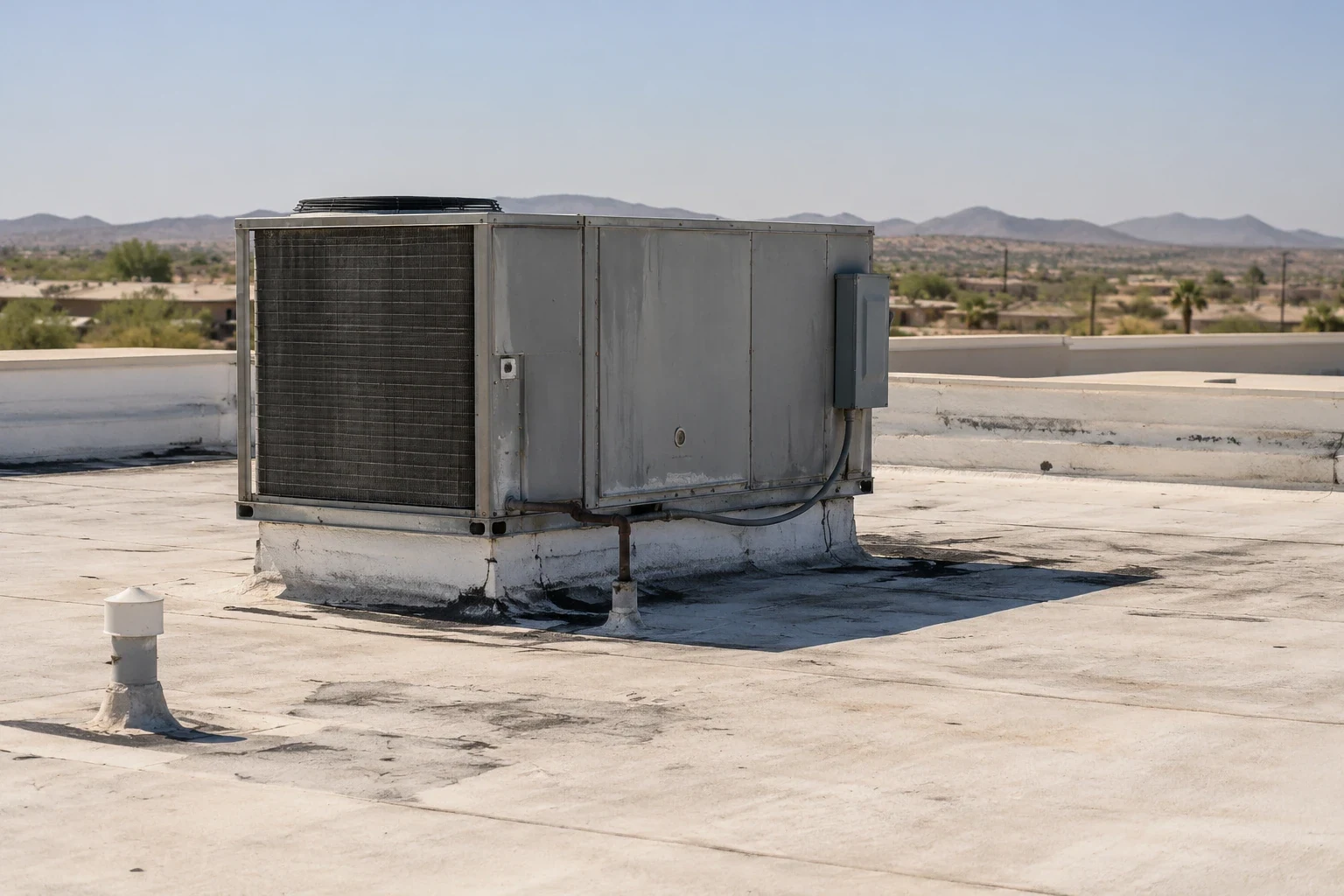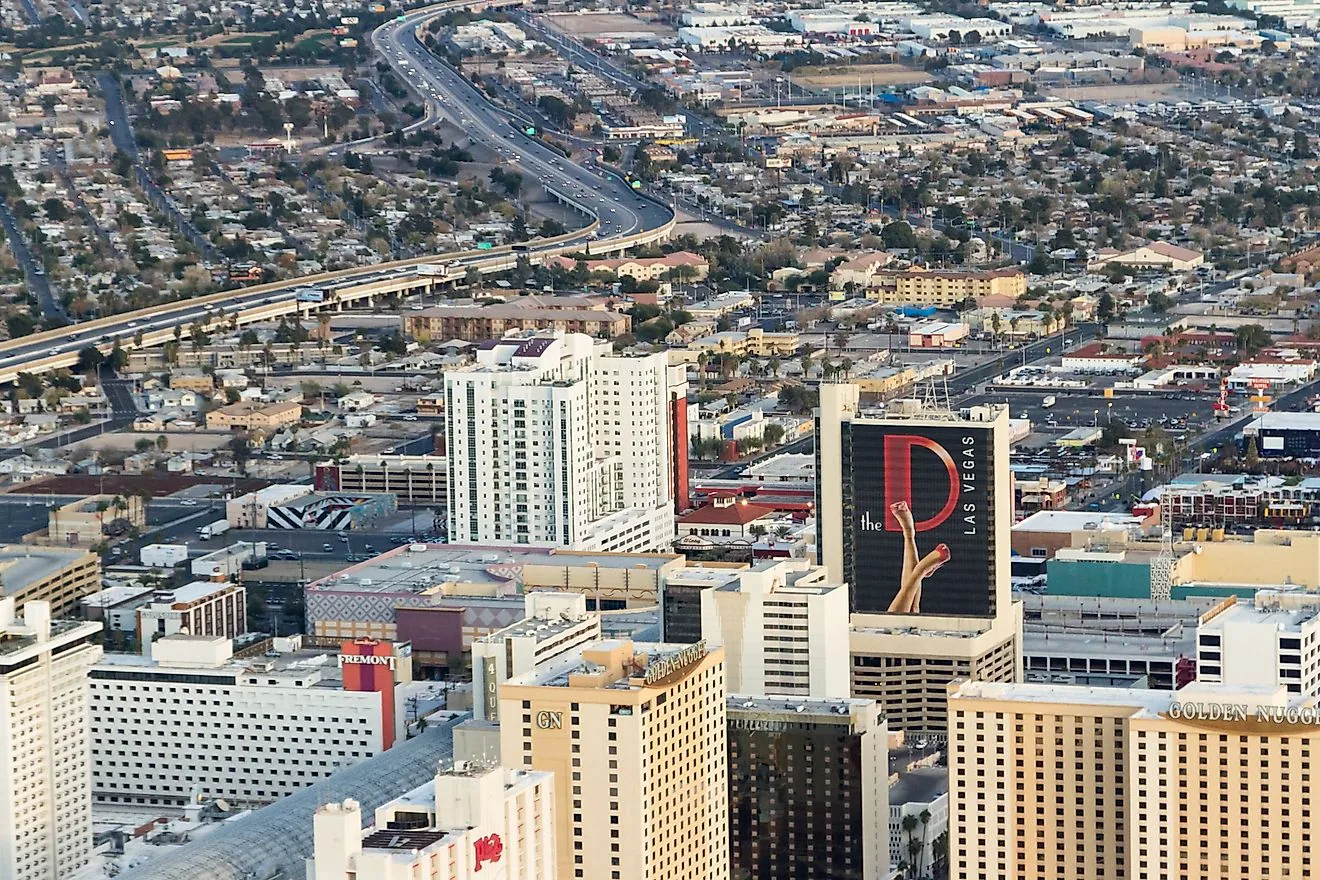
Commercial Roofing North Las Vegas inspects, repairs, restores and replaces commercial roofs in North Las Vegas, NV, with a written record for every job.

Every job here begins with a roof condition that someone in the building can point to, and the first task is to establish what that condition is. Before scope or price is chosen, the inspection has to show where water or heat is getting in, which roof zone it belongs to, and what can be proved on site. We are a commercial roofing contractor for North Las Vegas, NV, and this is how we work.

We repair, replace, recover, restore, coat, inspect and maintain low-slope and metal commercial roofs. Our crews install TPO, PVC, EPDM, KEE, modified bitumen, built-up, standing seam and retrofit metal, spray foam, and silicone and acrylic coating systems. We work on occupied buildings and plan around tenants, operations and schedules, and emergency response runs around the clock, including holidays.
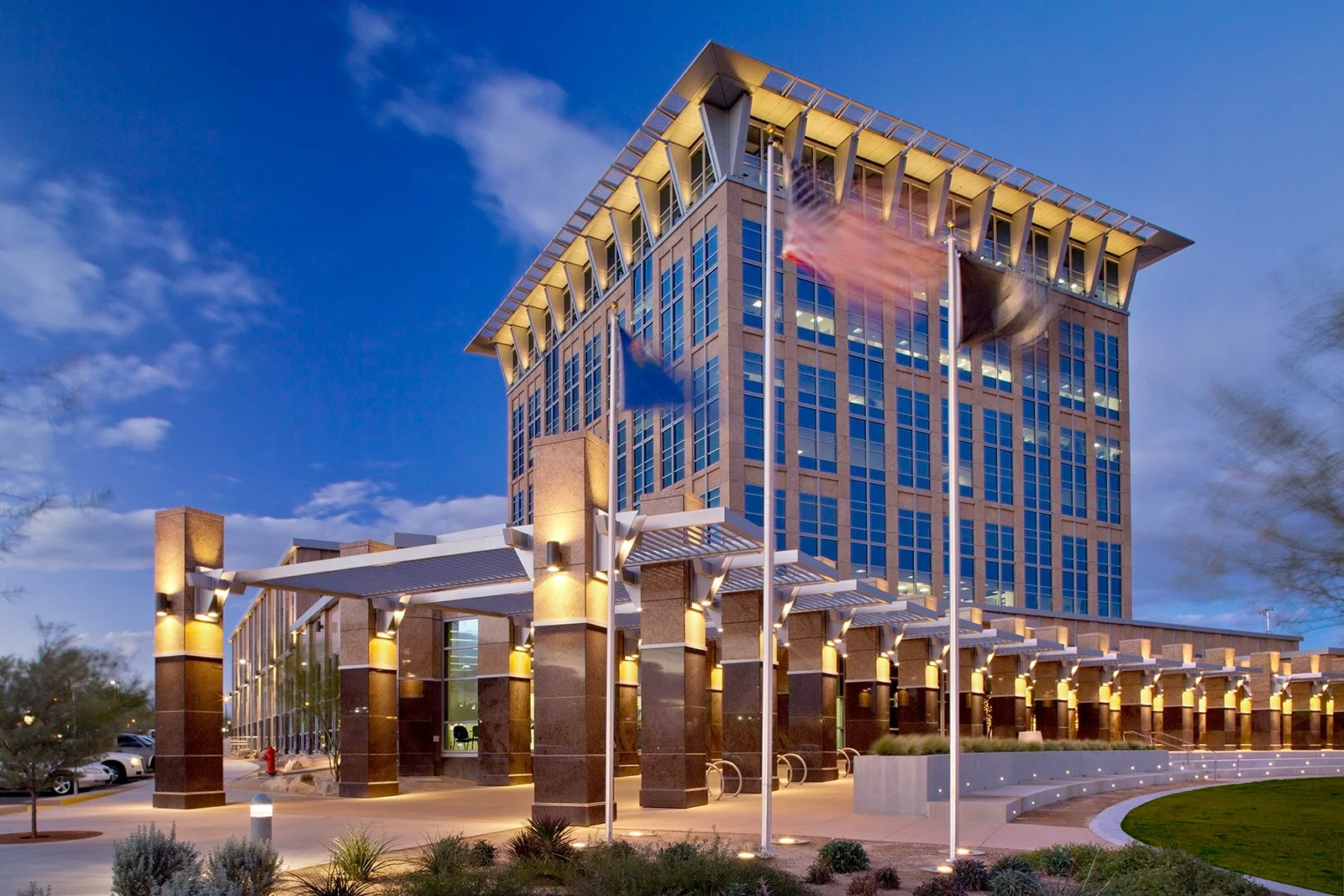
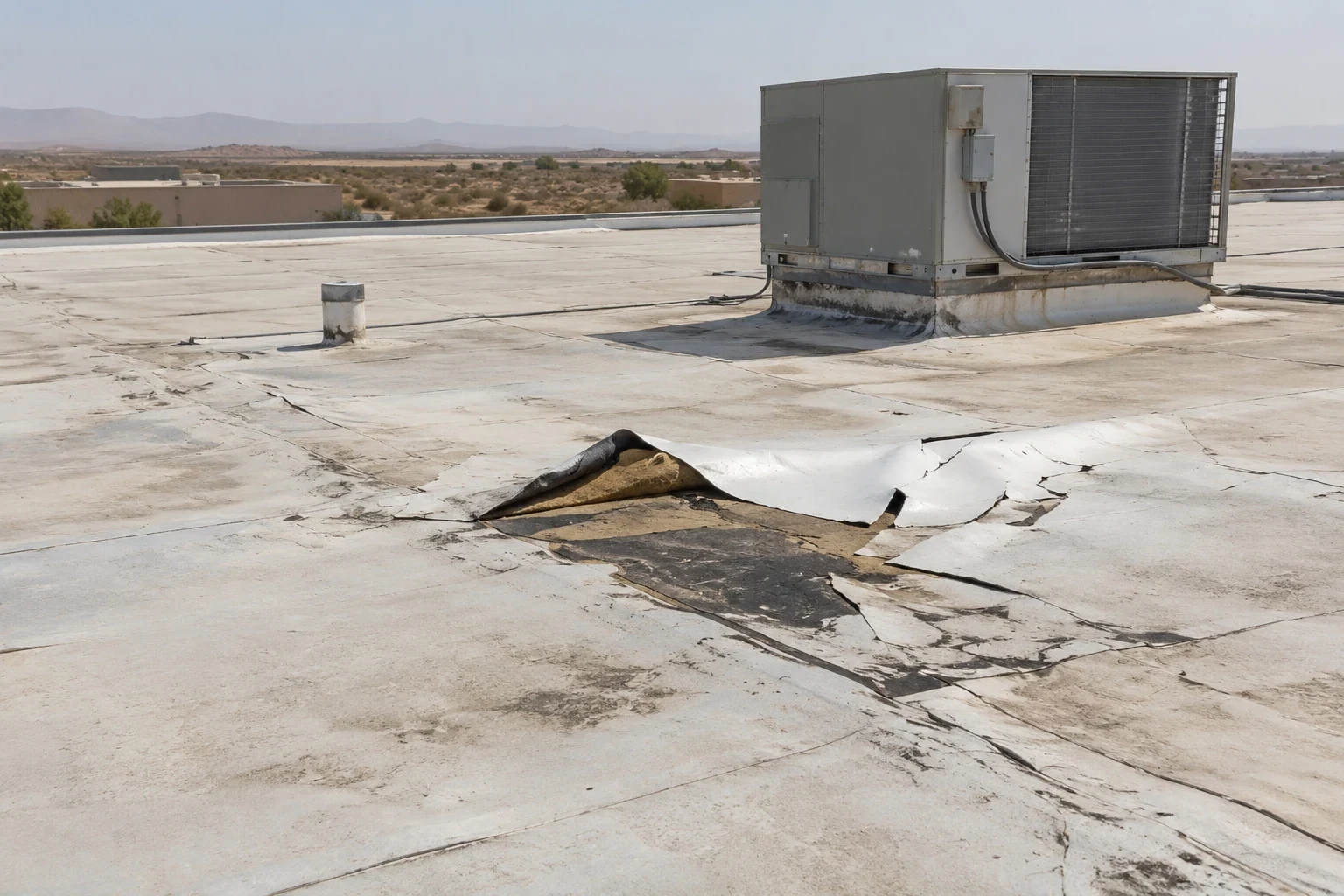
North Las Vegas commercial buildings
Approach: evidence before scope

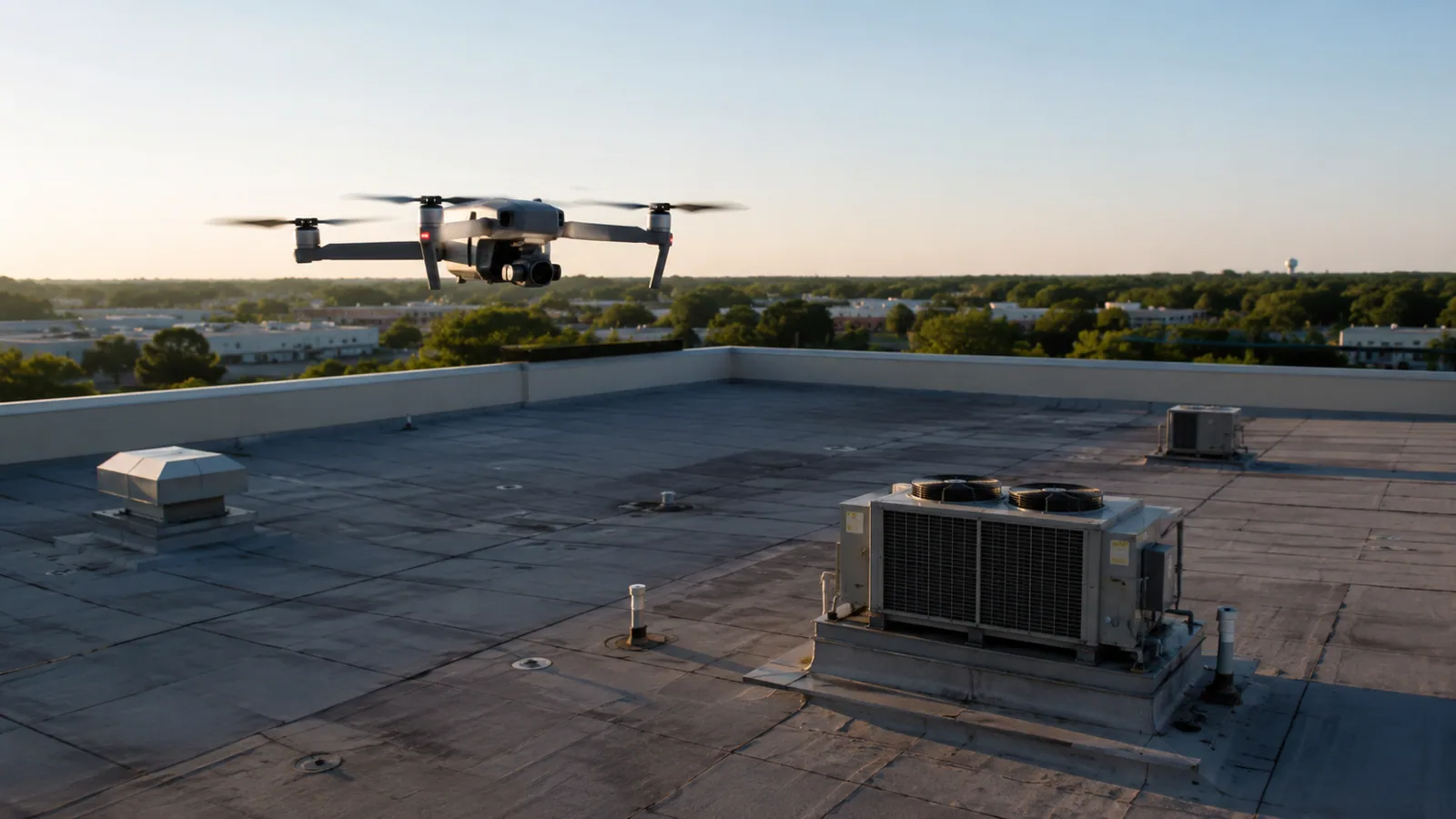
A roof is read as a set of zones. Each zone has a membrane, a drainage path, edges, penetrations and equipment, and each can fail independently. We walk every zone, photograph the conditions, and note what could not be reached. A hands-on inspection comes first, and where the question calls for it, a drone roof inspection or an infrared moisture survey adds evidence about areas that are unsafe or hidden.

The written report separates what is visible from what needs testing. A roof can look dry after a storm while the insulation below stays wet, and a pond alone does not tell us the membrane has failed. That separation protects the owner from paying for a repair aimed at the wrong cause and from skipping a repair that the evidence supports.

When the report is finished, the owner has photographs, roof zone labels, a priority list and a plain statement of which items are repairs, which need testing and which point to a larger review. The report is the foundation for every later decision, from a patch to a commercial roof replacement.

About Commercial Roofing North Las Vegas
Climate: heat, wind and short storms

The Las Vegas Valley is hot, dry and sunny for most of the year, according to the National Weather Service, with short monsoon storms in July and August that bring wind, hard rain and the chance of flash flooding. Wind is more frequent in spring and fall. The official climate station is at the airport in the south valley, so these figures are regional context and not a reading taken at any North Las Vegas roof.

We treat that context as exposure, not as a diagnosis. Heat ages membranes, sealants and coatings. Wind loads edges, corners and rooftop equipment. Short, heavy storms test drains, scuppers and seams within an hour. Each of those pressures is checked against the roof itself, and a conclusion about damage is drawn only from what the inspection finds.

Buildings: who the work is for

The roofs we work on belong to people with operations to run. Transportation and warehousing receipts in the city were reported at $704.951 million for 2022, so warehouse roofing and distribution center roofing shape much of our planning. Retail sales were reported at $3.796 billion that year, and health-care and social-assistance receipts at $1.483 billion, which is why shopping center roofing and medical office roofing matter as well.

Our clients are property managers, investors, facilities leads, school and agency staff, healthcare groups and general contractors. Each reads a roof report differently, and the report is written for the person who will act on it. The work spans many building types and the owners who run them, from a single-tenant shop to a multi-building campus.

About Commercial Roofing North Las Vegas
Sequence: how a project runs

Projects run in a set order. The first step is the walk, with the plan, the roof zones and the access route. Next comes the scope, written with repair boundaries marked against fixed features such as a curb, a seam or a wall. Staging comes third: where material is stored, where the crane or lift sets up, and how the dock, the entrance and the parking are protected.

Then the roof is opened in sections sized to what can be sealed the same day. Dry-in is the priority, and temporary protection is staged ahead of any storm. Tie-ins are photographed before they are covered. The last step is a closeout walk with the building team, where every tie-in, drain and edge is checked and the photo log is handed over.

The same sequence applies on a small repair and a full tear-off, scaled to the job. For work where access is the constraint, such as an occupied building reroof, the sequence is set with the facility lead before a crew mobilizes.

Weather adjustments are made on the roof, not on paper. If a monsoon cell is forecast for the afternoon, the crew leader shortens the open area in the morning, stages membrane and sealant at the edge of the section and holds back tear-off that cannot be closed by evening. In dry shoulder weeks the sections grow, and the closeout walk covers more ground.

Records: what stays with the building

The inspection record, the photographs, the repair boundaries and the warranty paperwork belong to the owner. Keeping them together matters most when staff changes, when a building is sold, or when a claim is filed. Roof condition reports and roof asset management keep that file current, and a preventive roof maintenance program adds a dated visit each season.

For owners with several buildings, a shared format makes roofs comparable and helps rank spending. Estimates describe cost drivers in plain terms, such as access, roof area, moisture found at tear-off and the number of details, and they never rely on invented figures.

About Commercial Roofing North Las Vegas
Geography: where we work

North Las Vegas covers 101.28 square miles of land, from dense areas to lower-density ones. We organize visits by broad planning areas including Downtown North Las Vegas and the Apex Industrial Area, and by nearby parts of the valley. Those labels are service geography. A roof is described only from what we find on it.

Commercial Roofing Questions

What does a first visit actually produce?

A dated record of each roof zone with photographs, a list of defects ranked by urgency, and a clear statement of what could not be checked. You also receive a recommendation on whether the next step is a repair, a test or a larger evaluation.

Do you work while the building is open?

Yes. We plan around tenants, operations and schedules, and we agree access windows, dock use and noise hours with the facility lead before the crew arrives.

How quickly can a leak call be answered?

Emergency response runs around the clock, including holidays. The first visit secures the opening with a temporary measure and records where the water entered, and the lasting repair is scheduled after the cause is found.
Which codes apply to a roof project in the city?

Nevada has adopted the 2024 energy conservation code, and its public works projects reference the 2024 IBC and IEBC, but the city's adopted edition governs a private roof, so we confirm which one applies before design begins.

Can you help with an insurance claim?

We prepare the roof record: dated photographs, measured damage areas and a written repair scope. Coverage decisions stay with the owner and the carrier.

Share the roof record and your constraints

Send roof plans, access rules, leak dates, repair history, equipment changes and operating-hour constraints. The inspection will be set up to answer a defined question for your building.

Call555-555-5555