
Arrange around-the-clock commercial roof response in North Las Vegas, protect occupied areas, and document a safe temporary or permanent repair.
An active leak calls for a safe plan that protects people and operations while the roof is assessed. Give the response team the affected room, current water activity, roof access point, and any electrical or process hazard. We can respond around the clock, every day of the week and on holidays. The first objective is a safe inspection and a documented plan for temporary control or a repair that can be completed under current conditions.
In North Las Vegas, gusty wind and short periods of heavy rain are part of the broader Las Vegas Valley's summer monsoon context described by the National Weather Service. That regional weather information helps frame the call timeline, but it does not establish what happened to a particular roof. Record when water began, the wind or rain observed at the property, and where the interior mark appeared. A later commercial leak repair investigation can trace the entry path if an emergency measure is needed first.
Triage the building before dispatch
Tell the facilities lead whether water is actively dripping, spreading across a ceiling, collecting near electrical gear, or affecting a production, care, or customer area. Keep people away from sagging ceiling materials and standing water. Do not climb onto a wet roof, remove ceiling panels below an active leak, or handle electrical equipment exposed to water. If there is immediate danger, follow the building's emergency procedures and call the appropriate public responder before roof work.
Give the crew a contact who can open the roof access and identify restricted spaces. Share roof plans, leak history, recent service work, and known membrane or metal system if those records are available. If the property has several roof levels or tenant suites, mark the affected room and floor.
COMMERCIAL ROOFING IN NORTH LAS VEGAS, NEVADA
Make roof access deliberate
Before anyone goes up, confirm the ladder or hatch, escort rules, fall-protection requirements, weather exposure, and any restricted work hours. Wind, lightning, standing water, poor visibility, or unstable access can change what is safe to inspect. The response lead should know who can authorize a temporary opening, move stored property, pause equipment, or approve an expanded repair.
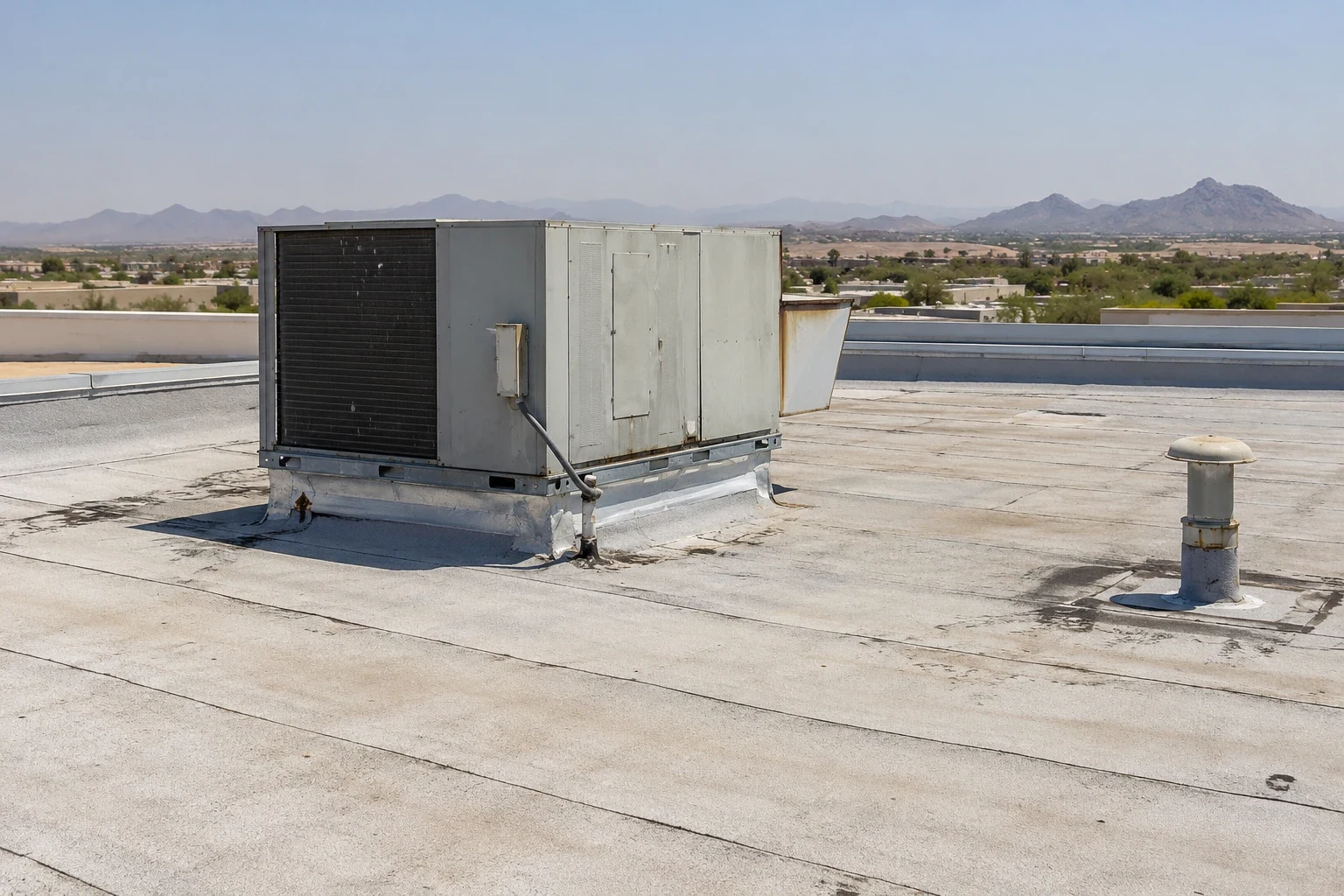
On arrival, map the leak report to a roof zone and photograph conditions before disturbing them. Identify drains, curbs, seams, walls, penetrations, roof edges, and rooftop units that may be near the water path. Check for loose membrane, a displaced termination, an open lap, a puncture, or a blocked drainage route.
Choose temporary control with a next check
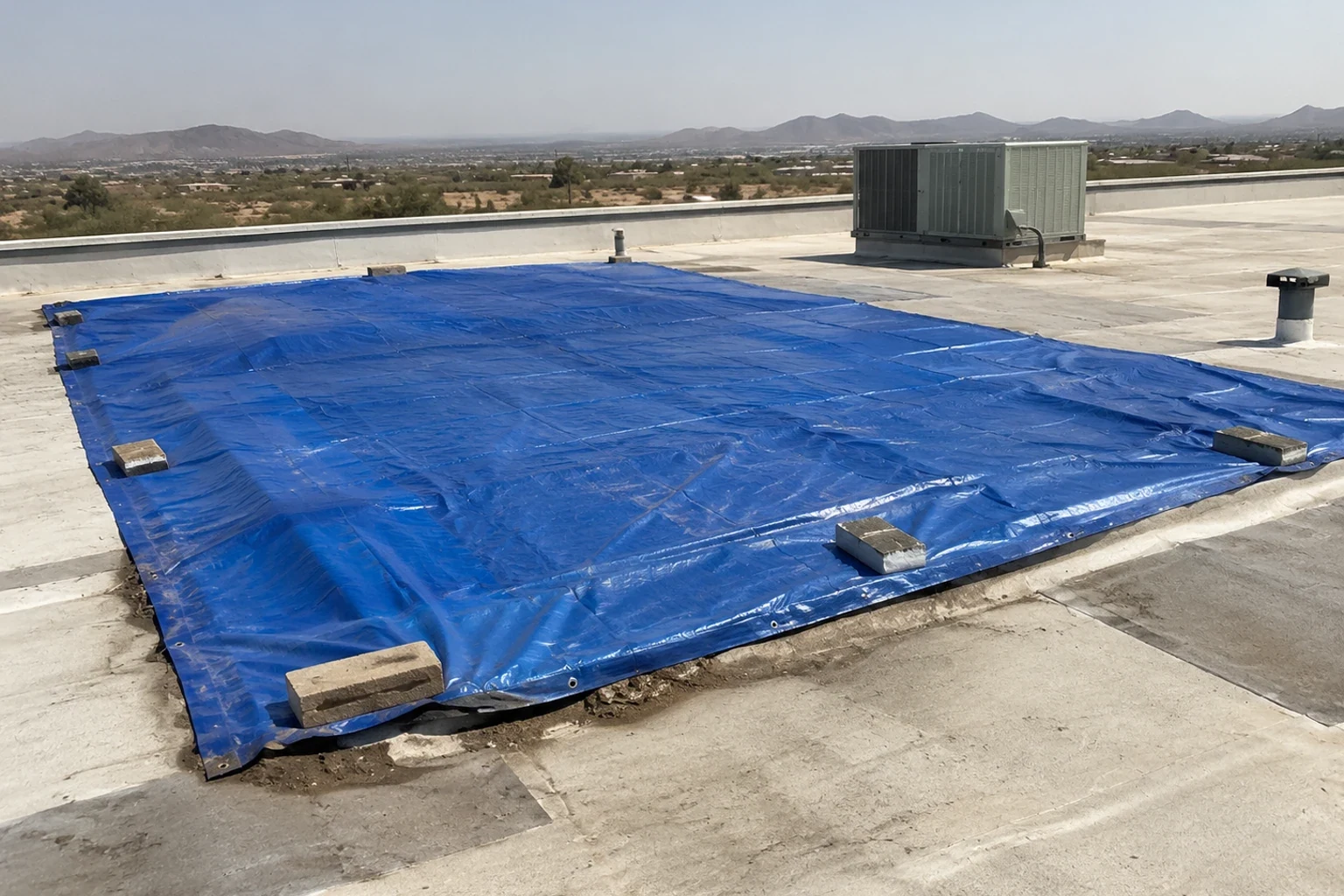
A temporary measure can reduce immediate exposure while a permanent repair is scheduled, but it should have a location, installation record, and follow-up point. A tarp or sealant applied over a wet, dusty, or incompatible surface may move with wind or trap moisture. The crew should describe what was used, what it can reasonably control, and what remains exposed.
Protect inventory or equipment below the leak when staff can do so without approaching a hazard. Use containers or barriers only where they will not create a trip or electrical risk. If a ceiling is bulging or material is falling, keep the area clear and follow the property's safety plan. A facilities contact should know when the temporary material needs inspection, removal, or conversion to a permanent repair, especially if another storm is forecast.
Separate emergency work from permanent scope
Emergency work may stop or limit active entry, while a lasting repair requires a sound tie-in to compatible roof material. Once access and conditions allow, identify whether the defect is at a membrane seam, flashing, curb, drain, edge, metal panel, or another transition. Mark the work boundary against a roof-plan feature and state what will be removed, dried, replaced, or prepared. If wet insulation or damaged deck extends beyond the first opening, document it and obtain approval before expanding the scope.
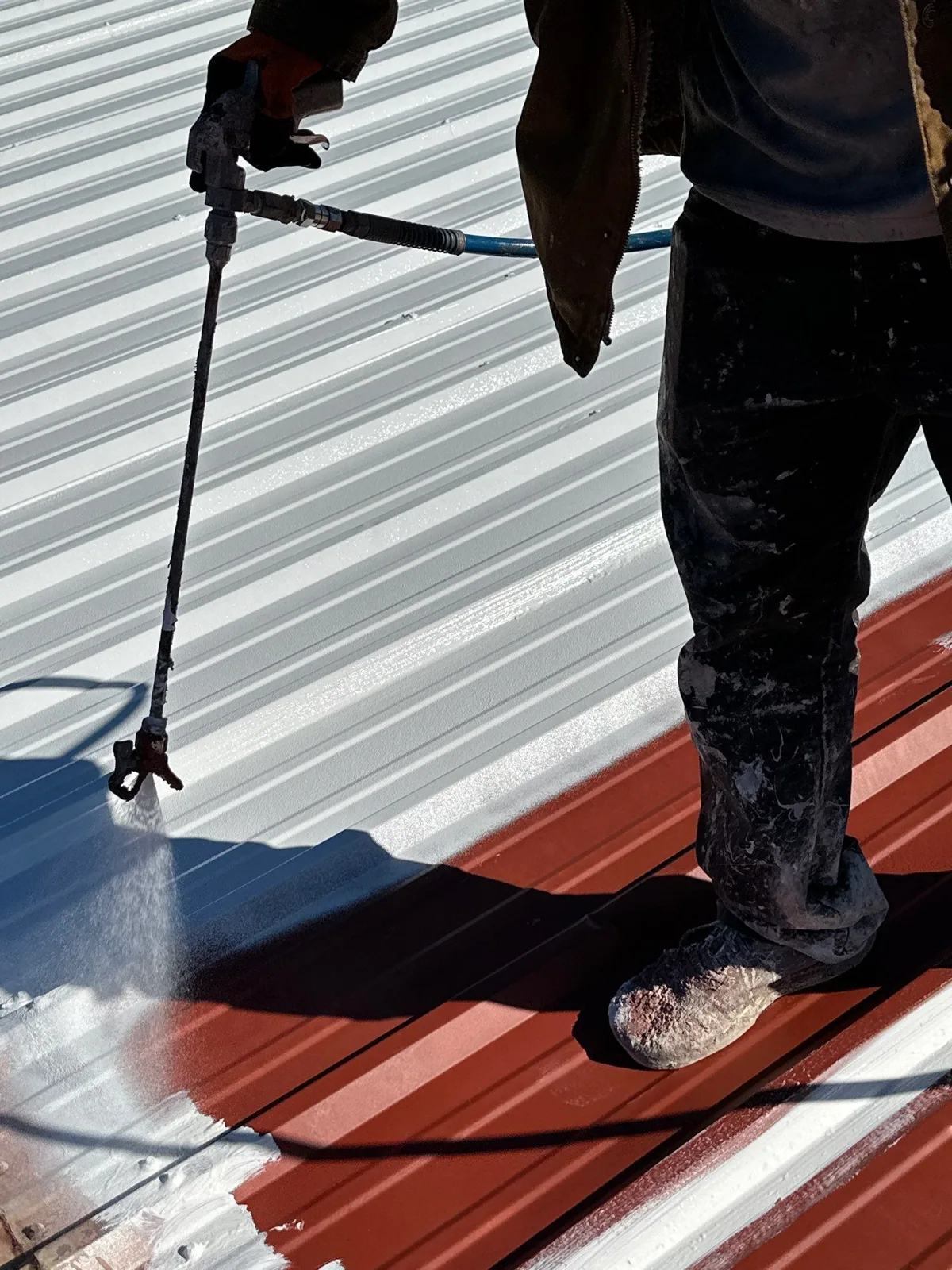
For sheet membranes, the repair detail must suit the actual system and substrate. Heat-welded thermoplastic material, adhered EPDM, coated surfaces, and metal roofs need different preparation and closure steps. If the product is uncertain, examine an exposed edge or available record before selecting a patch. Keep the emergency ticket separate from later corrective work so the owner can see what was done during response, what was found after testing, and what requires another authorization.

Protect the work area and operating schedule
Coordinate roof access with the person responsible for tenants, staff, customers, or production. Set a route for tools and removed material, protect the area beneath the repair, and agree on any temporary shutdown needed around rooftop equipment. Tell occupants which spaces are affected and when the crew expects to enter them.
North Las Vegas includes broad commercial planning areas such as the Industrial Lands and Downtown. Those are broad service areas, not access instructions for a specific property. Each operator supplies the site requirements. For a roof near the Cheyenne Technology Corridor, the facilities lead should still confirm escort, equipment, and working-hour limits directly.
Leave a useful response record
Record the call time, weather reported, affected interior location, access conditions, roof zone, and observations. Photograph the initial condition, the temporary measure, the materials opened, and the finished detail. List any area that could not be inspected and why. Note whether the response controlled active water, completed a permanent repair, or only stabilized the area pending testing. A precise closeout prevents a later crew from treating a temporary patch as proof that the source has been corrected.
Connect each photo to a location on the roof plan or a measured landmark such as a drain, curb, wall, or seam intersection. Keep the owner informed if material removal reveals wet insulation or deck damage. If the leak returns, compare its location and timing with the first record rather than repeating the same patch without review. A commercial roof inspection can extend the investigation to neighboring zones when evidence points beyond the emergency repair.
Make the emergency call actionable
Call and share the site address privately with the dispatcher, the affected room, active water status, roof access instructions, and the name of the onsite contact. Give the exact address to dispatch by phone, since the crew needs it to reach the property. If available, send a roof plan, system type, interior photos, previous repair notes, and equipment restrictions. We serve the wider North Las Vegas area, including broad districts such as the North 5th Street Transit Corridor and nearby commercial areas.
Our response team is available every day, including holidays. The visit establishes safe inspection limits, immediate controls, and evidence needed for a permanent scope. A drainage path review can be added when runoff is part of the report. When the roof is safe and access is approved, we document the defect and boundary.
Commercial Roofing Questions
What information speeds up an emergency roof response?
Give the dispatcher the property address, affected room, whether water is still entering, roof access instructions, and the onsite contact. Mention electrical hazards, occupied spaces, roof-system records, or any area that must stay open.
Can a crew repair a roof during rain or high wind?
Only work that can be performed safely under current conditions should proceed. Wet surfaces, lightning, wind, and visibility can limit roof access and material installation. The crew can explain whether temporary protection is feasible and when conditions permit a permanent tie-in.
Does an emergency patch finish the leak investigation?
Not always. A temporary measure can limit entry while the source remains uncertain. The response record should identify the patch location and what could not be checked. A later inspection may need to examine adjacent seams, penetrations, drainage, or concealed materials.
What should occupants do under a leaking ceiling?
Keep people and movable equipment clear if water is near electrical systems or ceiling material is sagging. Do not touch wet electrical equipment or enter a space with falling material. Follow the building safety plan and alert the facilities contact.
How do we know whether the emergency work is permanent?
The closeout should say whether the crew completed a compatible permanent repair or applied temporary control pending further work. Photos, material details, the repair boundary, and any unresolved moisture or access limitation help the owner make that distinction.
More Roofing Detail
Call for around-the-clock roof response
Share the affected space, active water status, access instructions, and onsite contact. We will confirm a safe response plan and document whether the visit can complete a permanent repair or needs follow-up testing.