KEE roofing in North Las Vegas, NV: PVC-alloy membrane identification, welded seams, chemical and grease exposure, heat wear, and repair decisions.
Many building managers cannot say what membrane is on their roof, and KEE is the one most often mistaken for something else. It looks like a PVC sheet, welds like a PVC sheet, and shows up in the records as PVC or just single-ply. The difference matters because repair materials and cleaning methods that suit one thermoplastic can leave a weak weld on another. The first job in a KEE inspection is to confirm what the sheet actually is.
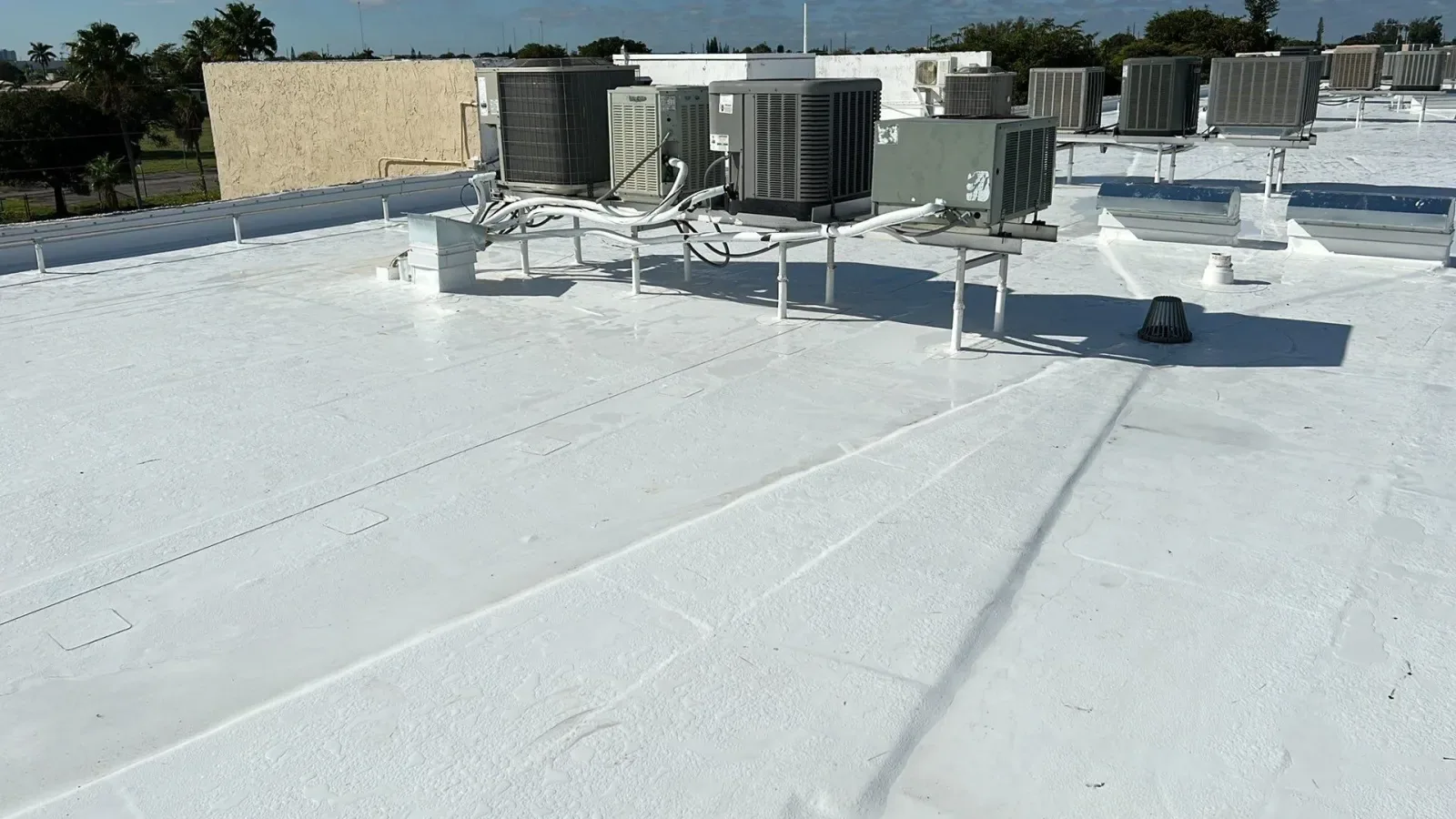
KEE is a PVC-alloy membrane built with ketone ethylene ester, a polymeric modifier intended to resist the loss of flexibility that affects some plasticized sheets. It is used where roofs see grease, oils, or chemical vapor. The inspection on a North Las Vegas building establishes the membrane identity, the weld quality, the flashing details and the exposure from vents and equipment, and then separates a repair from a plan for restoration or replacement.
Membrane Identity: Confirm Before You Patch
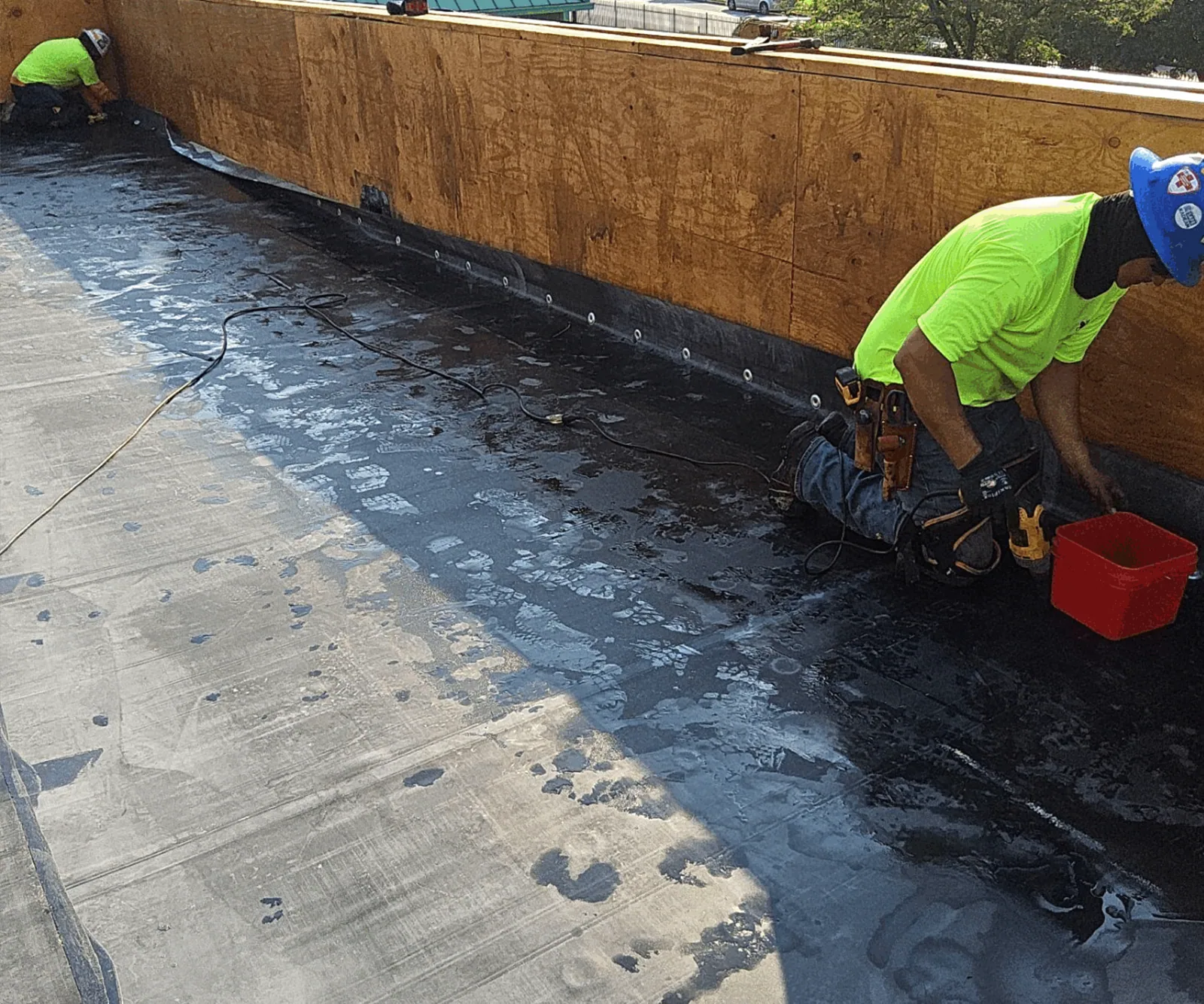
Records come first: the specification, warranty papers, and installer invoices. If they are missing, the field has to answer. We note the sheet color and texture, the seam width and weld pattern, the scrim visible at cut edges, the thickness at an approved test cut, and the attachment method. Where the evidence still leaves doubt, a small sample can be sent for identification before the repair material is chosen.
The point is compatibility. A patch of an unmatched thermoplastic may weld to the surface and look sound, then peel at the edge when the roof heats and cools. We record the identification result and its evidence in the inspection record, with a flag for any zone where the membrane is unconfirmed. That flag stays until the zone is verified, so no crew treats a guess as a fact on the next visit.
Identification also helps with warranty questions. If a roof was sold as one system and installed as another, the paperwork and the roof disagree, and the owner needs to know that before a claim is filed. We note mismatches in the report in plain terms and leave the decision about what to do with the manufacturer to the owner.
Commercial Roofing Questions
How can I tell KEE from PVC on an existing roof?
Records are the best route, but the roof can help. Look at the specification, the warranty, and any product labels left on equipment curbs. A cut sample taken at an approved location can be identified in a laboratory if there is no paperwork. Until the sheet is confirmed, we use welds and materials that suit PVC-family sheets generally and flag the zone as unconfirmed in the record.
Does KEE need different cleaning than other thermoplastics?
Cleaning methods should match the membrane and the residue. Mild detergent and soft brushes work for dirt on most thermoplastics, and grease may need a degreaser that the sheet tolerates. Harsh solvents can damage seams. We test any cleaner on a small area before using it on a zone, and we avoid pressure that can drive water under seam edges.
What happens when exhaust drips onto a KEE roof?
The sheet resists many such materials, but residue can still collect, stain, and attract dirt. Containment trays at exhaust fans, scheduled cleaning, and walk pads at service points reduce the load. Where staining persists near a vent, we check the seams and flashings in that zone first, because a weakness there would show up before the field of the roof.
Is a KEE roof worth restoring or should it be replaced?
Restoration makes sense while the sheet stays flexible, the seams hold and the insulation tests dry. A moisture survey and test cuts give those answers. A sheet that cracks at folds, or insulation that is wet across much of the field, points to replacement. We write both options with the evidence so the owner can compare cost, disruption, and expected service.
More Roofing Detail
COMMERCIAL ROOFING IN NORTH LAS VEGAS, NEVADA
Exposure: Grease, Oils, and Chemical Vapor
KEE earns its place on roofs where exhaust carries aggressive material. Kitchen exhaust, process vents, and laboratory or industrial discharge all reach the membrane in different ways, and the downwind area of each vent shows where. We map every discharge point on the roof, record what comes out of it, and inspect the surface nearby for softening, staining, and seam damage.
The Census Bureau reports $1.483 billion in North Las Vegas health-care and social-assistance receipts for 2022, a broad citywide indicator and not a list of facilities. Roofs on hospitals and manufacturing plants commonly carry exhaust and process vents, so the vent map belongs in every inspection of those property types, whatever membrane is installed.
Walk pads protect the sheet where service staff step, especially near fans that need regular filter changes. Staff carrying grease buckets or chemicals across the field are a hazard, and a marked path with pads limits the damage to a line the inspection can watch.
Weld Quality: Seams, Flashings, and Details
KEE seams are fused with hot air, and the weld is probed along its length. We concentrate on T-joints, the seams near drains, and the welds at flashing terminations. A weld that is continuous and shows a clean flow-out at the edge is sound. One that is intermittent, dull, or lifted at an end gets marked for repair.
Flashing details get special attention because they involve hand forming. Corners at curbs, wraps around pipes, and terminations at parapets are where the sheet is stretched and folded. Wrinkles, thin spots, and open ends are logged by roof zone with photographs. If the flashing has pulled away from its termination, the repair runs the full length of the pull, not just the visible gap, since the membrane behind it has moved with it.
Probing is done with a blunt tool and a steady hand, and each opening found is flagged and measured. After a repair weld, the same probe runs the new edge. A repair that cannot be probed, such as one finished with sealant, is labeled as temporary and carries a date for follow-up.
Heat Wear: Surface, Seams, and Movement
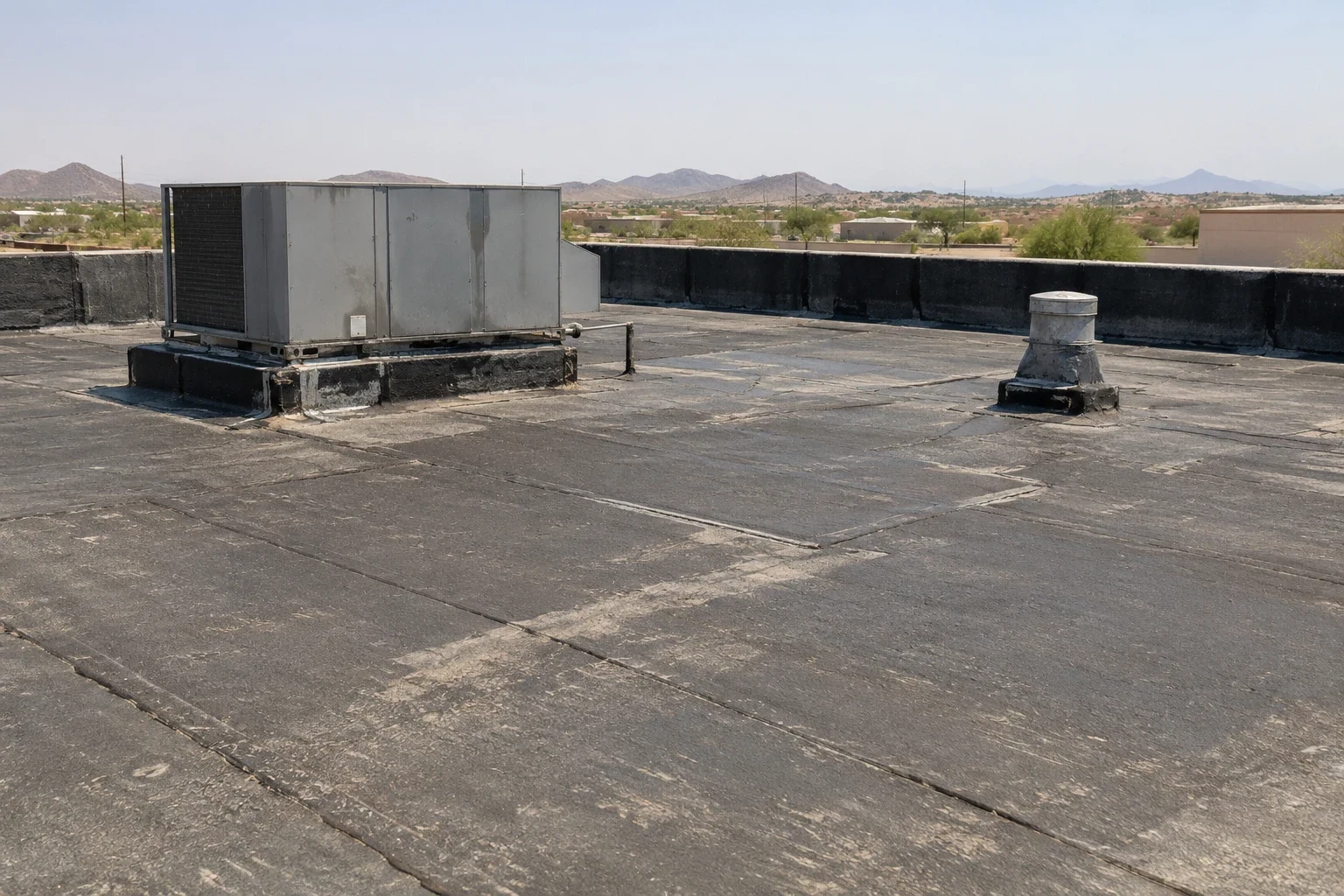
The valley is a hot, sunny desert, so the sheet's surface and its weld edges get checked on every visit. Thermal cycling works every thermoplastic seam, and surface wear shows as chalking, discoloration, and fine cracking at folds. We press the sheet at corners and compare shaded and exposed areas.
If the surface is worn but the sheet is flexible, a compatible coating may extend service, and a coating restoration plan begins with adhesion tests. If the sheet is brittle, cracks at folds, or has open seams across the field, replacement is the better path. In either case the record carries photographs from the same positions each visit, so the owner can see whether wear is steady or accelerating.
Setting: South District and the Cheyenne Corridor
The city's planning framework labels a South District, and its map is a dated snapshot that confirms history, not current zoning. The same framework names the Cheyenne Technology Corridor as an employment-planning area. A building in either place is inspected for the equipment it carries and the exhaust it discharges, not for the label on the map.
For a facilities lead in the South District or along the Cheyenne Technology Corridor, the practical question is whether the membrane in place is KEE, PVC, or TPO. Once identified, the repair path is set, and emergency leaks, which our crews answer at any hour, get a temporary seal that leaves the weld area clean.
Send What You Know About the Membrane
Share roof plans, access rules, leak dates, repair history, equipment changes, and operating-hour constraints. We will inspect the roof, confirm the membrane, and return a defined scope.