
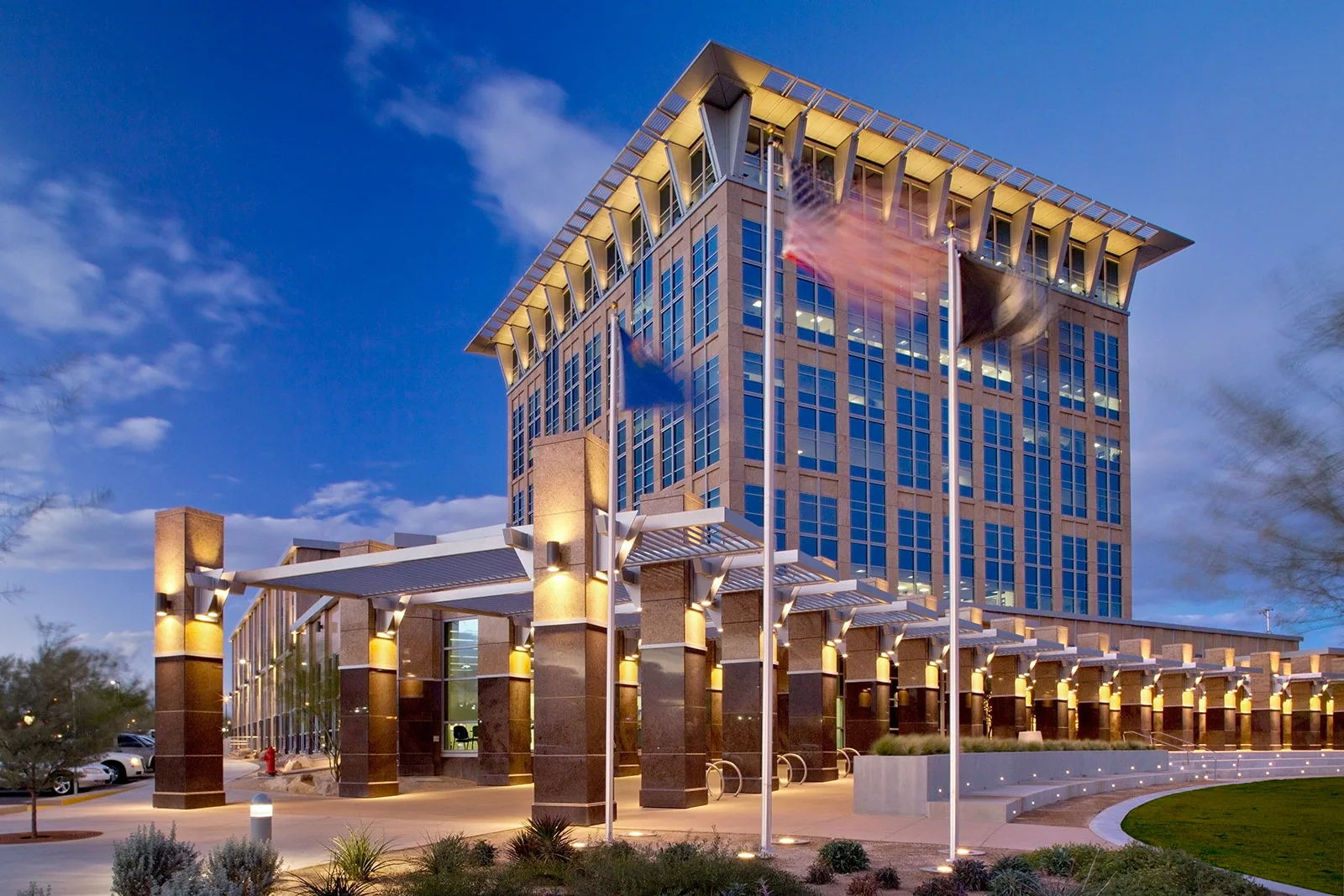
Plan commercial roof inspections in Cheyenne Technology Corridor, North Las Vegas, with clear drainage, access, repair, and replacement decisions.
A roof inspection starts with a verified access plan and a clear record of what can be seen. In Cheyenne Technology Corridor, North Las Vegas, NV, we first confirm the property contact, safe entry, roof areas, and any operating limits before walking the assembly. The city's planning framework names Cheyenne Technology Corridor as an employment-planning area, a broad designation rather than proof of current parcel zoning or a particular building use. Each roof still needs its own inspection; a map label cannot establish membrane condition, drainage performance, or repair history.
The Las Vegas Valley has a hot desert climate, with summer monsoon storms that can bring gusty winds and short periods of heavy rain. Those regional conditions shape what we look for, but they do not diagnose a roof in Cheyenne Technology Corridor. We document current conditions at the property, then connect each finding to a practical next step for the owner or manager.
Inspection sequence: establish the roof record
Before testing a suspected leak, we collect the building's available roof plans, repair history, warranty information, and reports of interior water. We note when the problem appeared, where it was observed, and whether it changed after rain or maintenance. The site contact identifies access rules, restricted areas, rooftop equipment, and any work that must avoid disrupting occupants or operations.
On the roof, the walk follows a repeatable route. We photograph the perimeter, transitions, drains, penetrations, equipment supports, and visible membrane conditions. We look for open seams, displaced flashing, cuts, punctures, surface wear, loose edge components, debris, and standing water. We record measurements and mark observations by roof area so a later proposal refers to a specific condition rather than a vague statement about the whole roof.
Water stains indoors are useful clues, but the point directly below a stain may not be the entry point. Water can travel across layers before it appears inside. We trace possible paths, compare exterior details, and identify where further testing or a controlled opening may be needed. The report separates observed evidence from items that remain concealed or unconfirmed.
Commercial Roofing Questions
Does the corridor's planning label confirm how a parcel is zoned?
No. The city framework identifies Cheyenne Technology Corridor as an employment-planning area, but that broad designation is not a parcel-level zoning determination. Confirm current zoning through the appropriate city records for the specific property.
Can you identify a leak source from an interior stain alone?
Usually not. Water can move through the assembly before appearing indoors. We use the stain as a clue, then compare roof conditions, drainage paths, penetrations, and available records before identifying a likely source or recommending further testing.
What should we have ready before a roof walk?
Share available roof plans, leak reports, repair invoices, warranty documents, and photographs. Also identify the access contact, safety rules, restricted areas, equipment concerns, and times when roof access could affect building operations.
Does monsoon weather prove that a roof defect is storm damage?
Not by itself. The National Weather Service describes gusty winds and short-duration heavy rain as regional Las Vegas Valley conditions, but an inspection must document the property's actual condition. We distinguish visible findings from older wear or causes that cannot be confirmed.
When is replacement worth comparing with repair?
Compare it when leaks recur, several details are failing, the assembly cannot be reliably repaired, or repair costs and disruption are accumulating. We document the roof's condition, remaining uncertainties, and owner constraints before presenting an option.
More Roofing Detail
COMMERCIAL ROOFING IN NORTH LAS VEGAS, NEVADA
Drainage and storm review: follow the water path
Drainage review begins at the roof surface and ends at the discharge point. We check whether drains and scuppers are open, whether strainers are seated, and whether nearby debris could slow flow. We inspect the surrounding membrane, flashing, and seams for movement or deterioration. If water remains after a weather event, we record its location and extent. A single observation does not establish the depth, duration, or structural cause of ponding, so we avoid promising a corrective design before the assembly and slope are understood.
Monsoon rain and gusty wind are regional Las Vegas Valley conditions. After a reported event, we compare the owner's timeline with visible edge, flashing, and membrane conditions. We photograph fresh displacement separately from older wear where the distinction is supportable. This keeps a repair scope focused on documented damage and avoids assigning a cause that the inspection cannot prove.
Where safe and appropriate, we can prioritize temporary protection while a permanent repair is evaluated. The record should state what was covered, what remained exposed, and what follow-up is required. Owners can also review our drain and scupper work when the inspection identifies a specific drainage detail needing attention.
Repair scope: define the boundary before work
A useful repair scope identifies the condition, location, approximate dimensions, proposed preparation, materials, tie-in details, access method, and cleanup. It also states what is excluded. If membrane damage is isolated and surrounding materials provide a sound tie-in, a localized repair may be considered. If failures repeat across seams, flashing, or multiple roof areas, we compare the cost and service implications of a broader restoration or replacement. The recommendation follows evidence and owner priorities, not a preset answer.
We review the repair area for compatibility with the existing roof system. That includes identifying the substrate and membrane as far as records and field observations allow, checking the condition of adjacent surfaces, and confirming the manufacturer's requirements before specifying materials. When a layer cannot be identified without an opening, we label that uncertainty and explain how it could affect price or schedule.
The proposal should make quantities and assumptions visible. It can separate known work from concealed-condition allowances, outline safety and protection measures, and show what approval is needed if the field condition changes. A clear boundary helps the owner compare options and lets the crew verify that completed work matches the authorized scope. For a larger lifecycle decision, see our commercial roof replacement planning.
Replacement and recover: compare the assembly
Replacement is not determined by age alone. We consider documented leak history, repair frequency, surface and flashing condition, insulation concerns, drainage, and the amount of assembly that can be verified. Recover may be an option only when the existing roof and the applicable requirements support it. The inspection must establish what layers are present, whether moisture or deterioration changes the decision, and whether added weight and attachment can be addressed.
For a thermoplastic system, we review seams, flashings, penetrations, and compatibility with the specified assembly. A TPO roofing review is useful when that system is being considered or documented; it is not a recommendation based on the corridor's name. We compare proposed work against the verified conditions, manufacturer details, warranty requirements, and project constraints.
Schedule depends on roof size, access, occupied use, material availability, weather windows, and the amount of preparation or removal required. A phased sequence may help an owner maintain access, but phasing must be designed around the actual property and authorized scope. Our commercial inspection process can establish the condition record used for that comparison.
Closeout: preserve useful information
At completion, the owner should receive a clear account of the work performed, areas repaired or replaced, materials documented, photographs, and any maintenance or warranty information available. If a concealed condition changed the work, the record should include the approval and updated boundary. This gives the property team a basis for future inspections and reduces the chance that a later contractor must reconstruct the history from scattered invoices.
Roof asset planning can extend that record across budget cycles. Our roof condition reports organize observed conditions, priorities and open questions for planning, and the final scope waits for site verification. Owners with roofs near Craig Ranch or Future Industrial Lands follow the same sequence, and each property's roof still needs its own evidence and scope.
For a first conversation, share the property location, the roof concern, any recent photographs, and the best access contact. We can determine what records would help and whether a site walk is the appropriate next step. The purpose is to define the inspection, document what is visible, and give the owner a sound basis for deciding what happens next.
Plan a documented roof inspection
Share the property location, roof concern, available records, and access contact. We can define the inspection and the evidence needed for your next decision.