
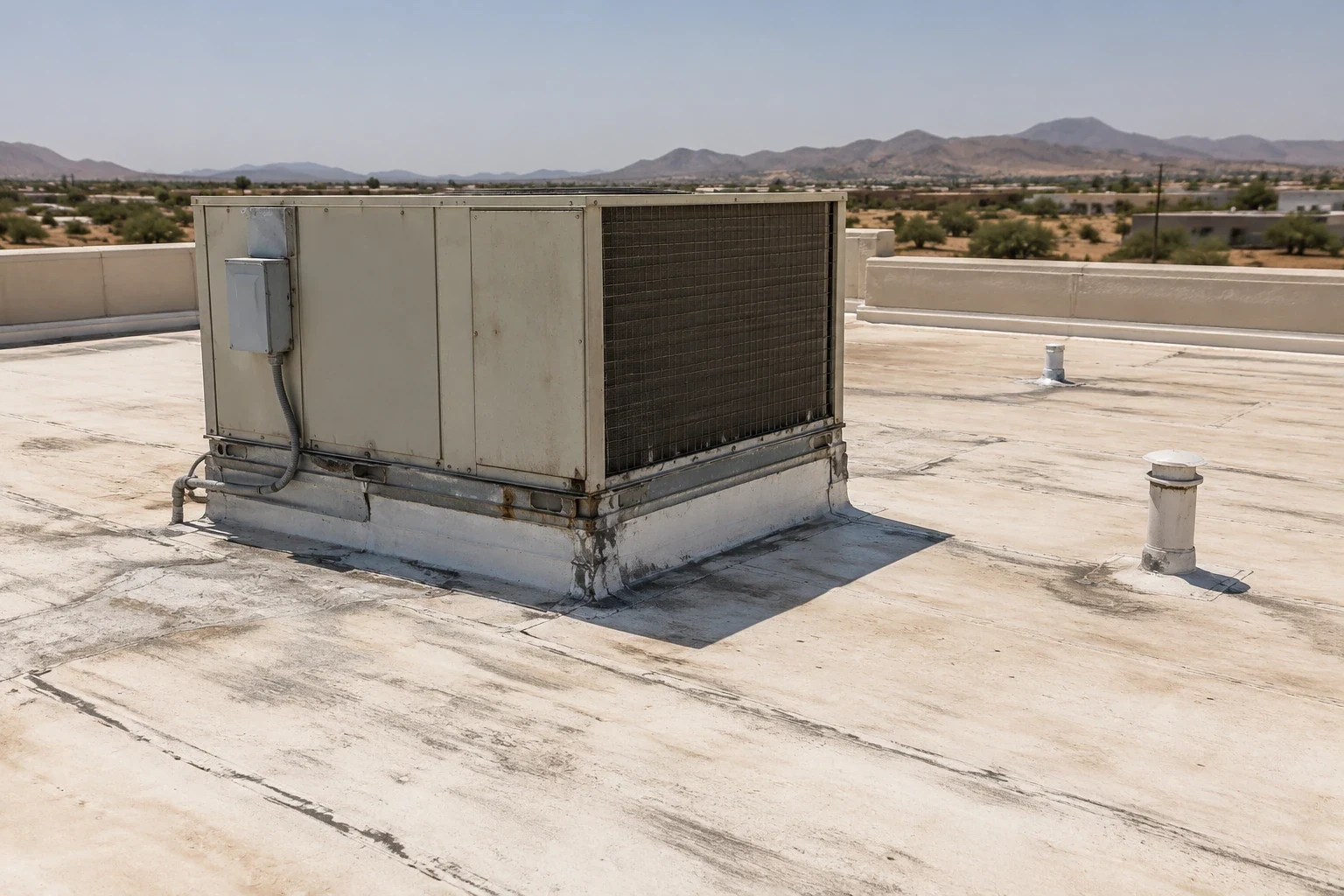
North Las Vegas roof reports with dated photos, area-level findings, inspection limits, priorities, and steps for repair or testing.
A commercial roof condition report should help an owner decide what to inspect, repair, budget, or monitor next. It is not simply a collection of roof photographs. We connect each observation to a roof area, visible evidence, operating impact, and the limits of what could be confirmed during the visit. For a North Las Vegas property, the report should identify its inspection date, weather and access conditions, areas not reached, and records reviewed. That gives the next facilities meeting a traceable starting point instead of an unqualified condition label. When a field visit is needed, our field inspection records the observations behind the written report.
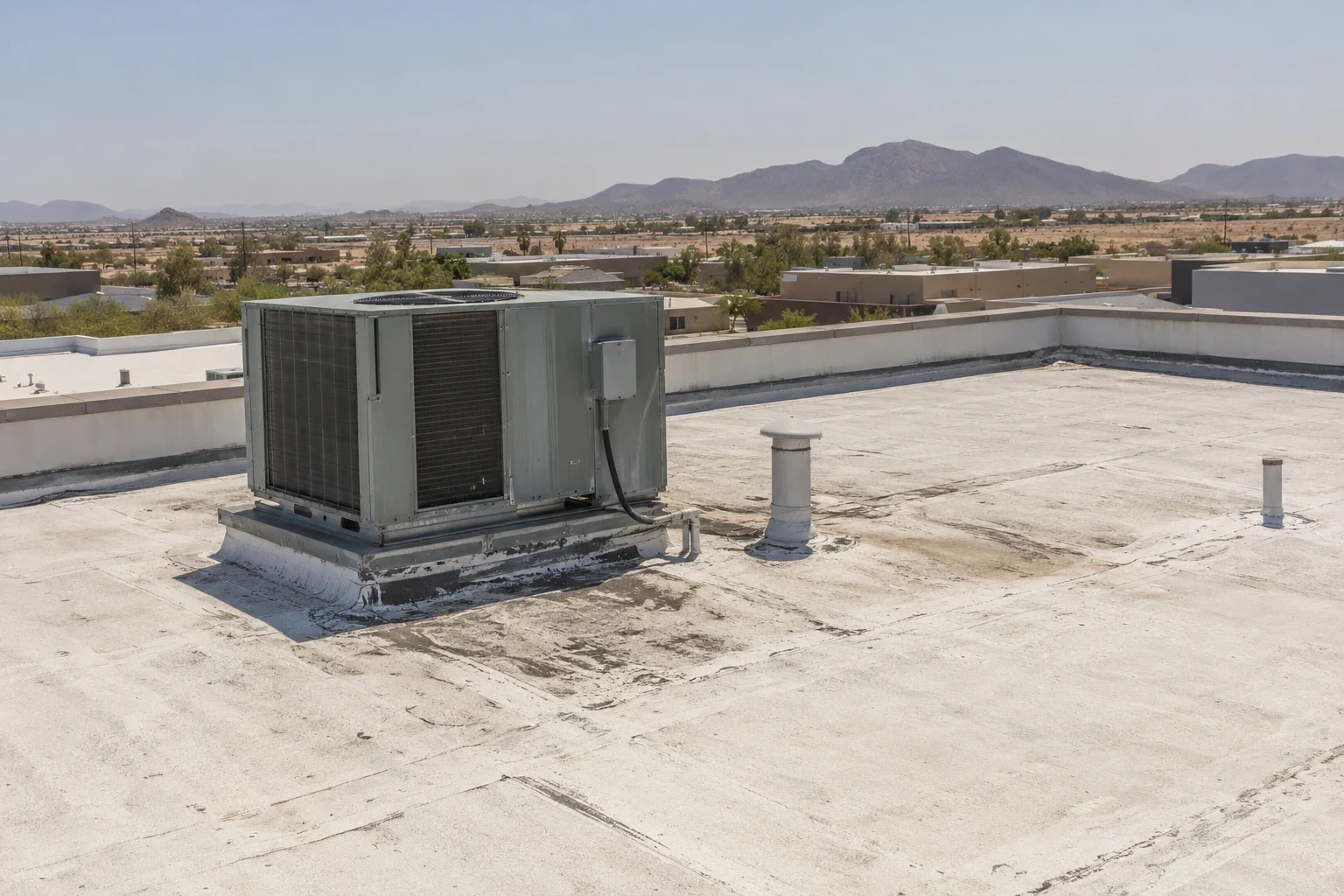
Make the observations repeatable
We first reconcile available plans with the roof as accessed. Areas receive stable identifiers, and the report notes the apparent membrane, surfacing, edge conditions, drains, penetrations, curbs, and visible repairs. A photograph should show both the detail and enough context to find it again. Captions state the direction or nearby roof feature, not just “north side.” If the plan is missing or does not match the field, we flag the mismatch and show what needs confirmation. That same structure makes a future portfolio record useful across inspection cycles without implying that one building’s condition applies to another.
Each note distinguishes observation from interpretation. A split seam, open flashing edge, debris at a drain, or displaced termination can be recorded as seen. The report can then explain the possible consequence while stating what was not verified. Moisture below a membrane, deck capacity, concealed attachment, and the full extent of a leak path may require testing or opening. We do not convert a suspected condition into a measured quantity. The report lists the investigation needed, who should authorize it, and whether temporary protection is appropriate while the question remains open.
Commercial Roofing Questions
What belongs in a commercial roof condition report?
Include the inspection date and limits, roof-area identifiers, observations, contextual photographs, priority, recommended action, and unresolved questions. Distinguish what was directly seen from interpretation or testing that remains outstanding.
Does a roof photograph prove the source of a leak?
Usually not by itself. A photo can document a visible condition, while tracing water entry may require interior review, weather history, testing, or additional access. The report should keep the observed detail separate from the suspected path.
How should inaccessible roof areas be handled?
Identify the area and why it was not reached, describe any records or views used instead, and list the access or safety step needed to inspect it. Do not treat an unvisited area as having the same condition as nearby roof sections.
Can an infrared scan confirm wet insulation?
An infrared pattern is an indication for interpretation and possible confirmation, not a standalone diagnosis. The report should state scan conditions and limitations, then specify whether sampling or another approved test is needed.
How does a condition report support a capital decision?
It supplies dated evidence and clarifies which items need repair, testing, monitoring, or broader evaluation. A budget should retain the report’s assumptions and update them when follow-up work confirms or changes the field condition.
More Roofing Detail
COMMERCIAL ROOFING IN NORTH LAS VEGAS, NEVADA
Separate urgent controls from planned work
Findings need a useful order. Active water entry, an exposed opening, or a detail that could admit additional water may warrant prompt review and temporary protection. A drain needing routine clearing may belong in planned maintenance. A soft area or recurring interior stain may require testing before the repair boundary can be set. We identify the observed condition, operational concern, recommended next step, and the evidence that will close it. The report can point to a preventive maintenance or a follow-up infrared survey when that fits the documented question.
Priority is not a substitute for scope. A recommendation should say whether it is for further investigation, interim control, repair, or capital evaluation. If a facility needs a budget decision, connect the report to the owner’s capital plan and state any assumptions that affect timing or cost. Record access limits, occupied operations, interior inspection needs, and coordination with other trades. The decision-maker can then separate what can proceed from what still depends on field verification.
Read regional conditions as context
For a recent event, regional weather belongs in the inspection context, not in the finding itself. The weather service notes that summer monsoon storms, gusts, and localized flooding can affect the wider valley. Check the property’s roof and interior evidence before attributing a condition to a particular event. Record the owner-provided event date and any areas that could not be accessed; regional information is not a measurement at the subject building.
The city’s 2006 framework map identifies Apex Industrial Area as one broad planning label. Cheyenne Technology Corridor appears separately as an employment-planning reference. The map does not decide current zoning or draw a parcel. If a facility is associated with either name, confirm its position and site rules from current property records before scheduling work. The report still belongs to the verified address, roof plan, and access context.
Give every photograph a decision trail
A useful deliverable includes a concise summary, a roof-area inventory, dated photographs, finding descriptions, priorities, limitations, and recommended next actions. Put each photo beside the related finding or give it a clear identifier that is cross-referenced in the text. If a detail is obscured, unsafe to reach, or outside the agreed scope, say so in the relevant area. The reader should not have to infer whether a caption describes a confirmed defect, a maintenance item, or an unresolved concern.
When an infrared scan or other diagnostic step is included, document its conditions, scope, and interpretation limits. An image pattern is not by itself proof of wet insulation or a leak source. State where confirmation is required and how the test result affects the recommendation. If the roof uses a TPO roof system, identify only what the inspection established; do not infer manufacturer approval, warranty status, or assembly details without supporting records. The finished report can feed multi-site reporting while retaining the property-specific photo log and findings.
For a property discussed near the Apex Industrial Area, confirm the address and access contact before assigning a roof inspection.
Close the loop after the report
Before a repair begins, confirm that the contractor, owner, and facilities contact are working from the same report revision and roof-area identifiers. Agree on temporary dry-in responsibility, access windows, interior protection, the repair boundary, and the closeout evidence. If opening the roof reveals a different condition, pause at the defined decision point and document the new evidence before expanding the scope. After work, add dated photographs, marked-up plans, material or warranty documents when relevant, and any remaining monitoring item to the property file. For multi-building work, maintain a separate cover sheet per property and use a shared status key only for portfolio comparison. If a report is revised, note what changed and why. Preserve superseded versions so reviewers can distinguish a new field observation from an editorial correction. That history helps avoid carrying a resolved defect into the next scope or mistaking an old image for current evidence.
A report is most useful when it remains connected to later decisions. Update its status when a finding is closed, superseded by testing, or still awaiting access. Keep the original observation date so a future reviewer can tell which conditions were reassessed and which were not. That makes the report a practical record for facilities staff, finance, and project teams without presenting one inspection as a permanent statement about the entire roof.
Get a clear record of roof conditions
Share roof plans, prior reports, access requirements, and the questions facing your facilities team. We can document what is visible, identify limits, and outline the next field step.