
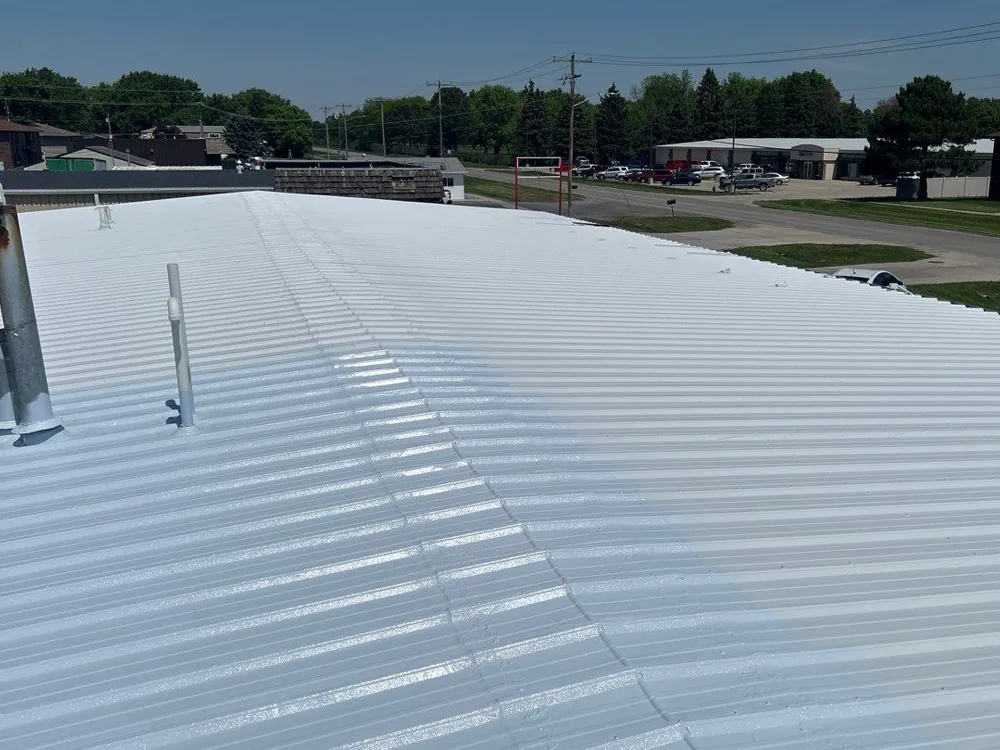
Acrylic roof coatings in North Las Vegas, NV: drainage screening, cure and weather windows, reinforcement at details, thickness, and recoat planning.
The question that decides an acrylic coating project is where water goes after a rain. Acrylic is a water-based coating that forms a reflective film as it dries, and it performs best on roofs that shed water quickly. If a roof holds ponds for days, the film beneath them stays wet, softens, and loses adhesion. A manager can check this after the next storm by photographing the low spots and noting how long they hold water, which is information the inspection can use immediately.
For commercial buildings in North Las Vegas, NV, acrylic coating is a restoration option for roofs that are watertight, dry underneath, and draining. The inspection has to establish the existing surface, the insulation moisture, the seam and flashing condition, and the drainage path before acrylic is recommended over silicone, a repair, or replacement, and the scope states which conditions made the case.
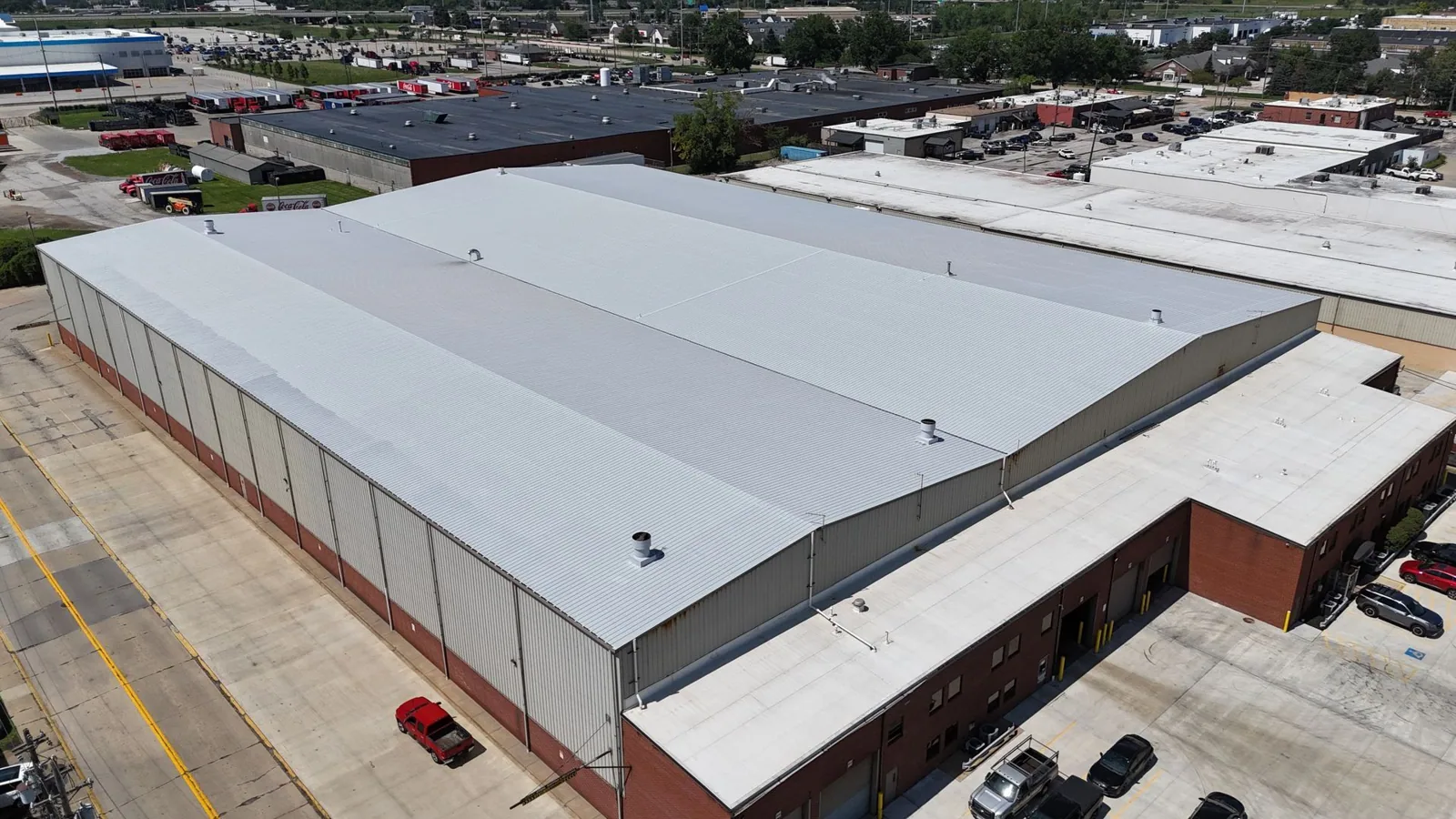
Drainage Screen: Ponding Decides Fit
Acrylic does not tolerate standing water the way silicone does. We map ponding on the roof plan, measure depth and duration where possible, and check drains, scuppers, and slope. A shallow area that dries within a day or so is a different problem from a low spot that stays wet for several days after storms.
Where ponding exists, there are three paths. The cause can be corrected with added drains or tapered insulation, the ponded area can be treated with a different coating system, or acrylic can be skipped for the whole roof. Our ponding water repair work begins with the cause, since a coating over unresolved ponding is the most common reason acrylic jobs fail early.
Drain details are treated as part of the coating scope. A drain bowl that is cracked, a sump that is clogged with old coating, or a scupper that sits above the roof surface keeps water on the roof. We clean and, where needed, rework those outlets before coating, because a coating cannot be asked to drain a roof the structure does not drain.
Commercial Roofing Questions
Is acrylic or silicone the better coating for my roof?
Drainage and recoat plans point to the answer. Acrylic suits roofs that drain well and where the owner may want to recoat with other chemistries later. Silicone suits roofs with shallow ponding. Dirt behavior and the existing surface also matter. We inspect the roof, map the ponding, test adhesion, and give the reasons for the pick in the scope.
What happens if rain hits a fresh acrylic coat?
Rain before the film cures can wash out the coating or leave it streaked and thin. A light shower on a fully cured coat is harmless. We watch the forecast, shorten the work area when storms are possible, and stage covers. If a coat is damaged before it cures, the area is cleaned and recoated, and the incident is recorded.
Does acrylic cover cracks and seams?
It seals small cracks and seams when reinforced with fabric and base coat, but it does not bridge large gaps or moving joints by itself. Open seams are repaired first, and movement joints get flexible details. A coating placed over unrepaired defects hides them for a season. We list the defects and their treatment by roof zone before the first coat goes.
How can a manager tell that a recoat is due?
Look for chalking when a hand wipe leaves white residue, thinning where the base shows through, cracking at details, and dirt that will not wash. We photograph coating at set points each visit, so changes are visible. When thinning appears at seams and penetrations first, a maintenance coat there may be enough for now.
More Roofing Detail
COMMERCIAL ROOFING IN NORTH LAS VEGAS, NEVADA
Substrate: Which Surfaces Accept Acrylic
Acrylic bonds to many roofing surfaces when they are clean and sound, including metal, modified bitumen, built-up roofs, and sprayed foam. Each needs its own preparation: priming for metal, cleaning of granules on cap sheets, gravel removal or bonding on BUR, and repair of damaged foam. Wet insulation, open seams across the field, and brittle sheets rule a roof out, and a moisture survey with cores confirms which side of that line a roof is.
The prior coating history matters as well. Acrylic goes over acrylic well. Over other chemistries it needs compatibility testing, and silicone residue can block adhesion. We cut small samples and test a patch before the job, then log the results by roof zone.
Roof edges and penetrations get their own preparation. Rusted edge metal is wire-brushed and primed, loose sealant is cut out, and pipe boots and curbs are reinforced with fabric set in base coat. Those details take more time than the field and carry more of the risk, so the scope lists them by count and location.
Cure and Weather Window
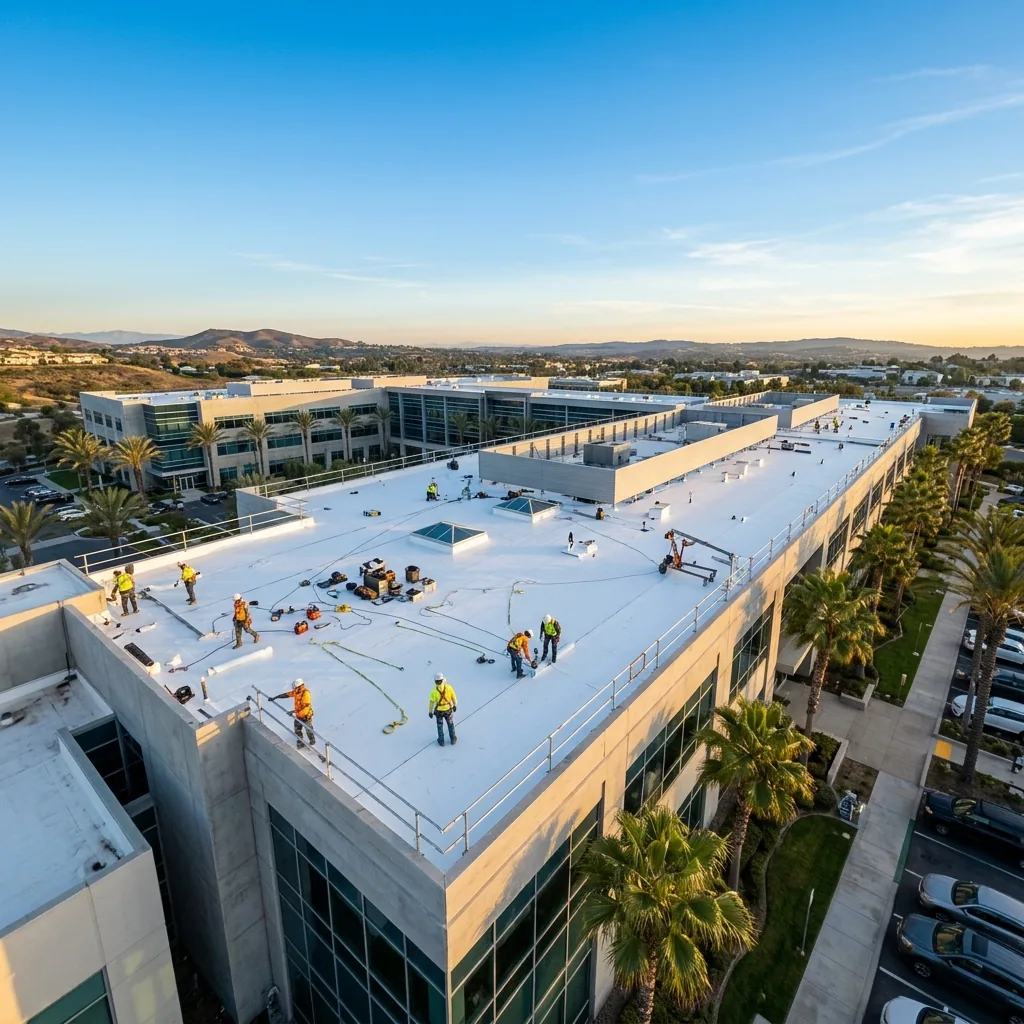
Acrylic dries by evaporation, so it needs a dry window after application before rain or heavy dew reaches it. A coat washed off before cure is lost. Coating days are scheduled against the July and August monsoon forecast, and each day's area is sized to what can be coated and cured before heavy rain could arrive.
Surface temperature affects both flow and cure. A hot roof dries the film quickly, which can trap bubbles, and a cool or damp roof slows it. Coats go on in layers, with a base coat, reinforcement fabric at seams and details, and a topcoat to the specified thickness. We measure wet film as the crew works and log it, so the owner has a record of coverage.
Safety and access shape the day as well. Wet coating on a hot roof is slick, and tracked material marks the building below. Walk routes are marked, hatches protected, and crews wear soft-soled shoes. When the building is occupied, the plan covers intake protection for odor and the hours when rooftop equipment must be off.
Heat Exposure, Dirt, and Recoat Planning
Spring and fall wind events carry blowing dust and sand across a hot, sunny desert roof, and a fresh coating collects both. Acrylic coatings reflect much of the sun and are widely used to build a cool roof surface, and dirt on the surface lowers reflectivity over time. Chalking and thinning are the signs of wear.
Recoat timing follows condition, not a fixed date. We inspect coating by roof zone, record thickness where we can measure it, and note dirt, chalking, cracking at details, and any lifted edges. A cleaning and a maintenance recoat ahead of full wear costs less than rebuilding a worn coating, and the inspection record shows when the recoat window is opening. A coating restoration plan names the recoat cycle at the start.
Walk traffic wears coating where staff reach equipment. A line of thinning along the access path is the usual first sign, and walk pads installed after the coating protect it. Surface cleaning before each maintenance coat restores adhesion and shows the true state of the film beneath.
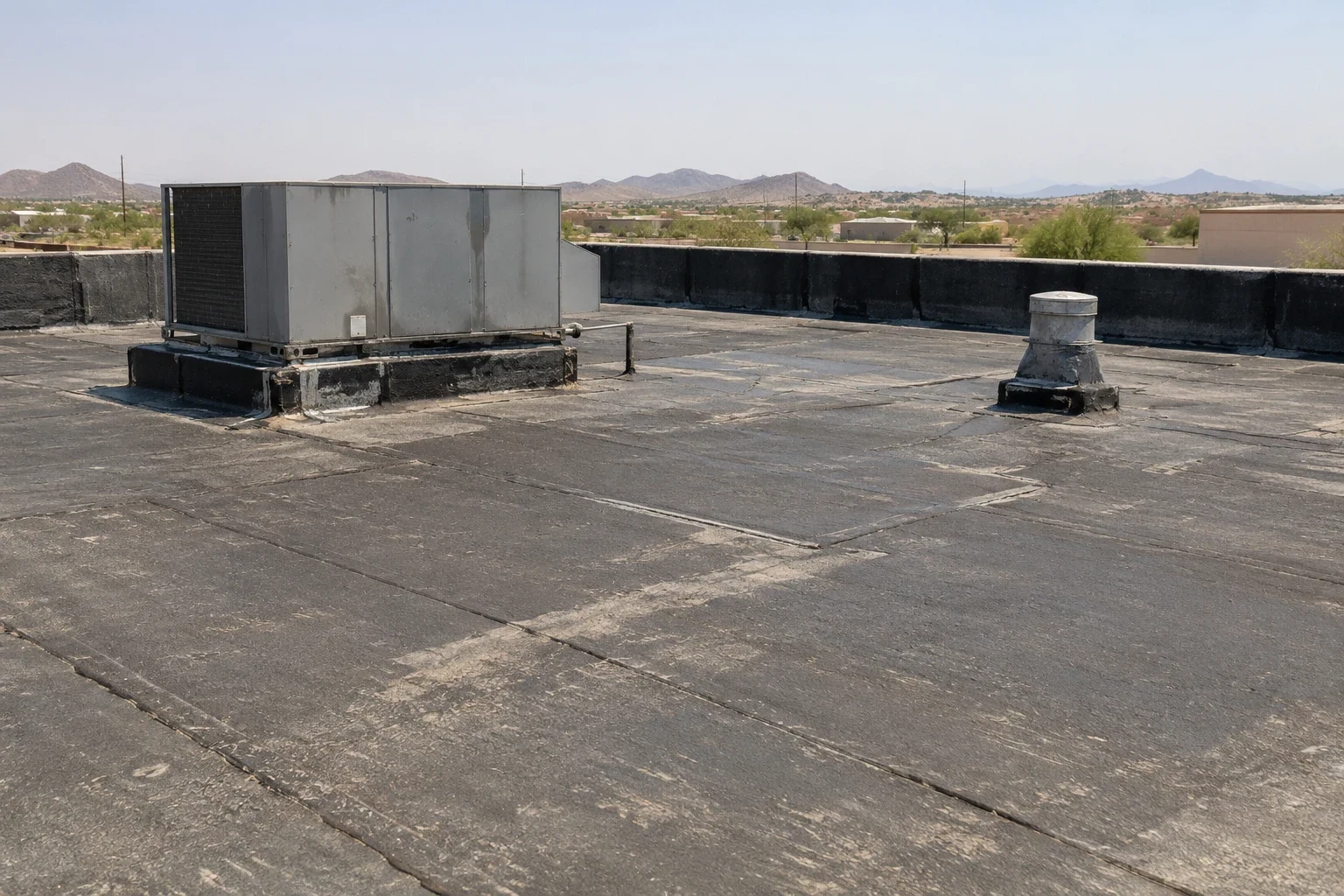
Setting: Lone Mountain and the North 5th Corridor
Clark County lists Lone Mountain among the named advanced-planning areas within its Las Vegas Valley land-use map system, and the City of North Las Vegas labels the North 5th Transit Corridor as a main-street and transportation planning area. Jurisdiction and current maps differ, so code and permit conditions are confirmed for each address.
On any building, the checklist is the same: identify the surface, test the moisture, repair seams and details, confirm drainage, and test adhesion. The scope lists thickness, reinforcement, and recoat timing, and the access and operating-hour limits for the building. Emergency leaks are sealed temporarily at any hour with a material that accepts the coating later.
Send the Roof Plan and Ponding Photos
Share roof plans, access rules, leak dates, repair history, equipment changes, and operating-hour constraints. We will inspect the roof, test adhesion, and return a defined scope for acrylic coating or an alternative.