
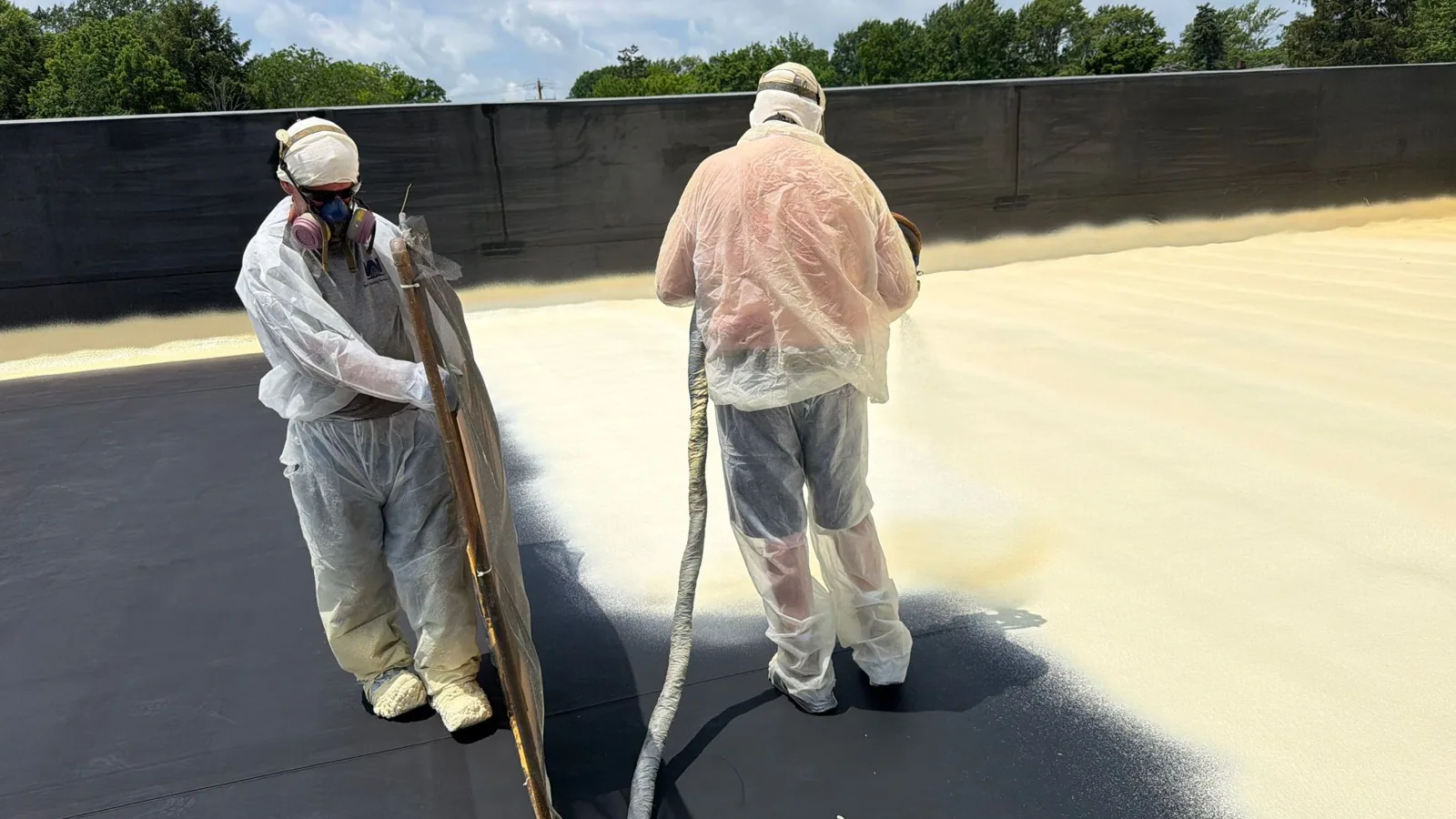
Spray polyurethane foam roofing in North Las Vegas, NV: substrate checks, spray conditions, protective coating, recoat cycles, and repair of foam roofs.
A foam roof that shows a sandy, cracked, or peeling surface layer has lost the coating that protects the foam, and the foam beneath is the part that cannot take sun. Spray polyurethane foam is a good insulator and a continuous surface, but only while its protective coating is intact. A manager can check this from the roof: look for chalky white or yellow patches, bare foam, or pitted areas that hold water. Each one is a spot where the coating has worn through.
SPF is a two-part liquid sprayed onto a roof deck or existing roof that expands into a rigid foam, then covered with a coating. The inspection establishes the substrate, the foam thickness and condition, the coating type and age, and the drainage before a repair, recoat or replacement scope is written.
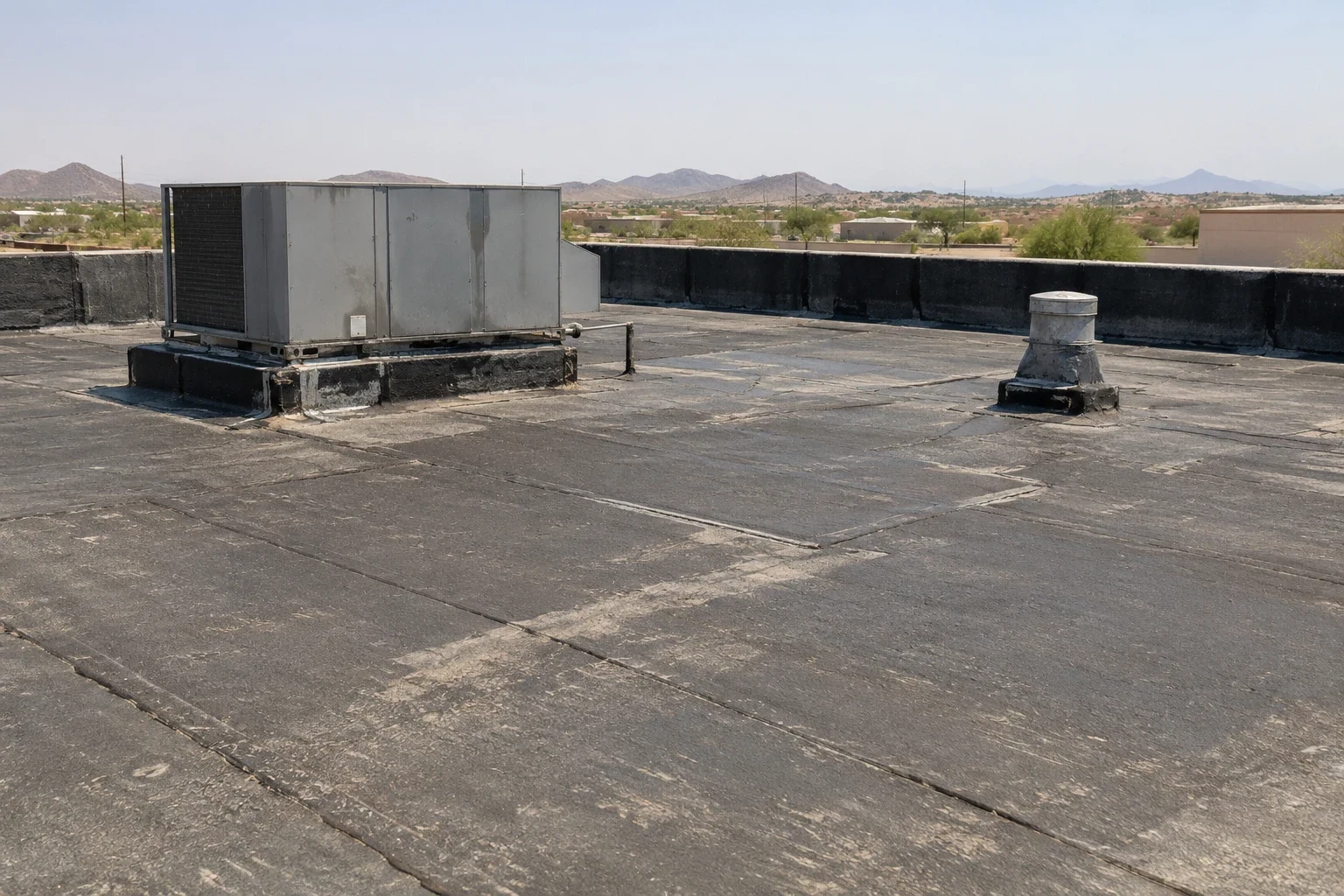
Substrate and Spray Conditions
Foam bonds to a clean, dry surface. Moisture in the existing roof, dust, grease, and loose material all weaken the bond, and foam sprayed over a wet substrate traps the water. Before a spray project we test the substrate for moisture, clean and prepare the surface, and mask what must be protected. Equipment, vents, and neighboring cars all need protection from overspray.
Weather limits the work. Wind carries foam off target, rain and dew prevent adhesion, and extreme surface temperatures change how the foam rises. July and August monsoon storms bring gusty wind and heavy rain, so spray days are chosen against the forecast. Foam applied in passes is checked for thickness, and each day's work is coated before weather can reach it.
Existing penetrations and curbs are prepared before spray. Loose flashing is removed or reinforced, rust on metal is treated, and sealant that will not bond is cut out. The foam then wraps the base of each penetration, which avoids the lap at the curb that membrane roofs have, though the transition still needs a reinforced coating detail.
Commercial Roofing Questions
How often does a foam roof need recoating?
Recoating follows coating condition, not a calendar. A roof with chalking, thinning, or cracking in the coating is approaching the point where recoat prevents foam exposure. Sun, ponding, foot traffic, and the coating type all change the interval. We inspect at set times, record coating condition by roof zone, and recommend a recoat before the foam is exposed.
Can foam be sprayed over an existing roof?
Yes, when the existing roof is dry, sound, and clean. Moisture surveys and test cuts show whether the old insulation is wet, and loose or failing areas are removed first. Foam over a wet roof traps the moisture and degrades. Gravel BUR roofs need the gravel removed or well bonded, and metal roofs need rust treated and primed.
What damages a foam roof most often?
Foot traffic and impacts, followed by ponding and coating wear. Dropped tools and heavy boots dent foam, and hail can crack coating. Birds may peck at exposed foam. Walk pads, regular inspection, and quick repairs of small damage prevent most of it. A small bare spot repaired promptly is a minor job, while a neglected one grows.
Does foam solve ponding?
It can help. Foam can be built up to create slope, which moves water toward drains, and the continuous surface avoids lap leaks. But foam does not fix a blocked drain or a deflecting deck. We check the cause of ponding before specifying foam, and if the structure is moving, correct that first, since a smooth foam surface over a moving deck will still crack.
More Roofing Detail
COMMERCIAL ROOFING IN NORTH LAS VEGAS, NEVADA
Foam Condition: Thickness, Density, and Damage
On an existing foam roof, we measure thickness at test points, press the surface to feel density, and look for dents, pecked holes, and soft areas. Dense foam resists foot traffic and hail, and soft foam crushes. Where the foam has been cut for equipment or damaged by a dropped tool, the exposed foam must be sealed quickly, because bare foam degrades in sun.
Foam can also hold water. If a roof ponds, the foam below the pond may be wet, and the coating above it may be stressed by standing water. A moisture survey and test cores show whether the foam is dry. A ponding water repair on a foam roof may be as simple as building up a low spot with new foam, or as large as correcting the drainage path so water leaves the roof.
Thickness is not uniform on a sprayed roof, since the applicator builds in passes and the surface can vary by a fraction of an inch. We measure at several points per roof zone and record the range, so a later repair or recoat can compare against the original thickness.

Protective Coating: The Part That Wears
The coating is the roof's weather skin. Acrylic, silicone, and polyurethane coatings are used on foam, and each has its own behavior around standing water, dirt, and recoat requirements. A silicone coating tolerates ponding, while an acrylic coating prefers drained surfaces. The choice follows how the roof drains and what the owner expects to maintain.
Ultraviolet exposure in a hot, sunny desert wears coatings steadily. Chalking, fading, thinning, and cracking mean the coating is nearing the point where recoating is needed. We note coating condition by roof zone and recommend a coating restoration before the foam is exposed, since a recoat is cheaper than foam replacement.
Dirt pickup is a quiet problem on any coating. Dust and sand carried by spring and fall winds settle on the surface and darken it, which reduces reflectivity and traps heat. Washing before the recoat restores adhesion and shows the true condition of the coating beneath.
Repairs: Punctures, Penetrations, and Edges
Punctures in foam roofs are repaired by cutting out damaged foam, spraying or filling new foam, and recoating the area with the same coating system. Penetrations need flashing details that bridge the foam to the pipe or curb, usually with membrane or mastic reinforced into the coating. Edges are sealed with the coating carried over the termination.
Foot traffic is the common culprit. Technicians servicing equipment leave dents and scrapes, so walk pads along access paths protect the foam. Hail is another hazard, since impacts can dent foam and crack coating. After a storm, a walk looks for dents and fractures. Each repair is recorded against a roof zone and a date. Our crews respond at any hour if a storm opens the roof.
When a patch is made, the new foam is trimmed flush and the coating is feathered out beyond the repair so the edge does not form a lip that catches water. Ponding at a repair is a sign the surface was not blended well, and we correct it before the coating cures.
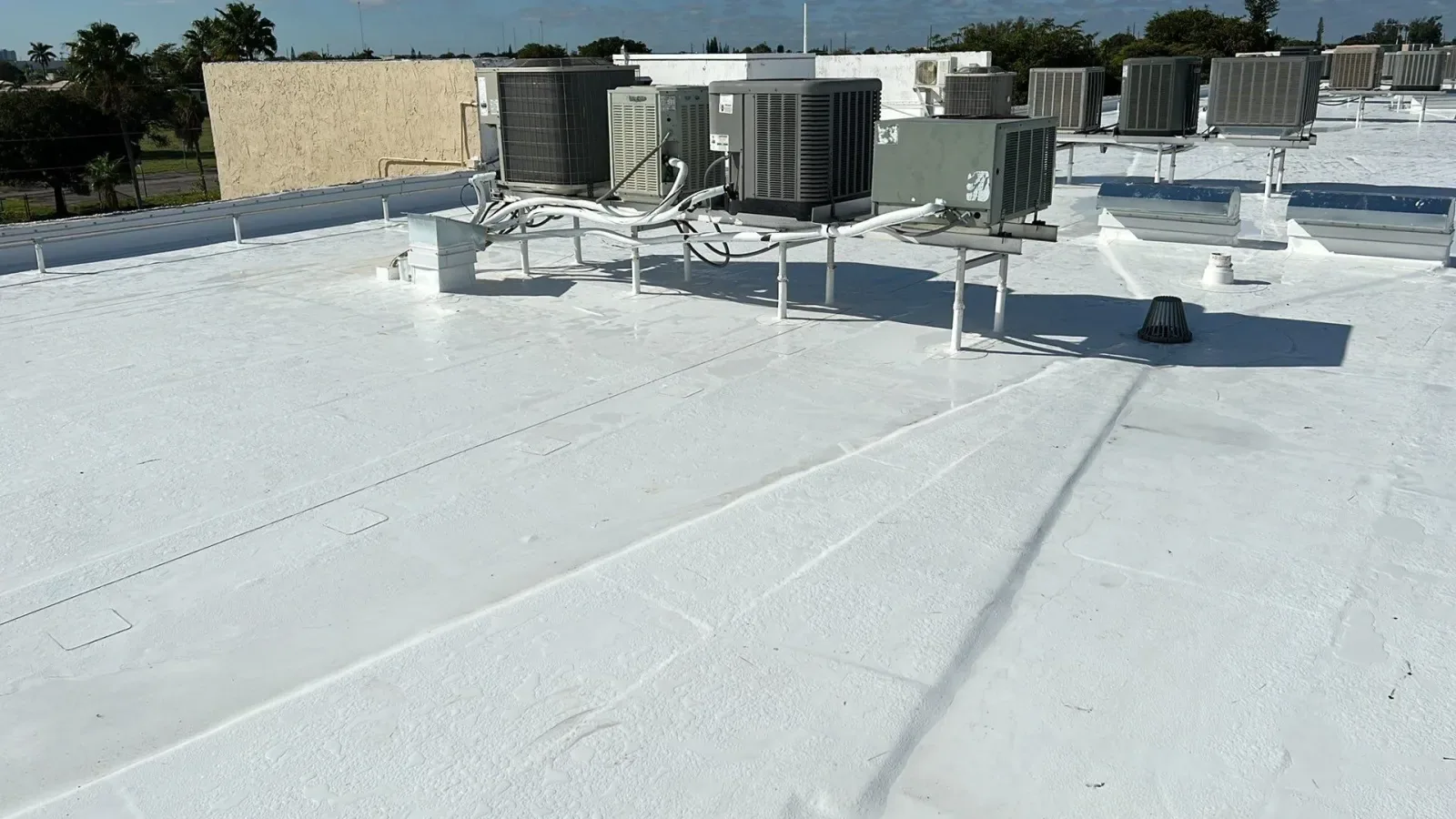
Setting: Technology Corridor and Unincorporated Towns
The city's planning map lists the Cheyenne Technology Corridor as an employment-planning area, and Clark County describes Whitney as an unincorporated town in the eastern Las Vegas Valley with a planning area of about 22 square miles. Insulation value and roof weight matter for buildings in either setting, as for any roof, but jurisdiction and code review differ between city and county.
Nevada adopted the 2024 International Energy Conservation Code, and owners confirm local requirements before design. Foam adds R-value as it is sprayed, and its thickness is set to meet the requirement. The scope states the thickness, coating, and warranty conditions in writing, along with the access plan for occupied buildings.
Send the Roof Plan and Coating History
Share roof plans, access rules, leak dates, repair history, equipment changes, and operating-hour constraints. We will inspect the foam roof and return a defined scope for repair, recoat, or replacement.