Fire and smoke damage roof repair in North Las Vegas, NV: safe access, deck and insulation checks, temporary dry-in and documented rebuild scopes.
After a fire, the roof can look intact from the street and still hold charred decking, melted membrane and insulation that has absorbed heat, smoke and firefighting water. On commercial buildings in North Las Vegas, NV, the first question is not what to repair but whether the roof can be walked at all, so our first visit begins with access and safety. Only then do we move to what burned, what melted, what got wet and what must be stopped from getting wetter.
Fire damage involves other parties from the start: the fire authority, the carrier, the owner's engineer and the restoration team. We keep our findings in a form each of them can use. Every observation carries a roof zone, a photograph and a plain description, and anything that depends on a structural opinion is marked for the engineer. A burned roof in the Las Vegas Valley also has to be dried in before the next summer storm, and that weather window does not wait for the paperwork.
Access: confirm the roof is safe before anyone walks it
Fire can weaken decking and supports in ways that are not visible. Before crews step on the roof, we ask whether the fire authority has released the building and whether a structural engineer has cleared access. If not, we inspect from the edge, from a lift or by drone, and we leave the walk until clearance is given.
A drone roof inspection shows burn patterns, melted areas, collapsed sections and open penetrations without putting anyone on a compromised surface. Photographs from above give the restoration team and the carrier a quick view of the extent. The drone record is labeled as an exterior survey, with the limits stated, and the hands-on inspection follows once access is approved.
Commercial Roofing Questions
When can a burned roof be walked?
After the fire authority releases the building and an engineer clears access. Until then we survey from the edge, from a lift or with a drone. Walking an uncleared roof puts crews at risk and can worsen damage.
Is smoke damage on the membrane a reason to replace it?
Not by itself. Soot discolors surfaces that may be sound. We test for heat damage, brittleness and adhesion before deciding, and clean where cleaning is enough.
Who decides if the deck is safe?
A structural engineer. We report scorching, deflection and fastener loss we can see, and the engineer decides whether the deck stays. Roofing starts after that decision.
Why list code-driven items separately?
Because they come from the rules in effect now, not from the fire. Showing them apart lets the owner and carrier review each on its own terms and understand the total.
Can you secure a burned roof after hours?
Emergency response runs around the clock, holidays included. A crew places temporary protection once access is approved and documents what it covered.
What happens to rooftop units damaged by a fire?
The mechanical contractor decides whether each unit is safe and serviceable. We protect the roof around them, rebuild curbs and flashing where needed and reflash once the unit is reset or replaced.
More Roofing Detail
COMMERCIAL ROOFING IN NORTH LAS VEGAS, NEVADA
Dry-in: stop the second loss
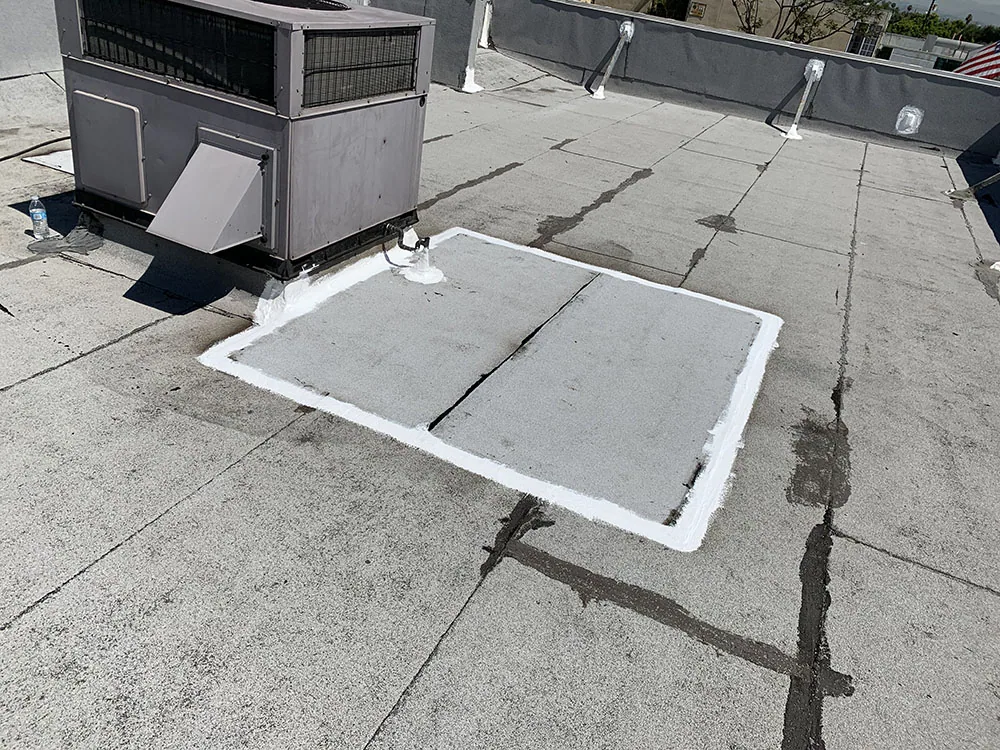
Open roofs let rain, wind and dust in, and water on top of fire damage causes a second loss. As soon as access is approved, we place temporary protection over open areas and damaged membrane, secure loose material and clear drains so water leaves the roof. The measures, materials and covered areas go into the record.
An emergency roof repair crew can work at any hour, holidays included. Timing tightens in July and August, when monsoon moisture can bring thunderstorms with heavy rain, and the spring and fall wind events can strip loose debris off an opened deck. We secure temporary covers for the forecast, check them after storms and replace them if wear shows. Where wind has also lifted edges or metal, the work overlaps with a wind damage roof repair.
Rooftop equipment needs its own check. Units that lost power or were exposed to heat and water may be unsafe to touch, so we coordinate with the building's mechanical and electrical contacts before working near them, and we note which curbs and supports will need rebuilding.
Assessment: separate charred, heat-damaged and wet layers
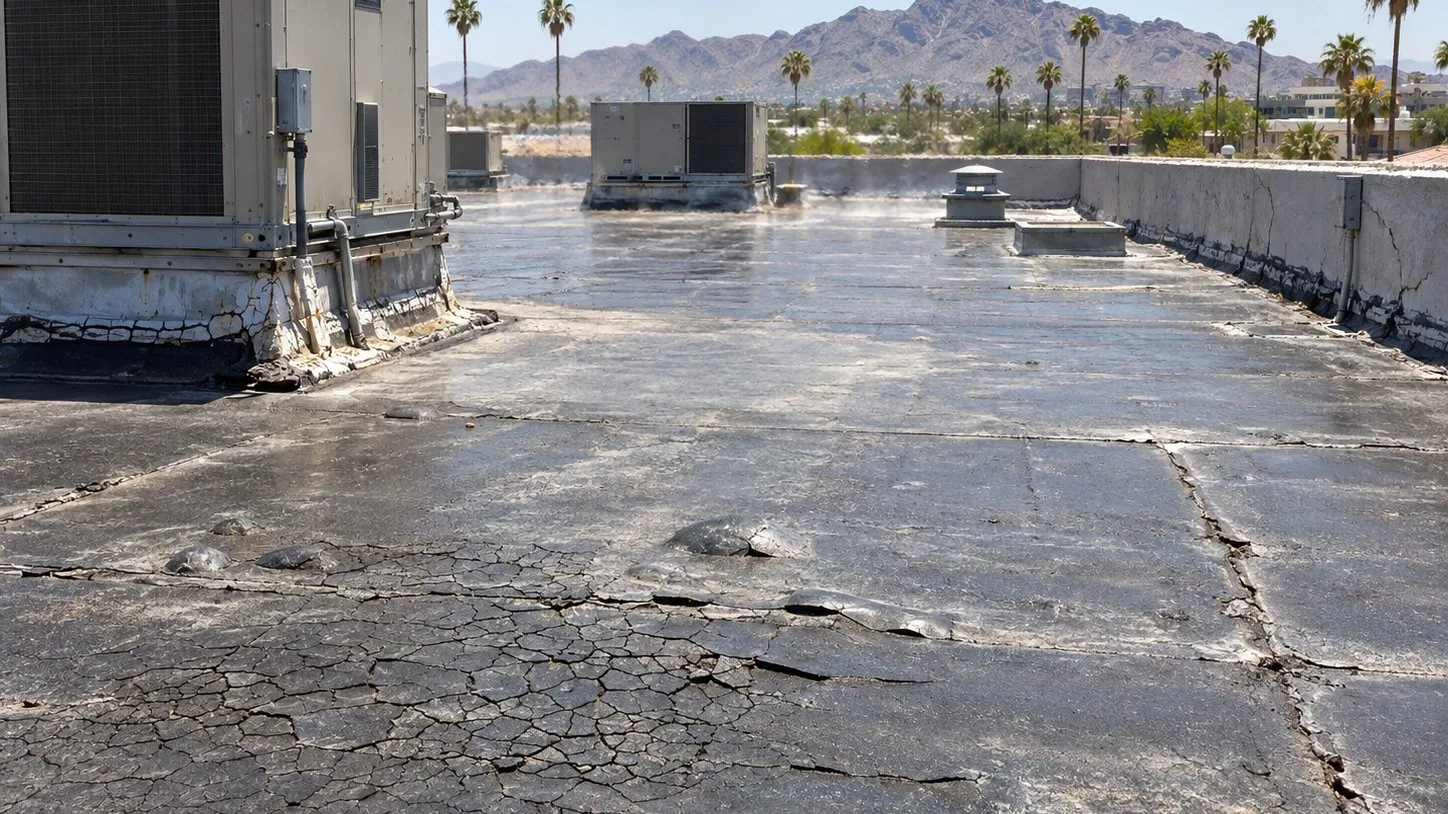
A fire roof is a stack of layers with different damage. The membrane may be burned or melted, the insulation may be charred, shrunk or wet, the deck may be scorched or weakened and metal components may be warped. Smoke can discolor surfaces that are otherwise sound, and heat can damage areas far from visible flames. Water used in firefighting can leave the same wet-insulation problem that a ponding water condition does.
We walk approved areas, probe the membrane and insulation, check the deck from above and from below where interior access allows and test for moisture. Charred or heat-shrunk insulation comes out, wet insulation comes out and the deck is reviewed by the engineer before new materials go on. The report maps each layer's condition on the roof plan and separates what is clearly fire damage from what predates the event, since both matter to the carrier and the owner.
Debris is part of the roof condition. Charred material, melted membrane and broken glass or metal can clog drains and cut workers, so we clear it in controlled passes and photograph the roof before and after, which also protects the evidence the carrier may need.
Scope: decide between section repair and replacement
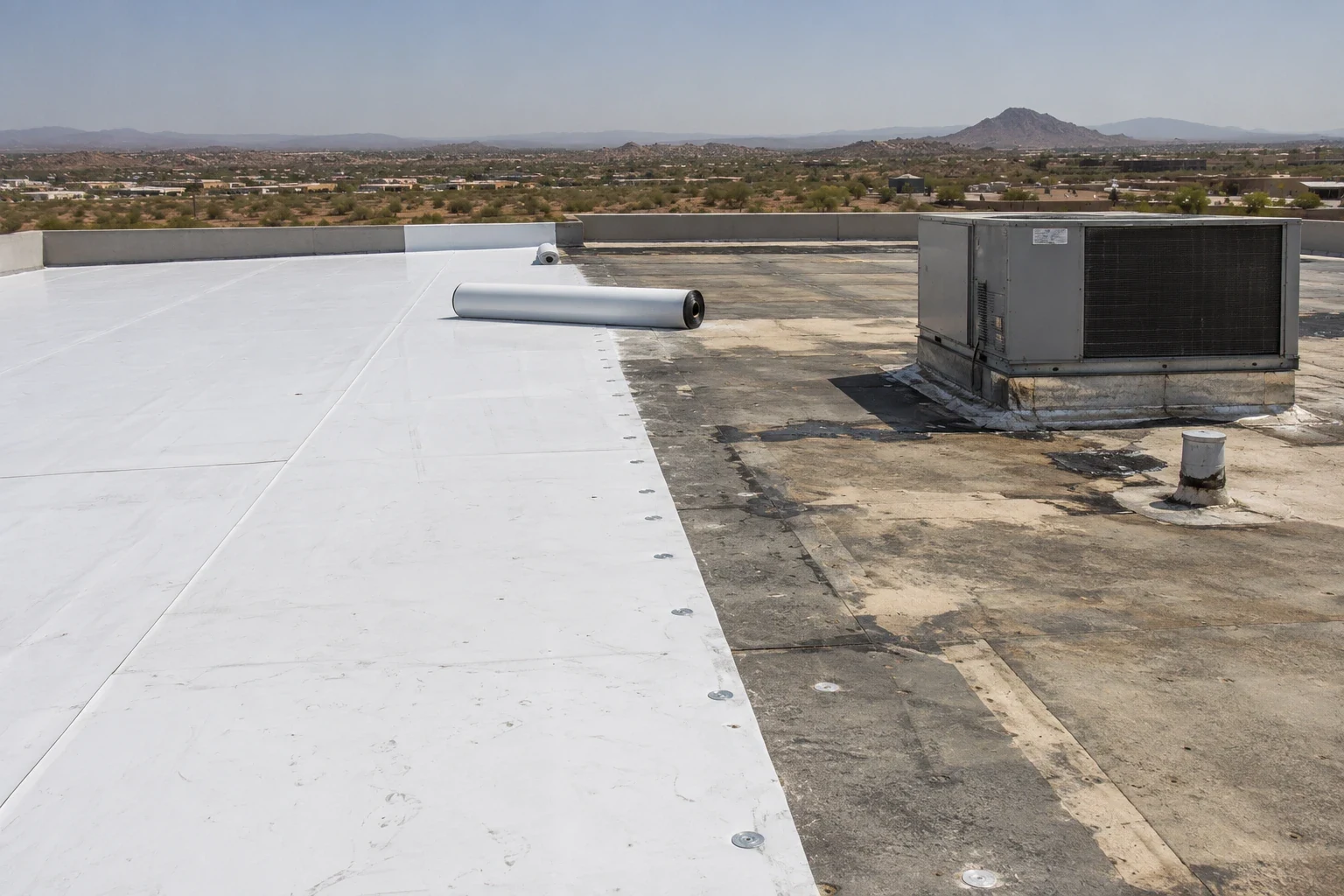
When damage is limited to one bay or section and the rest of the roof is sound, a section replacement can restore the roof, with new tie-ins to the existing membrane. When damage is widespread, or smoke and heat have degraded the membrane across the roof, a full commercial roof replacement is cleaner and often more reliable than many tie-ins.
The deck comes first. If the engineer finds the deck compromised, repair or replacement of the deck precedes the roofing. Insulation and cover board are then specified to the energy code in effect, which may differ from the original roof, so the carrier sees code-driven items listed separately. Equipment, curbs and penetrations burned or displaced are rebuilt as part of the scope, with their flashing.
Records: build the file the claim and the owner both need
A fire claim runs on records. We provide the dated photographs, roof plan, descriptions of each condition, moisture readings, temporary protection log and the scope with pricing as separate items. Our roof insurance claim assistance supports the adjuster's questions with specifics, and we do not decide coverage.
For the team managing the overall restoration, including insurance and restoration specialists, we coordinate the dry-in date, the interior drying schedule and the roofing start. The same approach applies to buildings in planning areas such as Downtown North Las Vegas or the Apex Industrial Area, where the only difference is access and neighboring conditions.
Cost and timing: what lengthens a fire roof project
Fire roof projects run longer than ordinary repairs because several approvals line up before work starts: release of the building, engineer clearance, carrier scope agreement and permit review. Material lead times and weather add to it. Cost moves with the area of damage, deck repair, insulation replacement, equipment rebuild and the temporary protection needed while approvals proceed.
We keep the owner informed of where the project stands and which approval is pending. If a delay leaves the roof exposed, we maintain and recheck temporary protection and add the cost to the record, so the carrier sees it as part of mitigation. Sequencing roof work with interior restoration shortens the overall timeline.
Tell us where the fire was and who has cleared access
Send roof plans, photographs from the fire authority if available, the carrier contact and the access status. We will protect the roof and record what the fire did.