
Roof inspection records, photographs and repair scopes that support insurance claims on North Las Vegas, NV commercial roofs, separating damage from wear.
An insurance reviewer reads a roof claim from the file, not from the roof, so the quality of the file decides how clearly the damage is understood. In North Las Vegas, NV, summer monsoon storms and spring and fall wind events give a building owner a plausible reason to file, and they also make it easy to blur new damage with long-standing wear. We build the roof side of that file: dated photographs by roof zone, a written description of each condition, a repair scope with its boundary, and a clear line between what looks storm-related and what looks like age. We do not decide coverage, and we do not promise an outcome. We supply the evidence an adjuster, a broker and a facilities lead can all read. For active leaks, an emergency roof repair protects the building while the file is assembled.
Timeline: Capture Conditions Before They Change
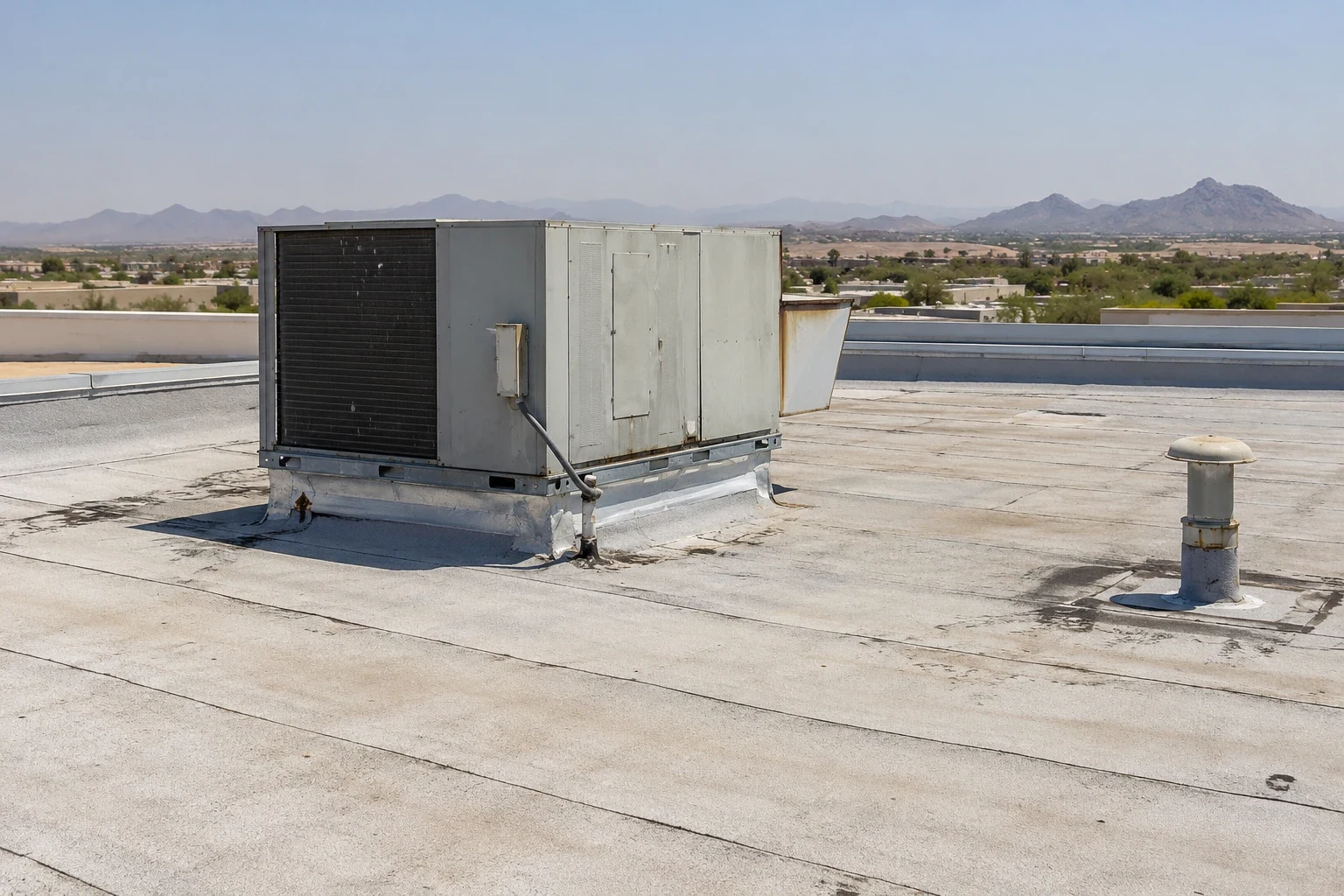
Roof evidence is perishable. Water dries, debris gets swept, temporary patches cover the original damage and the next storm adds new conditions on top of the old ones. The first visit should record the roof as it stands: photographs of every affected zone, standing water marks, displaced material, lifted edge metal and any interior stains matched to roof locations.
We note the date and time of each observation and the weather around it. The Weather Service describes a hot desert with the occasional summer storm, and that regional description is useful context for a storm window. It is not proof that a named roof took damage. The claim file links the storm date to what the roof shows, and the roof evidence has to stand on its own.
If temporary protection is needed, we document the roof before and after placing it. Each tarp, patch or drain clearing gets a location, a material note and a next inspection point, so a reviewer can see what was done to stop further loss.
Commercial Roofing Questions
What does a roofer contribute to an insurance claim?
Roof evidence: dated photographs by zone, measurements, a description of each condition and a repair scope with a clear boundary. Coverage decisions, policy interpretation and negotiation stay with the owner, broker and carrier.
Why do you separate storm damage from wear in the same report?
A reviewer will make that separation anyway, and a file that does it carefully is more credible. Photographs of both conditions show the whole roof, and the owner can decide how to treat each item.
Should a temporary repair wait until the adjuster visits?
If water is entering the building, protect the building first and document the roof before and after. Waiting for a visit while rain reaches the interior increases loss. Keep records of the temporary work so the reviewer sees what was done and why.
Which roof records help most when a claim is filed?
The roof plan, earlier inspection reports, repair invoices, maintenance logs and recent photographs. Those items show the roof before the event. Where they are missing, the file states that plainly.
Can the same documentation support a replacement decision?
Yes. The photographs, measurements and moisture findings feed a replacement scope as readily as a repair scope. We present both side by side when damage is broad, so the owner sees the cost drivers for each.
More Roofing Detail
COMMERCIAL ROOFING IN NORTH LAS VEGAS, NEVADA
Evidence: Photographs, Measurements and Roof Plans
A useful photograph set follows a pattern. Wide shots orient the reviewer to the roof. Mid-range shots show the zone. Close shots show the defect with something for scale. Each photograph is tied to a roof-plan reference such as a seam intersection, curb corner, drain or wall, so another person can find the same spot.
We add measurements: the length of a split, the dimensions of a lifted area, the extent of wet insulation if testing has confirmed it. A moisture survey with infrared imaging can help outline suspected wet areas, and test cuts confirm them. The file says which findings are visible, which are tested and which could not be reached.
Prior records matter. The roof plan, earlier inspection reports, repair invoices and maintenance logs show what the roof looked like before the event. Where those records do not exist, we say so in the file instead of filling the gap with a guess. A clear statement of what is unknown is easier to work with than a confident claim that cannot be checked.
Causation: Separate Storm Damage From Wear
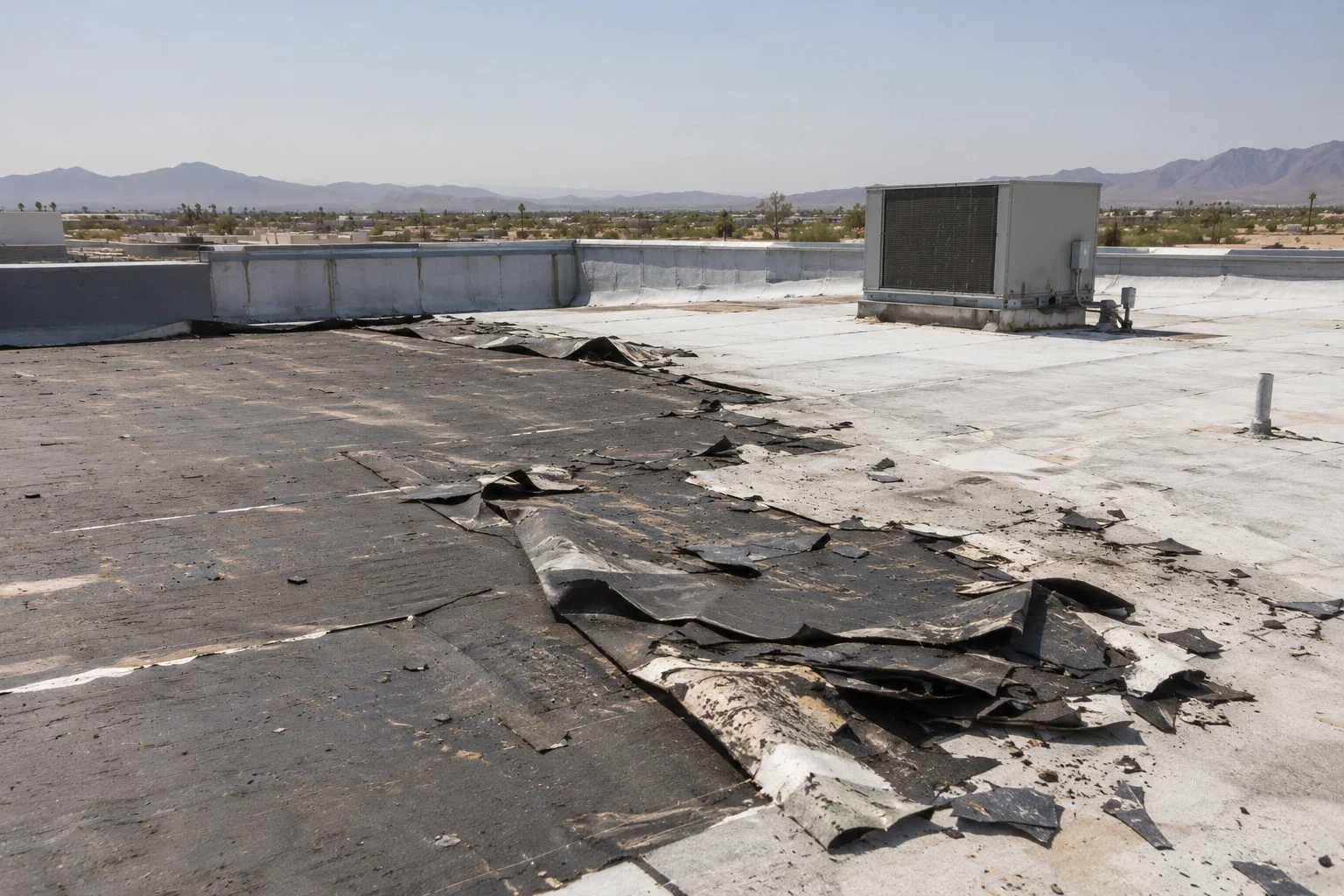
Adjusters ask a fair question: what did this event do, and what was already there? We answer it on the roof. Wind damage tends to show direction and pattern, with lifted edges, displaced metal, peeled membrane at a perimeter or corner and debris thrown against curbs. Water entry from a storm may show fresh staining, active drips at specific points and ponded areas that match the drainage path.
Long-term wear looks different. Chalking, crazing, granule loss, weathered sealants and aged lap seams develop over many seasons, and heat exposure from the desert sun accelerates them. Neither condition makes the other irrelevant. A worn roof is more vulnerable to wind and rain, and the file should describe both, with photographs of each. We do not stretch a worn condition into a storm claim, and we do not leave out storm damage because the roof is also old.
On a wind-damaged roof, the edge and perimeter findings carry the most weight, and ponding and drainage findings are recorded with the same photograph and plan reference.
Scope: A Repair Boundary the Reviewer Can Follow
A claim scope is only as useful as its boundary. We mark the repair perimeter against fixed features, list the materials to be removed, describe substrate preparation and name the repair method and tie-in. If the scope covers wet insulation, it states how the extent was determined and how replacement board will be fitted.
The scope also separates items. Storm-related repair goes in one group. Items that need attention but look unrelated, such as a drain strainer missing for years or sealant dried at a curb, go in another. The owner decides how to handle each group. Mixing them hides the repair cost of each and invites disputes over the whole.
When damage is broad, the file includes a comparison between repair and replacement. A commercial roof replacement scope describes the tear-off boundary, new assembly and drainage corrections, and it is priced as a separate option. Code matters here. Nevada has adopted the 2024 International Energy Conservation Code under NAC 701.185, and owners should confirm which building and energy requirements the North Las Vegas jurisdiction applies before a replacement is designed or permitted.
Coordination: Adjusters, Brokers and Occupied Buildings
A claim touches several people. The property owner, the broker, the adjuster, the tenant and sometimes a lender all want the same facts in a form they can use. We provide the roof documentation and attend site meetings when the owner asks us to. We do not negotiate coverage or advise on policy language.
Access is part of the schedule. An adjuster visit may need roof keys, an escort, fall protection and a time that does not disturb tenants. We confirm those items ahead of time and walk the adjuster through the documented zones.
Buildings in the Apex Industrial Area and the Cheyenne Technology Corridor are examples of broad service geography that we cover, but each building file stands on its own roof plan and inspection record.
Closeout: Records That Outlast the Claim
When repairs are complete, the file closes with photographs of the prepared substrate, each exposed layer, the finished work and the perimeter. We list the materials used and any area left open or deferred. The closeout ties back to the original roof-plan zones, so a future inspection can compare conditions.
That record has a second life. It supports warranty discussions, informs preventive roof maintenance and gives the next property manager a reliable history.
To start, share the roof plan if one exists, the date of the event, interior photographs, prior repair records, equipment changes, and any policy deadlines your broker has given you. We build the roof file around those dates.
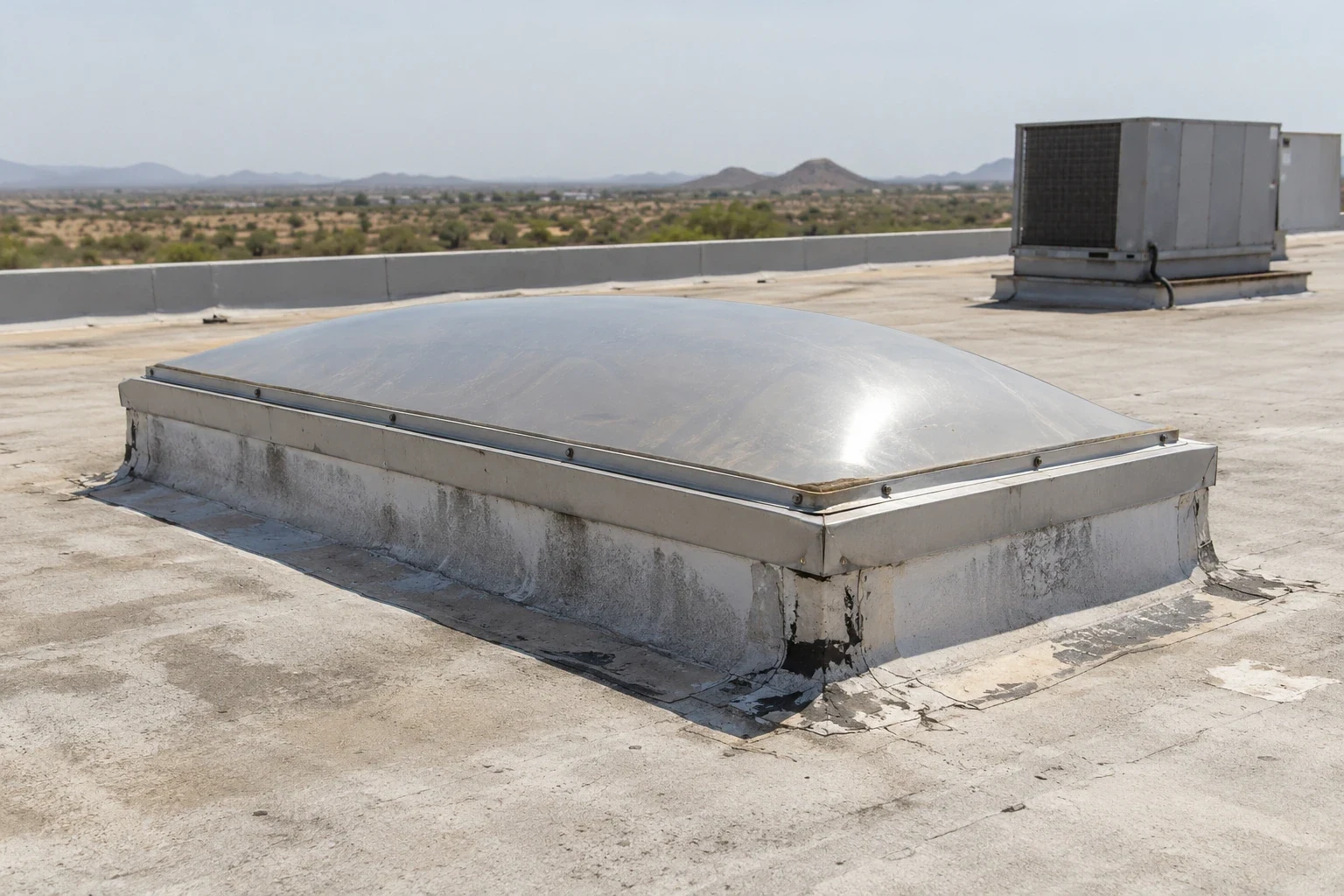
Start the Roof Side of Your Claim File
Share the event date, interior photographs, roof plans and any policy deadlines. We will document the roof by zone and prepare a repair scope your broker and adjuster can read.