
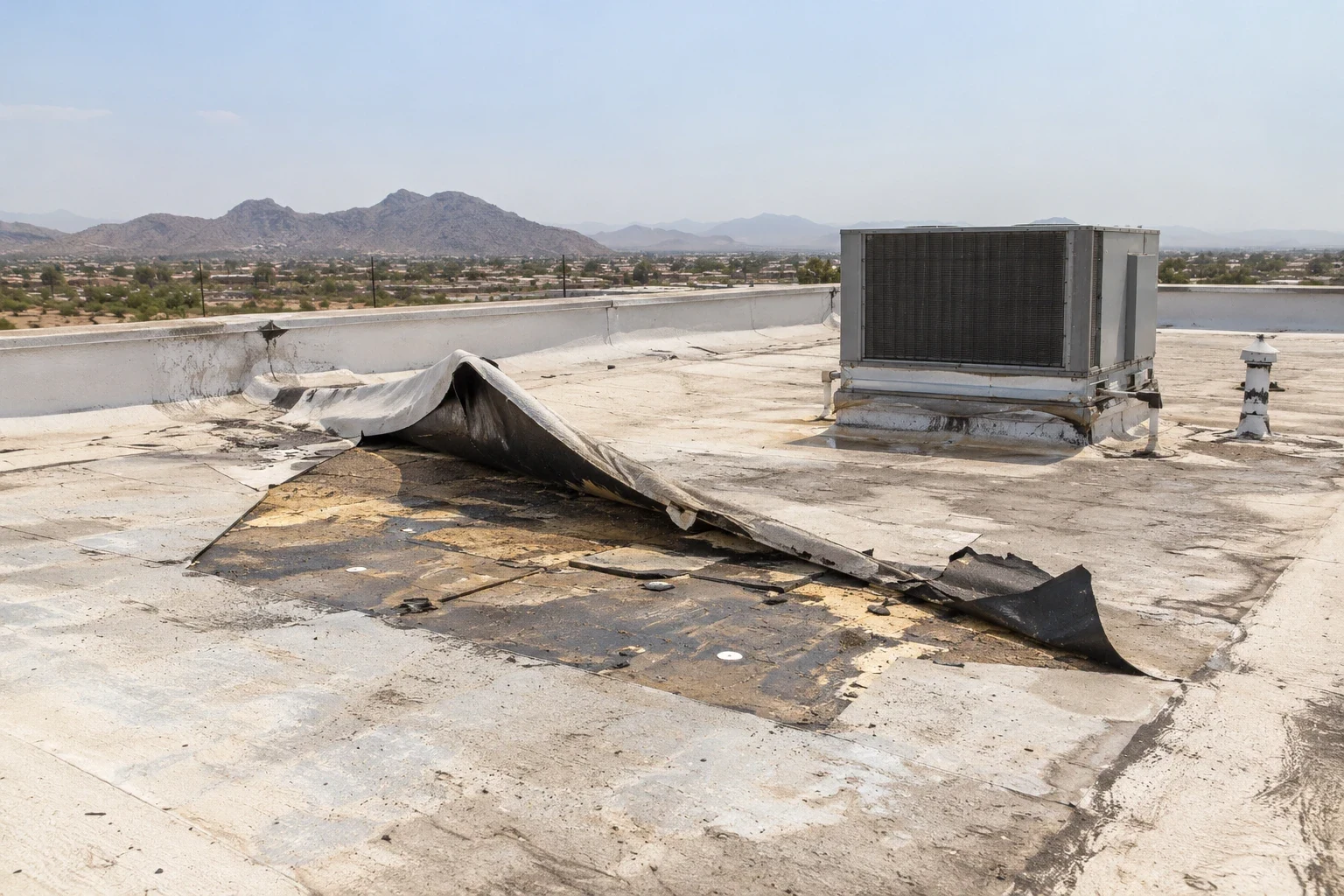
Documented roof damage assessments, emergency protection and repair scopes for insurance adjusters and restoration teams in North Las Vegas, NV.
A claim file with a roof photograph and no roof zone is a file that invites a second inspection, and a second inspection costs everyone time. For insurance adjusters, restoration contractors and loss consultants working properties in North Las Vegas, NV, we document roof damage so one visit answers the question: what was damaged, what predates the event, what is the water entry path and what protection is in place. Findings are tied to a roof plan and dated, with the limits of the inspection stated.
Summer monsoon storms bring gusty wind and heavy rain to the Las Vegas Valley, and spring and fall wind events add a second season of claims-type damage. That is regional exposure context. It does not establish that any roof was damaged, and we do not write findings from weather reports. We write them from the roof: observed conditions, measured locations and photographs, separated from conditions that need testing.

First visit: protect the building, then record it
When a roof is open to the weather, the first job is to stop further loss. We tarp or temporarily seal openings, secure loose metal and shed standing water where safe, and photograph conditions before and after protection goes on. Temporary measures go into the record, including materials used and the area covered, because they are part of the mitigation story an adjuster reviews.
Emergency crews work around the clock, holidays included, and an emergency roof repair visit produces a first record the same day: location, extent, apparent cause where supportable and immediate risks to the space below. Items needing testing are listed rather than guessed, which keeps the first report accurate and the later report consistent with it.
Commercial Roofing Questions
What does an adjuster need from a roof inspection?
A roof plan with zones, dated photographs tied to those zones, descriptions of each condition, measurements, moisture evidence where collected and a list of areas not tested. We also state the date and conditions of the visit.
How do you tell storm damage from aging?
Compare exposed and protected areas, look for fresh bruising, fractures and displaced metal that line up with exposure, and note uniform chalking, shrinkage and old patches. We record both and avoid assigning cause where the roof does not support it.
Do you make coverage decisions?
No. Coverage belongs to the carrier. We document the roof, describe the conditions and provide scope and pricing as separate items.
What counts as mitigation on a roof?
Tarps, temporary seals, securing loose metal and removing standing water, all documented with photographs and descriptions. The record shows materials, areas covered and dates.
Can you inspect many roofs after one event?
Yes, by triage. We start with active water entry and sensitive occupancies, use one checklist for all roofs and deliver a portfolio summary with status and priority.
How long can a tarp protect an open roof?
It depends on wind, sun exposure and traffic, and we say so in the record. Most temporary measures need rechecking after any storm. We schedule permanent work before the temporary protection reaches its limit and document each recheck.
More Roofing Detail
COMMERCIAL ROOFING IN NORTH LAS VEGAS, NEVADA
Cause and origin: separate the event from long-standing wear
The harder question is what the event did and what the roof already had. A fresh bruise in the membrane, a fractured coating that lines up with exposure, edge metal displaced in one direction and debris pinned against a parapet suggest a recent event. Uniform chalking, widespread shrinkage, old patches and ponding stains suggest aging. We compare exposed and protected areas, look at the pattern across the roof and record both kinds of condition.
Hail and wind leave different signs. The hail damage record notes bruising, fractures, granule loss or dents, and which surfaces were exposed. The wind damage record notes lifted edges, displaced metal and torn membrane. Where fire or smoke is involved, the fire damage record notes charring, melted material and heat distortion. We do not assign cause where the roof does not support it. Photograph and date every condition at the first visit, so a reviewer reading the file weeks later can separate storm damage from wear that was already there.
Documentation: give the file what it needs to close
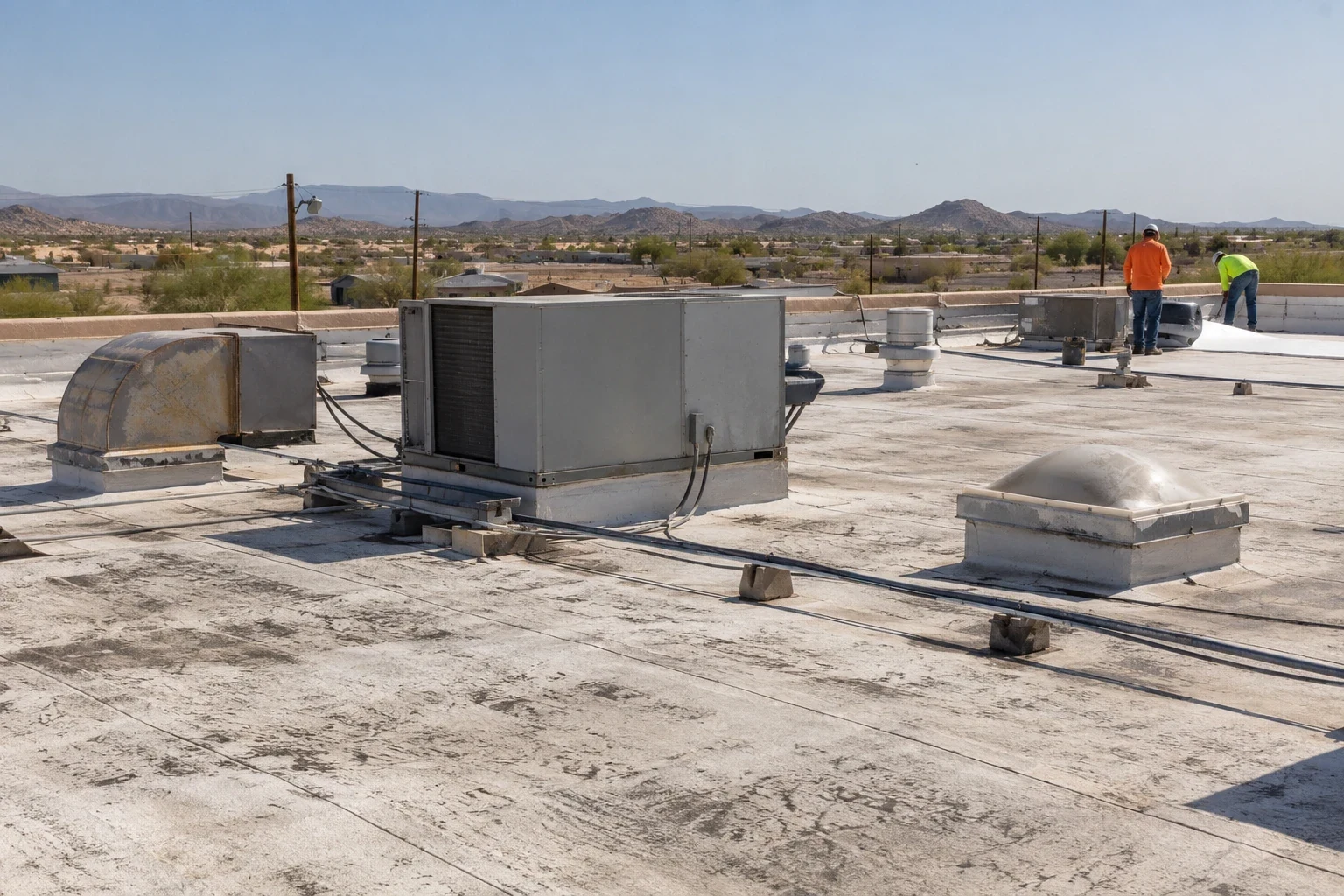
A usable roof record has a roof plan with zones, dated photographs referenced to those zones, descriptions of each observed condition, measurements where relevant and a list of untested areas. Moisture evidence, where collected, names the method, the date and the confirming cuts. Material identification is included where it can be observed.
Our roof insurance claim assistance assembles those pieces in the format the file needs and answers adjuster questions with specifics. We provide scope and pricing for repair or replacement as separate items, so the adjuster can compare line items. We do not decide coverage; that remains with the carrier. Our job is to make the roof facts clear, complete and consistent.
Dates matter as much as photographs. We note the visit date, the weather at the time, the access method and who was present, so a reader months later can place the record against the loss date and any later weather.
Repair scope: restore the roof to a watertight, documented state
After approval, a storm damage roof repair restores the roof with materials compatible with the existing system, and the record shows what was replaced and what was left. If the damage is widespread, the scope may call for a larger replacement, with the reasoning and testing laid out. If hidden moisture is suspected, we test before closing the scope.
Restoration teams working on interiors benefit from a clear roof status. We tell them when the roof is dry-in, when work above them is finished and where moisture readings remain a concern. That coordination avoids the cycle in which interior drying starts while the roof is still open. For work on larger properties, we coordinate with the general contractor managing the overall restoration.

Timing: keep temporary and permanent work distinct
A tarp is a pause, not a repair. Temporary protection holds for a limited time, and wind, sun and foot traffic wear it down quickly. We tell the adjuster and owner how long a given measure can be expected to hold in the conditions present, and we schedule permanent work before it runs out. That keeps a covered loss from turning into a second loss caused by delay.
Permanent repair has its own dependencies: approval, material lead time, permit requirements and the weather window. Monsoon weeks in July and August and the more frequent spring and fall wind events can interrupt a staged job, so we sequence work in sections that can be closed the same day. Where code requires upgrades that the original roof did not have, such as insulation thickness under the adopted energy code, we identify them as separate line items so they can be reviewed apart from the storm repair. The owner then sees which costs came from the event and which came from compliance.
Multiple buildings: triage by risk and by evidence
After a widespread event, an owner or carrier may have many roofs to assess. We triage by active water entry, exposure of occupied or sensitive space and the likely extent of damage, then inspect in that order. Each roof gets the same checklist so findings compare across the portfolio, whether the buildings are near the Apex Industrial Area or in Downtown North Las Vegas.
The portfolio summary lists each roof with status, urgency and recommended action. Property managers use it to communicate with tenants and the carrier, and the owner sees which buildings need immediate protection and which can wait for a scoped repair.
Send the claim details and access information
Share the loss date, reported symptoms, roof plans, access contacts and any prior inspection reports. We will document the roof so your file has what it needs.