
Storm damage roof assessment and repair for North Las Vegas, NV commercial buildings, with documented roof zones, temporary control and focused scopes.
A monsoon cell can drop heavy rain on a commercial roof in under an hour, and the first job afterward is to find out which details took the water and which only got wet. The Weather Service characterizes the valley as sun-baked desert where summer thunderstorms, gusts and local flash floods turn up from time to time. Those storms are regional exposure. They do not tell us what happened on a particular roof in North Las Vegas, NV. A storm-damage assessment starts on the roof: we walk the zones, photograph what moved, what split, what pooled and what blew in, and then separate storm damage from older wear. The result is a repair scope a building manager can approve in pieces. When water is already inside, an emergency roof repair visit comes first and the assessment follows.
Condition: What the Roof Shows After the Storm
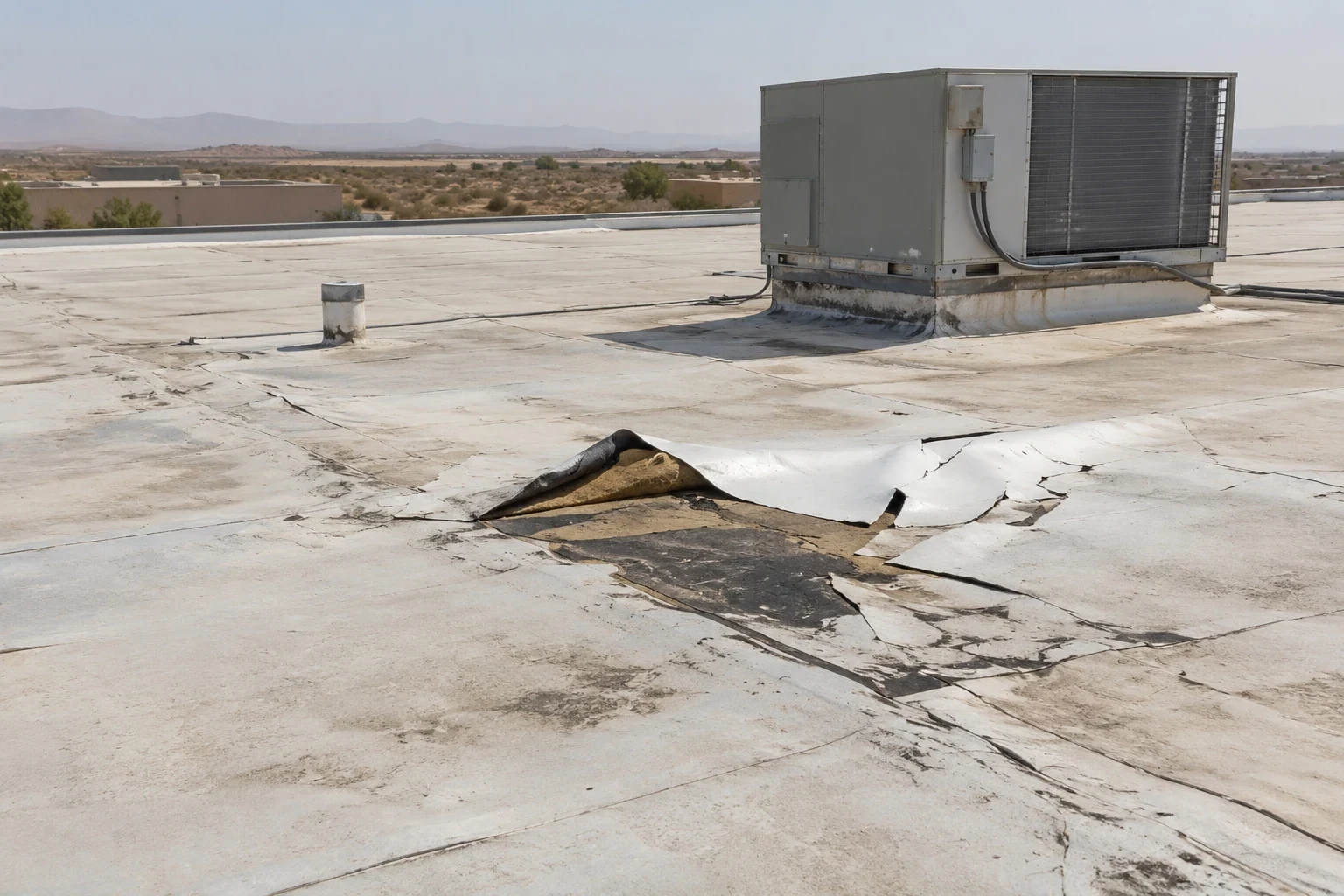
Walk the roof before anything is moved. Photograph loose debris, displaced gravel or pavers, lifted edge metal, bent equipment covers and any standing water that remains after the rain has stopped. Debris lines on the membrane show how deep water stood and how long it took to drain. A dry surface does not prove the assembly below is dry, and a pond does not by itself prove the membrane failed, so the walk records what is visible and marks what needs testing.
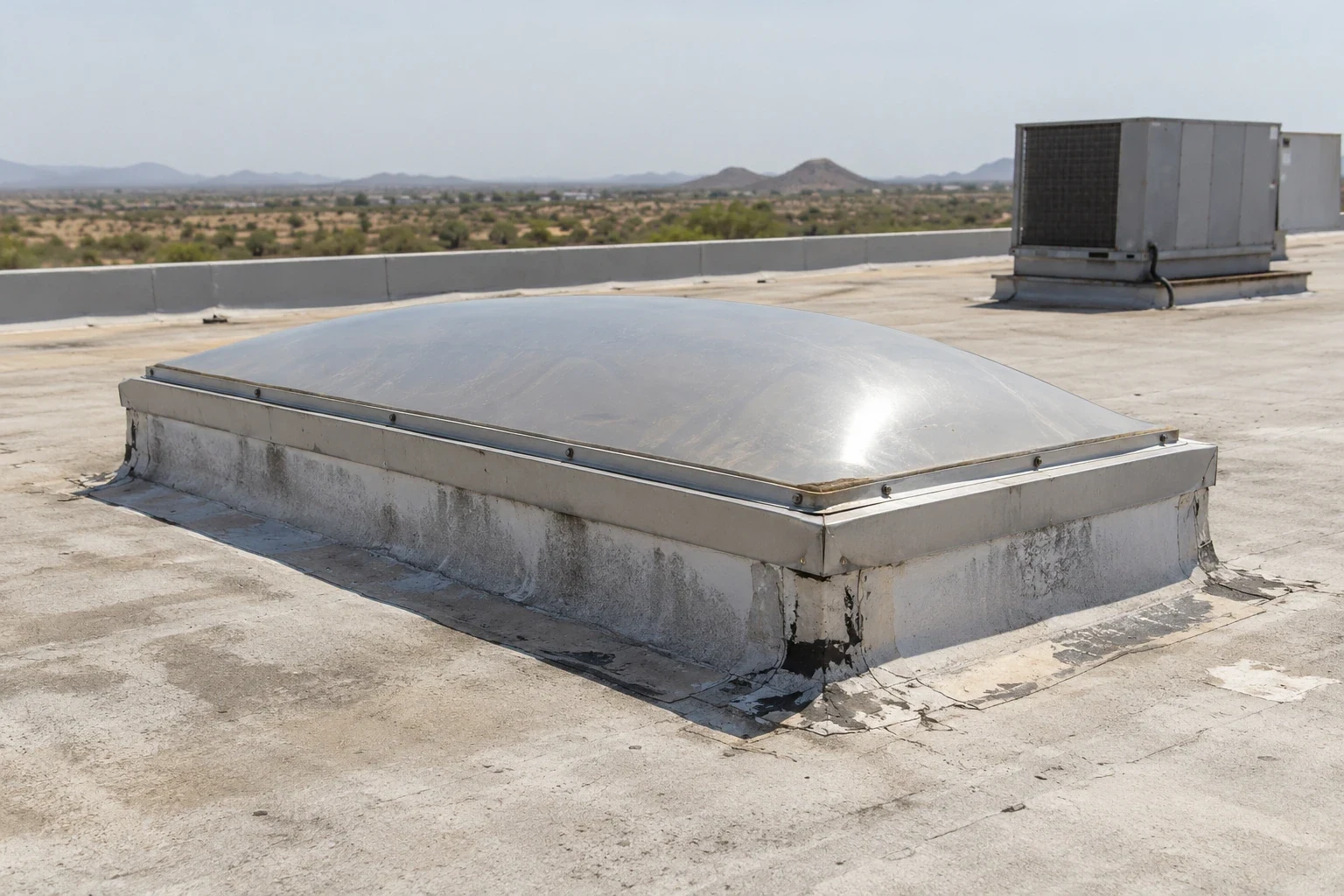
Storm damage tends to cluster. Perimeter metal, corner flashings, rooftop unit covers, skylight domes and drain bowls catch the most abuse, because they are the places where wind and water meet a break in the field. We start at those details and work inward. A split at a seam that runs straight and clean is a different finding from a membrane worn thin by years of ultraviolet exposure, and the repair method follows the difference.
Interior evidence gets equal weight. Ceiling stains, wet insulation at a penetration and fresh rust on deck fasteners all point to entry zones. Each interior mark is matched to a roof location and written down.
Commercial Roofing Questions
What decides whether storm damage needs a patch or a full replacement?
The extent of wet insulation and lost attachment decides it. If water entry is local and the membrane around it is sound, a defined repair works. If saturation or detachment spreads across many roof zones, we show the owner both a repair path and a replacement path with the conditions that trigger each.
How quickly should a roof be checked after a monsoon storm?
Soon enough that debris, standing water marks and fresh damage are still readable. A prompt visit also lets us place temporary protection before the next cell. If water is already entering the building, the call is an emergency and permanent scope waits.
Can blowing sand damage a commercial roof?
Sand clogs drains, collects behind curbs and scours coatings and membrane surfaces. We clear it, check for abrasion that exposes reinforcement and note areas where the surface layer has thinned.
Which roof details fail first in a high wind event?
Edge metal, corner flashings and perimeter membrane usually go first because uplift concentrates there. After those, rooftop unit covers, skylight domes and loosely attached accessories need attention.
What information should a facilities lead have ready for a storm assessment?
The roof plan, the date and time of the storm, interior photographs, prior repair records, equipment changes and access rules. Those items let the inspection compare the new condition with the old one.
More Roofing Detail
COMMERCIAL ROOFING IN NORTH LAS VEGAS, NEVADA
Wind: Edges, Uplift and Blown Material
Wind events cluster in spring and fall, according to the Weather Service. Gusts past 50 mph are rare, yet they can lift dust and sand into the air. Even moderate gusts load the roof edge, because wind uplift concentrates at corners and perimeters. When a coping cap, fascia or edge flashing loosens, the membrane underneath is exposed to peel from the edge inward.
We check edge metal and coping first on any wind-affected roof, then the membrane attachment near the perimeter. On a mechanically attached single-ply roof, fastener rows and plates tell us whether the sheet moved. On an adhered system, we look for bubbling or lifted laps along the edge.
Blowing sand collects in drain bowls, behind curbs and in low spots. It also scours membrane surfaces and coating. We clear the debris, note abrasion, and record any area where the surface layer has worn through to the reinforcement.

Water: Rain, Ponding and the Drainage Path
Monsoon moisture typically arrives in July and August, and the storms it feeds can dump heavy rain on dry washes and low ground. A roof is not a wash, but the logic carries over: a short, hard burst of rain tests every drain, scupper and seam at once. Drains that are partly blocked with sand or leaves hold water against laps, and flashing at curbs and walls faces more head pressure than it sees on an ordinary day.
We trace the drainage path from the roof's high point to each outlet, check the overflow route and measure how long water stands after the rain. A roof that keeps a pond for days after a storm has a drainage problem that shortens membrane life whether or not it leaks today. The fix may be a drain, scupper or cricket correction before any membrane work, since a patch over a low spot fails early.
For leaks, the stain is a starting point. Water can travel along deck flutes or insulation seams before dropping, so we follow the path uphill from the interior mark.
Repair Boundary: Define What Comes Out and What Stays
Once the entry points are known, the repair boundary is set against features another person can locate: a seam intersection, a curb corner, a drain, a wall or a measured roof-plan reference. The written scope lists the observed defect, the material to be removed, the substrate preparation, the patch material and the tie-in method. If wet insulation is confirmed, the scope states how far the opening extends and how new board will be fitted.
Not every storm event leads to a large repair. A lifted flashing can be reset and resealed. A split seam on thermoplastic membrane can be cleaned and heat-welded when the sheet is sound. In each case the method must be compatible with the existing material. A repair that bonds to the surface but not to the old sheet fails at the first thermal cycle.
When damage is broad, such as a membrane that has lost attachment across a large zone or insulation that is saturated across many squares, we say so and provide a replacement or recover comparison.
Operations: Access, Heat and Occupied Space
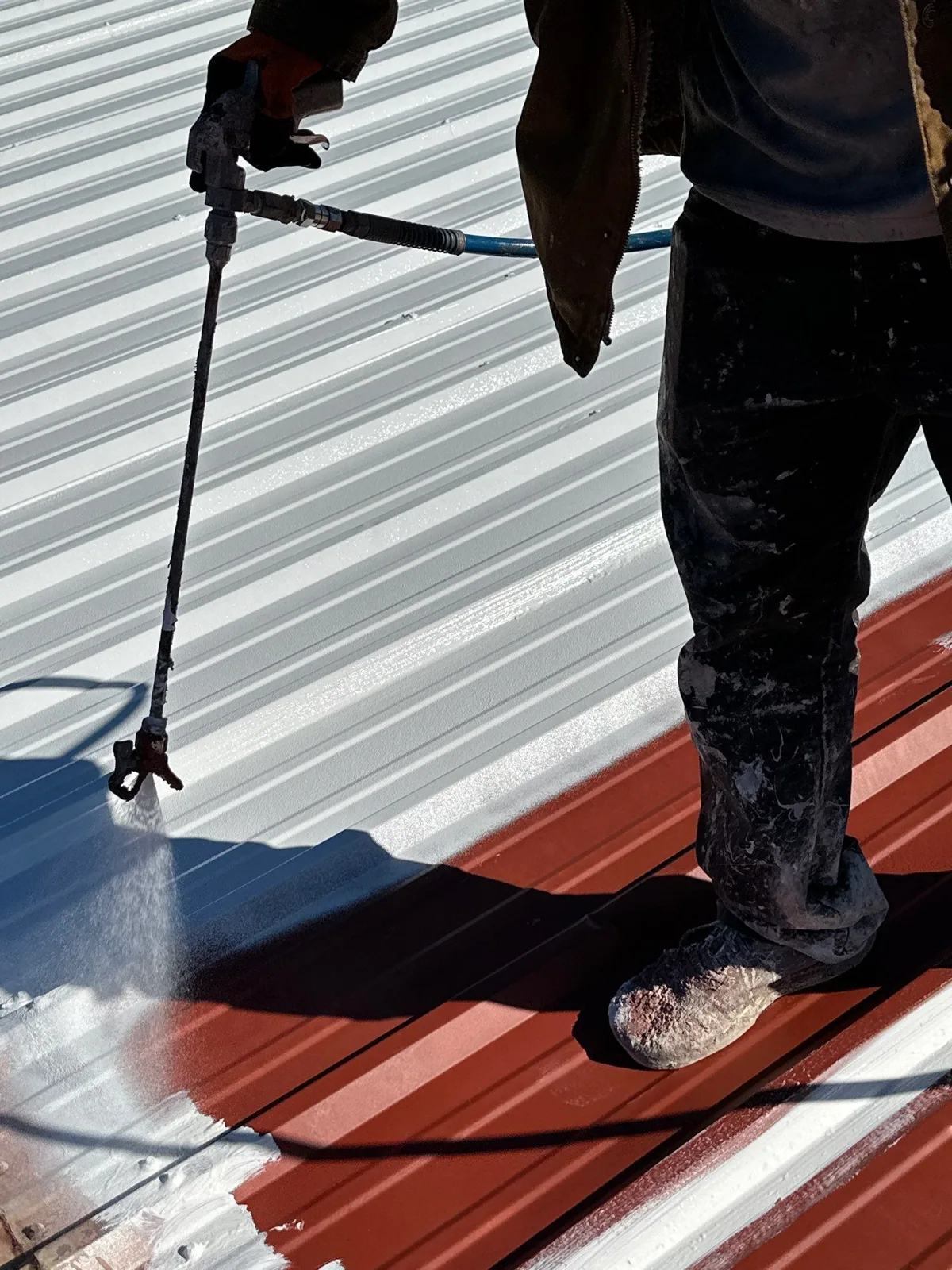
Storm repairs often run in hot weather. Adhesives, sealants and coatings have temperature and surface limits, so we plan early starts and hold sensitive work for the part of the day when the substrate is workable.
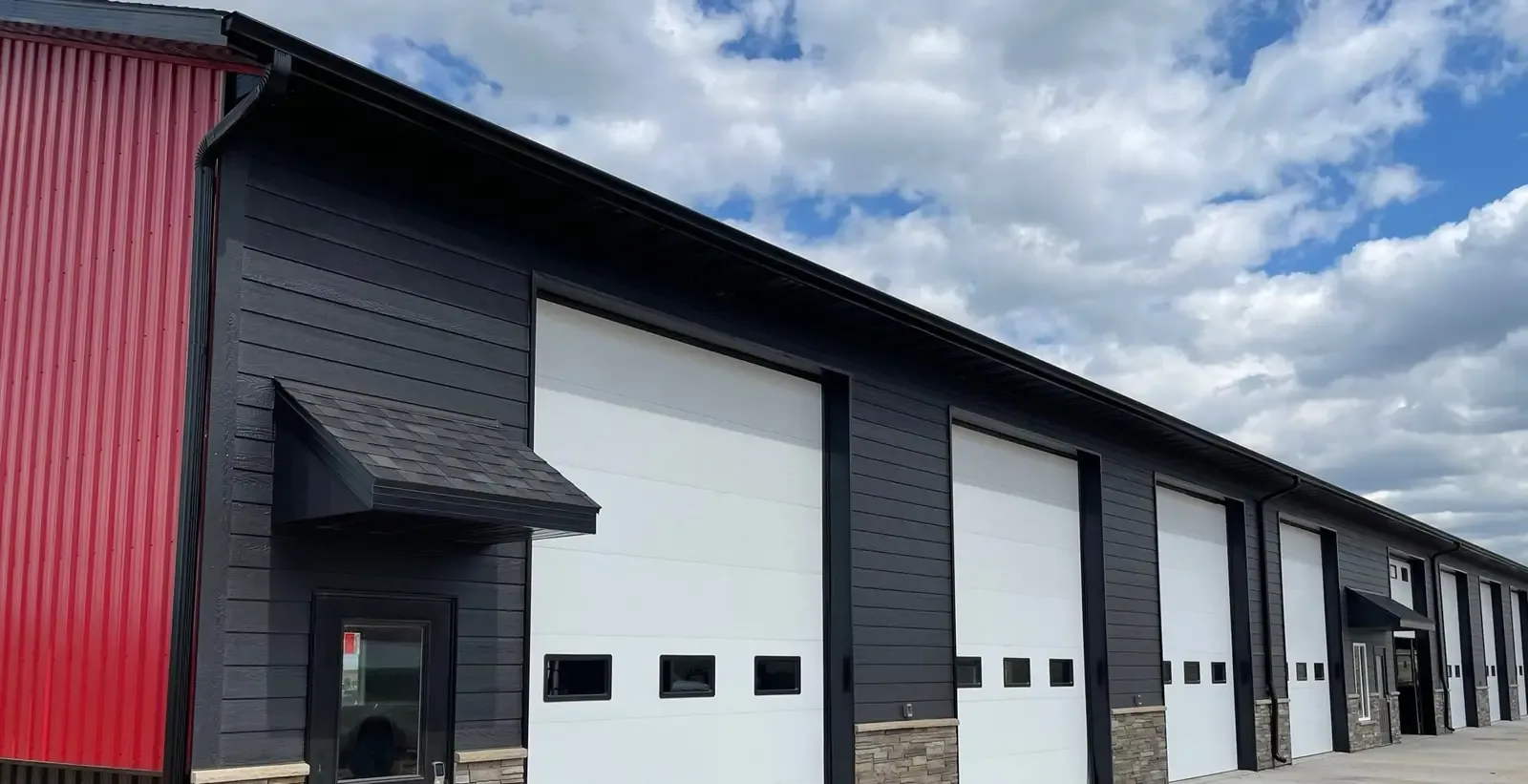
Access matters as much as heat. Before the crew arrives we confirm roof keys, hatch or ladder rules, fall protection requirements, tenant notices and any restricted periods. Temporary protection such as tarps, patching and drain clearing is documented with its location, material and next inspection point, so the temporary measure does not turn into a permanent unknown.
The Apex Industrial Area and Downtown North Las Vegas are wide stretches of the service area, not addresses. Each building needs its own inspection record, roof plan and repair history before a scope is final.
Record: Close the Loop With Evidence
Before closing a repair, we photograph the prepared substrate, each exposed layer, the finished patch and the perimeter. The record includes dimensions, material identifiers when known, weather during the work and any area that could not be reached. The closeout points back to the storm report and the roof-plan zone, which lets a later visit see if water came back at the same detail or at a new one.
That record serves several readers. A facilities lead uses it to schedule follow-up. A general contractor uses it to coordinate other trades. An owner uses it to decide between continued repair and capital replacement. If the building also has an open insurance question, the same photographs support the roof insurance claim documentation without adding new fieldwork.
Schedule a Storm Damage Assessment
Call with the storm date, the affected spaces and the access rules. We will walk the roof, document the entry points and give you a repair boundary your team can approve.