
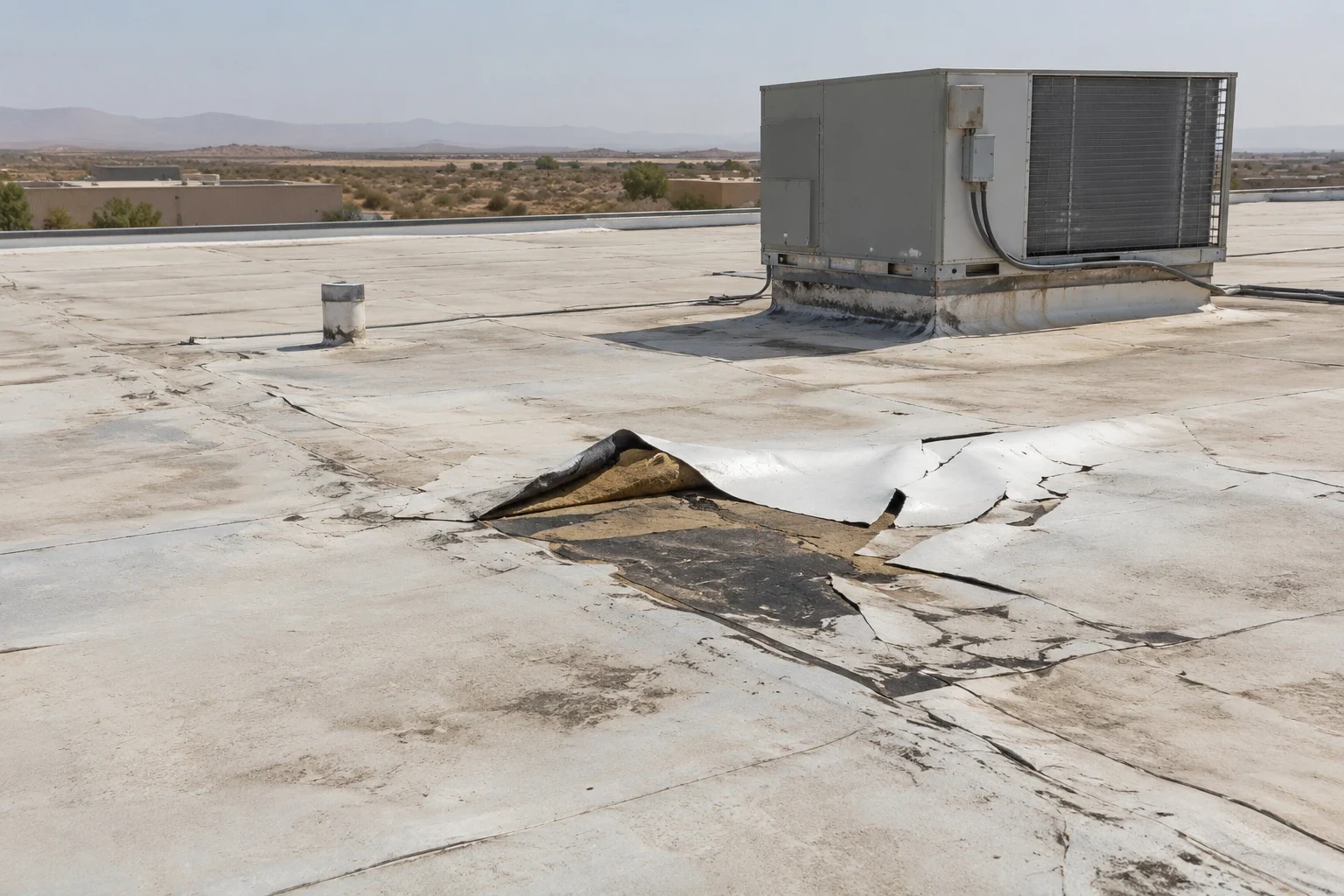
Hail damage roof repair in North Las Vegas, NV: documented impact evidence, moisture checks and repair scopes separated from ordinary wear.
Round, evenly spaced marks across a rooftop unit's top panel and a scatter of bruises on the membrane beside it are the signature a facilities manager can check for after a storm, and they are different from the long scuffs of foot traffic or the uniform chalking of an old surface. On commercial roofs in North Las Vegas, NV, a hail inspection has one job before any repair is priced: establish what the roof shows, how deep it goes and whether water has entered at the damaged points.
The National Weather Service describes summer monsoon thunderstorms in the Las Vegas Valley as capable of gusty winds, heavy rain and flash flooding. Any thunderstorm can carry hail, and a storm that brought heavy rain may or may not have produced it, so we do not assume. The record comes from the roof: dents on metal surfaces, bruises and fractures on membrane, displaced granules or coatings and the pattern across exposed and sheltered areas. A weather report supports the date of the storm and nothing more.
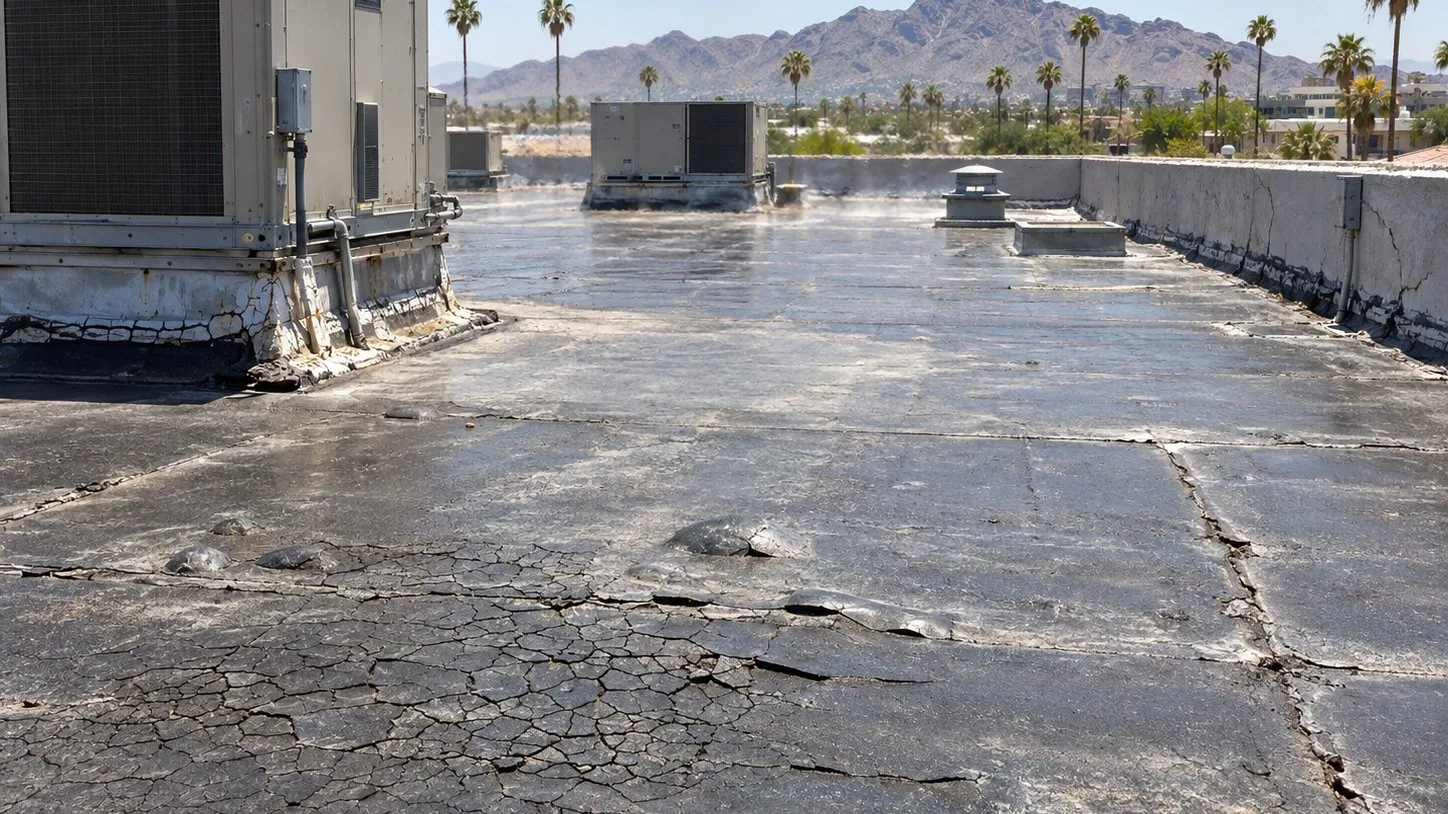
Evidence: read dents, bruises and fractures
Hail leaves different marks on different surfaces. On metal panels and equipment covers, impacts show as dents with a roughly uniform size, and soft metals such as vents and flashing show them clearly. On single-ply membrane, hail can bruise the surface, fracture the reinforcement or crack aged material. On coated roofs, it can fracture the coating or knock off the surface. On granule-surfaced roofs, it can bruise the mat and displace protective granules.
The pattern matters as much as the mark. Hail marks usually appear on exposed surfaces facing the storm direction, with fewer on areas sheltered by parapets or equipment. We compare exposed with protected areas, photograph test squares and count impacts per area, so the report can say how severe and widespread the damage is without overstating it. Wear and storm damage can coexist, and the record separates them.
Marks that look like hail sometimes turn out to be something else. Punctures from dropped tools and scuffs from service traffic can be mistaken for storm damage, so we separate them using the pattern and the location; a membrane puncture repair is a different scope with a different cause. Where an impact line coincides with an old seam, we also check the lap, since hail can open a weakened seam that was already marginal.
Commercial Roofing Questions
How do we know a mark is hail and not foot traffic?
Hail marks are roughly round, spread across exposed surfaces facing the storm and more frequent in open areas than sheltered ones. Foot traffic leaves lanes and scuffs along routes. We photograph both and describe the pattern.
Does a bruise on the membrane mean the roof leaks?
Not necessarily. We probe the mark, look for a fracture through the waterproofing layer and test the insulation for moisture. Intact bruises may only need monitoring.
How soon should the roof be documented after a storm?
As soon as it is safe to walk. Dust, foot traffic and later weather change the evidence. Early photographs with scale references are easier to connect to a storm date.
Can a cover board help against hail?
It adds protection against bruising and compression of the insulation below the membrane. It is an option on replacement or recover, and we explain the cost and weight trade-offs.
Do you provide emergency service after a storm?
Emergency response runs around the clock, holidays included. A crew can cover any opening, document conditions and schedule permanent repair.
More Roofing Detail
COMMERCIAL ROOFING IN NORTH LAS VEGAS, NEVADA
Water entry: check whether the impacts opened the roof
A bruise is not a leak, and a leak does not always follow a bruise. The question is whether the damage has broken the waterproofing layer. We probe suspect marks, look for fractures through the membrane and test the insulation beneath for moisture with a meter, an infrared scan or a small test cut.
An infrared moisture survey can show where water has entered following a storm, particularly on larger roofs with many marks. Where impacts have cracked old or brittle membrane, water may enter at many points, and the repair scope grows with the number of confirmed openings. Where the membrane is flexible and intact, bruises may need no repair beyond monitoring. The report states which condition applies to each zone.
Interior evidence helps close the loop. Ceiling stains that appeared after the storm date, with their locations marked on the floor plan, point to the roof zones worth testing first, and stains that predate the storm tell us the roof had a path in earlier.
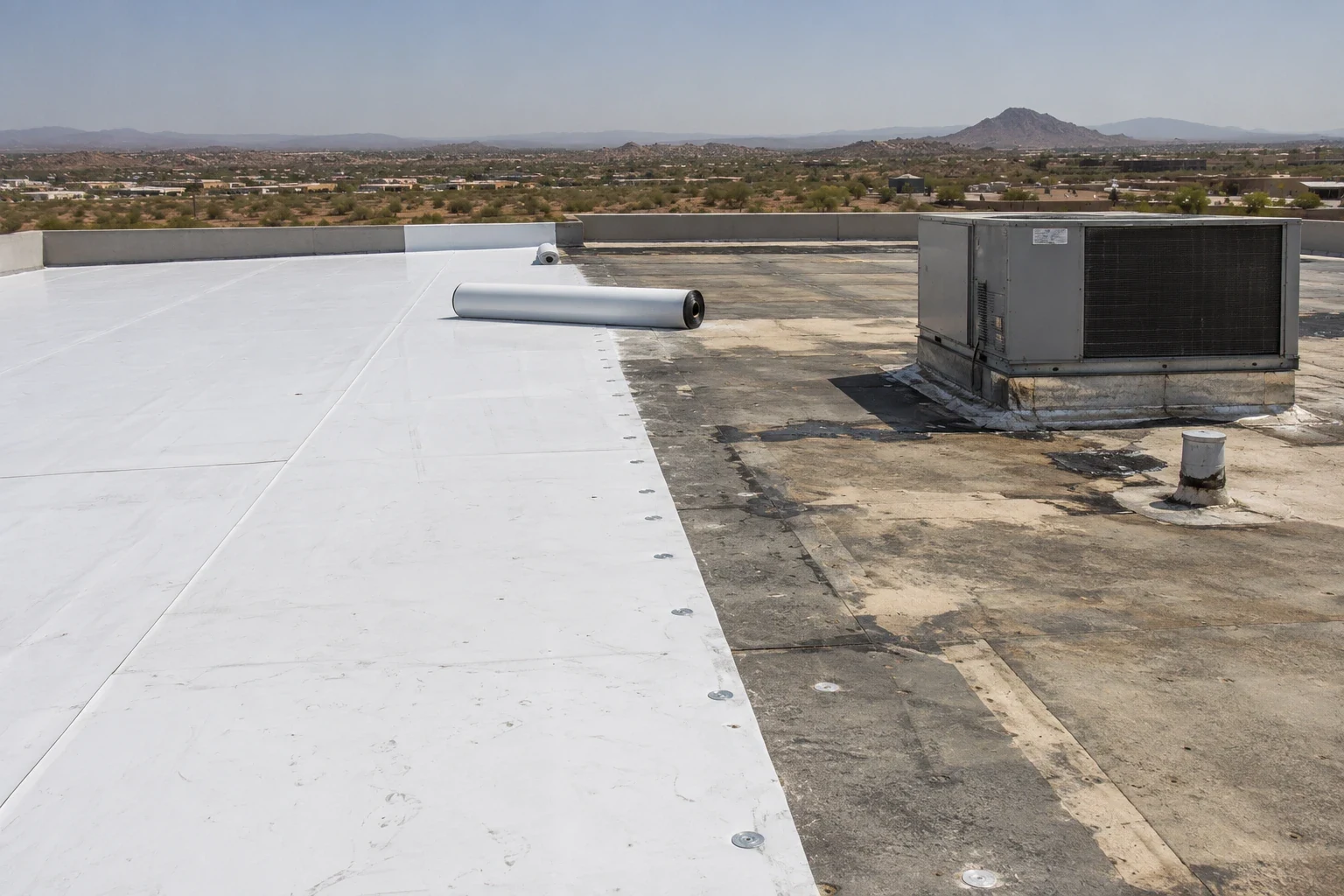
Documentation: build a record that stands on its own
Hail evidence fades. Dust settles in dents, foot traffic scuffs marks and later weather adds new ones. We photograph test areas with a scale reference, note the date and conditions, and reference each image to the roof plan. Interior reports and photographs of ceiling stains are tied to the roof zone above.
That record supports the owner's decision and any roof insurance claim assistance. We provide findings and pricing as separate items, state the limits of the inspection and do not decide coverage. Where prior inspection photographs exist, we compare them with current conditions, which helps establish what changed. Adjusters and restoration teams get the same record as the owner, in the same format.
Repair: match the work to the damage
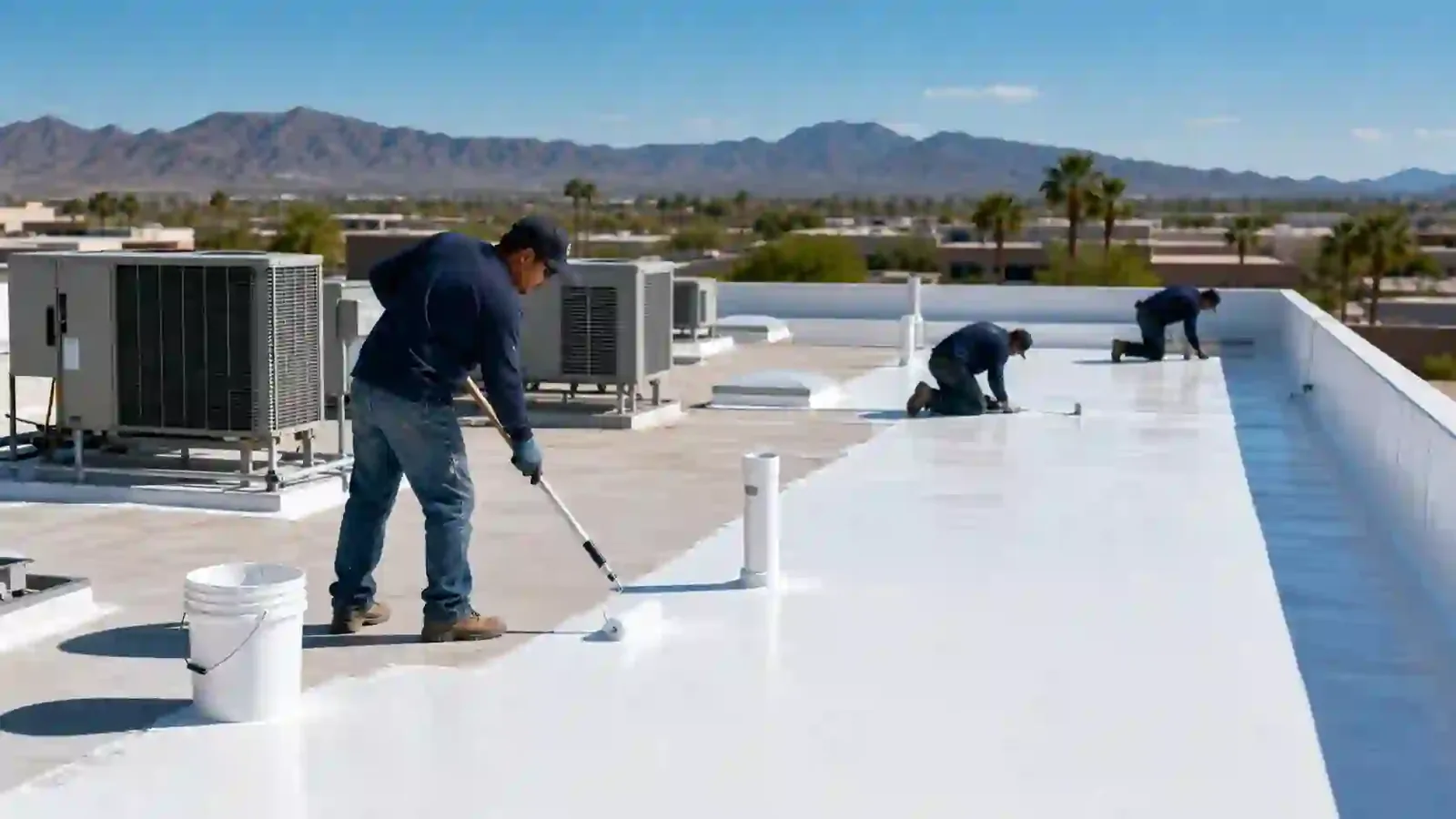
Repairs follow the evidence. Dented metal panels may need replacement if seams are compromised or coating is cracked, while cosmetic dents may be monitored. Fractured membrane is cut out and patched with compatible material after wet insulation is removed. A coating fractured by hail is repaired locally or recoated where adhesion is intact, and a roof with widespread fractures may need a larger scope.
The storm damage roof repair scope restores watertightness first and then addresses secondary damage. If damage is widespread and the membrane is aged, repairing hundreds of fractures may cost more than replacement, and the report shows the comparison. Penetrations and flashings near the impact area are checked too, since hail can crack sealant and brittle boots even where the field survives.
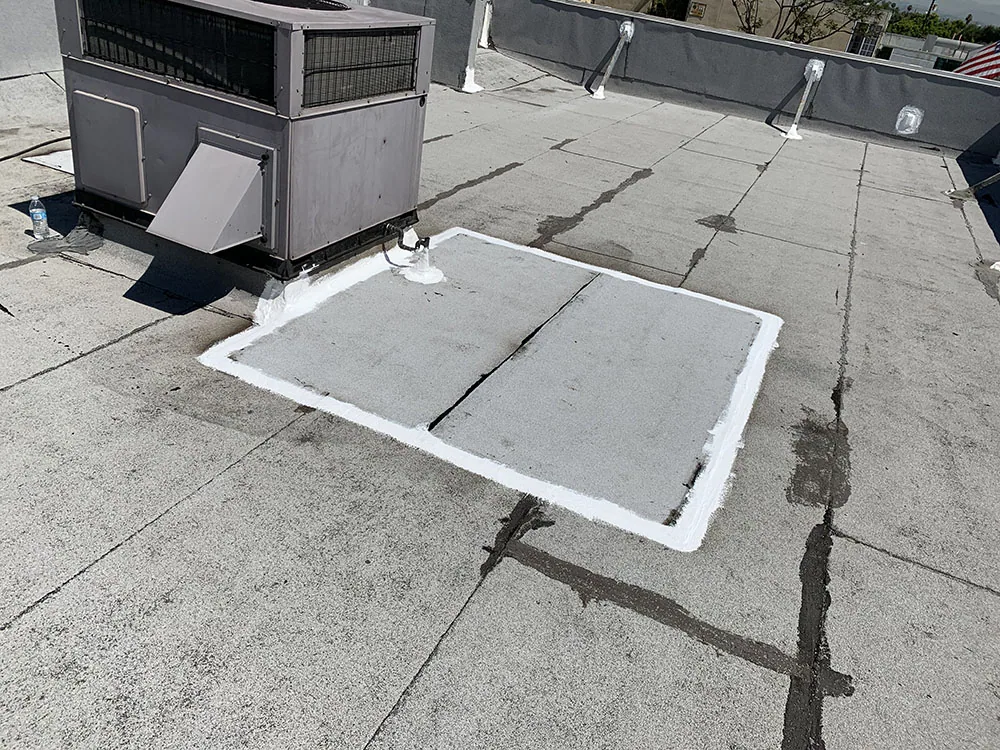
Resilience: choose materials and covers that take impact
When replacement is the answer, the choice of membrane, thickness and cover board changes how the roof takes impact. A cover board over the insulation protects against bruising and compression, thicker membranes resist cracking and reflective surfaces reduce heat stress on aging material. These are options with cost and weight implications, and none removes the need for inspection after a storm.
For a replacement or recover, we compare options in plain terms and show what the owner gains for the added cost. Roofs in planning areas such as the Cheyenne Technology Corridor or the Sandstone District receive the same comparison. An annual walk with photographs creates a baseline that makes any later storm evidence easier to read. Where the same storm also lifted edge metal, a wind damage roof repair runs alongside the hail work.
Cost and timing: what moves a hail repair
The number of confirmed openings, the area of fractured membrane, wet insulation, damaged metal and the access conditions drive price. A roof with a few repairable fractures costs little to restore, while one with widespread fracture on an aged membrane may call for replacement.
Timing depends on the claim process, material lead times, weather and permit review. Temporary protection comes first if any opening is active. We list conditional items separately so the owner can see what depends on testing.
If the owner wants to wait for a claim decision, we keep temporary protection in place and recheck it after each storm, so the roof does not worsen while approvals proceed.
Tell us when the storm hit
Send the date, photographs of dents or stains, roof plans and prior inspection records. We will document what the roof shows and recommend only what the evidence supports.