
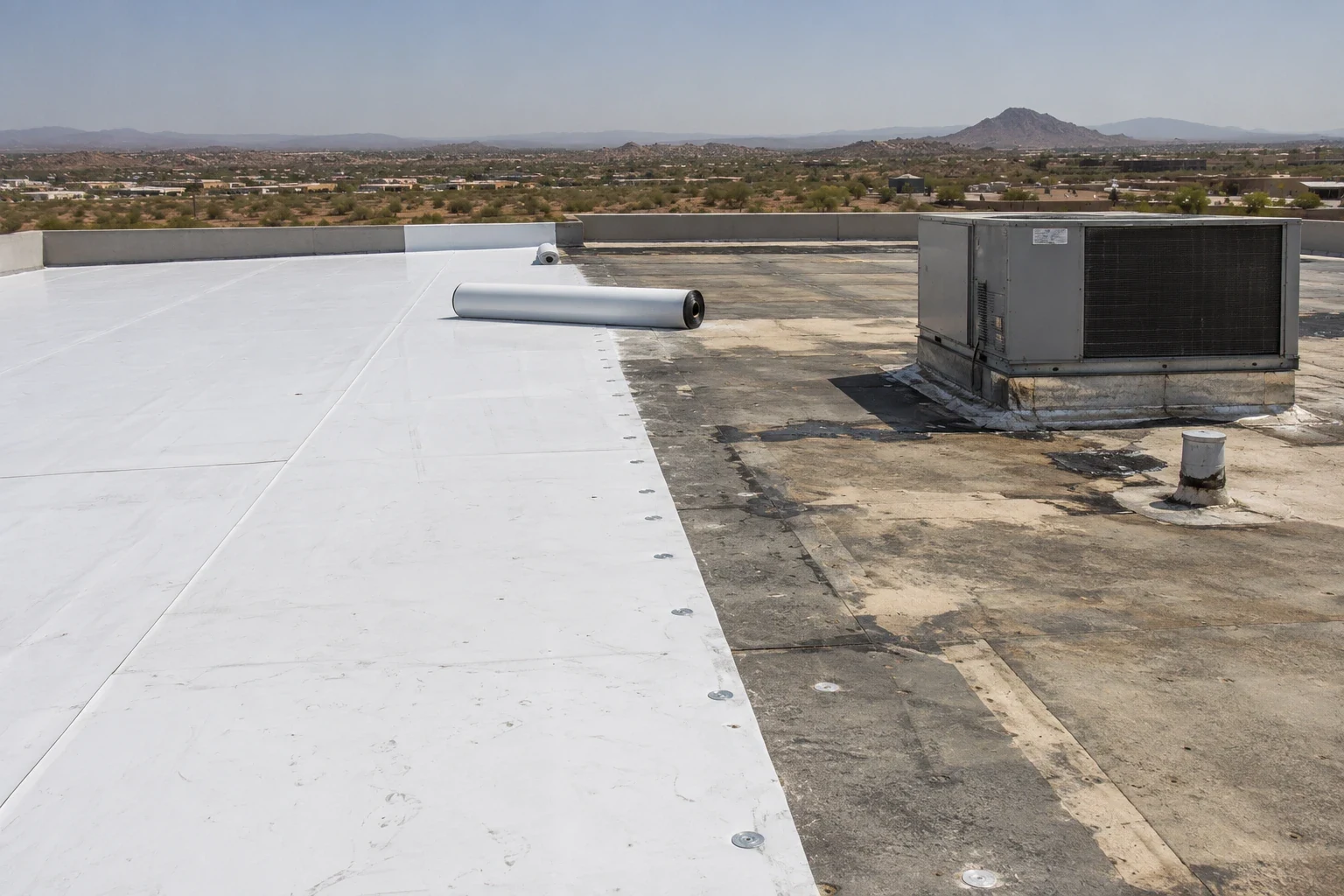
Heat and UV roof damage repair in North Las Vegas, NV: chalking, cracking and shrinkage diagnosed by testing, then restored or replaced on evidence.
Surface chalking that rubs off on a gloved hand, fine cracks that open when the membrane is flexed and flashing that has shrunk away from a wall are the three field tests a building manager can ask for on any heat-exposed roof, and each answers a different question. On commercial roofs in North Las Vegas, NV, sun and heat wear the surface first and the details next, and the inspection must establish how deep the wear goes before anyone picks coating, repair or replacement.
The station record for the valley shows a 70.1 degree Fahrenheit annual mean over 1991 to 2020 and only 4.18 inches of precipitation, so on these roofs the sun does the damage, not the rain. Those are regional station values, not measurements on a specific roof, and they say nothing about its condition. They do explain why we test for ultraviolet and thermal wear on every exposed surface, then let the roof show how much it has actually suffered.
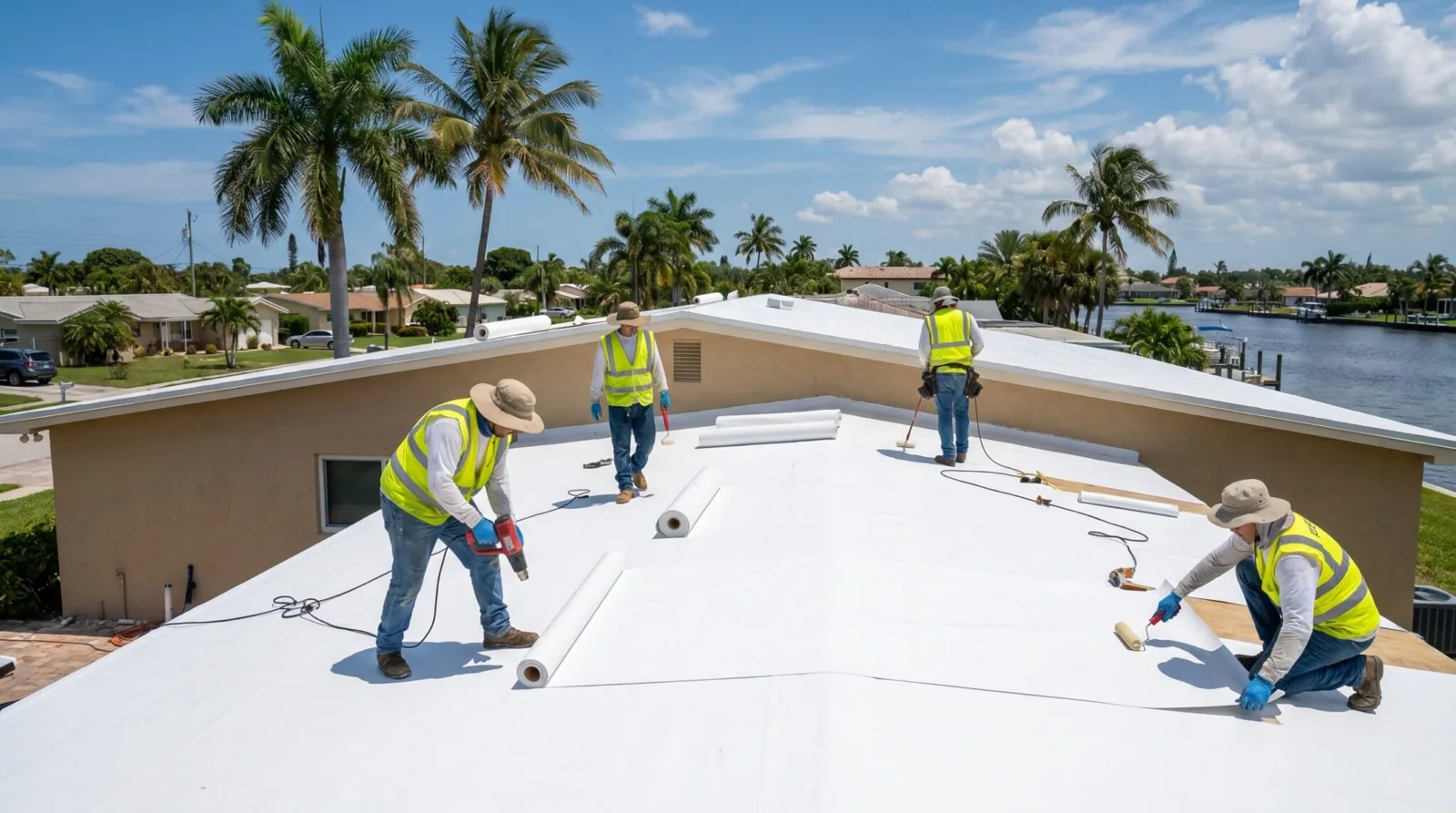
Signs: separate surface wear from structural loss
Chalking is the first sign on many membranes. It means the top layer is breaking down, but the membrane below may be sound. Crazing or fine cracking suggests the surface has lost flexibility. Exposed reinforcement scrim means the covering has worn through. Shrinkage shows as flashing pulling from walls, seams opening at ends and the membrane tightening between fasteners. On asphalt-based roofs, surface granule loss, alligatoring and blistering are the equivalent signs.
We record where each sign appears and how severe it is. A roof that chalks evenly but flexes without cracking is in a different state from one that cracks at edges and laps. Photographs with a scale reference and a marked roof plan show whether the wear is concentrated near edges, equipment or ponded areas, or spread evenly. That pattern points to cause and guides the repair.
Where wear concentrates around low spots, the cause may be water as much as sun, since standing water speeds the breakdown of the surface. In that case the ponding water repair comes before any coating, because a restored surface over a pond fails at the pond first.
Commercial Roofing Questions
Is chalking a sign the roof needs replacing?
Not by itself. Chalking shows the surface is breaking down, but a flexible, dry membrane under it can still be restored. We flex-test, check bond and test for moisture before deciding.
Why do flashings fail before the field of the roof?
Details move more than the field, and sealant and small components age faster in the sun. Wall flashings pull away as the membrane shrinks. We probe each detail and repair the cause.
Will a reflective coating lower my building's heat load?
A reflective surface absorbs less sunlight, which can reduce roof temperature. The effect on interior cooling depends on insulation and use. We explain what to expect for your building.
When is coating a poor choice?
When the insulation is wet, the membrane is brittle or seams are failing widely. Coating those roofs hides the problem for a season or two. Testing tells us which case applies.
Do you respond to heat-related roof failures after hours?
Emergency service runs around the clock, holidays included. A crew can seal or cover openings and document conditions for permanent repair.
Which roof components age fastest in the sun?
Rubber boots, sealant beads, plastic vent caps and skylight domes usually fail before the membrane. We check them on every visit and replace the worn ones during repair work.
More Roofing Detail
COMMERCIAL ROOFING IN NORTH LAS VEGAS, NEVADA
Tests: flex, bond and moisture
Three tests turn impressions into findings. A flex test at a lap or edge shows whether the membrane bends without cracking. A bond test shows whether seams and flashings still hold. A moisture test, by meter, infrared scan or small cut, shows whether heat damage has already let water into the insulation.
A roof can pass the flex test and fail the moisture test, or the reverse. The results decide the path: a flexible, dry, well-bonded membrane is a candidate for coating, and a brittle or wet one is not. An infrared moisture survey helps on larger roofs, and the report records where each test was done, so another inspector can repeat it.
Test locations matter. We sample at roof edges, near equipment, in ponded areas and in open field, because heat wear varies across a roof, and a result from one corner does not describe the rest. Each sample point goes on the roof plan with its result, so a reader can see how widespread each condition is.
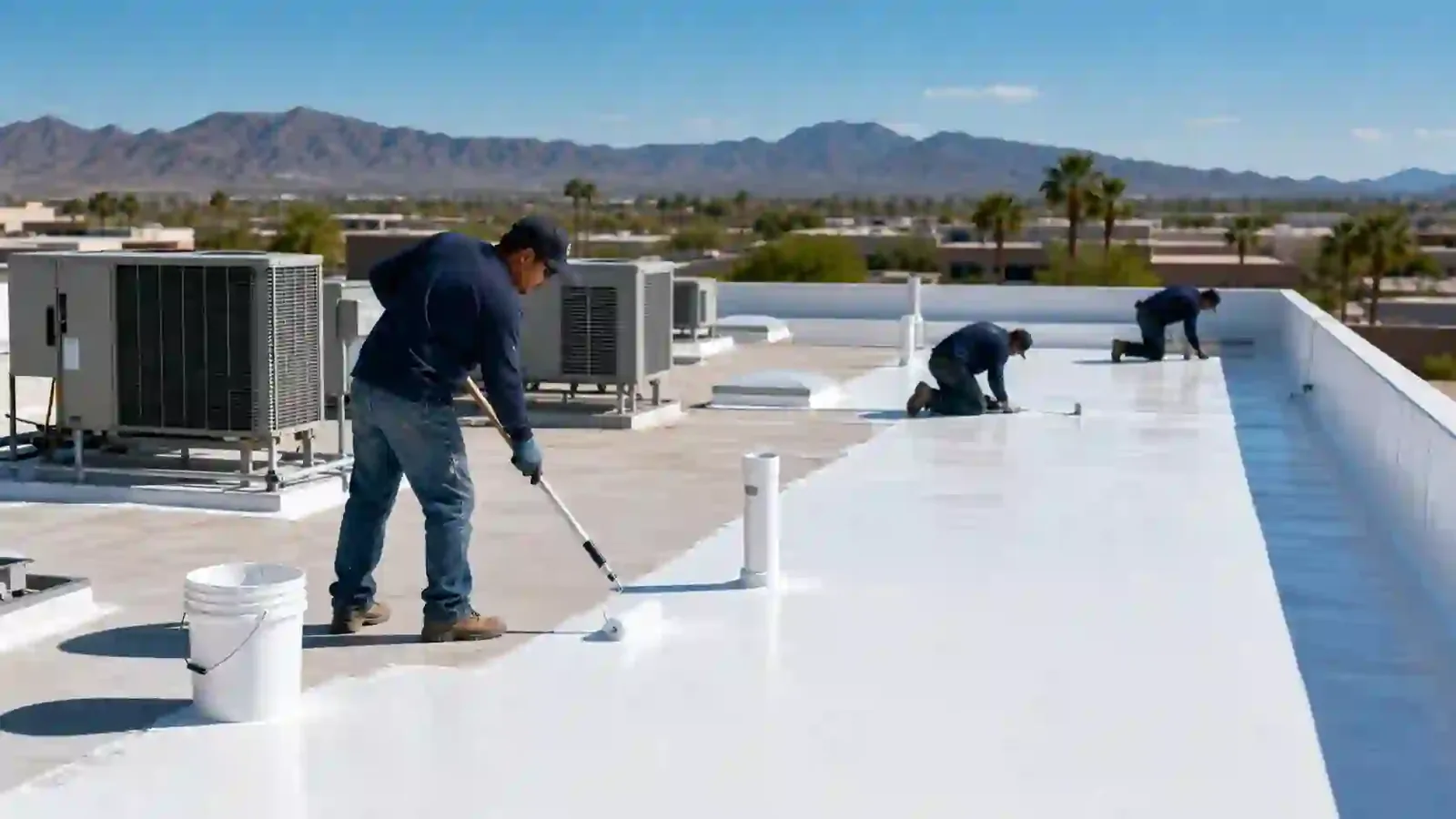
Details: heat finds flashings and seams first
Heat cycles stress details more than open field. Flashing at walls and curbs shrinks, sealant dries and splits, seams at laps open and edge metal loosens as fasteners work against thermal movement. We probe each detail and photograph the failures, then compare them with the field condition.
When the field is sound and the details have failed, targeted repair is the answer. A seam failure repair restores the lap, and flashing is reset with compatible material. Where heat has also lifted edge metal, we reset the perimeter. If detail failures are widespread across an aged membrane, the report points to coating or replacement, with the count of failures as evidence. Penetrations and pipe boots are also checked, since rubber and plastic components age quickly in the sun.
Sun-baked components deserve a separate walk. Vent caps, plastic skylight domes, rubber boots and sealant beads age on a faster clock than the membrane, and replacing them during the repair visit costs far less than a separate leak call later.
Restoration: coat only what can hold a coating
A restoration coating renews the surface and can reflect more sunlight, reducing heat load. It works on a dry, well-bonded membrane with sound seams and drainage that works. The choice between an acrylic roof coating and a silicone roof coating depends on the substrate, the ponding behavior of the roof and the owner's plans.
Preparation decides the result: cleaning, repair of seams and details, primer where required and reinforcement at penetrations. A roof coating restoration proposal lists the preparation, the number of coats and the areas excluded. Application temperature and surface temperature limits apply, so we schedule early in the day in summer and avoid forecast rain. A test area can verify bond before the full roof is coated.
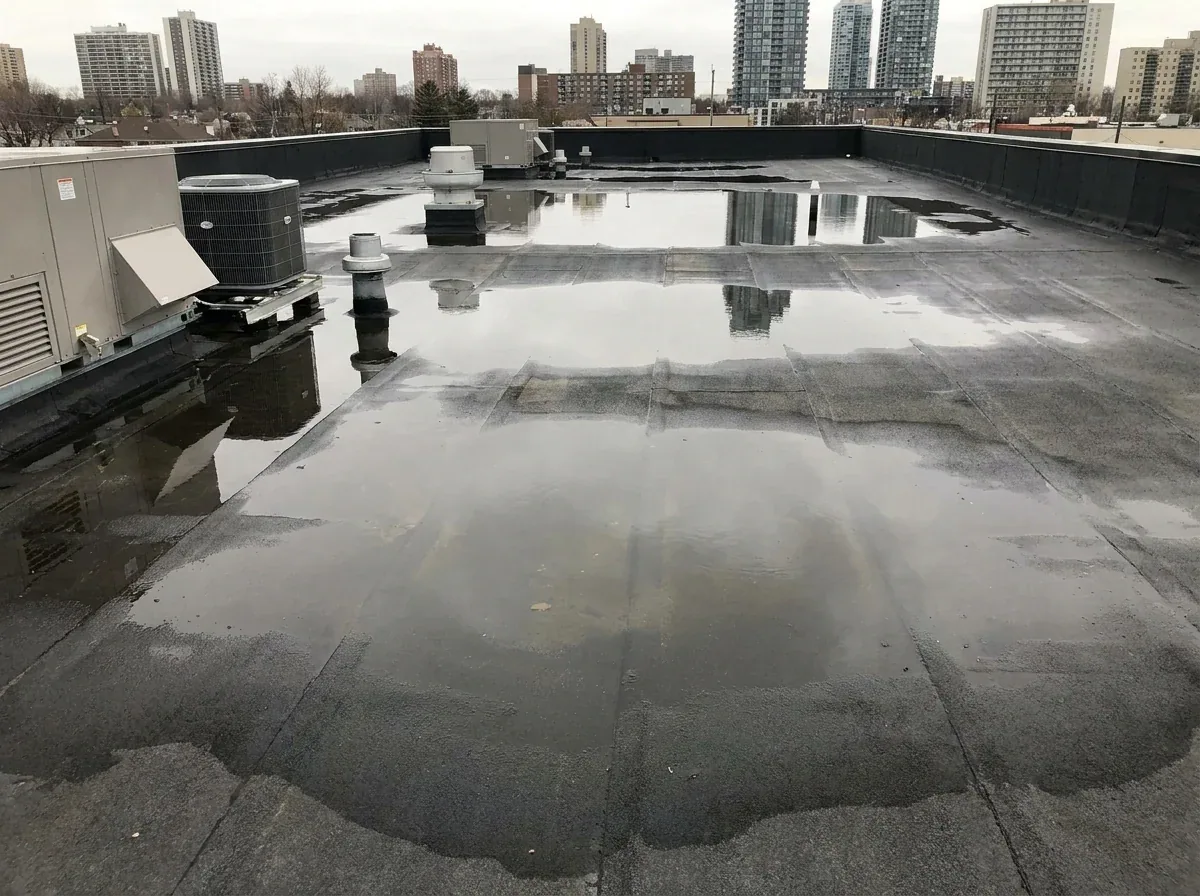
Replacement: recognize when repair has run its course
A membrane that cracks when flexed, shows widespread seam failure and sits over wet insulation has reached the end of its useful life, and coating would only hide it. In that case, replacement is the sound investment. A cool roof installation pairs a reflective membrane with insulation matched to the energy code, reducing heat absorption on the new roof.
Insulation and reflectance choices follow the energy code the city enforces, and Nevada's adopted baseline is the 2024 International Energy Conservation Code, so confirm local enforcement before the layers are chosen. We give the owner the comparison: continued repair, coating and replacement, with the testing behind each. Roofs in planning areas such as the Apex Industrial Area and Craig Ranch follow the same decision path.
Cost and timing: price by condition and area
Detail repairs are priced by count, coating by area and preparation, and replacement by area, insulation and access. Heat limits crew hours in summer, so large jobs run longer. We schedule demanding tasks for early hours, follow product temperature limits and plan weather holds for monsoon weeks. The proposal states each assumption and the price of conditional items such as wet insulation.
A follow-up visit after the first summer confirms that repairs and coating are performing, and a yearly walk keeps the record current.
Tell us what the surface is doing
Describe the chalking, cracking or shrinkage, and send roof plans, the age of the roof if known and recent repairs. We will test the roof and recommend the least work that holds.