
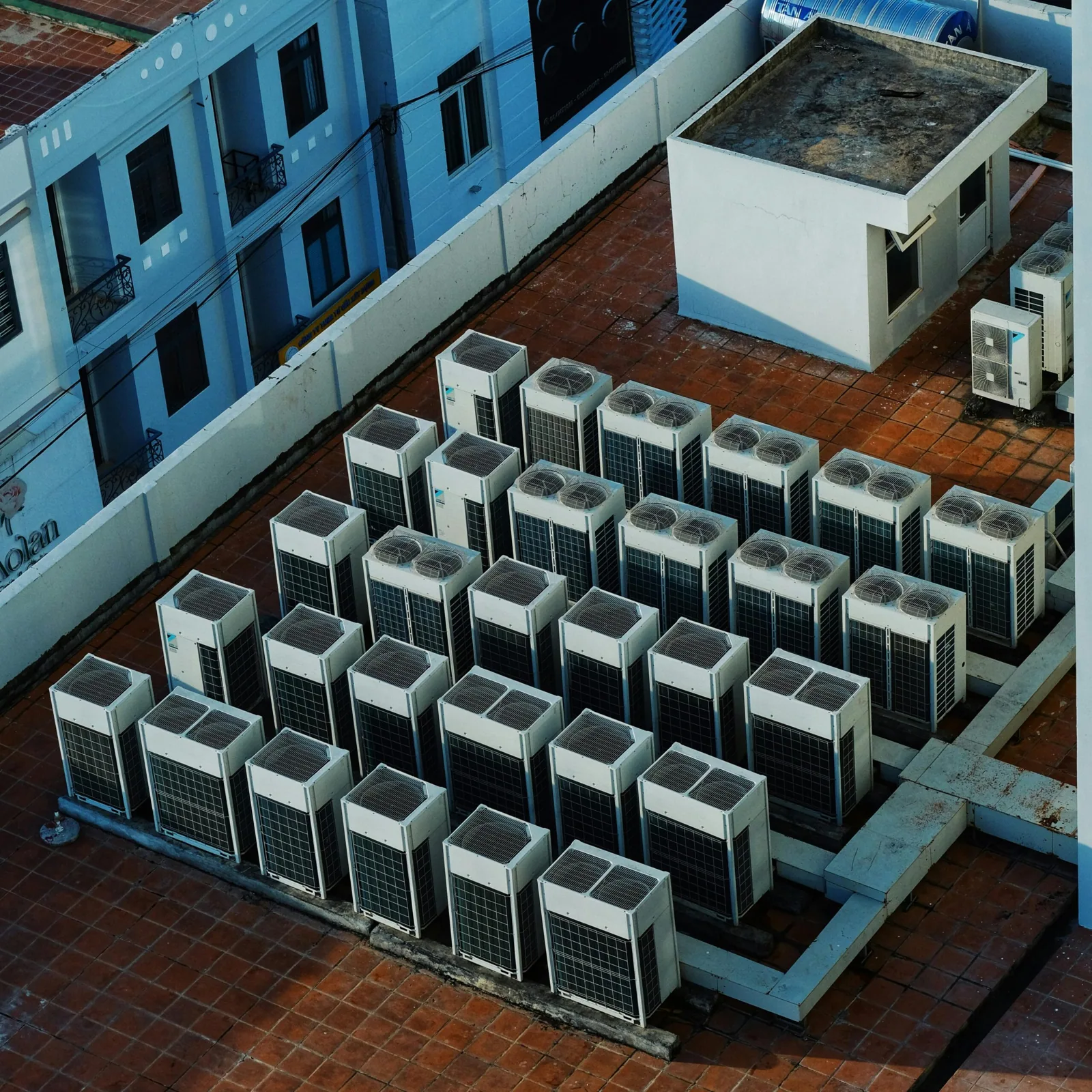
Rooftop unit curb, pipe support, and equipment flashing work in North Las Vegas, NV, with inspection steps for leaks at curb transitions and support pads.
A rooftop unit that was swapped last season for a different model may be sitting on a curb the roof was never flashed for. The new unit can have a different footprint, a different weight, and a different duct opening, and the trade that set it was working to the equipment schedule, not to the membrane. When a leak appears below that unit, the first questions are simple and can be verified on site: what changed at the curb, when, and who opened the roof.
For buildings in North Las Vegas, NV, the inspection has to establish four things before scope or price is chosen: the curb height and construction, the condition of the flashing and counterflashing, whether the support points beside the unit are carrying load on the membrane, and where water travels once it passes the transition. Only then can the work be set as a reflash, a curb rebuild, or a larger roof-zone repair coordinated with the mechanical trade.
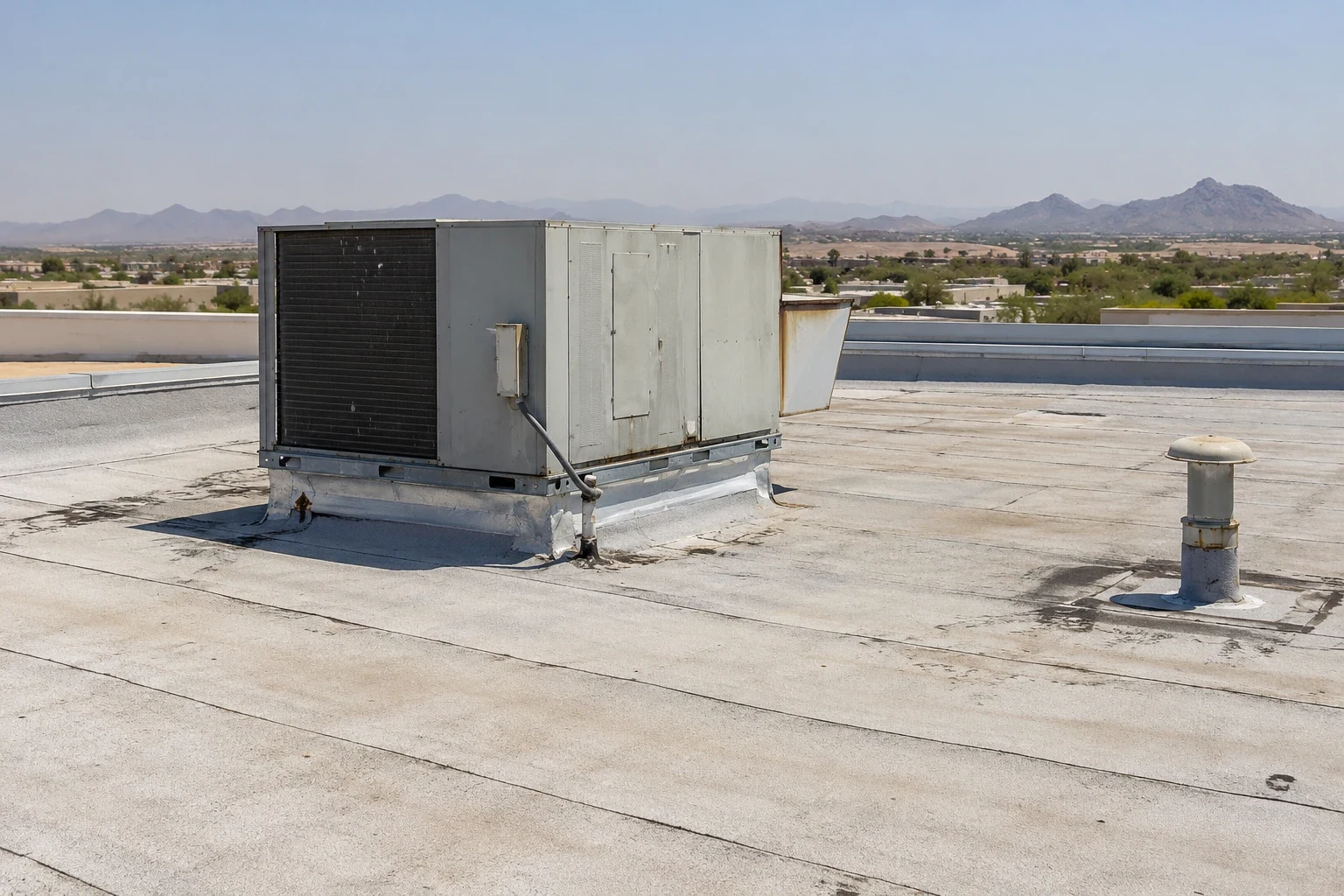
Curb Transition: Where the Membrane Meets the Equipment
The curb is a short wall, and the roof membrane has to climb it and terminate above the water line. We check the height of the curb above the finished roof surface, the cant strip at the base, the membrane or flashing sheet turned up the face, and the counterflashing or termination at the top. A flashing that stops short, a counterflashing that has opened, or a sealant bead doing the job of a termination are all common findings.
We also look at the corners. Open the corner, look at the lap, and note whether the sheet is bonded, welded, or only sealed. That observation, with a photograph tied to the curb number on the roof plan, goes into the inspection record before anything is repaired.
Commercial Roofing Questions
What decides whether a leaking curb can be reflashed instead of rebuilt?
The curb itself decides it. If the curb frame is sound, level, and tall enough above the roof surface for flashing to terminate above the water line, a reflash with a new counterflashing usually works. If the frame is damaged, too short, or out of square, new flashing will fail again. We check the height and the framing before choosing, and photograph the findings so the decision can be reviewed.
Who should be responsible for the roof when an equipment contractor opens it?
Notify the roofing contractor responsible for the membrane before any cut, set the sequence for the flashing, and inspect the closure afterward. When an HVAC crew closes its own penetration with sealant, the result is often a temporary seal that fails. A short written hold-point list, agreed before the work, puts the flashing in roofing hands and lets the equipment trade finish its own scope.
How can a general contractor tell a condensate overflow from a roof leak?
Look at the timing and the staining. Condensate problems follow equipment operation and hot, humid operating hours, not rain, and they leave water at the unit drain and the line path. Roof leaks follow storms or irrigation and appear at flashing edges. If the stain appears on a dry day, check the condensate line first. A water test at the curb, run with the unit off, settles the question.
What changes when a unit is replaced with one that has a different footprint?
The old curb may no longer match. If the new unit overhangs or leaves gaps, an adapter curb or a rebuilt curb is needed, and the flashing must be rebuilt to match. The weight may also change, so the deck and supports need review. We ask for the equipment submittal early so the curb, the flashing, and the crane schedule can all be settled before the old unit is lifted.
More Roofing Detail
COMMERCIAL ROOFING IN NORTH LAS VEGAS, NEVADA
Roof Zone Map: Units, Pipe Supports, and Penetrations
Curbs are only part of the equipment load. Gas lines, refrigerant lines, conduit, and condensate piping often cross the roof on supports that sit directly on the membrane, and each support is a point of wear. A roller support that has shifted can abrade the sheet. A fixed block without a protection pad can crush insulation under it and leave a low spot that holds water.
We build a roof-zone map with every curb, support, and penetration numbered. Next to each entry we record the type, the condition of the flashing or protective pad, and the distance to the nearest drain. That map lets a general contractor see which items belong to the roof scope and which belong to mechanical or electrical trades,. It also shows where a penetration flashing repair can be combined with a support replacement in one visit.
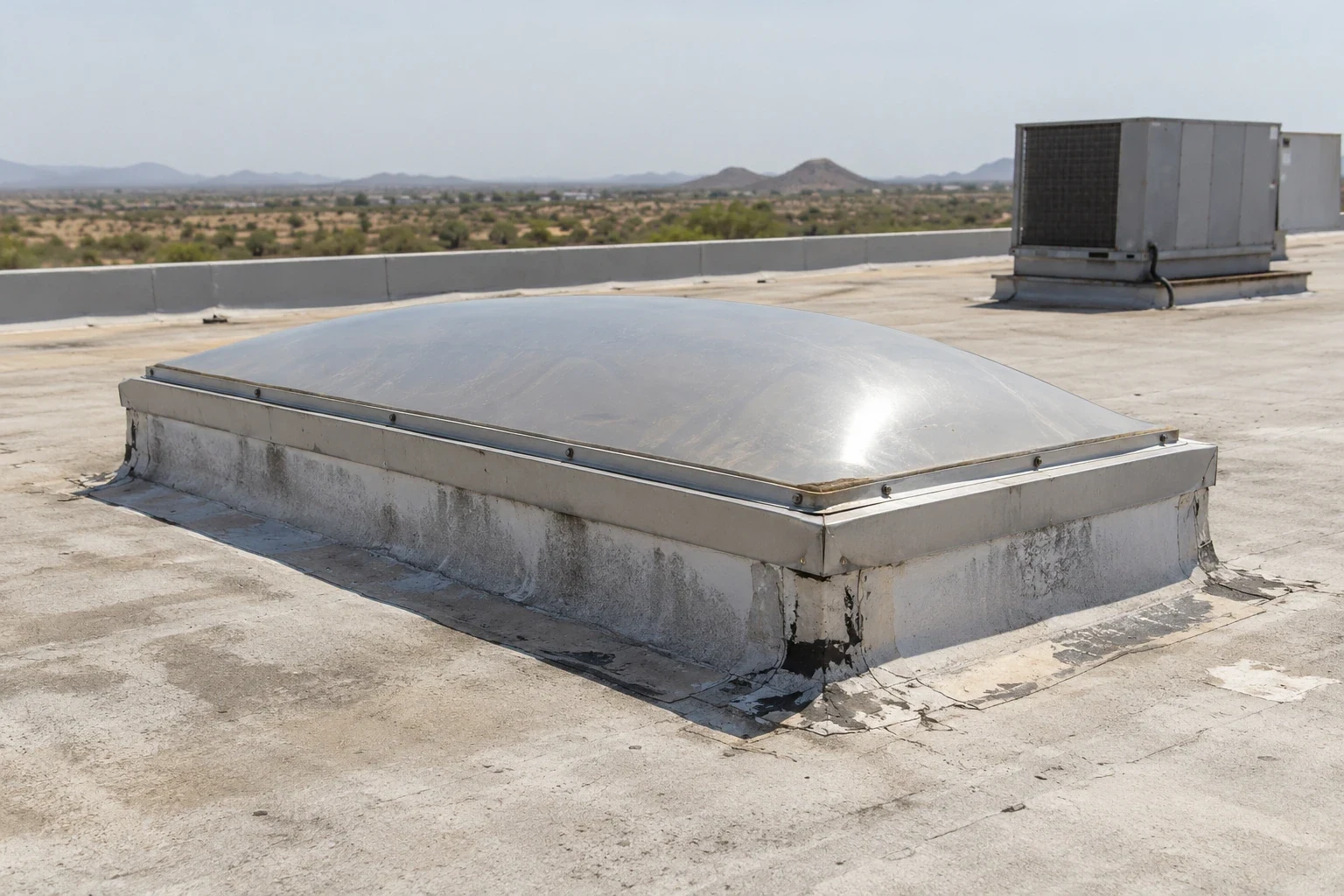
Water Entry Path: How a Curb Leaks
Curb leaks follow a short list of causes. Water can pass an open corner, a fastener driven through the flashing face, a counterflashing that no longer laps over the base flashing, or a gap where a duct passes through the curb wall. A condensate line that overflows onto the membrane can mimic a roof failure.
The interior stain is rarely directly below the entry point. Water follows the deck, the insulation, or a duct, and travels until it finds a seam in the ceiling. We trace the path from the stain back to the roof, check the high side of the curb first because water drains toward the low side, and test with a controlled water source where the building allows it. The goal is to name the entry before opening anything, which keeps the leak repair within a defined boundary.
Access Window: Coordinating the Roofing and Mechanical Trades
Most curb work depends on the HVAC schedule. A curb cannot be raised or rebuilt while the unit sits on it, so the sequence is disconnect, lift, work the curb and roof, set the unit, and reconnect. That sequence needs a crane or lift, a shutdown window, and a roof that is dry and closed before the unit goes back. We ask for the equipment schedule early and fit the roofing steps into the mechanical trade's window.
The same discipline applies on an occupied roof. Tenant hours, noise rules, and interior protection are set before work starts, the same way they are on occupied building reroofing. For the general contractor, the practical output is a short sequence with named hold points: curb condition confirmed, flashing complete, unit set, final inspection. Each hold point has a photograph, so a later question about who touched the roof has an answer.
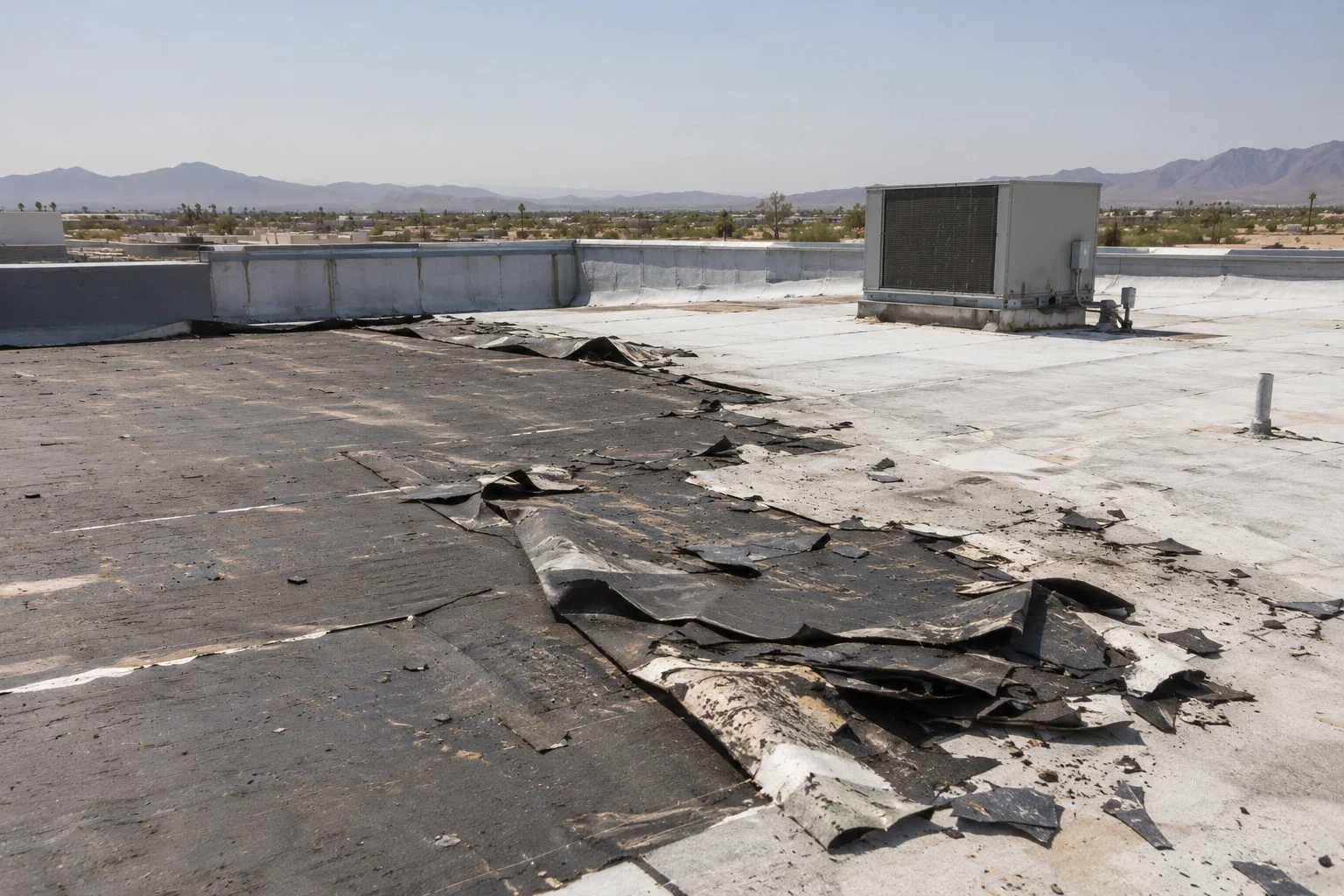
Heat Exposure and Wind Uplift: What the Curb Sees
The valley is a hot, sunny desert, so sealants and boots around curbs and supports tend to dry out and crack ahead of the field membrane. Still, a curb flashing in full sun sees large daily temperature swings. Sealants harden, adhesives soften, and flashing sheet pulls at its terminations.
Wind is the other load. The Weather Service notes that spring and fall wind events are more common in the valley than in other seasons, and that winds above 50 mph are infrequent. Equipment panels, loose duct covers, and unsecured flashing can all catch the wind. The city's planning map labels the Apex Industrial Area as an industrial planning area and the Cheyenne Technology Corridor as an employment-planning area. A large roof carrying many units, wherever it sits, makes this check a routine part of every maintenance visit.
Repair Boundary: Reflash, Rebuild, or Replace
The result of the inspection is a decision. A curb with sound construction and a failed flashing gets a reflash with compatible materials and a new termination. A curb with damaged framing, rot, or an incorrect height gets rebuilt, which usually needs the unit lifted. A support that has worn the membrane gets a protection pad or a relocated support, and the damaged membrane around it is cut out and replaced.
When the surrounding membrane is near the end of its service life, spot repairs at curbs buy little time, and the better choice may be a broader plan that includes commercial roof repair or a recover. The scope draws a line at the curb so the owner knows exactly what the work covers.
Send the Roof Plan and Equipment Schedule
Share roof plans, access rules, leak dates, repair history, equipment changes, and operating-hour constraints. We will inspect the curbs and supports and return a defined scope with hold points.