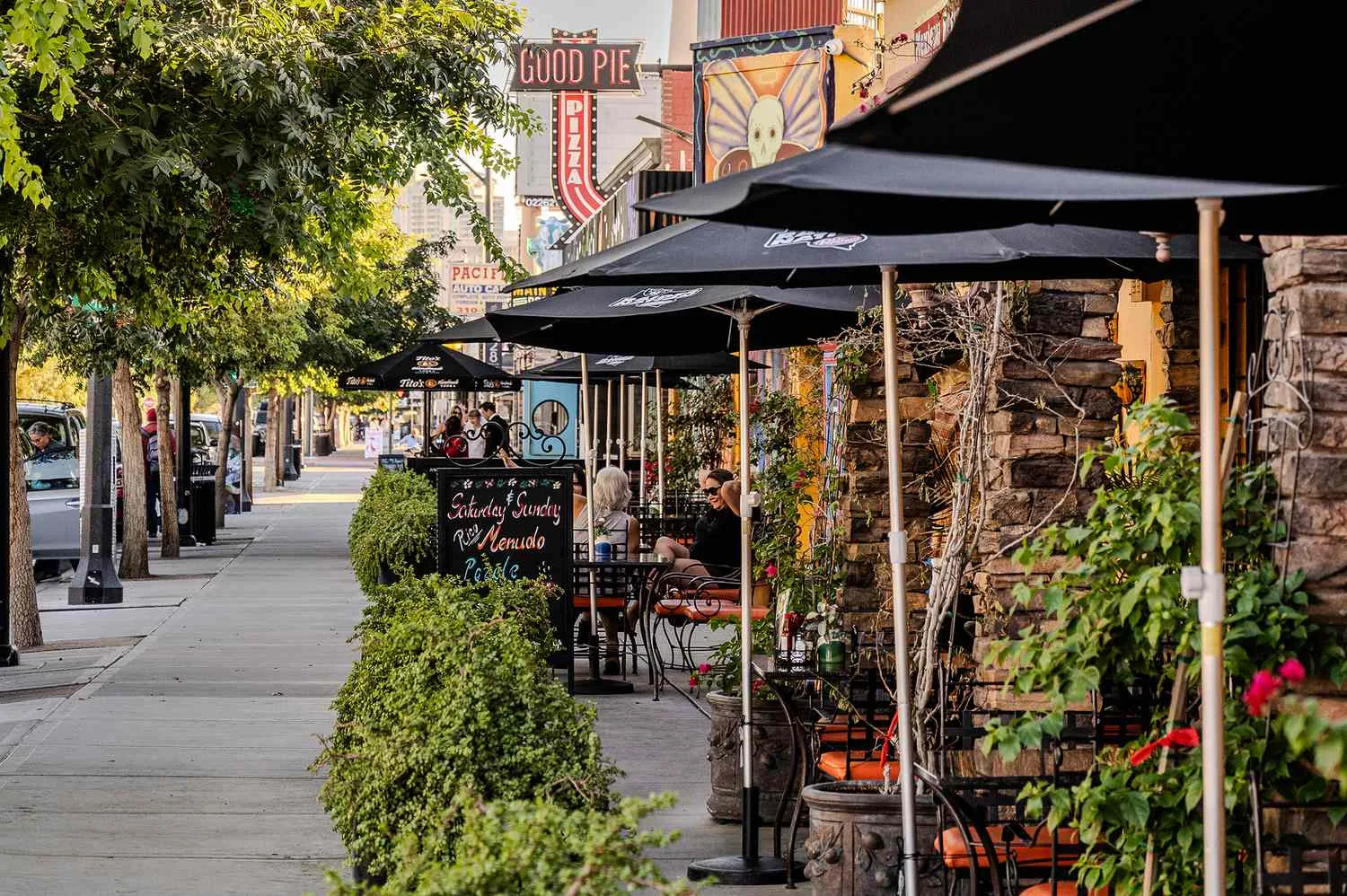
Commercial roof inspection, repair and replacement in the Historic Westside district of Las Vegas, NV, starting with the roof assembly and its records.
A missing roof plan turns the roof itself into the record, and the first visit has to rebuild what the paperwork cannot supply. Historic Westside is a named downtown district in the City of Las Vegas master plan, and the city keeps a separate community plan for it. A district name tells us where a property sits on a planning map. It does not tell us what the roof is made of, how old it is or what has been done to it. For a commercial building in Historic Westside, Las Vegas, NV, we start by identifying the assembly layer by layer, mapping roof zones and photographing every detail that could admit water. Only then do we price a repair, a recover or a replacement. A commercial roof inspection produces that baseline.
Roof records: what to gather before the visit
Ask the property manager or owner for whatever exists: a roof plan, past inspection reports, invoices for patches, warranty papers, drawings of rooftop equipment and the dates of any leak. Even partial records narrow the question. A repair invoice that names a membrane type saves a test cut. A note that a unit was replaced three years ago explains why a curb has fresh sealant and old flashing.
Where nothing survives, we say so in the file and build the record from observation. We walk the roof, note the surface material and its condition, probe seams and laps, and mark transitions where one roofing type meets another. A small test opening at an agreed spot reveals the insulation type, thickness and attachment. The result is a documented assembly instead of an assumption.
That record travels with the building. A new manager, a lender or an insurer can read it without having seen the roof, and the next inspection can compare conditions against it.
Commercial Roofing Questions
What if the building has no roof plan or repair history?
We build the record on the roof: identify the surface material, probe seams, mark zones and take an agreed test cut for the insulation layers. The file states what is known and what is not, and the owner uses it for the next decision.
Does the district name change how a roof is repaired?
No. The name places the property on a planning map. The roof assembly, its condition and the access rules decide the method. For permits, the owner should confirm the current city requirements.
How can a leak appear far from its entry point?
Water travels along deck flutes, insulation joints and membrane seams before it drops. We follow the path uphill from the interior mark and check the nearest transitions, since those are the likeliest openings.
When is a coating a sensible choice?
When the membrane is dry, bonded and mostly intact, and the seams and flashings can be treated first. A moisture survey confirms that before the coating is priced.
Can roof work continue while tenants stay open?
Phased work usually allows it. We agree on work windows, noise limits and interior protection with the manager, and close each zone before the end of the shift.
More Roofing Detail
COMMERCIAL ROOFING IN NORTH LAS VEGAS, NEVADA
District context: what a planning label supports
The city's framework treats Historic Westside as an area label, and its own materials give area-level context rather than parcel-level zoning. We use the district name the same way: as broad service geography. It tells us a property is in this part of Las Vegas. It does not support any claim about the age, use, style or roof type of a given building, and we do not make one.
Planning documents are a useful starting point for questions that touch the permit side of a project. Owners considering a major renovation or a change in use should confirm the current requirements with the city before the roof scope is fixed, since an altered assembly can bring added insulation or fire-rating requirements. Nevada has adopted the 2024 energy conservation code at the state level, and local adoption has to be verified for each project.
Water path: tracing entry from the surface
Regional weather here means hot desert with summer monsoon storms that deliver gusts and short downpours. That is context for Historic Westside and not a diagnosis of any property. On the roof, the same logic applies in simple terms: a surface that dries for weeks has to move a sudden volume of water through its drains, and any open detail finds out in minutes.
We follow the water path from the high point to the outlet. We check drain bowls and strainers, scupper openings, the slope between them and any low spot where dirt rings show ponding. Then we look at where the roof meets something else: walls, curbs, pipes, hatches and equipment. Those transitions fail first, and a ceiling stain below usually sits away from the actual opening. A commercial roof leak repair follows the path uphill from the interior mark.
If wet insulation is suspected, an infrared survey can outline it before anyone cuts the roof.
Heat and surface: reading what the sun has done
Sun exposure ages every roofing surface, but it does so differently by material. A single-ply membrane may show chalking, crazing or shrinkage at seams and flashing. A coated roof may show thin spots or lost granules. A built-up or modified bitumen surface may show alligatoring, blisters or exposed felts. Metal roofing may show fastener backout, failed sealant and faded finish.
We read those signs against the roof plan and record what we see by zone. A surface that is worn but dry and bonded may be a candidate for a roof coating restoration. A surface with saturated insulation beneath is not. The distinction decides cost, so we confirm with moisture mapping and test cuts before recommending a coating.
Heat also controls how and when we work. Product temperature limits set the day: early starts for the field, and the heat-sensitive details wait until the surface is workable.
Access: planning around tenants and neighbors
We do not assume delivery limits, shared walls or tenant constraints at any property, but we ask about them early. Where is the roof hatch or stair? Where can a truck stop, and for how long? Which tenant spaces sit under the work zone, and what hours matter to them?
The answers set the lift plan, the staging area and the daily closeout. Whatever is opened in the morning is dried in by evening, with a photograph of the tie-in. If a crane or hoist is needed, the owner confirms street use and clearances before mobilization. Noise, odor and hot work are scheduled with the property manager, and interior protection goes in before the roof opens.
On roofs with equipment, we coordinate with the mechanical contractor about shutdown times and curb heights, so the new flashing meets the unit as it will stand after the job.
Decision: repair, recover or replace
Three conditions drive the choice: how much of the assembly is wet, how many layers the roof already carries and how soon the owner needs a stable asset. A defined repair fits a local failure in a sound roof. A recover fits a dry, well-attached roof that can carry another layer. Replacement fits widespread saturation, a damaged deck or an assembly at the end of its service.
The owner sees all three priced against one documented scope, which makes lifecycle value comparable and not only first cost. A roof recover overlay avoids tear-off but depends on dry insulation, and a replacement can correct slope, thickness and drainage at once.
Owners who also hold property in Downtown North Las Vegas or the Resort and Casino District can receive the same record format across buildings, which supports a ranked capital plan.
Request a Historic Westside Roof Inspection
Share whatever roof records exist, the access rules and the leak dates. We will document the assembly by zone and give your team a scope that matches what the roof shows.