Review Carlisle SynTec roof zones in North Las Vegas by membrane, seam, and substrate. We verify the installed system before setting repair scope.
A seam that lifts at the end of a repair strip can reopen even when the center looks tight. We start by identifying the Carlisle SynTec assembly actually on the roof, then inspect the seam, attachment, and substrate that support the detail. An old product label is only one record. Later repairs, additions, or a recover layer can change what remains on the building, so field conditions must agree with paperwork before a repair or replacement scope is selected.
For a North Las Vegas, NV building, that check also sets a workable access window. Regional desert heat, monsoon rain, and gusty winds can change when a crew can prepare or close an exposed area. Las Vegas Valley heat, monsoon rain, and gusty winds are regional conditions, not a diagnosis of a specific roof. We use that context for sequencing, then tie the recommendation to the membrane, seam, and moisture evidence documented on site.
Separate Thermoplastic From Rubber Membranes:
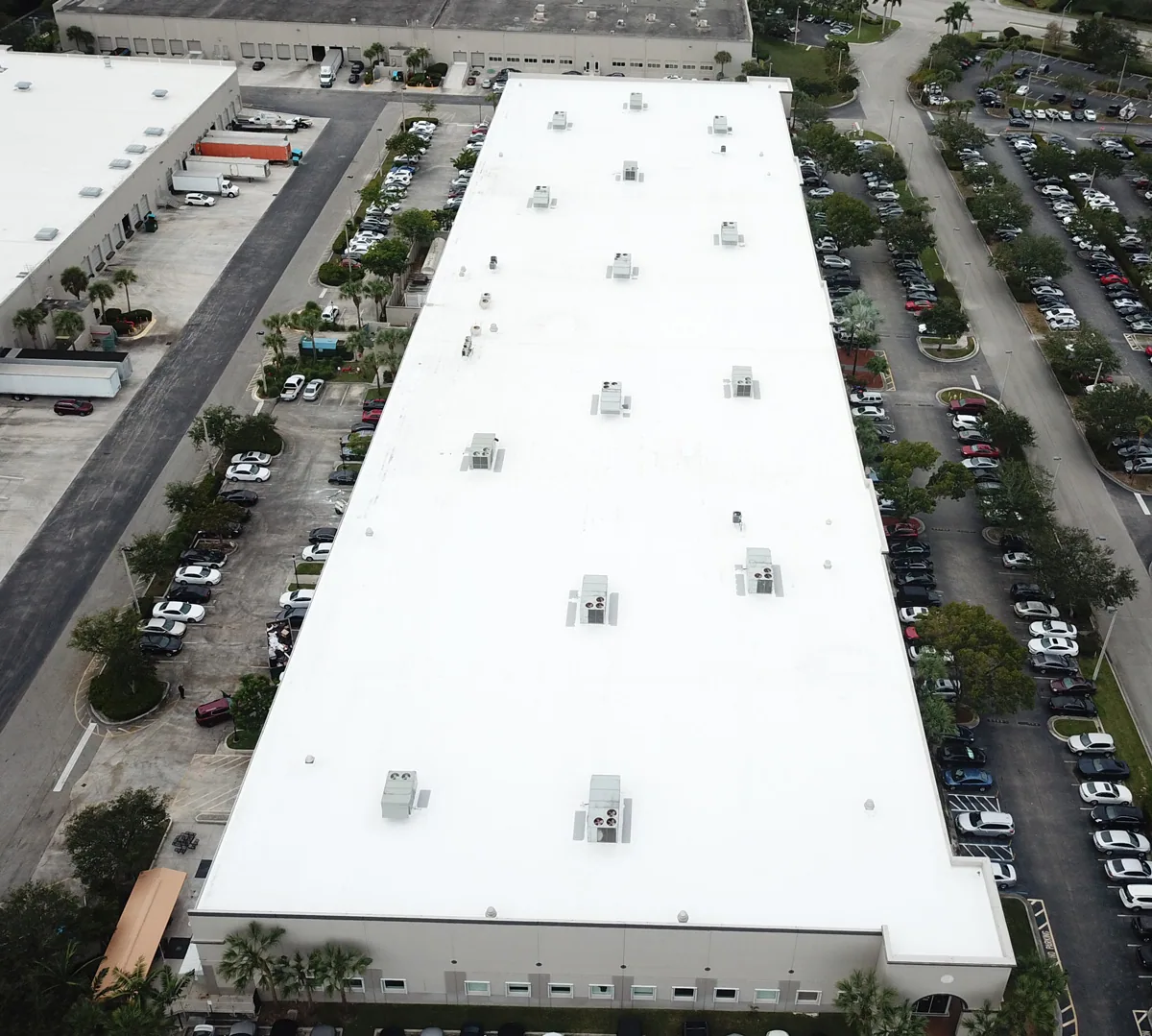
Carlisle SynTec commercial roofs may include different membrane families, so confirm the sheet before planning a tie-in. Thermoplastic seams are joined with heat, while EPDM repair uses different preparation and compatible flashing materials. Those approaches are not interchangeable. We inspect labels, seam appearance, edge details, and closeout documents, then record any zone where the system remains uncertain. A test cut, approved by the owner, can confirm layers where a roof has been recovered or patched repeatedly.
We map membrane changes by roof zone instead of assigning one material to the whole building. A later addition can meet an older field at a wall or curb; that transition often needs a different detail than the open field. The TPO system and EPDM assembly should be compared with the installed material and project specifications. If records identify another system, the scope follows that evidence rather than the name on an earlier proposal.
Commercial Roofing Questions
How can I tell whether an older Carlisle roof is EPDM or TPO?
Start with submittals and closeout records, then compare them with seams and flashing details in the field. Repairs may hide the original sheet or add another layer. If the material remains uncertain, an approved test opening can confirm the assembly before compatible repair materials are specified.
Why does a seam repair need more than a surface patch?
The sheet must be clean, sound, and prepared for the repair method. We inspect beyond the visible opening, check the substrate, and establish a boundary that reaches material able to accept the tie-in. A patch over contamination or a moving edge can separate again.
Can one proposal cover multiple Carlisle membrane types?
It can cover a building with multiple roof zones, but work descriptions should separate each assembly and detail. Identify the system, repair method, preparation, and materials for every zone. That keeps a TPO seam procedure from being applied to EPDM by assumption.
What records should follow a Carlisle SynTec repair?
Keep the roof-zone map, membrane identification, preparation notes, material records, before-and-after photographs, and test findings. Mark the completed boundary and note areas left for monitoring. The next inspection can compare the same seam or curb with the repair record.
Does a Carlisle name confirm compatibility with existing materials?
No. We confirm the actual sheet, prior repairs, coating, and substrate before selecting a tie-in. Compatibility depends on what is installed and its condition, not only the manufacturer's name on a past document. If uncertain, test the method before full application.
More Roofing Detail
COMMERCIAL ROOFING IN NORTH LAS VEGAS, NEVADA
Inspect the Seam Before Rewelding:
Before a thermoplastic repair, we check for dirt, oxidation, incompatible coating, trapped moisture, and old patch material along the seam. A probe can locate an open section, but the repair needs a prepared surface and enough sound material for a consistent weld. We mark the failed length and inspect beyond both ends. If the opening returns at a stress point, the detail may need reinforcement or a larger boundary instead of another short strip.
At EPDM laps, preparation and adhesive or tape must suit the membrane and its condition. We check for contamination, wrinkles, movement, and water that has reached the insulation below. The closeout records material, preparation, and tie-in photographs. A commercial roof inspection keeps system identification separate from diagnosis. A focused membrane repair can address the confirmed opening without implying adjacent sections were rebuilt.
Trace Water Across the Roof Plane:
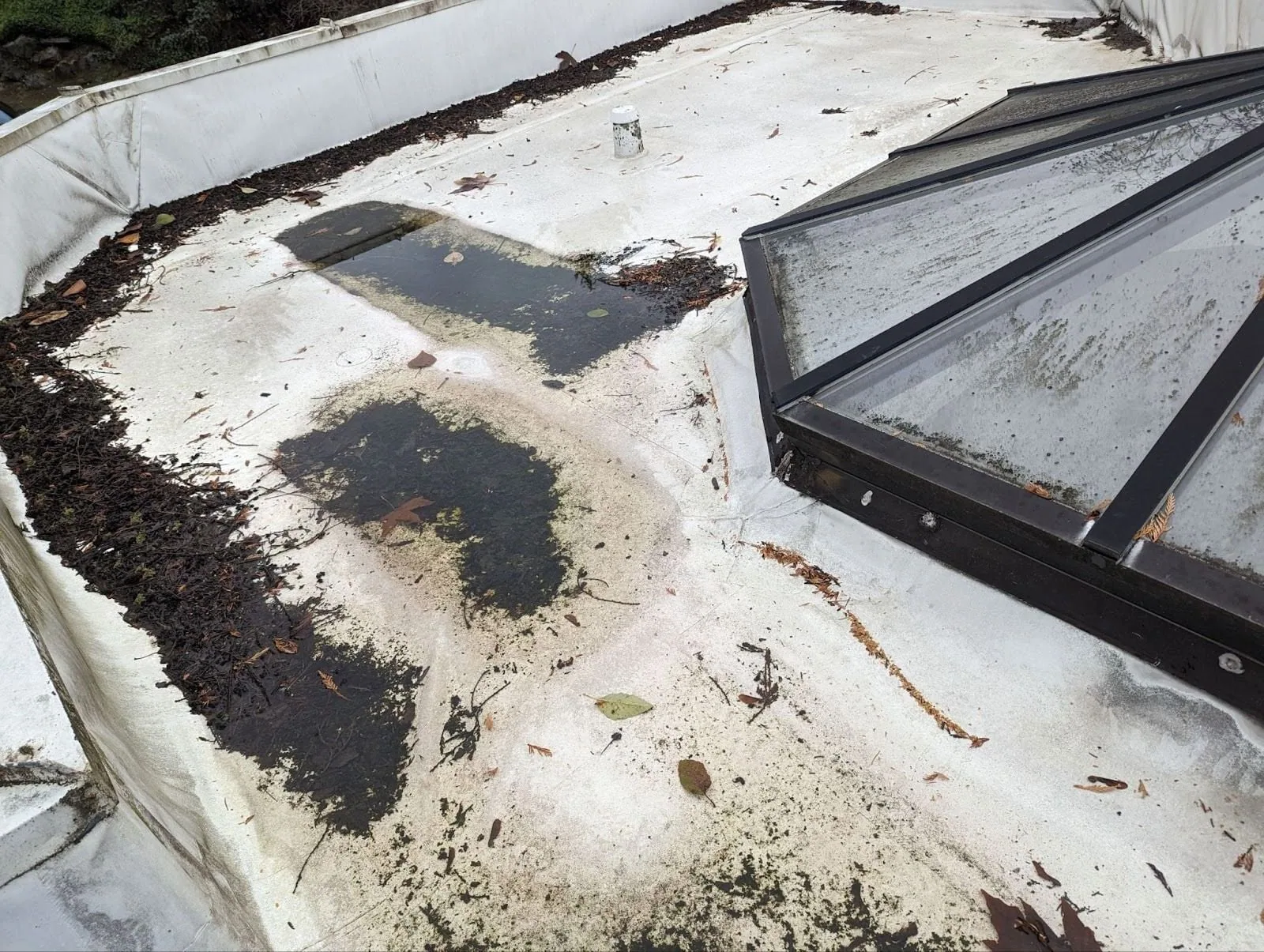
Water movement can expose a failure that a dry-day seam check misses. We follow the drainage path from high points toward bowls and scuppers, noting backfall, sediment, ponding, and transitions across the flow. If water sits around a curb, inspect the flashing and the slope that feeds the low point. If it collects at a drain, check the bowl, ring, and membrane connection. The report records what was visible and what needs testing below the sheet.
Summer monsoon moisture can bring heavy rain to the Mojave Desert, with gusty winds and localized flooding. That regional condition informs temporary closure planning, but the roof inspection determines whether a drain or seam needs work. At Apex Industrial Area or along the Cheyenne Technology Corridor, the building's own slope, outlet, and plan still control. We keep drains open during work and protect any area that cannot be made weather-tight before the shift ends.
Define the Tie-In and Repair Boundary:
A clean boundary lets a superintendent verify what was completed. We remove loose material to a sound edge, prepare the membrane for the selected method, and connect the new detail to compatible existing sheet. Flashings at penetrations and walls may need a reinforced corner or termination bar. If the substrate is soft or moisture extends beyond the patch, we stop and document the finding before extending the scope.
For a roof with intact membrane but worn surface, restoration can be reviewed after moisture and adhesion checks. A coating is not a substitute for a loose seam, defective curb, or blocked outlet. The restoration assessment lists preparation and repair work before coating. If the material cannot be identified, we document that limitation and test compatibility rather than guessing. The owner can authorize a sample area or request a separate replacement alternate.
Set Replacement Details Before Ordering:
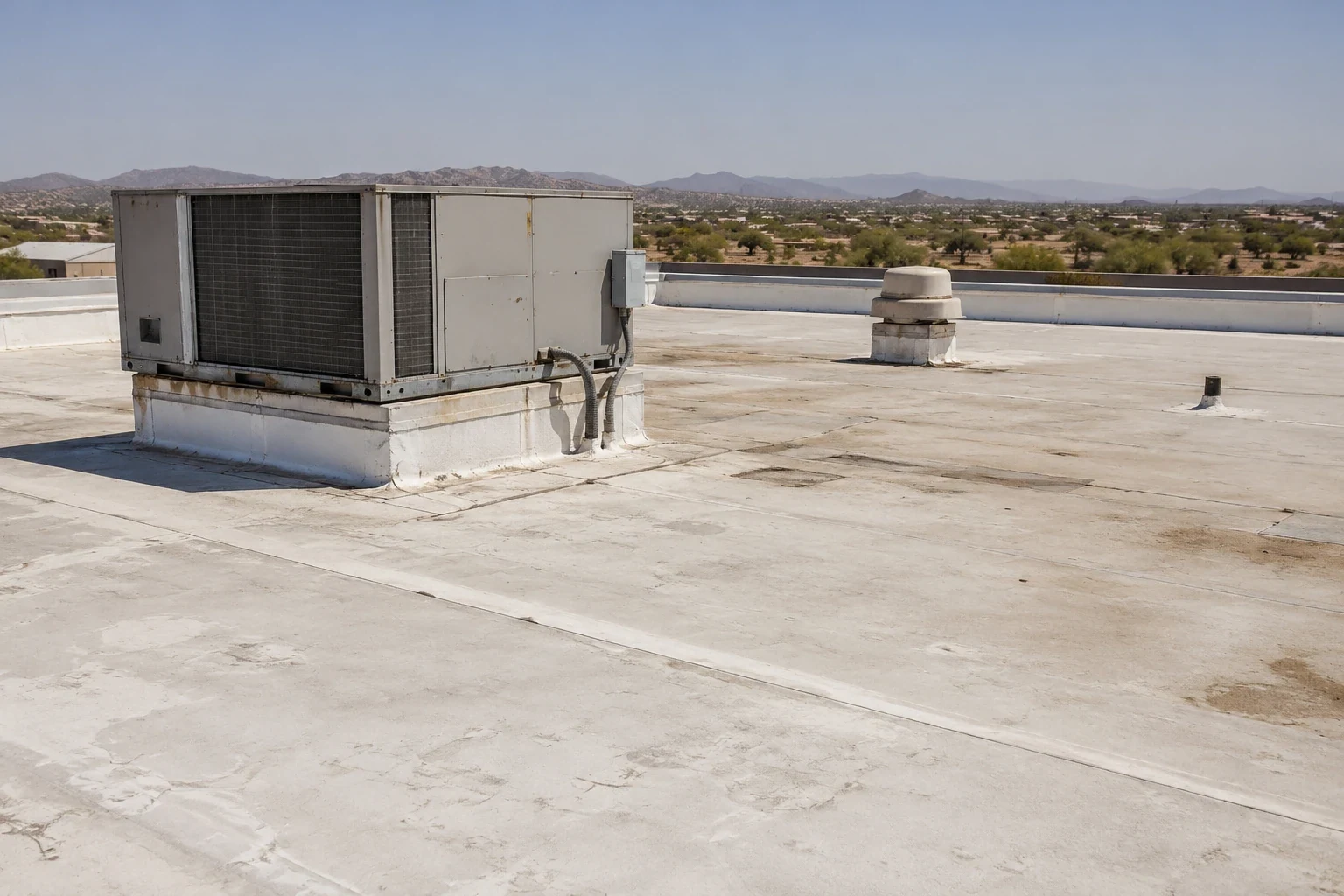
When failure is widespread, replacement planning starts with confirmed layers and deck conditions. We verify removal depth, insulation, cover board, attachment, perimeter securement, and how the new sheet meets curbs, walls, and drains. Mechanical units and conduits need coordinated elevations so flashing can be completed without a late field change. The proposal marks work zones, daily stop lines, and temporary closures, with concealed-condition steps listed separately.
A Carlisle SynTec system proposal should identify the specific membrane and components, substrate assumptions, and assembly details required by the project. We compare those details with the roof plan and site constraints, then document field changes for approval. A replacement scope, a GAF system proposal, and a Johns Manville option should be compared on the same zones, drainage, attachment, and wind assumptions.
Carry System Information Into Closeout:
Record the installed membrane, seam method, flashing details, repair limits, photographs, and any areas that were not accessible. Keep approved submittals with the roof plan and list open testing or maintenance items. If a later trade changes a curb or adds a penetration, update the map before the next roofing visit. That keeps a future superintendent from assuming an old detail still matches the field.
Share roof plans, repair dates, leak locations, equipment changes, and access rules before inspection. We will identify the Carlisle SynTec system present, trace the water entry path, and explain what evidence supports the next step. If a leak is ongoing, share the affected room, roof zone, and access limits when requesting an inspection; move contents only where safe. The inspection record then starts with a defined question instead of a product name alone.
Inspect the Carlisle SynTec Roof by Zone
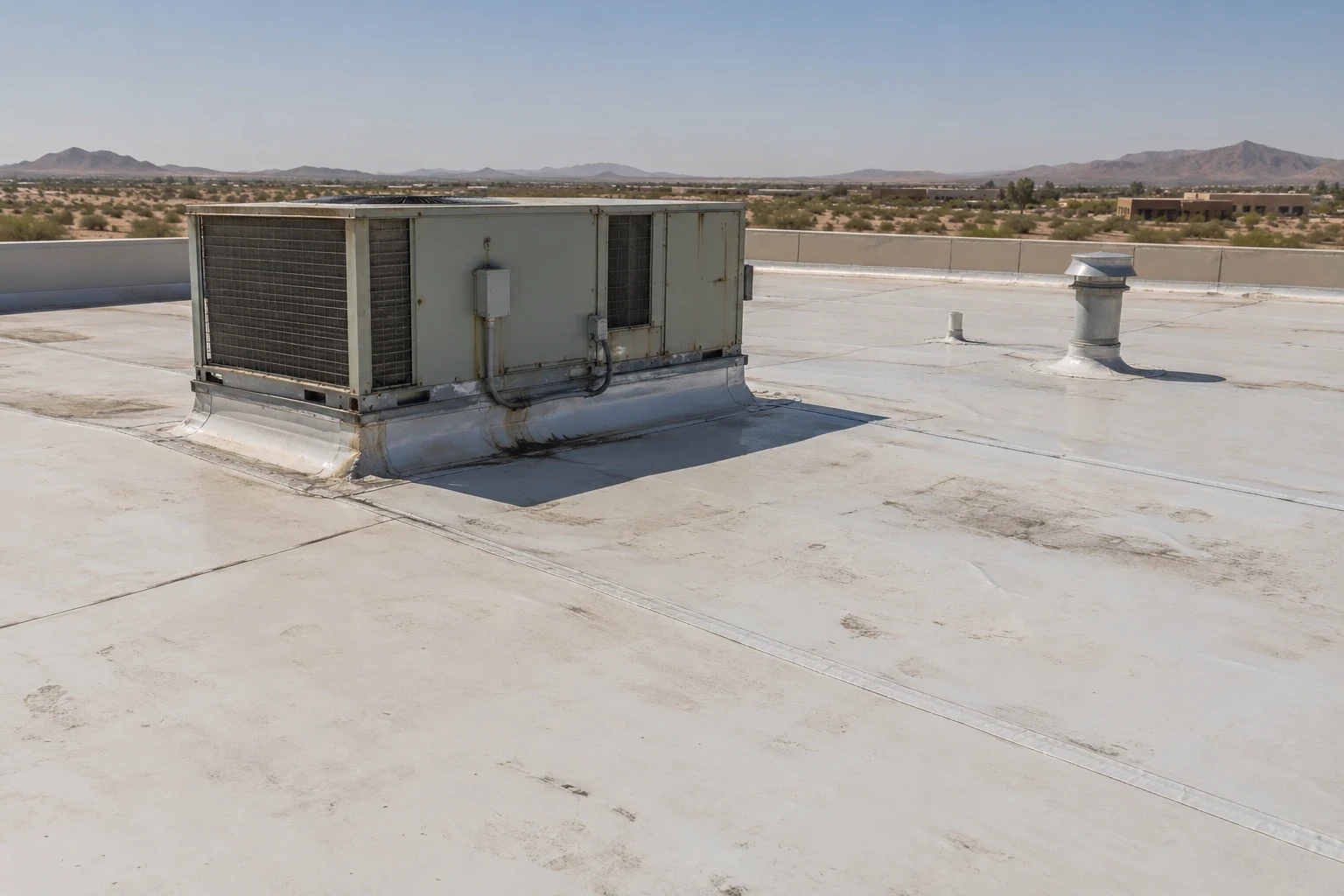
Send roof plans, prior submittals, repair dates, leak reports, equipment changes, and site access rules. We will verify the installed membrane and document a repair or replacement scope.