Assess Johns Manville roofs in North Las Vegas by layers, seams, and moisture. We verify the installed assembly before pricing repair or replacement.
A roof record that lists Johns Manville but not the component or roof zone leaves a superintendent with an open question. The name could refer to a membrane, insulation, or material used during earlier work. We begin by checking submittals and field labels, then compare the documented assembly with seams, transitions, and repairs on the roof. That confirms what material can be tied into the repair and what needs testing before the scope is priced.
Across North Las Vegas, the Las Vegas Valley brings heat, occasional summer monsoon thunderstorms, gusty winds, and localized flash flooding. Those regional conditions affect access, storage, and temporary protection, not the diagnosis of a specific roof. We record the surface and substrate evidence at the property, identify the repair boundary, and connect every recommendation to what the inspection establishes. This keeps a material name from standing in for a condition assessment.
Identify the Component, Not Just the Label:
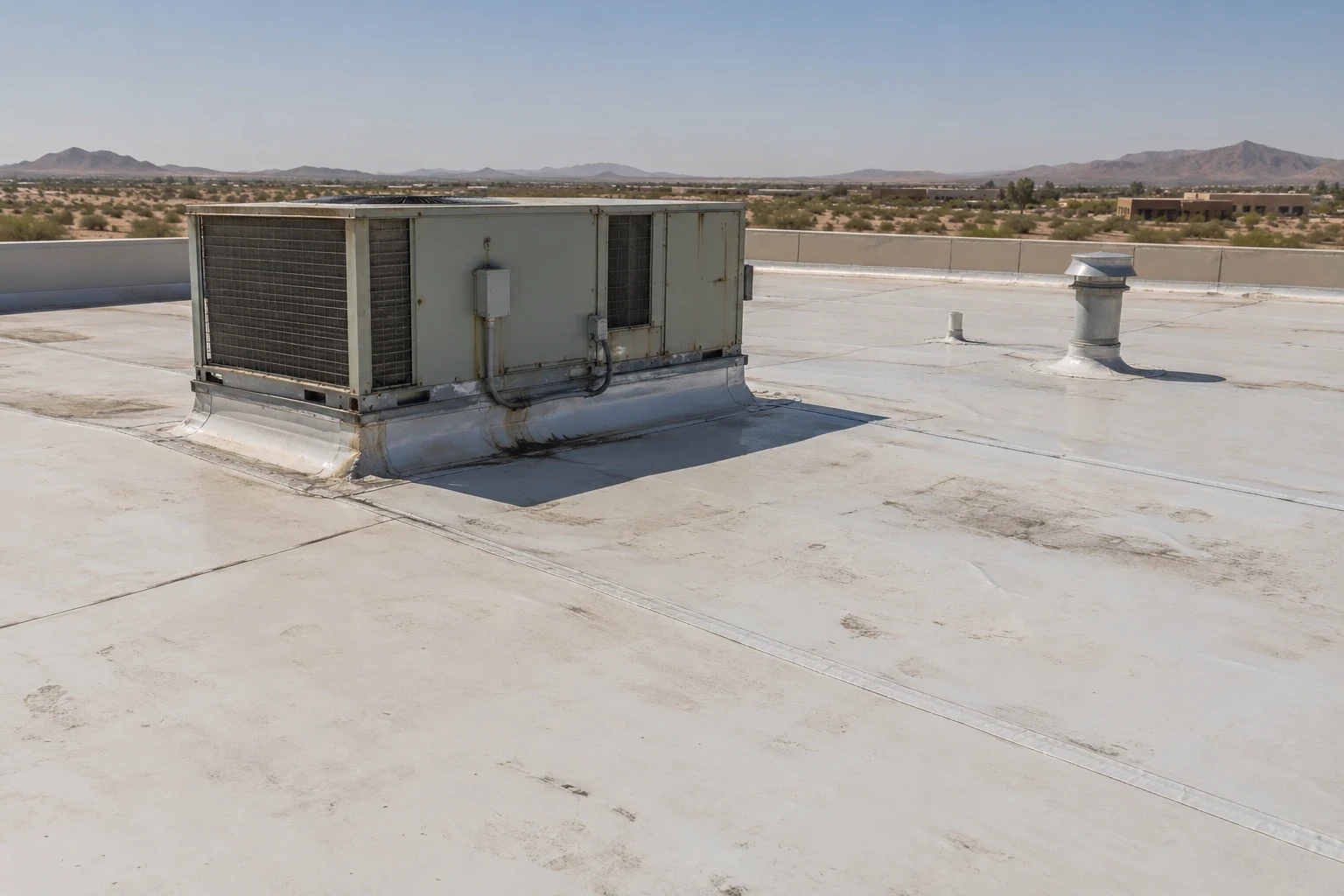
Start with the closeout package, specification, product labels, and repair tickets. Determine whether the Johns Manville reference applies to the field membrane, insulation, cover board, or another assembly component. Then inspect exposed edges, penetrations, seams, and any later addition where the roof build-up may have changed. If the documents do not match the field, mark the discrepancy and request an approved test opening before selecting materials.
A building can contain several roof zones with different ages and repair histories. We map each separately and note which layers are confirmed, recorded, or still unknown. This matters where a membrane is recovered over earlier material or where wet insulation may extend beyond a visible patch. The inspection record should show the observation, test location, and effect on the proposed scope. Compare an applicable Carlisle SynTec assembly or Holcim Elevate system only when the project criteria and substrate are the same.
Commercial Roofing Questions
Does a Johns Manville product label identify the full roof assembly?
Not necessarily. The label may identify one component, while later work adds a membrane or another insulation layer. We compare submittals with exposed edges and field details, then mark any uncertainty. An approved test opening can confirm the layer sequence before a repair system is selected.
How should a repair handle a roof with mixed materials?
Map each zone and identify where the materials meet. The repair detail must suit both sides of the transition and use compatible preparation. We document the boundary and any test needed before applying new material, rather than treating an older patch as proof of compatibility.
Can an infrared scan set the tear-off limit?
It can help select test locations, but it does not confirm every layer below the roof. We compare readings with leak history and field conditions, then use an approved opening where the result would change removal or repair scope. The report records both the scan and the confirmed substrate evidence.
What should a closeout record include?
Identify the specific component, roof zone, repair method, preparation, and material used. Add before-and-after photographs, test findings, and items left for monitoring. A marked plan lets the next superintendent locate the same transition or seam without relying on a product label alone.
When should replacement be compared with another repair?
Compare replacement when failures recur across zones, moisture extends beyond a local boundary, or the deck and attachment cannot support the current system. We document those findings alongside a focused repair option so the owner can weigh immediate work against a broader project using the same evidence.
More Roofing Detail
COMMERCIAL ROOFING IN NORTH LAS VEGAS, NEVADA
Trace Seams and Transitions by Roof Zone:
On a single-ply roof, inspect seams for separation, poor preparation, contamination, or movement at the edge of a previous repair. At curbs, pipes, and walls, check how flashing returns onto the field sheet and where the termination is secured. A narrow opening can be local, but the seam may also be stressed by a low area or a loose perimeter. We trace the defect outward until the surrounding material is sound and compatible with a tie-in.
If the roof includes an asphaltic or built-up section, the repair sequence changes. Identify the surface and layers before applying heat or solvent, and protect adjacent materials. A built-up roof review should document the exposed ply, surfacing, and tie-in rather than assume a membrane seam is present. The photos show full-zone context and close detail, with measurements and the direction of water movement. That lets the project team distinguish a failed seam from water traveling in from another roof area.
Use Moisture Evidence to Set the Boundary:
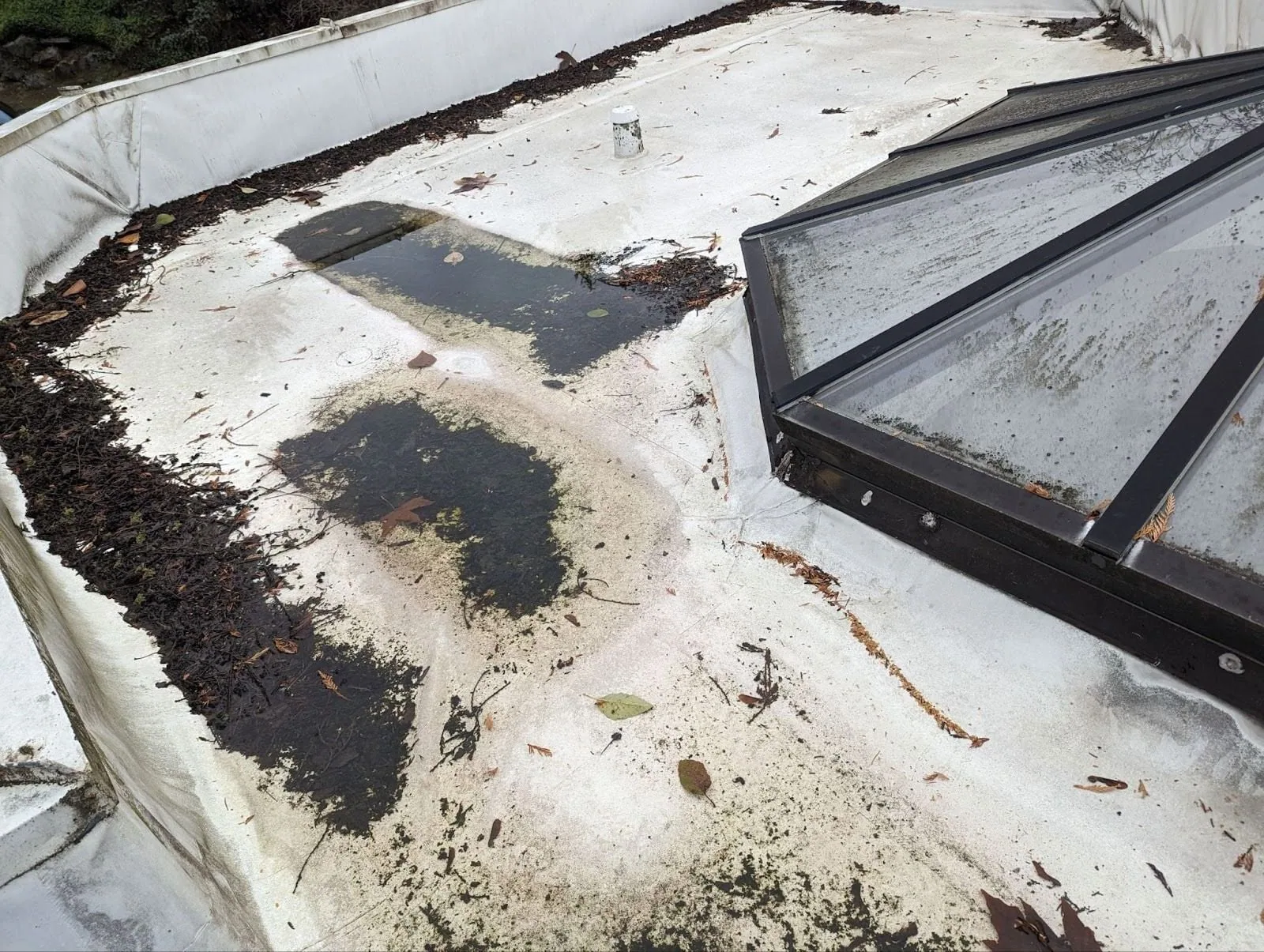
A dry-looking surface can cover wet insulation, and a damp ceiling may sit downslope from the entry point. We compare interior reports with roof elevations, seams, curbs, and drains, then record any area that needs additional testing. Infrared readings can direct a test cut, but do not establish material condition without verification. If the test finds saturated board or a soft deck, the repair boundary must include that substrate condition before the roof is closed.
Water from a monsoon storm can move quickly across a roof plane. North Las Vegas's broader desert setting includes short-duration heavy rain and localized flooding; we check outlets and temporary protection before opening a section. At North 5th Street Transit Corridor properties or in the Apex Industrial Area, site access differs, but the route across the inspected roof comes from its actual slope and details. A moisture survey can help prioritize testing where visual evidence alone leaves a question.
Prepare a Compatible Repair Detail:
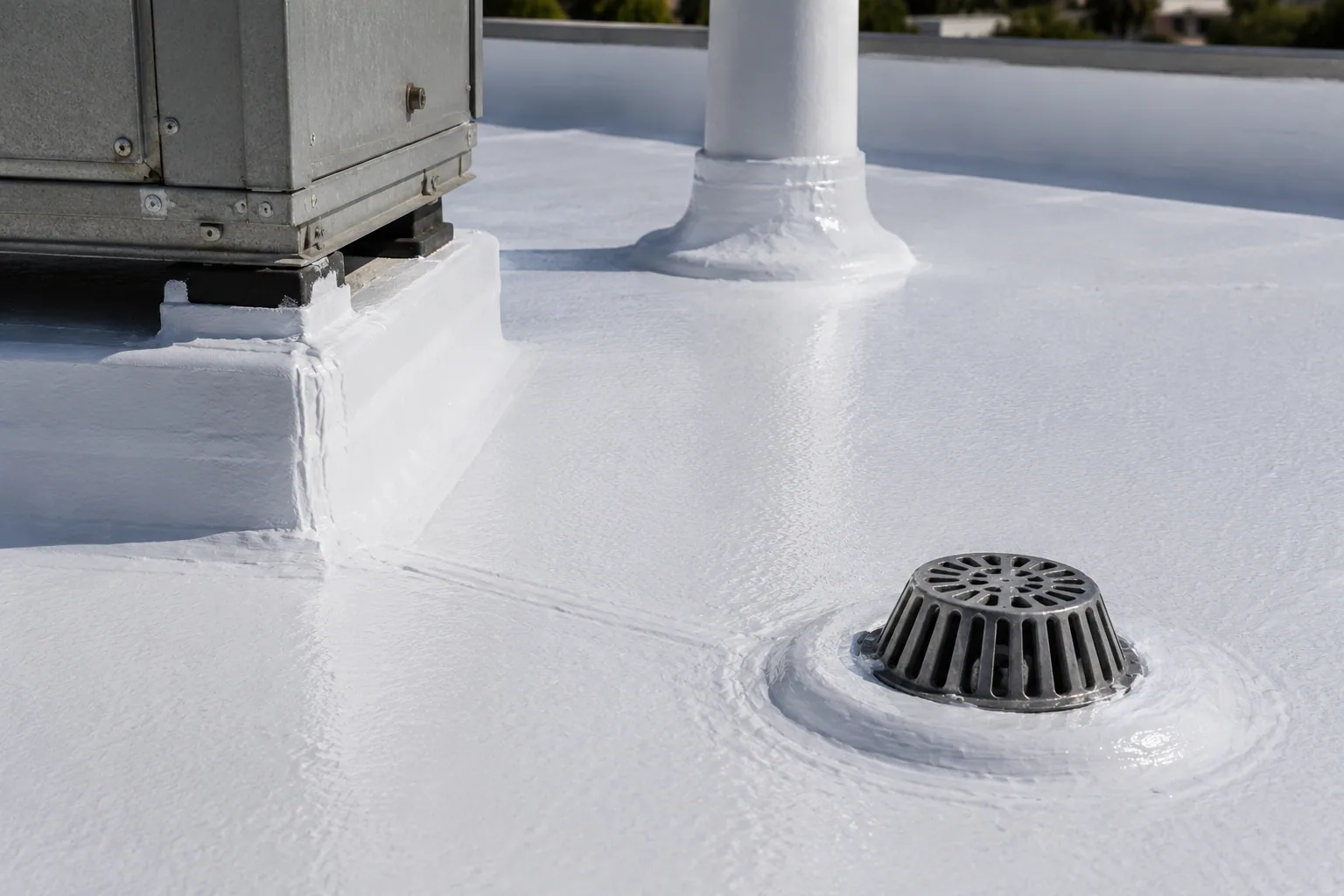
Once the membrane and layers are known, define the repair method, preparation, and stop line. Remove loose or contaminated material, expose sound substrate, and use a tie-in appropriate to the installed system. At a curb, rebuild the flashing height and corners if the existing detail cannot be secured. Around a drain, inspect the bowl, ring, membrane connection, and surrounding low area so a patch does not leave the water path unresolved.
The work order should identify material and preparation, not simply say to seal the leak. Record the patch dimensions, photographs, and test results, then list any nearby condition that remains outside the authorized boundary. If multiple roof systems meet, separate the details by assembly. A drain inspection may belong in the same visit, but drainage correction and membrane repair should be scoped as distinct work when each has a separate cause.
Compare Restoration With Removal:
When the roof is stable and dry but the surface has worn, restoration may be considered after adhesion and compatibility checks. It cannot correct wet insulation, loose attachment, or a failed drain. We document surface wear, moisture evidence, and repeated repairs before proposing a coating. If the substrate is uncertain, a test area or cut may change the recommended path.
Widespread wet layers, repeated seam failures across zones, or a deck that cannot hold attachment may support a replacement scope. That proposal should show removal depth, insulation transitions, edge securement, drainage work, curbs, and daily weather closures. We compare options on the same mapped roof zones, with concealed conditions separated from the base scope. A replacement review identifies what is confirmed and which opening or test could change the quantity before work begins.
Keep Product Records With the Roof Map:
At closeout, record which Johns Manville component was installed or repaired, the roof zone, preparation, and tie-in. Keep submittals, product information, repair photographs, and test results together. Mark sections that were inaccessible or left for monitoring. If a future trade adds equipment or changes a curb, update the roof map and record the new detail so the next inspection does not rely on an outdated assembly description.
Send roof plans, leak dates, repair history, equipment changes, and access rules before a site walk. We will verify the installed assembly, trace the water entry path, and explain whether the evidence supports repair, testing, or replacement. When water is entering, note the interior location and protect equipment where safe; scheduling depends on current access and crew availability. The field record can then answer a specific project question rather than repeat a brand name.
Verify the Johns Manville Roof Assembly
Share the submittal, roof plans, leak dates, repair tickets, equipment changes, and access rules. We will identify the installed component and document the next repair, test, or replacement decision.