
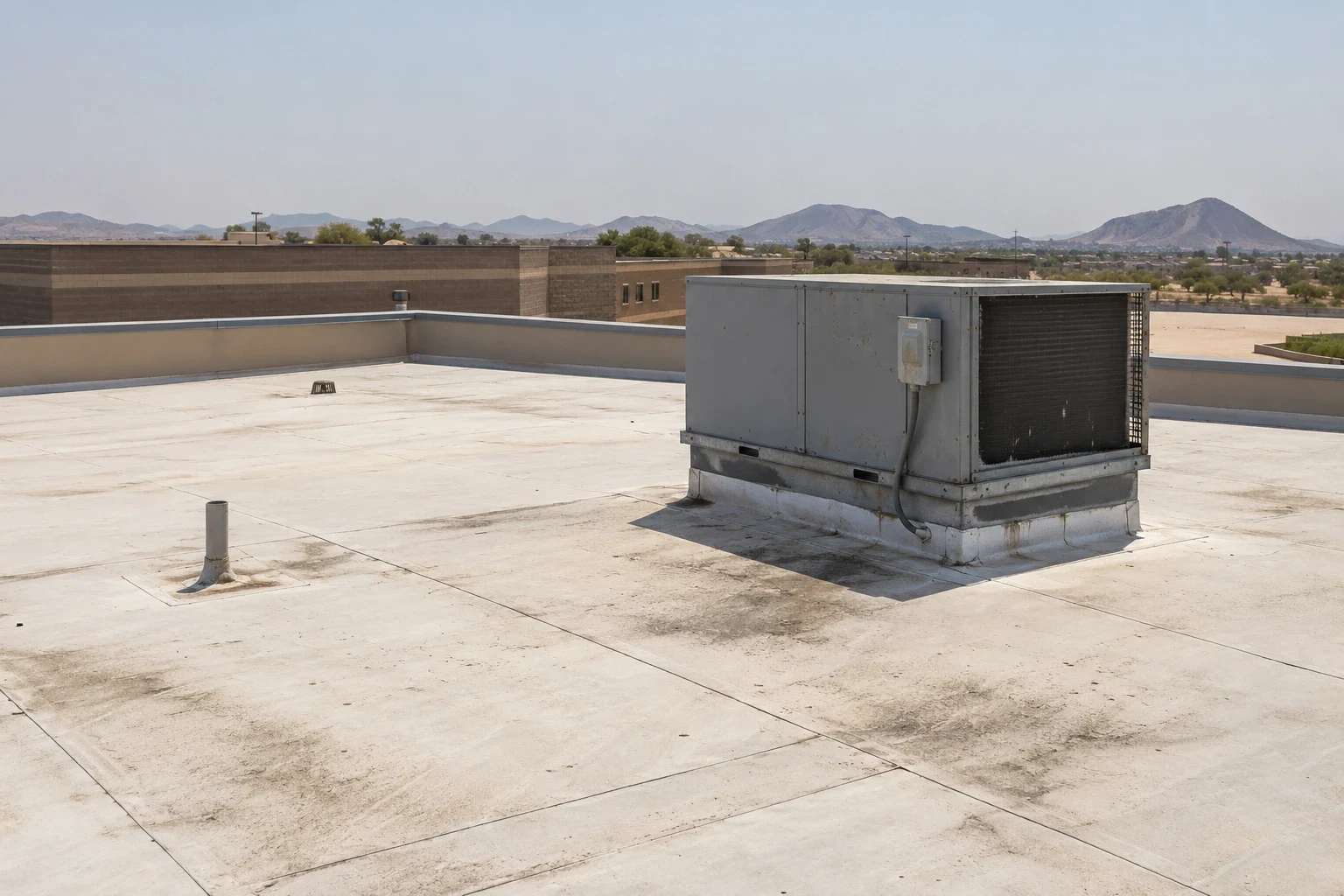
Plan school roof inspections, leak response, repairs, and replacement around occupied hours, access controls, roof zones, and documented assembly conditions.
A school roof project has to fit the building calendar as well as the roof condition. Before choosing a repair or replacement scope, identify which rooms are affected, what work can occur during the school day, and where crews can reach the roof without crossing controlled areas. A ceiling mark is only a starting point. The inspection needs to trace the water path through the roof zone above it, check nearby penetrations and drains, and compare the observed assembly with available plans and repair records. That record helps administrators and facilities staff decide what can wait for a break, what needs a protected work window, and what calls for a broader evaluation.

Start with the room, roof zone, and access plan
Bring the leak date, room location, photographs, ceiling or wall observations, and any prior repair notes to the first review. Mark the occupied spaces on a plan, then connect them to the roof area above, including the likely direction water can travel before it becomes visible indoors. A drain, parapet, curb, seam, or wall transition may sit between the entry point and the stain. We document the suspected path and separate confirmed conditions from areas that need additional testing.
School access rules affect what can be inspected and when. A facilities lead can identify roof hatches, ladders, keys, escort requirements, restricted rooms, and periods when noisy work would interrupt classes or testing. A roof walk should follow the approved route and avoid leaving tools, open penetrations, or unsecured materials at the end of a shift. For a suspected active leak, the commercial roof inspection sequence provides a starting point for gathering roof-plan, interior, and repair-history evidence.
Commercial Roofing Questions
Can a school roof be inspected while classes are in session?
Often, if roof access is separated from student areas and the work plan controls noise, deliveries, escorts, and restricted rooms. The facilities lead should approve the route, access point, work window, and emergency contact before the crew arrives.
Does a ceiling stain identify the roof section that needs repair?
No. Water can move along a deck, insulation layer, structural member, or wall before it appears indoors. Map the symptom to roof zones above, inspect nearby transitions, and record what remains uncertain. Moisture testing or a controlled opening may be needed before setting a repair limit.
When should a school consider replacement instead of another patch?
The decision depends on repeated failures, the condition of adjacent seams and flashings, moisture findings, substrate evidence, remaining serviceability, and the cost of continuing repairs. One leak alone does not establish a replacement need. A documented roof-zone review lets the owner compare a defined repair with a broader scope and identify what additional testing could change the recommendation.
How can roofing work avoid interrupting classes or testing?
Define quiet periods, exam dates, room access limits, material staging, equipment routes, and daily cleanup responsibilities before scheduling. The scope can divide work into roof zones or phases when the assembly and weather protection allow it. The school should name a contact who can approve changes if room use or site conditions shift during the project.
What should the facilities team send before an inspection?
Share roof plans if available, leak dates and room locations, repair history, roof access requirements, known equipment changes, and the school calendar constraints. Photographs from indoors are useful when they include the room and date. Keep sensitive access details within the approved project channel and identify who can authorize roof and interior entry.
More Roofing Detail
COMMERCIAL ROOFING IN NORTH LAS VEGAS, NEVADA
Separate roof assemblies before comparing options
A school campus may contain additions, gymnasiums, cafeterias, administrative wings, and classroom blocks with different roof ages or assemblies. Treat each roof zone as its own record instead of assuming one material or installation date applies across the property. The inspection should note membrane or surface type when identifiable, seam condition, flashing transitions, penetrations, drainage details, rooftop equipment, and visible substrate concerns. If records are incomplete, say what remains uncertain and whether a test opening or moisture survey is needed before pricing a larger scope.
For a membrane roof that remains a candidate for a coating or restoration, the decision depends on adhesion, moisture, existing layers, drainage, and manufacturer requirements. A TPO roof assembly review can clarify what details must be checked when that system is documented, while a modified-bitumen assembly review addresses a different set of seams and transitions. Either assembly still needs an inspection of the actual school roof before anyone draws a conclusion. For related institutional assemblies, compare college and university roofs with hospital roof assemblies.
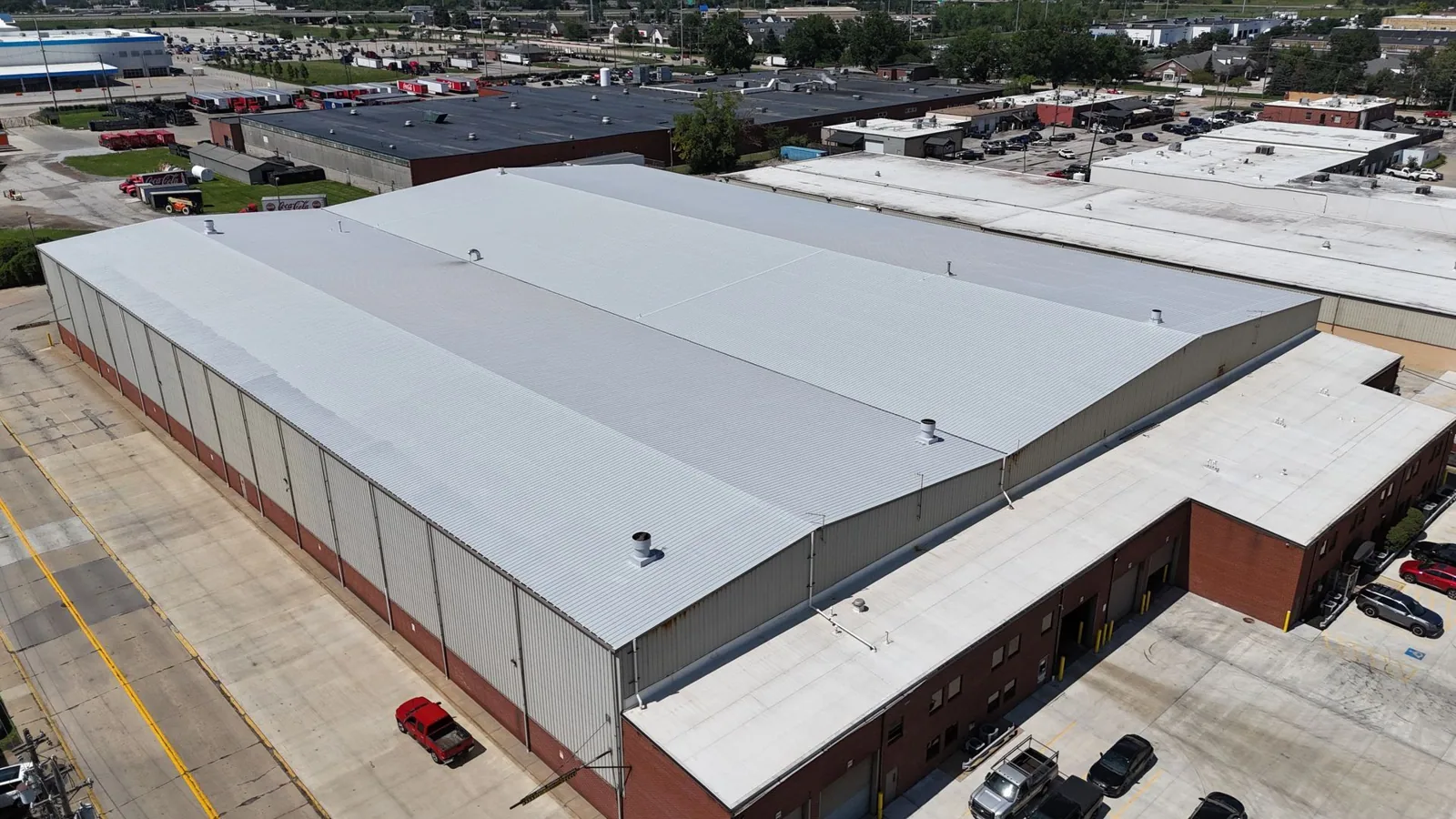
Build work windows around school operations
Scope and schedule are linked. A repair near an occupied classroom may require a quieter work period, interior protection, or coordination with custodial staff. Larger work can require roof access controls, material staging, crane or lift planning, fire-lane clearance, and daily cleanup. Confirm who can approve access, how crews check in, which doors or corridors remain restricted, and how the site reports a change in building use. The project plan should name the person who can stop work if an unexpected condition appears.
Weather planning also needs a practical limit. Valley weather references note intense summer heat, seasonal monsoon showers, and gusty conditions as regional patterns. They are not a site-specific diagnosis or a substitute for the current workday forecast. Plan daily protection and dry-in responsibilities around that forecast and the actual roof opening. Where school schedules make a long closure difficult, phased commercial roof replacement can be evaluated alongside repair, provided the assembly and sequencing support it.
Use planning geography carefully
North Las Vegas planning references include broad names such as Apex Industrial Area service geography and Cheyenne Technology Corridor. The city framework map is dated November 2006, so those labels are useful only as historical planning context. They do not prove current school boundaries, zoning, transit availability, project access, or roof conditions. A campus team should verify present jurisdictional requirements and site records for its own project.
For school portfolios, a useful asset register records each building name supplied by the owner, roof area or zone, installation and repair history, known leaks, drainage observations, access restrictions, and the next inspection question. Keep the register tied to approved property records instead of assigning a roof condition from a planning label or nearby corridor. If water has reached interior finishes, commercial roof leak repair begins with locating the source and protecting affected areas; it should not assume the visible ceiling location is directly below the entry point.
Compare a repair with a larger scope
A repair is a reasonable option when the failure boundary can be found, the surrounding materials remain serviceable, and the work can restore a sound transition without concealing moisture or a broader defect. Replacement review becomes more important when repeated patches, widespread seam or flashing issues, saturated insulation, deck concerns, or recurring interior reports point beyond one location. Those are inspection questions, not automatic replacement triggers. Document the evidence, identify exclusions, and list any condition that could change price after work begins.
For budgeting, separate immediate water control from long-term capital planning. A short-term repair may protect an occupied room while a roof-by-roof evaluation determines the next funding cycle. Record assumptions about access, weather protection, disposal, substrate condition, and occupied-hour coordination in the scope. A roof capital planning review can organize priorities across documented roof zones without implying a condition rating that has not been established.
Keep a useful inspection record after the work
Closeout should leave the facilities team with more than an invoice. Record the repaired boundary, materials installed, photographs before and after work, any concealed condition encountered, and the roof zones that still need attention. Include the date, weather protection steps, warranties or product documents provided, and the person who accepted the work. If an area could not be reached or tested, state that limit so the next inspection does not treat an assumption as a verified condition.
After major wind or monsoon activity, an inspection can look for displaced edge details, debris, loose rooftop items, blocked drains, and new interior signs. Do not send school staff onto a roof unless they are trained and authorized for that access. A preventive roof maintenance visit can be planned around the school calendar and the asset register, with findings prioritized by safety, active water entry, and the time required to protect classrooms or other occupied areas.
Set the school inspection question
Share roof plans, leak dates, repair records, access rules, and school-calendar constraints so the inspection can answer a defined question.