
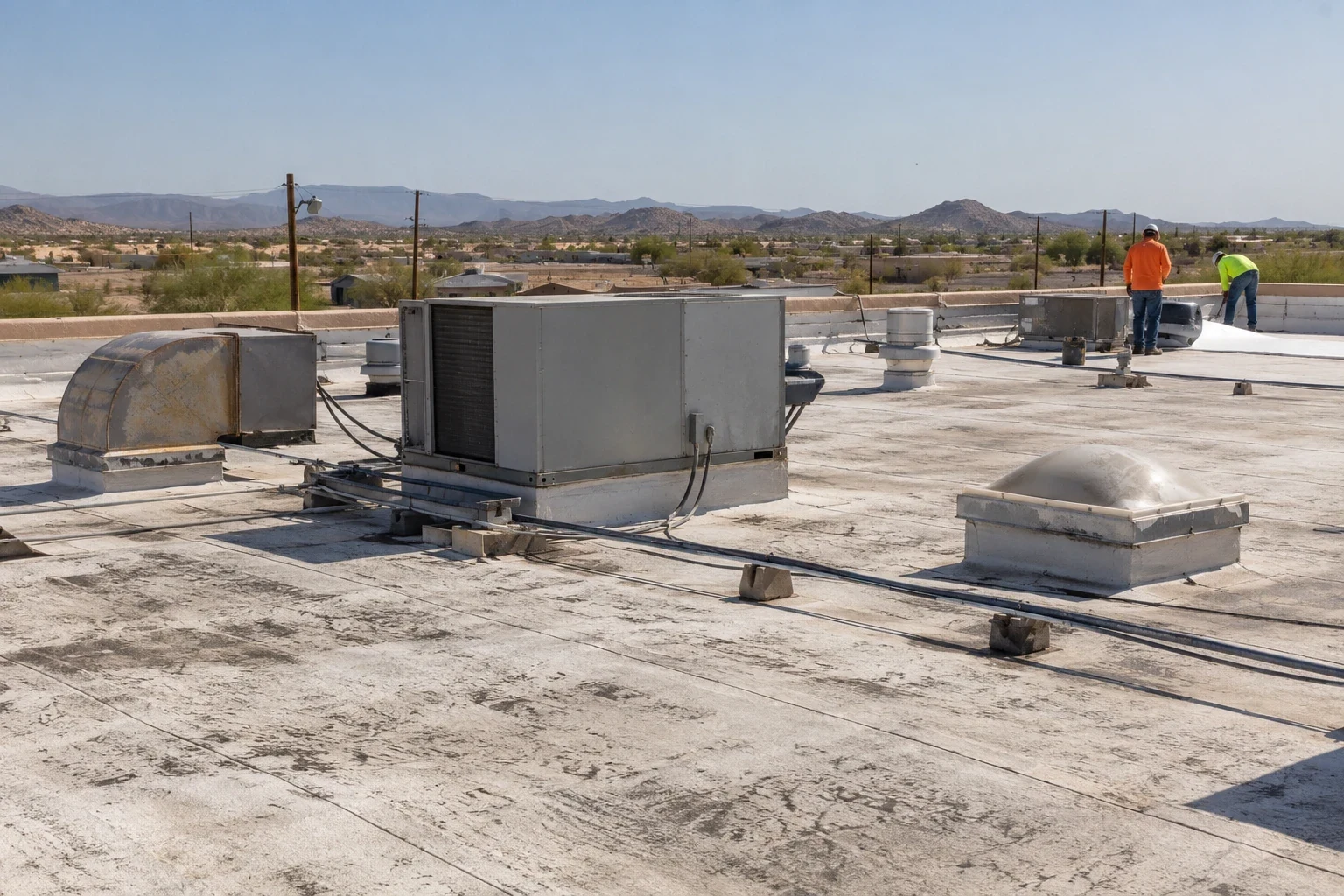
Roof condition reports, repair and replacement scopes for cities, counties and public agencies in North Las Vegas, NV, written to stand up in a public file.
A public building roof is judged twice: once by the water that gets through it and once by the paper trail that explains why it was repaired, restored or replaced. For cities, counties and other public agencies in North Las Vegas, NV, we write the inspection so it can sit in a public file and still be understood by a reader who was not on the roof. Every finding carries a roof zone, a photograph, a condition and the decision it supports.
North Las Vegas covers about 101 square miles, and the city's own planning framework groups its places into planning areas, employment districts, activity centers, residential neighborhoods and gateways, including Downtown and the North 5th Transit Corridor. Those labels describe planning intent from a 2006 map, not current zoning or the state of any building. An agency with facilities spread across that footprint needs a roof record that treats each building on its own evidence and ranks them together.
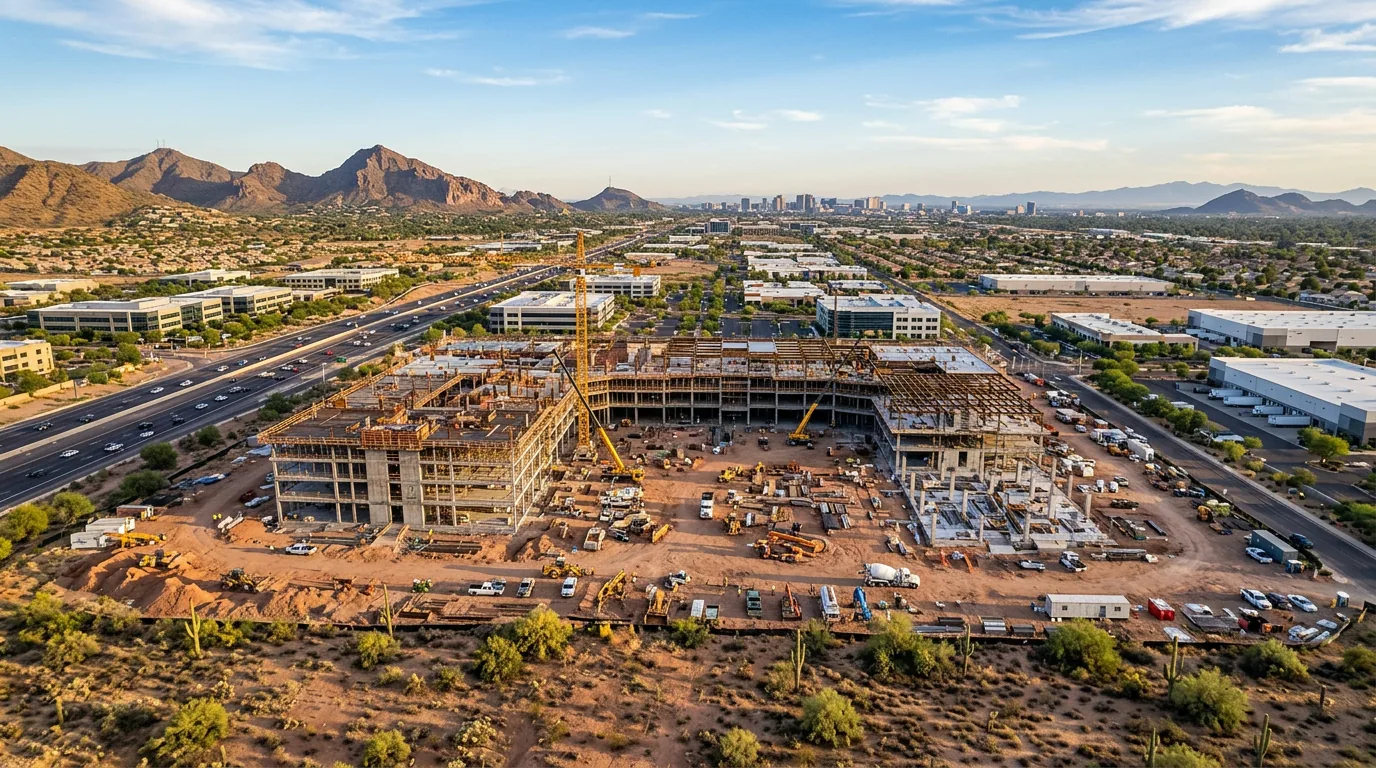
Scope: define the question before the bid
Public work moves on documents. A repair authorization, a bid package or a task order each needs a scope that a contractor can price and an inspector can verify. We help the agency draft the roof portion in plain terms: the roof zones included, the conditions to be corrected, the materials and details required, the testing to be done and the closeout record expected.
The more specific the existing-condition record, the fewer change orders appear later. We document the membrane or metal system, the insulation where it can be observed, the drainage path and the details most likely to leak, with photographs referenced to a roof plan. Where moisture is suspected, the record names the test and the result. A written scope built on measured conditions lets bidders compare like with like, and it lets the agency explain its choice if it is questioned.
Alternates help too. A base scope for the confirmed problem areas and priced alternates for adjacent zones let the agency act on what it can fund now and add the rest if bids come in favorably.
Commercial Roofing Questions
What makes a roof scope bid-ready?
A bid-ready scope names the roof zones, the existing system, the conditions to be corrected, the materials and details required, the tests to run and the closeout records expected. Photographs tied to a roof plan make the conditions clear. Bidders can then price like for like.
How should an agency rank its roofs?
Use observed evidence: active leaks, wet insulation, drainage faults and repeated repairs. Add the building's function and the cost of an outage. Age is a secondary signal and is shown separately in the report.
Can roof work happen while a public building stays open?
Usually, with a phased plan, protected entrances, clear fire lanes and controlled staging. Noisy or odorous steps are timed around public hours. The plan names who can pause work and how the agency is notified of changes.
What belongs in the closeout file?
The final condition record, before and after photographs, material documentation, test results, warranty terms and a roof sketch with all new penetrations marked. The file should let a new facilities lead understand the roof without calling the contractor.
Do you handle roof emergencies for public buildings after hours?
Emergency response runs around the clock, holidays included. We secure the opening, protect the space below and send the agency a photographed record the next morning.
How does an agency justify replacement over a coating?
Testing justifies it: wet insulation, poor adhesion, widespread seam failure or repeated repairs at the same details. The report presents those results with photographs, so the decision rests on evidence a reviewer can read.
More Roofing Detail
COMMERCIAL ROOFING IN NORTH LAS VEGAS, NEVADA
Inventory: rank buildings by evidence, not by request order
Agencies often hold roofs of several types and ages, and the loudest complaint is not always the worst roof. We inspect on one checklist and rank by observed evidence: active water entry, drainage faults, seam and flashing condition, signs of wet insulation and the cost of waiting. The ranking becomes the basis for a capital schedule.
A multi-site roof program turns that ranking into a multi-year plan with the cost drivers explained. Roofs with active leaks go first, sound roofs stay on maintenance and middle-aged roofs get monitored. The same format works for a library, a community building or a utility structure, though each type has different equipment and access rules. For government building roofing, the plan also records which buildings are open to the public and which have restricted access.
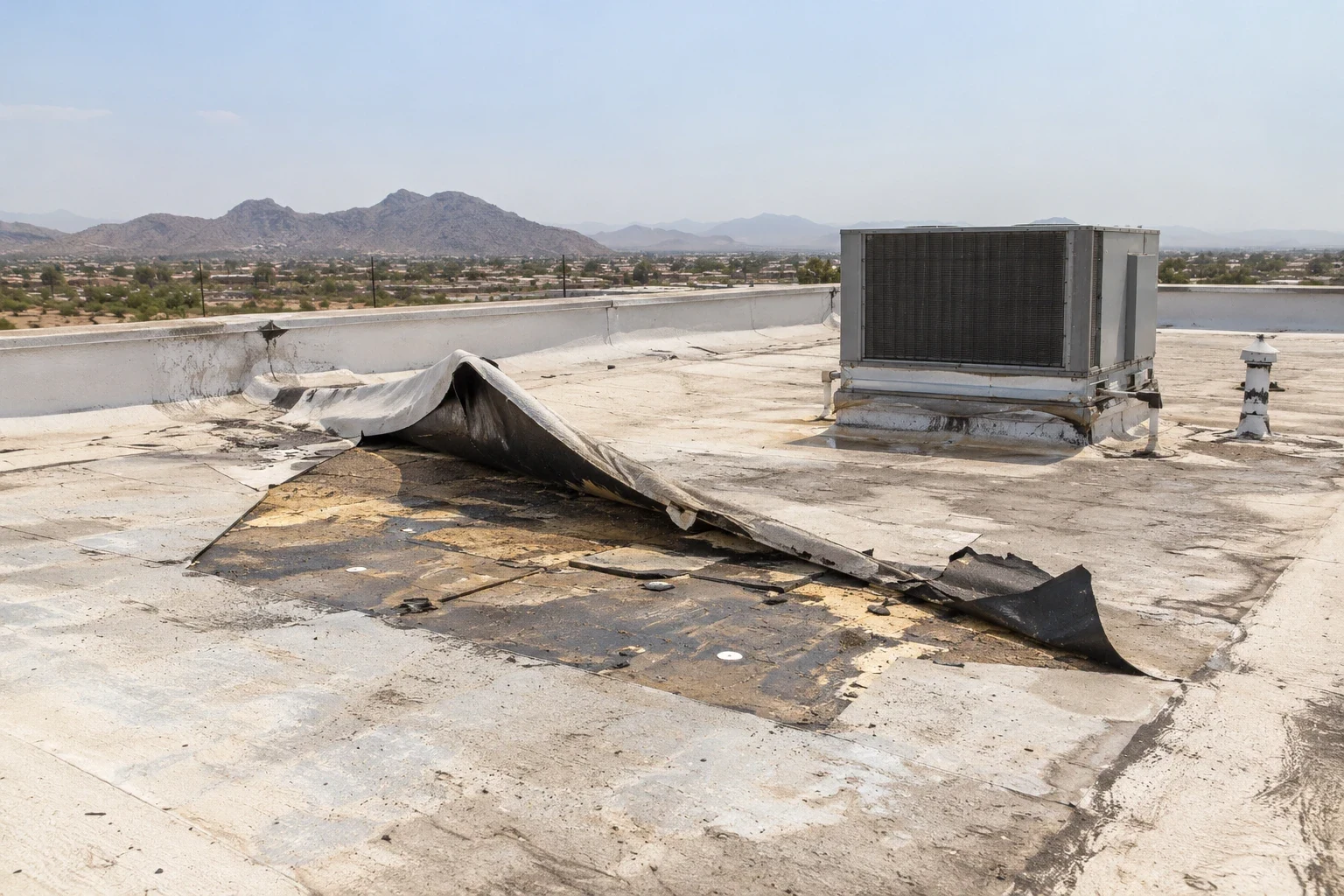
Access and safety: follow the agency's rules on site
Public buildings have security, badging and visitor rules that apply to contractors. We ask early who escorts crews, which areas are off limits, when the building is open to the public and what notice is required for noisy or odorous work. Material staging stays out of public paths and parking is coordinated so staff and visitors keep access.
For a facility that must stay in service, a phased plan keeps the building open. Utilities, communications equipment and emergency lighting may sit on the roof, so we map them before any tear-off. An emergency roof repair follows the same discipline in compressed form: secure the opening, protect the space below and document conditions for the agency's file.
Restoration: decide when a coating or recover is justified
Public budgets reward options that extend service without full replacement, and some roofs qualify. A restoration coating or a recover can be sound spending when the insulation is dry, the membrane is well bonded and drainage works. The same options are poor spending when they cover wet insulation, a deteriorated deck or a membrane that has shrunk away from its flashings. The difference shows up in testing, so the testing comes before the recommendation.
We run adhesion checks, moisture surveys and core samples where the roof allows, record the results on the roof plan and attach the photographs. A roof coating restoration proposal then states the preparation, the repairs included and the areas outside the scope. If testing shows a roof is past restoration, the report says so and moves to replacement, with the evidence the agency needs to justify it. Either way, the file records why the choice was made.
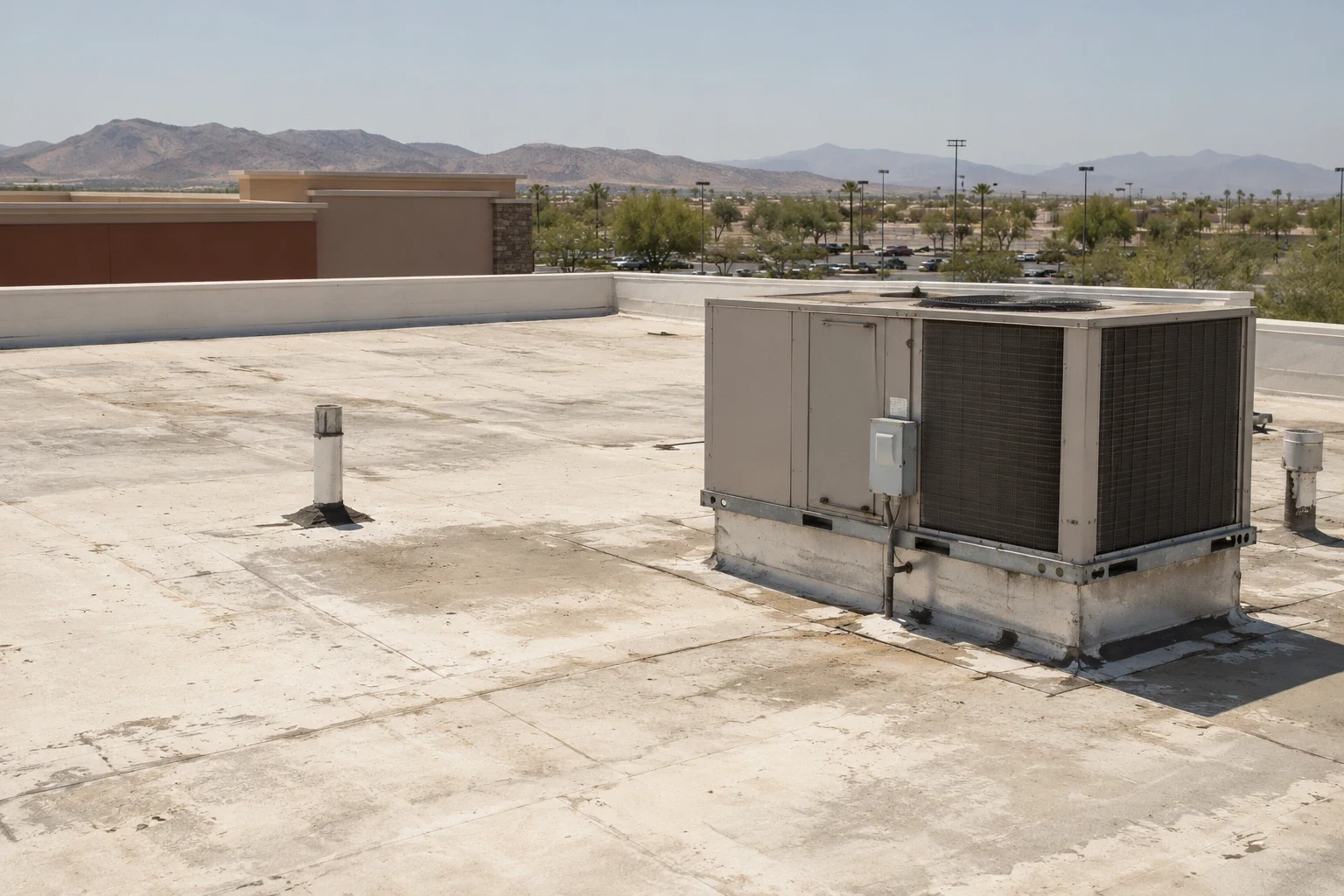
Weather: plan for monsoon, wind and heat
Monsoon moisture reaches the Mojave Desert in July and August, and a hot desert roof then takes thunderstorms with gusty wind, heavy rain and flash flooding in normally dry washes. Wind events come more often in spring and fall.
For an agency, those patterns shape the calendar for inspections and projects. A pre-season walk clears drains and scuppers and checks edge metal. A post-storm walk compares conditions with the baseline. A project that crosses the monsoon months carries weather holds and temporary protection in its schedule. These are regional timing points, and the roof's own condition determines what work is needed.
Coordination: work with other owners and teams
Public buildings are often shared with other agencies or managed by a separate facilities group. We keep the roof record consistent so each party sees the same findings. School districts and healthcare systems that share sites or services with an agency can use the same format.
Records for buildings in the Downtown North Las Vegas planning area and along the North 5th Transit Corridor are labeled the same way as those in any other part of the city. After closeout, we deliver the final condition record, photographs, material documentation and warranty terms, so the next facilities lead starts with a file instead of a search.

Send the building list and the procurement rules
Share roof plans, access requirements, current leak reports and any procurement or documentation rules we should follow. We will build an inspection record that fits your process.