
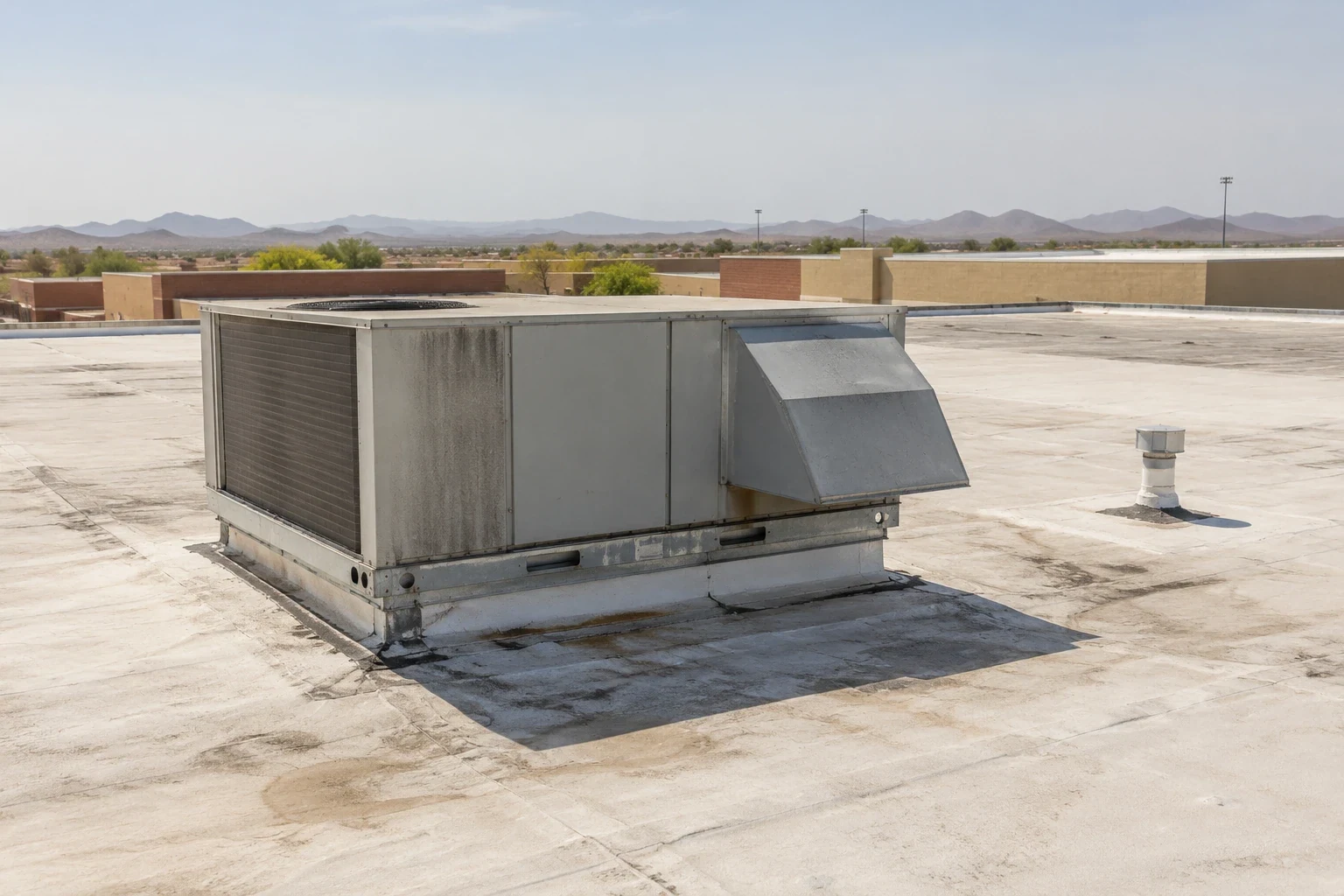
Roof inspection, repair and multi-campus planning for school districts in North Las Vegas, NV, scheduled around the academic calendar and student safety.
A school roof has two clocks: the weather and the academic calendar, and a repair that misses the calendar can be worse than one that misses the weather. For school districts with buildings in North Las Vegas, NV, the inspection starts with a question the district can answer: which buildings need attention before the next term, which can wait for summer and what evidence supports that order.
Census estimates put North Las Vegas at 296,653 residents on July 1, 2025, up 14.3% from the April 2020 estimate base. That is growth context for the city, not a count of school roofs or a statement about any campus. A district's buildings often span many construction years, and the roofs rarely match. We assess each building on its own record, then rank them together so a facilities director can defend the order to a board.
Calendar: put heavy work where students are not
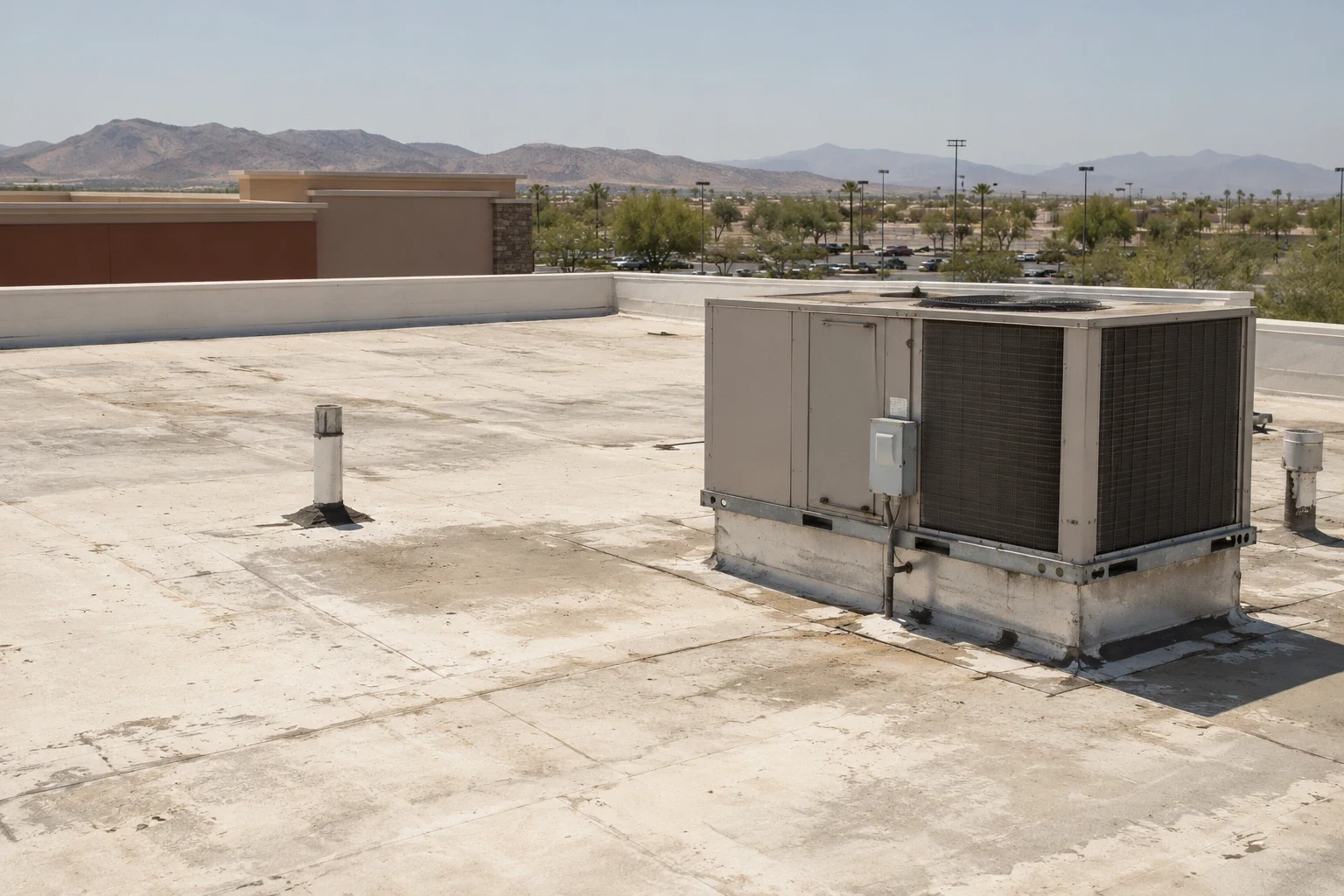
Summer break is the natural window for tear-off and replacement, but it runs straight into the hottest weather of the year. A hot, sunny desert makes roof surfaces punishing for crews and materials. We plan early starts, hydration breaks and application windows set by the manufacturer's limits, and we sequence large buildings in phases so the work finishes before students return.
Winter and spring breaks can handle smaller scopes: drain repairs, flashing work and localized replacement. For work during the school year, we agree on staging areas away from drop-off lanes and play areas, schedule noisy tasks around testing and keep crane lifts to hours when students are indoors and away from the lift zone. The district sets the rules, and the written plan names who approves any change to them.
COMMERCIAL ROOFING IN NORTH LAS VEGAS, NEVADA
Student safety: control the site, the dust and the access
Roofing next to a school is a site-control problem first. Fencing, signage, gate control and trained spotters keep students away from material and equipment. Hot work, solvent-based adhesives and torch-applied systems get extra scrutiny, and we coordinate with the district's safety staff on permits, fire watch and ventilation of nearby intakes.
Dust, odor and noise matter in classrooms, so intakes near the work are protected and sensitive areas are identified ahead of time. Crew screening and entry procedures follow the district's own rules. A school roof plan lists these controls in plain language so principals and facilities staff can answer questions from staff and families.
Condition evidence: sort leaks from end-of-life roofs
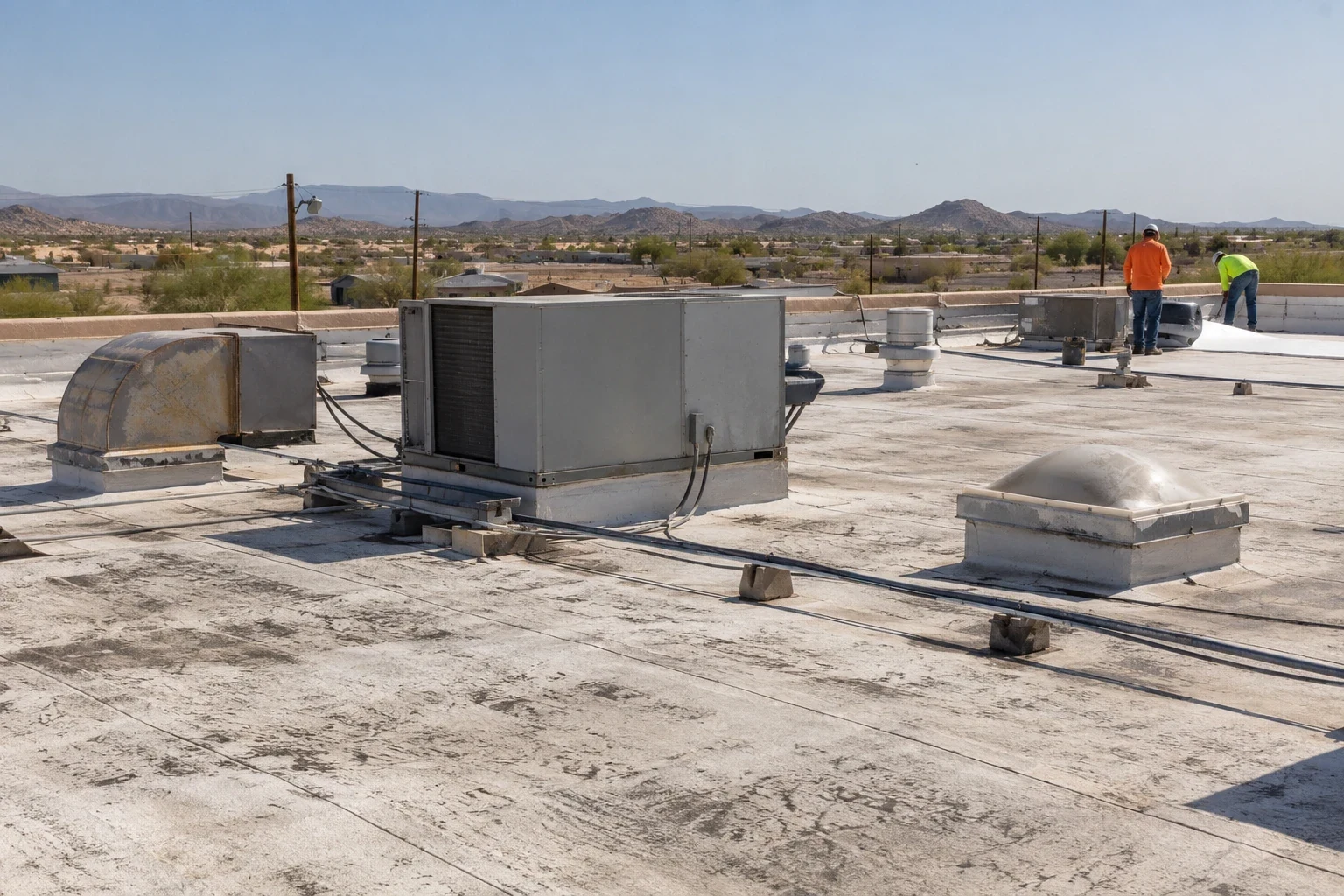
Every district has a leak list, and the list does not say which roofs are failing and which are just aging. We walk each building and record seam condition, flashing state, drainage performance, ponding and signs of wet insulation. Interior photographs from custodians and staff help trace water paths, and a moisture survey can sort doubtful roofs.
With that evidence the district can decide between repairs and replacement. A commercial roof inspection produces a ranking; an roof recover may fit buildings whose insulation is dry and whose decks are sound; replacement fits roofs with wet insulation or repeated failures. The report states which test supports each call, so a board member reading it can see the reasoning without a roofing background.
Monsoon and wind: prepare drainage before the school year
The school year starts into the July and August monsoon, so heavy rain, gusts and low-area flooding can arrive before the first bell. Those weeks fall inside the summer break, so a replacement project may be open on the roof when a storm arrives. Staging in sections, drying in each one before the day ends and keeping temporary protection on site are standard parts of the schedule.
Wind events are more common in spring and fall, which overlap with the school year. Edge metal, coping and loose flashing are the details we check before those seasons, since a displaced piece of metal over a walkway is a safety problem as well as a roof problem. After any storm, we walk the roof, photograph conditions and report to the facilities office before staff return.
Multi-campus planning: spread cost without losing control
Districts rarely have the capital to replace every roof at once. Roof capital planning lists each building with its condition, recommended action and target year, with cost drivers explained in plain terms. Priority runs in order: active leaks first, then roofs that stay on maintenance, with mid-life roofs on monitoring.
A district's plan can cover buildings in any part of the city, from master-planned areas such as Craig Ranch to planning areas like the Northern Development Area, with one inspection format across all of them. Where a district shares facilities or contracts with a public agency, the same records support coordination, and a college campus follows similar steps under college and university roofing.
Cost and timing: show what moves the price
Price follows scope, and scope follows condition. For repairs, cost rises with the number of details and with how much membrane must be cut back to reach sound material. For replacement, it rises with tear-off depth, insulation and cover board, equipment that must be disconnected and reset and the staging space the site provides. Roof access across a campus with multiple levels adds labor.
Timing depends on material lead times, permit review and the length of the break. When a general contractor manages a larger renovation, we coordinate the roof tie-ins and the schedule with the contractor's plan. We state the assumptions in every proposal and report any change the day it appears, such as wet insulation found at tear-off.

Records: leave the next facilities director a usable file
Staff change and memory fades, so each building gets a roof file: plans, photographs, repair history, warranty terms and the latest condition report. Warranty terms matter because some repairs and coatings can affect coverage, and the file shows what is allowed before a work order goes out.
After a storm, custodial staff can send photographs of any new leak to the facilities office, which compares them with the file and decides whether to call for service. That habit cuts the time between a leak report and an informed repair. It also gives the district a clean history if a claim or warranty question arises.
Commercial Roofing Questions
Which scopes belong in the summer window?
Full replacements and large recovers belong there, because they need weeks of open roof. Smaller repairs can happen during breaks. We schedule the heavy work first and keep a short list of items for weekends and holidays.
How do you keep students away from the work?
We fence the staging area, control the gate, assign spotters and set lift times when students are indoors and away from the lift zone. The district's safety rules govern, and the plan names who can stop the work.
How can a board see why one roof is replaced before another?
The report ranks buildings by what was observed: leaks, wet insulation, drainage faults and repeat patching. Photographs and test results back each ranking. Age is a secondary factor and is shown separately.
Is a recover acceptable on a school roof?
It is acceptable when the insulation is dry, the deck is sound and code requirements are met. Moisture testing before the decision confirms the base. Where the base is wet, replacement is safer.
Do you respond to school roof leaks after hours?
Our emergency line is staffed through nights and holidays. A crew protects the opening and documents conditions so classrooms can reopen quickly.
What happens if a storm hits during summer-break replacement?
We keep sections small, dry in the open area each day and hold temporary protection on site. After the storm, we inspect the work, drain any water and photograph conditions before resuming.
More Roofing Detail
Share the calendar and the leak list
Send roof plans, the district's contractor rules, the academic calendar and current leak reports. We will build the inspection and the schedule around keeping students safe and classrooms open.