
Review Duro-Last membrane seams, prefabricated details, drainage, and field changes before choosing repair or replacement for a North Las Vegas roof.
A roof that was designed around prefabricated membrane details still depends on the conditions found in the field. An added pipe, shifted unit, changed curb, or older repair can alter how a panel fits the building. We inspect the exposed Duro-Last sheet, seams, edges, and penetrations before proposing work. The goal is to distinguish an original detail from a later modification and set a repair boundary that can be verified.
Available drawings and product records help identify the starting assembly, but the roof may have been changed since installation. We compare those records with visible transitions and note where an opening would answer an important question. The owner receives a zone map, photographs, and a list of confirmed issues and open questions. That makes the repair decision specific to the present roof rather than the original design package alone.
Check Prefabricated Details Against Field Changes:
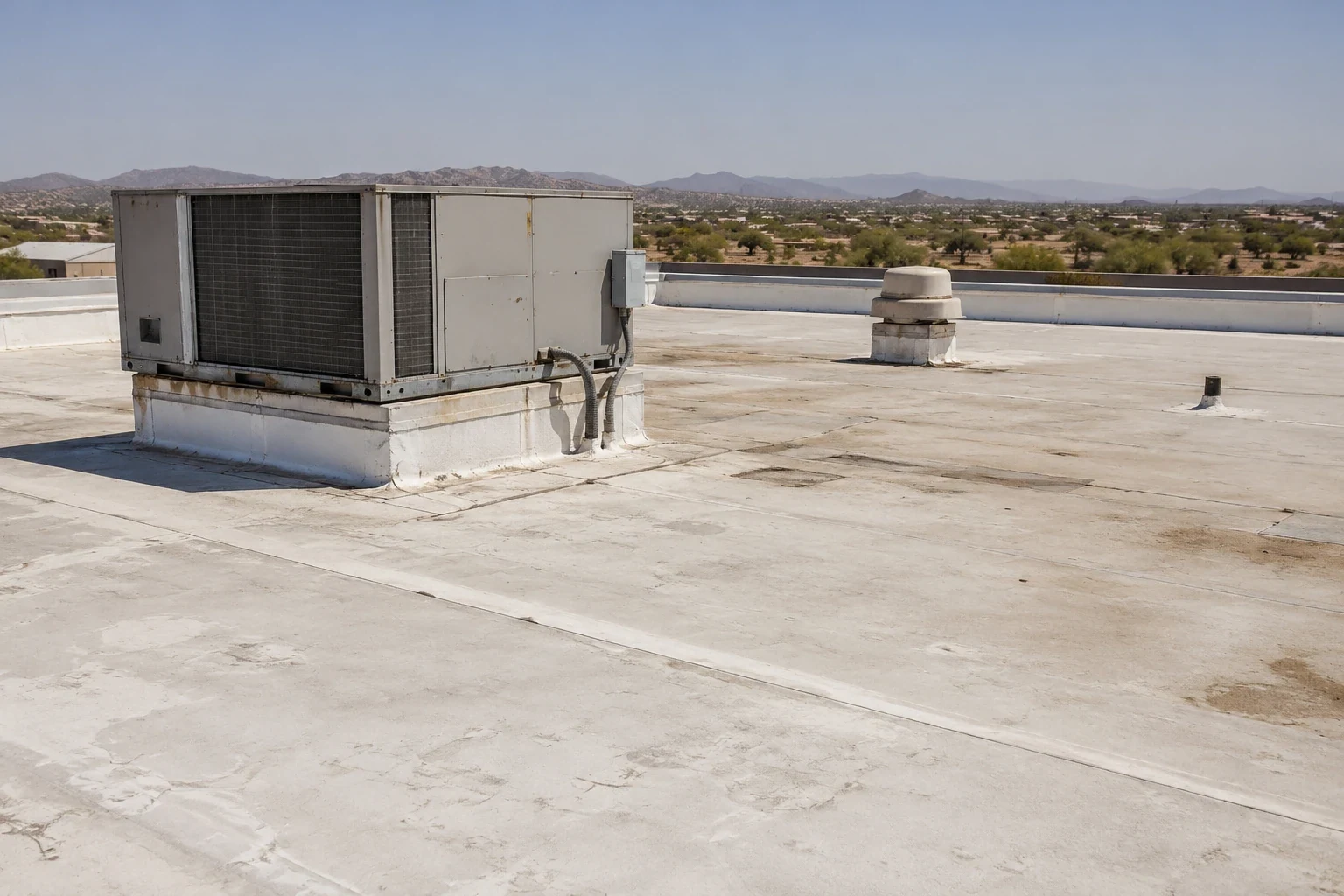
Prefabrication can reduce the number of field-built transitions, but only when the planned detail matches the curb, pipe, or corner that exists today. Measure the opening, check its position relative to seams, and look for patches that indicate a later change. A new support or penetration may have been installed through a previously complete assembly. That detail should be documented and assessed on its own instead of assuming the surrounding sheet is defective.
At curbs, inspect the membrane return, inside and outside corners, and termination at the top. At pipes, check the boot, seal, and movement around the penetration. We map each change and compare it with the roof plan before ordering a replacement detail. A penetration review can identify what needs rebuilding and whether adjacent sheet is sound. If a panel must be opened, record the dimensions and the field condition so the replacement piece can be fitted to the actual assembly.
Commercial Roofing Questions
Do prefabricated roof details eliminate field repairs?
No. Later equipment moves, new penetrations, and repairs can change the original layout. We inspect the present opening and surrounding membrane, then identify whether a replacement detail can follow the existing assembly or needs a larger tie-in.
How do you assess a Duro-Last seam?
We inspect the weld edge, adjacent sheet, and nearby transitions under suitable conditions. The record identifies the seam limits and any preparation issue. If contamination, coating, or a prior patch changes the surface, a test may be needed before a repair is specified.
Can a membrane repair cover wet insulation?
A patch will not correct wet or unstable material below it. If moisture is suspected, testing helps define which areas require removal. The scope should distinguish confirmed wet locations from scan indications and state how the substrate will be checked before closure.
What should I send before a roof inspection?
Provide roof drawings, repair records, leak dates, site access instructions, and notes about changed equipment or new penetrations. Identify any active interior water entry and areas with restricted access. This helps focus the field review on the details that may control the scope.
When is replacement worth comparing with repair?
Compare options when repeated repairs, widespread deterioration, or confirmed moisture affects the same zones. The recommendation should show the evidence, removal boundary, and deck or insulation assumptions. A defined repair area can then be weighed against a full-system scope on comparable terms.
More Roofing Detail
COMMERCIAL ROOFING IN NORTH LAS VEGAS, NEVADA
Inspect Welds and Repair Boundaries:
Duro-Last roofs use a PVC membrane, so seams and repairs require suitable surface preparation and welding procedures. The inspector checks weld continuity, edge condition, surface contamination, and previous patches. A seam may have a small opening that ends at a junction or a longer separation that follows a stressed detail. We mark where it begins and ends rather than describing the full roof as failed.
A repair should reach clean, compatible, stable material. If the surface has been coated or repeatedly patched, test preparation before extending the work. At a perimeter, inspect the edge securement, flashing termination, and corners as one assembly. A PVC membrane inspection records the sheet, seam, and attachment evidence. The repair scope then defines removal, patch dimensions, welding, and the check performed after the work. If the substrate is wet or unstable, the proposal should identify that condition instead of covering it.
Trace the Water Path Before Cutting a Panel:
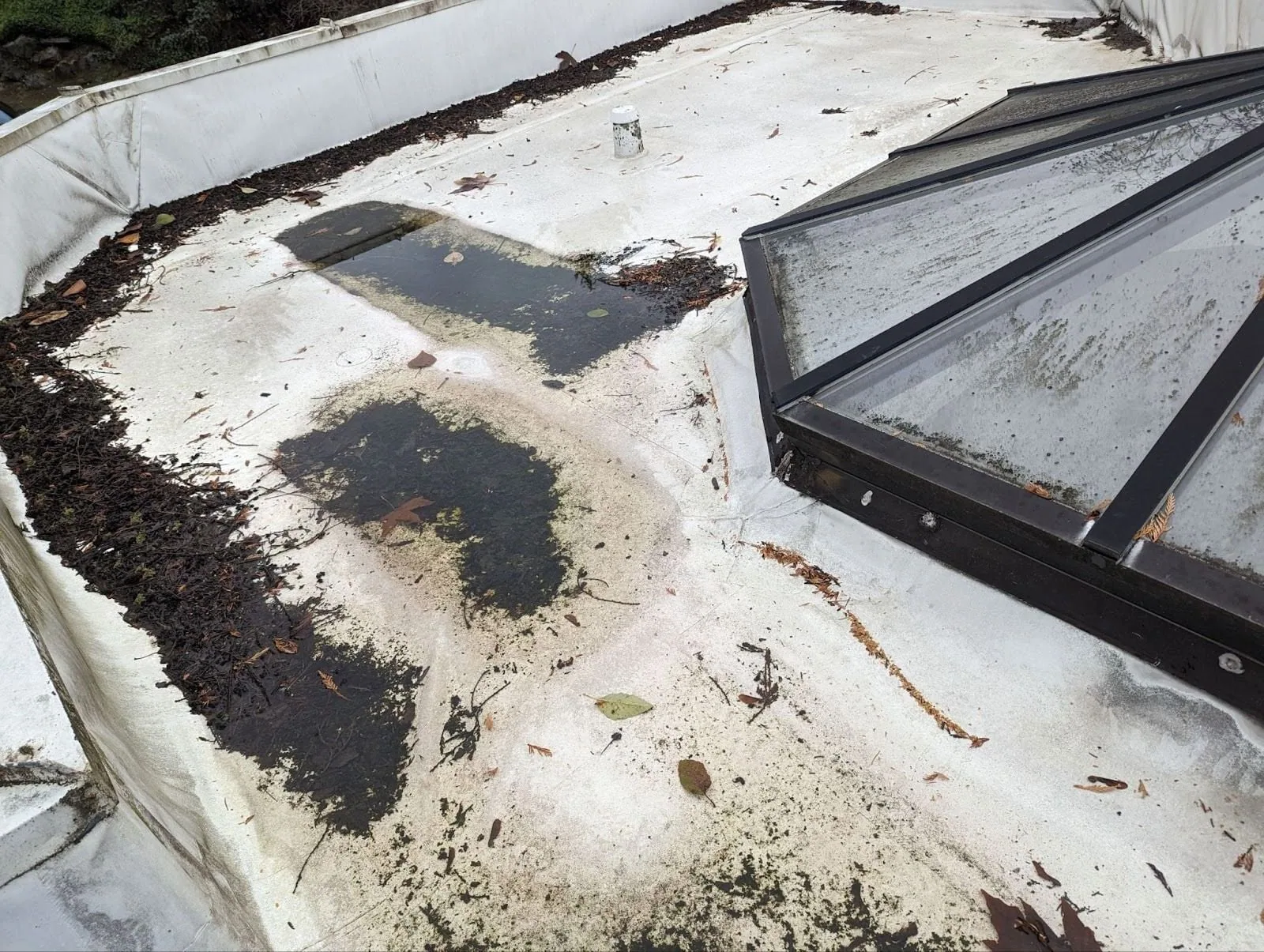
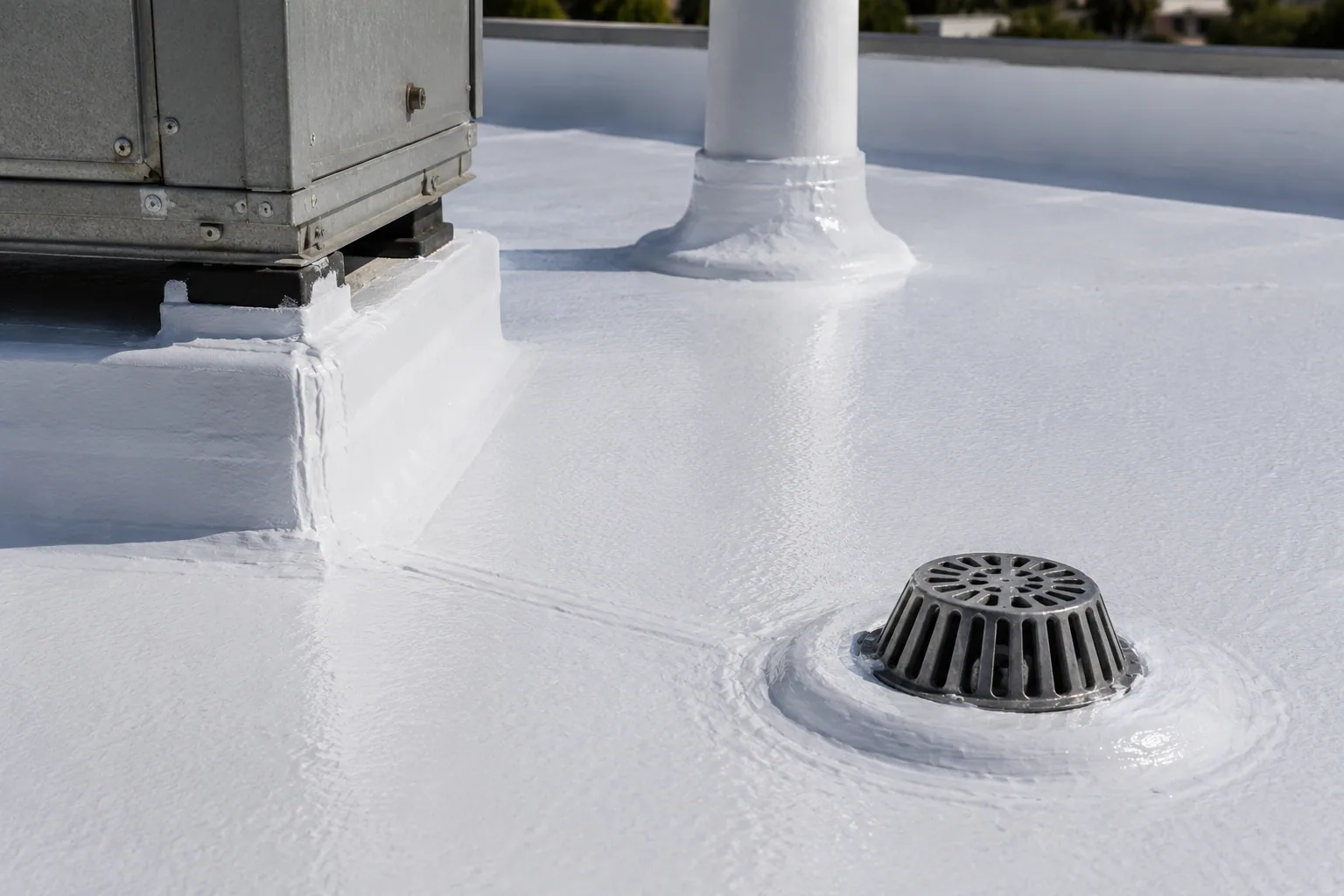
A leak reported below a roof penetration may originate at a drain, seam, or transition farther upslope. Record the room and time, then trace the roof slope toward outlets and low areas. At the drain, check the bowl, clamping detail, and surrounding membrane. At a scupper, inspect the throat and the exterior discharge path. Debris removal may restore flow, but it does not resolve a damaged connection or a low roof plane.
Moisture below the membrane can change how much material should be removed. A scan helps prioritize test locations; an opening confirms the condition only at its sample point. The moisture survey should show both scan limits and confirmed openings. If water is trapped in insulation, the repair boundary may need to extend beyond the visible seam. We keep drainage correction, membrane work, and any removal in separate scope items so the owner can see which finding controls each decision.
Plan for Site Access and Desert Conditions:
North Las Vegas planning labels include the North 5th Street Transit Corridor and Apex Industrial Area. These broad areas can help identify a location but do not set a property's roof access, operating hours, or construction requirements. Confirm staging, escorts, roof entry, loading routes, and areas that must stay open with the site contact before mobilization. The work plan should identify where materials can be stored and how the crew will protect finished surfaces during movement.
Hot, sunny regional conditions and occasional summer monsoon storms affect scheduling and open-roof limits across the Las Vegas Valley. Check the forecast and surface conditions before the shift. Keep rolls and accessories protected, define a secure end-of-day closure, and limit tear-off to what can be made weather-tight. If wind or rain changes the plan, pause at an agreed boundary instead of leaving an exposed area without a tested closure detail.
Compare Repair With a Full System Scope:
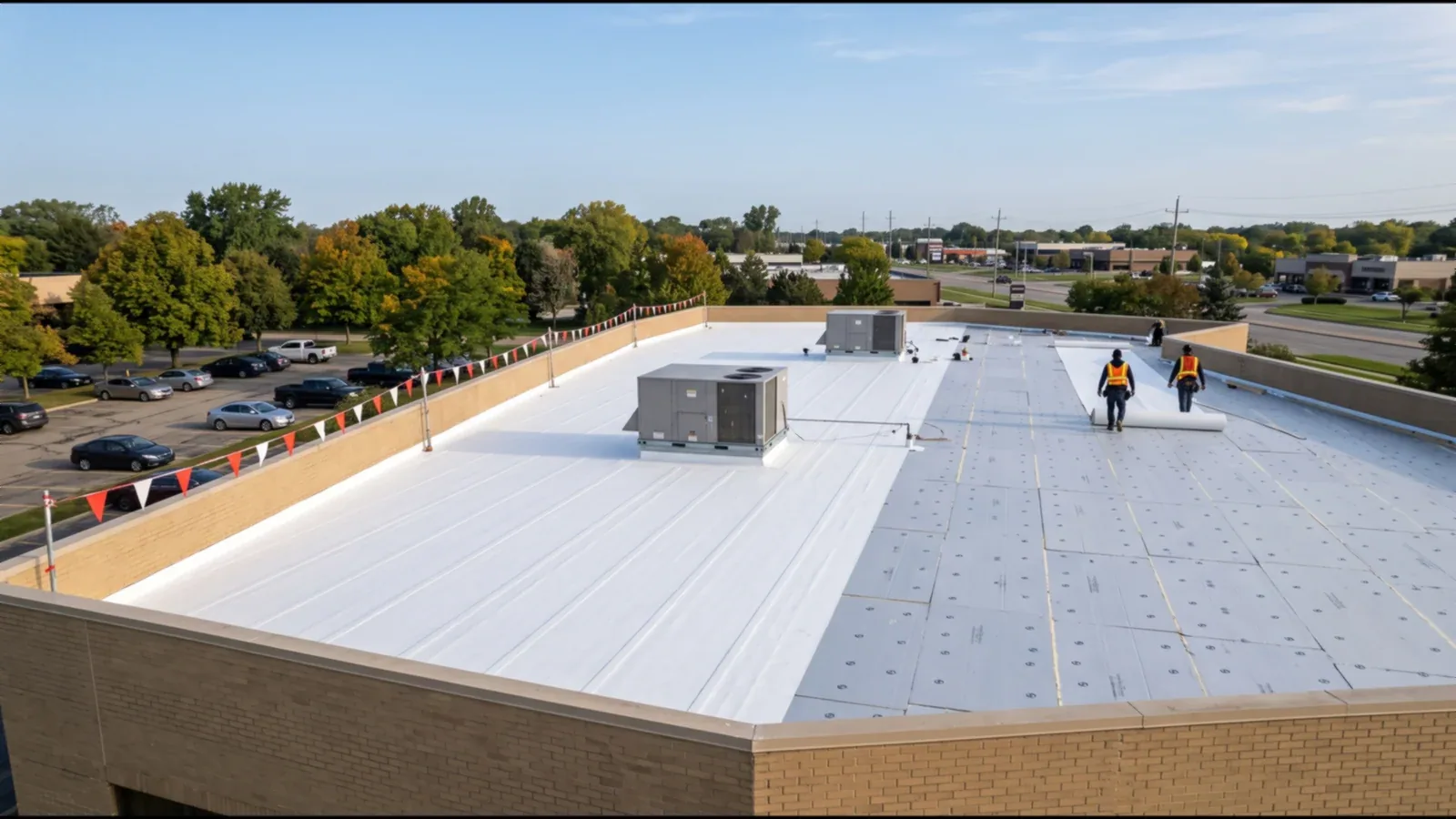
When local repairs no longer address the observed condition, compare restoration and replacement using defined roof zones. A restoration plan should show test areas, cleaning, repairs, reinforcement, and the conditions that would stop application. A replacement proposal should include deck assumptions, insulation, attachment, edges, flashings, drains, and equipment coordination. Separate tested findings from assumptions about concealed layers.
For replacement, panel layout and detail coordination should reflect actual field dimensions and the sequence of rooftop work. A replacement review identifies removal limits and daily tie-ins. The project team can compare a Sika Sarnafil option or Versico assembly on the same insulation, attachment, drainage, and flashing requirements. That is a more useful comparison than selecting a product first and adjusting the scope later.
Leave a Useful Record for the Next Roof Walk:
Closeout should include the roof-zone map, materials installed, preparation notes, photographs, and any weld or test observations. Mark each repair boundary and identify a panel or detail that was replaced. Note later trade work, equipment moves, and new penetrations so the next inspection starts with a reliable history. Keep the approved product information with the project file, but do not treat a submittal as proof of current roof condition.
Before an inspection, share the roof plan, leak history, previous repairs, access rules, and known changes to equipment or penetrations. We will compare that information with the field and state what is confirmed. When water is entering, report the room and time, protect contents if safe, and confirm a site contact before arranging roof access. Those details help connect the interior report to a roof zone without promising a repair method before the membrane and substrate are checked.
Review the Field Details
Share the roof plan, prior repair records, leak locations, and site access requirements. We will document the membrane and changed details, then define a supported next step.