
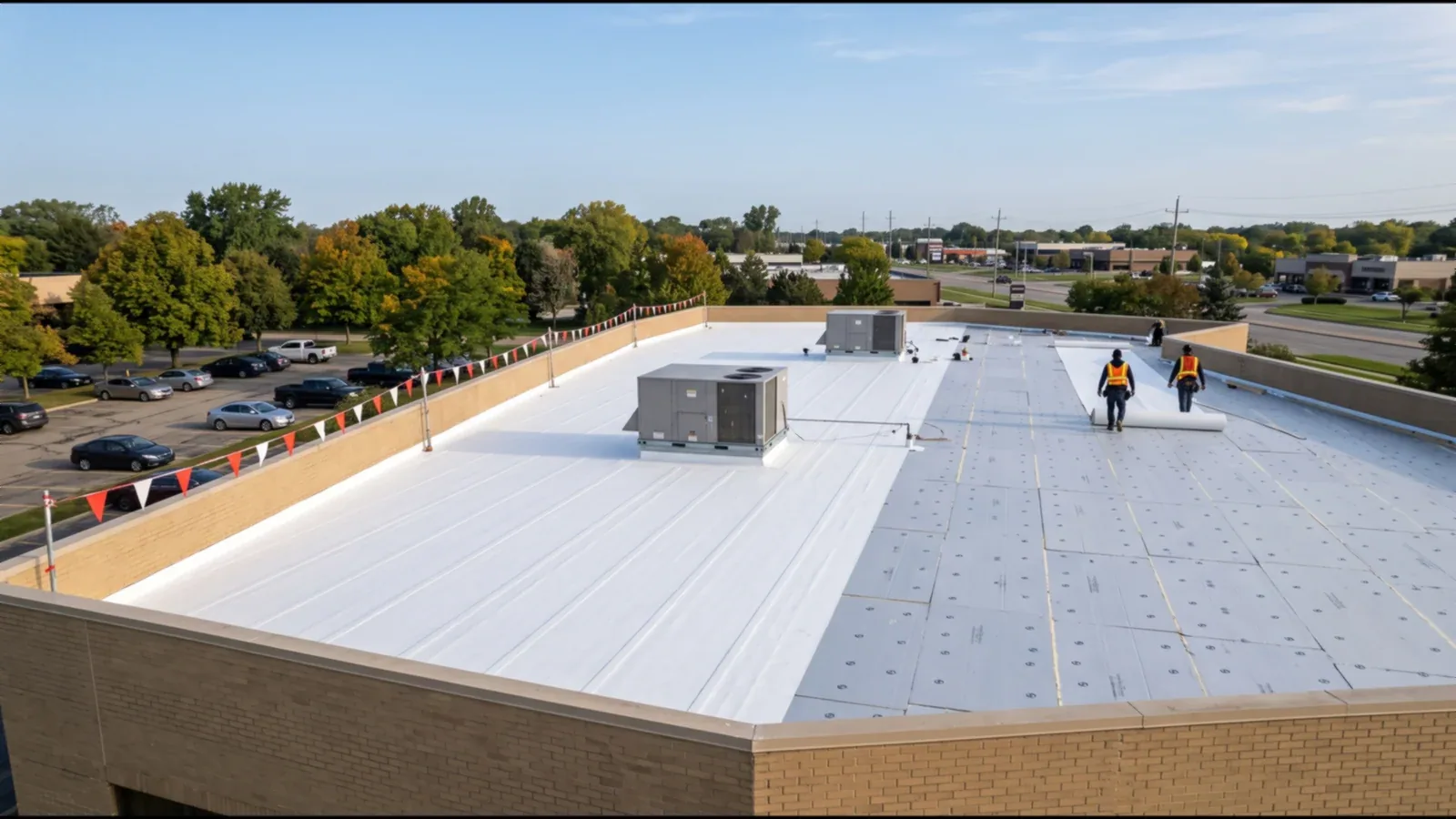
Plan a Versico roof repair around the installed membrane, attachment, edges, and drainage. North Las Vegas inspections define tested conditions and next steps.
A roof labeled Versico still needs a field review before a repair method is selected. The assembly may include TPO or EPDM, different attachment methods, replacement sections, coatings, and details installed by later trades. We begin by checking exposed sheet, seams, edges, drains, and available closeout records. Then we map the conditions by zone so a problem at one curb does not become an assumption about the whole roof.
The inspection should answer practical questions: which material is present, where is water entering, and what evidence would change the proposed work? We document access limits and any equipment that needs coordination. If the roof has concealed layers, the report separates confirmed observations from assumptions and identifies a test opening when that result affects scope. This makes a Versico system review useful whether the owner is considering a repair or planning a capital project.
Identify the Sheet and How It Is Attached:
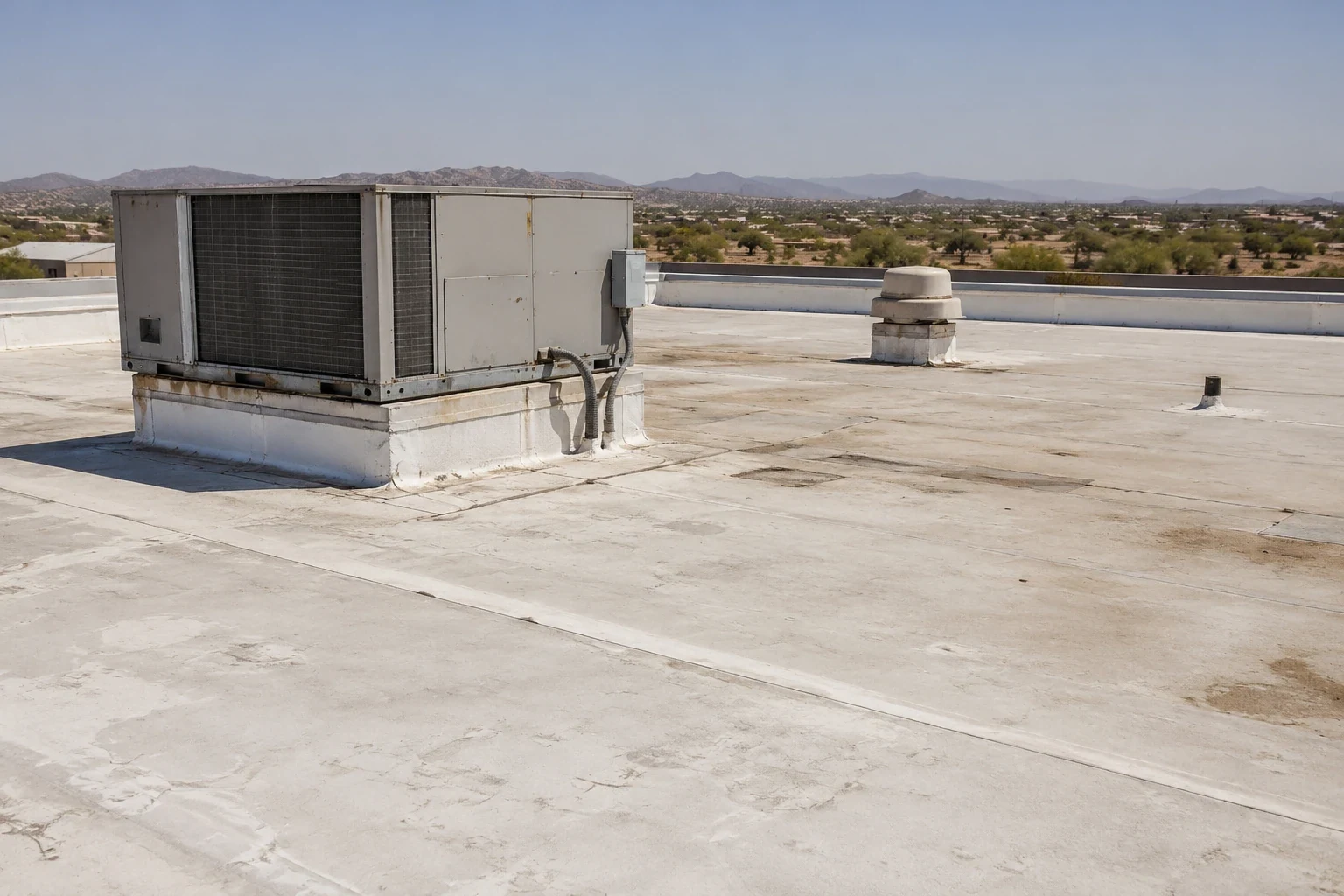
Start with a roof plan, available submittals, and an inspection at accessible edges or penetrations. Verify whether the field is TPO or EPDM, then note visible attachment rows, adhered areas, ballast, or recover work. The label alone does not tell us how a later repair was completed. Where exposed fasteners or seams show inconsistent patterns, record the condition rather than inferring the design beneath an overburden.
Attachment affects the repair boundary and the way the roof moves. A loose edge may be an isolated termination issue or part of a wider securement concern. At corners and perimeter zones, inspect the edge metal, membrane terminations, and signs of uplift together. A TPO system review or EPDM assessment should identify the observed assembly, not just repeat a product name. We list any concealed condition that requires drawings, a sample, or a test cut before a final recommendation.
Commercial Roofing Questions
Can you tell which Versico membrane is installed from a roof plan?
A plan can point to the original assembly, but later repairs or recover work may have changed what is exposed. We compare the record with accessible sheet, seams, and details. If the evidence conflicts or a concealed layer controls the repair, we identify the test needed to resolve it.
Why does attachment matter when repairing a roof?
Attachment affects movement, edge behavior, and the repair boundary. We inspect the field and perimeter details together and note where the pattern is visible or remains concealed. That distinction keeps the recommendation tied to observed conditions rather than an assumption about the original design.
Should a seam leak be patched immediately?
First confirm the sheet type, preparation, and extent of the opening. A patch over contamination or a moving detail can fail again. The inspection records the water path and adjacent transitions, then sets a repair limit that reaches sound material and can be checked after installation.
When is a moisture survey useful?
A survey can prioritize test areas when moisture is suspected beneath a membrane. It does not replace confirmation at an opening, and the result applies only to the locations evaluated. The report should show the scan limits, test points, and findings before a restoration or removal area is priced.
What should be included in a Versico replacement comparison?
Compare roof zones, deck and insulation assumptions, attachment, flashing, edges, drainage, equipment work, and daily closure. List test findings and unverified areas separately. Using the same scope basis for each option lets the owner compare project decisions rather than only product labels.
More Roofing Detail
COMMERCIAL ROOFING IN NORTH LAS VEGAS, NEVADA
Read Seams as Part of the Whole Detail:
For TPO, field seams are heat welded; for EPDM, seams use compatible adhesive or tape systems. A repair therefore begins with material identification and appropriate preparation. Inspect the seam edge, intersections, patches, and adjacent sheet for contamination, brittleness, fishmouths, or movement. A visible gap may be the symptom of a detail that is under stress rather than the full extent of the failure.
Trace that detail to the nearest curb, parapet, drain, or pipe support. At a curb, check the corners and top termination. At a drain, look at the bowl, clamping connection, and water path. The penetration flashing review records each transition and identifies which parts can be reached without opening the assembly. When a repair is proposed, define the area to be removed, the sound edge to receive new material, and the check that will confirm the tie-in is complete.
Schedule Access Around the Work Area:
In North Las Vegas, the North 5th Street Transit Corridor is a broad planning label, and Apex Industrial Area is another named area on the city's framework. These names orient a location discussion; they do not establish a building's rules or current access. Before work, confirm where vehicles can stage, which roof entry is available, whether escorts are required, and how material will be moved. Those details help keep roof work coordinated with activity below.
Regional Las Vegas Valley weather can include heat, gusty winds, and summer monsoon storms. We review conditions before a shift, protect materials, and plan to close every opened area securely. Work sequencing should account for the day's usable window and a stop point if wind or rain affects safe handling. The field supervisor and site contact should agree on that stop point before removal starts, not after an exposed section is already difficult to protect.
Separate the Leak Path From the Repair Choice:
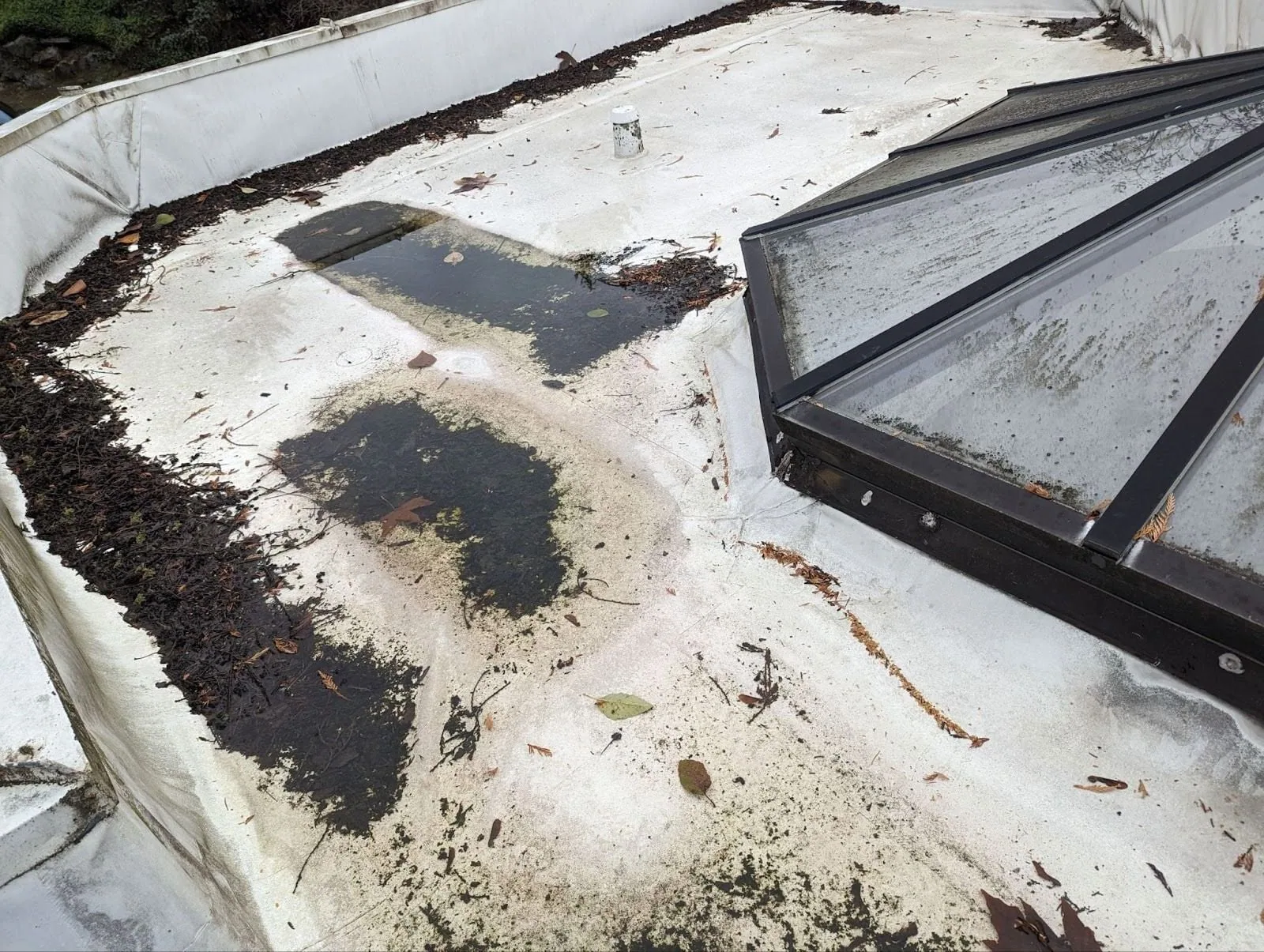
Water appearing indoors may have traveled along a deck, insulation joint, or framing member. Record when the leak appeared, the weather, and the room below it. On the roof, follow the slope toward drains and scuppers, inspect low points, and look for displaced flashings or openings near penetrations. This path helps narrow the inspection without treating an interior stain as proof of a specific roof defect.
If moisture is suspected below the membrane, a scan may help prioritize tests. An infrared survey should state its limits and mark any test locations used to confirm findings. An opening can reveal wet insulation or a sound assembly, but one test represents only the sampled area. We keep those findings distinct from observations made at seams or drains. The owner can then compare a localized repair, a larger removal boundary, or a restoration assessment against what was actually verified.
Build a Scope That Can Be Checked:
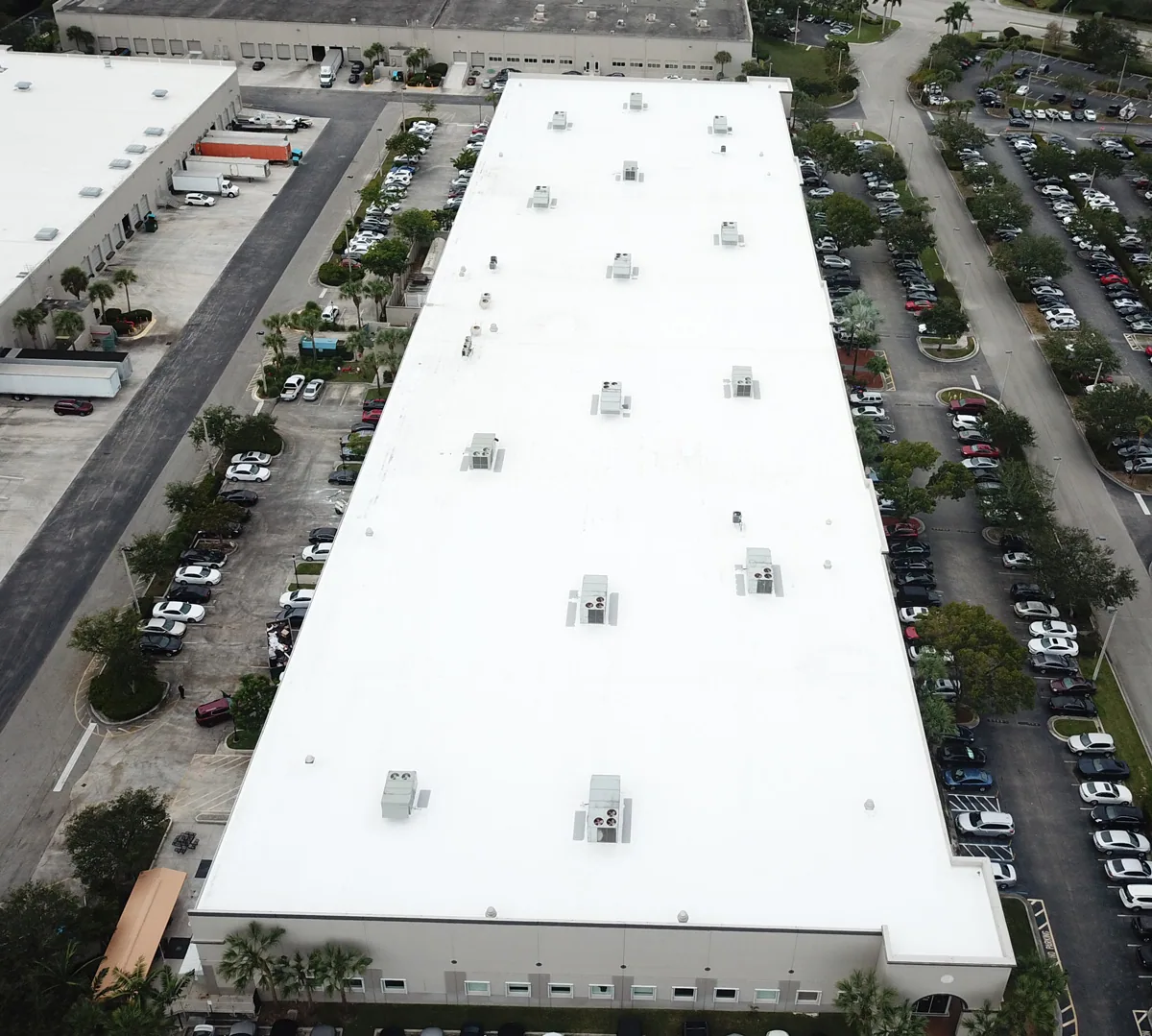
A repair proposal should list the roof zones, material and preparation, fastening or adhesion approach where relevant, flashing details, and the finished inspection method. For an edge concern, identify the length and endpoints rather than writing “repair perimeter.” For ponding, distinguish debris removal from correcting slope or replacing a drain detail. The work description should match the evidence in the photographs and leave room for concealed conditions only when those conditions have not yet been tested.
If observations support broader work, compare recovery, restoration, and replacement on the same assumptions. A commercial repair scope should list preparation, test areas, repairs, and exclusions. For replacement, include deck, insulation, attachment, perimeter, drainage, and equipment work. The owner can compare a Carlisle SynTec assembly with a Soprema option against the same roof plan instead of comparing names without scope detail.
Make Future Inspections Easier:
Closeout records should identify the system installed, repair locations, materials, preparation steps, and inspection results. Include dated photos before and after each repair, and mark roof zones consistently on the plan. Record changes made by other trades, including new supports or penetrations. These notes help the next inspector tell whether a seam or flashing is original, recently repaired, or affected by new work.
Before a site visit, share roof drawings, prior leak reports, repair history, access procedures, and any known changes to rooftop equipment. We will compare that information with the visible assembly and note what still needs confirmation. If a leak is active, tell us which room is affected and whether roof access is restricted; protect contents where safe while the condition is reviewed. The next scope can then address a defined roof condition rather than an incomplete recollection.
Review the Existing Roof Assembly
Share the roof plan, repair history, leak locations, and access rules. We will verify the exposed assembly and document a repair or replacement scope tied to the roof's condition.