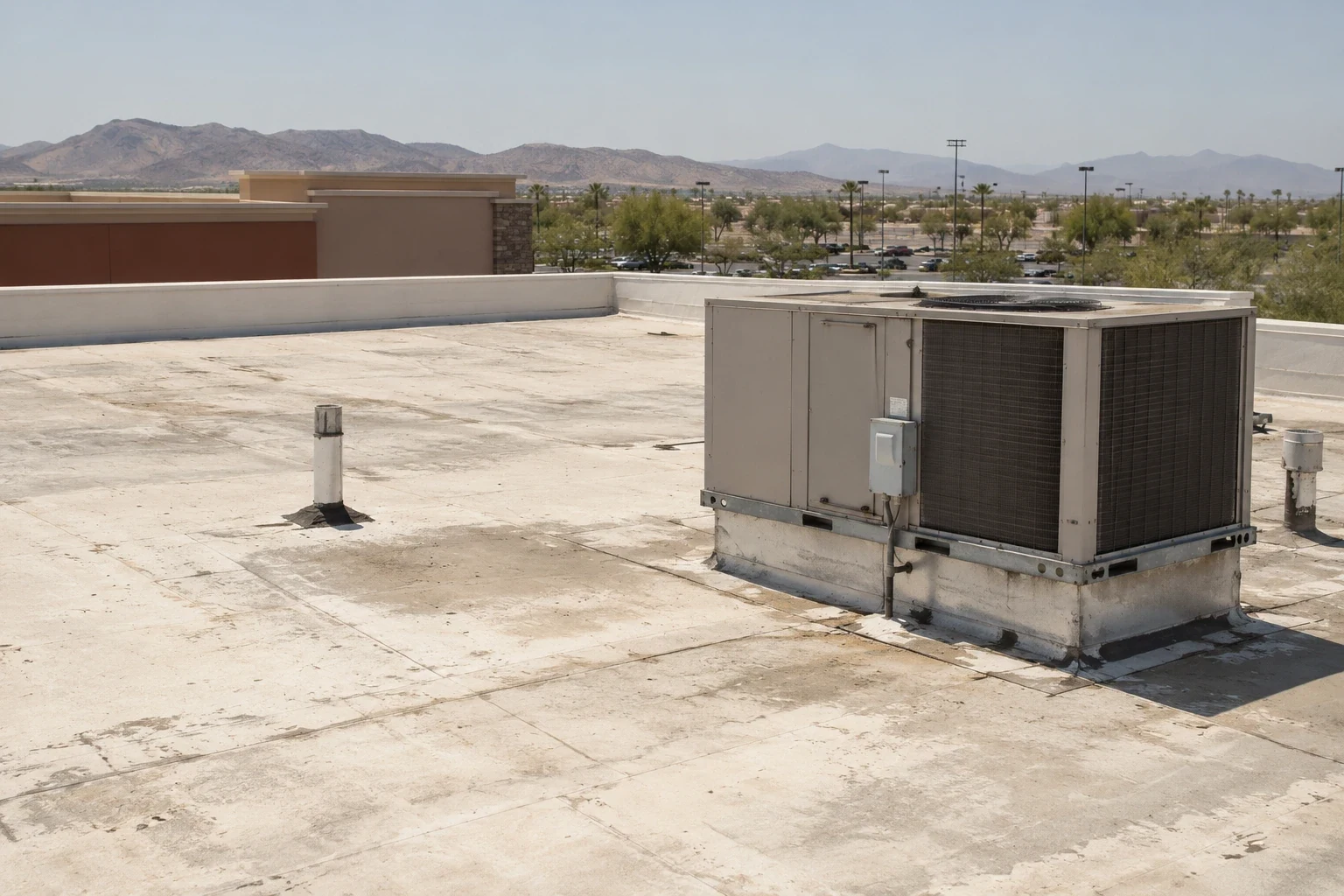
Coordinate shopping-center roof inspections and repairs around tenant hours, delivery access, drainage paths, occupied storefronts, and documented roof zones.
A shopping-center roof can cover storefronts, service corridors, canopies, loading areas, and additions that were built or repaired at different times. Treat the roof as a set of documented zones, not one continuous surface with one condition. A leak call from a tenant is a useful starting point, but the visible ceiling mark may be separated from the entry by a deck, insulation, wall, or drain path. The first task is to connect the report to the roof plan, identify nearby transitions, and protect the affected space without assuming that a single patch will resolve the whole condition.
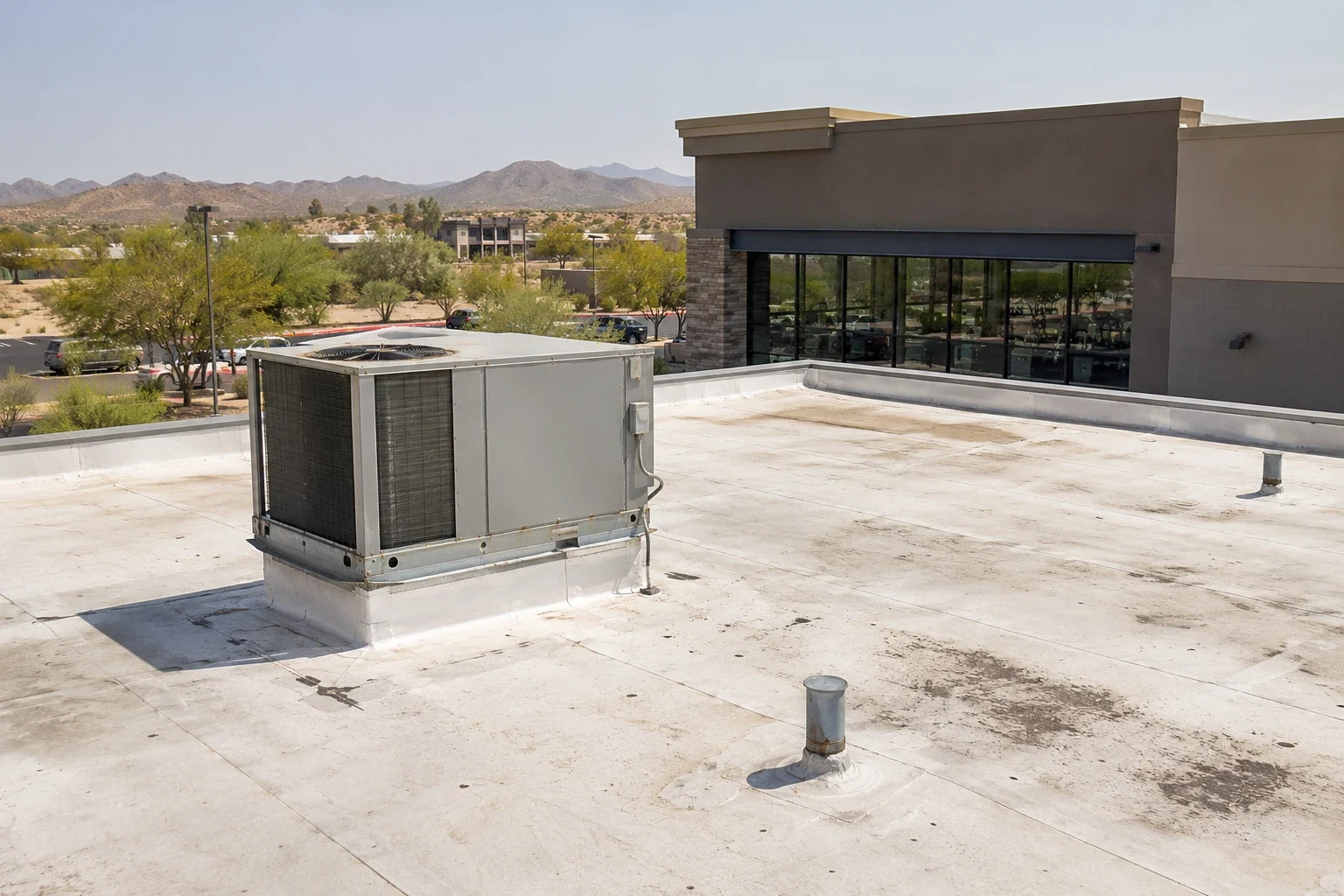
Connect tenant reports to a roof map
Log the date, suite or common area, photos, recent weather, ceiling changes, and any earlier repair. Ask whether the report started after equipment work, a roof opening, or a change in the space below. Mark the location on the owner’s plan, then inspect the roof zone above and surrounding details: drains, seams, curbs, wall transitions, parapets, and edge metal. If the route is not visible, state what remains uncertain and consider a moisture survey or controlled opening before setting a permanent scope.
Coordination matters because property staff may need to enter a tenant area, work before opening, or keep a public route clear. Confirm who can authorize access, where materials can be staged, how deliveries continue, and what temporary protection is acceptable. A commercial roof inspection record can align the interior symptom with roof observations. For a smaller-format retail property, the grocery-store roofing review considers different refrigeration and operating constraints.
Commercial Roofing Questions
How should a shopping center respond to a tenant leak report?
Log the date, suite or shared area, photos, weather, and any recent ceiling or equipment work. Protect the interior as needed, then compare the report with the roof zone above and nearby transitions. Do not assume the stain is directly below the entry point. Keep the tenant contact and access authorization in the work record.
Can roof repairs be scheduled outside store hours?
Often, but the available window depends on roof access, noise limits, crew setup, tenant operations, deliveries, and weather protection. Confirm who can approve the schedule and whether a lift, staging area, or customer route will be affected. Every shift needs a defined protected stopping point.
Does ponding water mean a shopping center needs replacement?
Not by itself. Check the drain and overflow path, slope, membrane condition, repair history, and any evidence of moisture or deck movement. The inspection should distinguish a drainage observation from a confirmed leak or assembly failure. Additional testing may be appropriate if the roof build-up is concealed.
What details belong in a shopping-center roof repair scope?
Identify the roof zone, observed condition, repair boundary, access hours, interior or tenant protection, materials, disposal, weather plan, and exclusions. State what the contractor assumes about the substrate and what could change the price. Include photos or a marked plan so the property team can verify the completed area.
How can the owner compare several tenant leak calls?
Map each report by date and suite, then look for roof-zone relationships without assuming the calls share one cause. Compare prior repairs, nearby curbs and drains, and weather timing. A condition report can separate confirmed failures from symptoms that need follow-up access or testing.
More Roofing Detail
COMMERCIAL ROOFING IN NORTH LAS VEGAS, NEVADA
Separate the field, edges, and tenant transitions
Walk the roof by zone and record the surface or membrane when it can be identified, visible seam condition, penetration details, roof-to-wall transitions, drainage points, surface wear, and repair patches. Note whether drains are clear and whether water movement is consistent with the roof plan. A low area or pond alone does not prove a membrane failure; compare drainage, slope, outlet condition, and evidence of moisture before selecting corrective work. Keep an observation separate from a conclusion when the assembly is covered or access is limited.
Shopping centers may have canopy roofs, storefront interfaces, equipment screens, and several curbs that create distinct repair boundaries. Photograph the detail with a location marker and record who supplied the roof plan. For a larger retail footprint, compare big-box retail roof planning while preserving the actual assembly and leak record for this property. A documented TPO field may call for seam and transition checks from the TPO roof system review; do not label a roof from appearance alone.
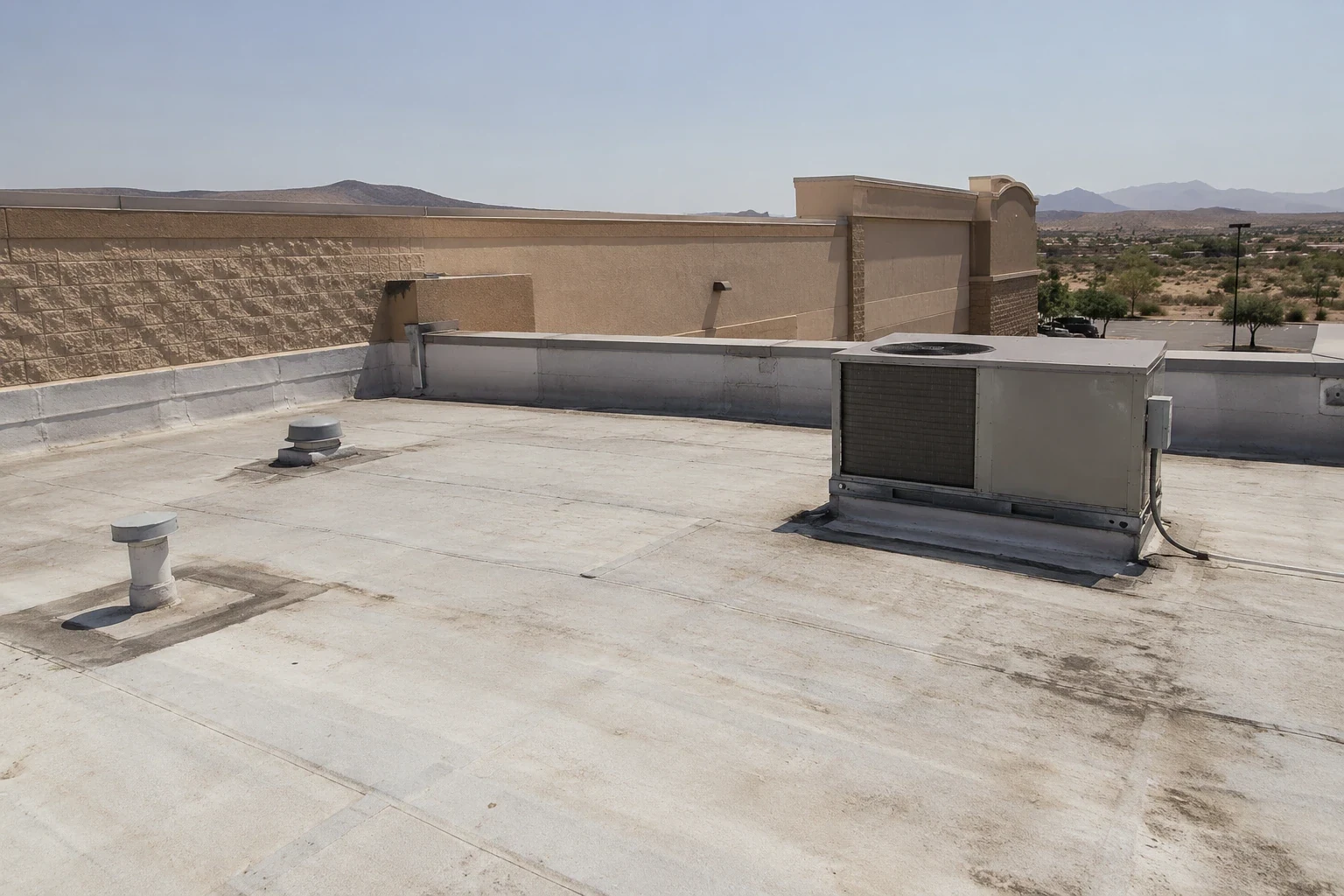
Keep public circulation and deliveries in the plan
Define tenant notice, customer routes, service entrances, loading windows, fire lanes, and roof-access controls before mobilization. If work involves odor, noise, heat, or equipment movement, name the decision-maker who can approve timing and temporary closures. Divide larger work into phases only when each daily stopping point can be protected against weather and the remaining roof stays serviceable. The site plan should identify staging, waste handling, lift placement, and a daily inspection before crews leave.
Regional heat and occasional monsoon storms are relevant to protection planning, but the current forecast and roof opening control the daily decision. The National Weather Service characterizes Las Vegas Valley weather at a regional scale, not as a property-level diagnosis. Specify how crews secure loose materials, cover exposed insulation, and restore drainage paths after each work period. A phased replacement plan should state which zones are open, closed, or temporarily protected at every stage.
Use citywide retail context without overclaiming
For 2022, Census QuickFacts lists North Las Vegas retail sales at $3.796 billion and accommodation and food-services sales at $794.934 million. Those are citywide economic figures; they do not measure the number, size, occupancy, or roof condition of shopping centers. They explain why a property team may need to coordinate different tenant and customer schedules, but the operating plan for a specific center must come from its owner and current lease or site records.
North Las Vegas's framework map, issued in 2006, marks the North 5th Street Transit Corridor as planning geography. The historical label is not proof of current transit schedules, zoning, or the boundary of a retail parcel. Before using a planning label in a project scope, verify current city records with the owner. The separate Cheyenne Technology Corridor is also named on the older framework map; its designation should likewise be checked against current records. For a center near the North 5th corridor or anywhere else in the city, tenant hours and public access are confirmed building by building. For active water entry, commercial roof leak repair should first locate and document the entry path.
Define the repair limit before comparing replacement
A targeted repair can make sense when the failure point is confirmed, surrounding materials are sound, and the detail can be restored without trapping moisture or weakening another transition. Repeated leaks, widespread open seams, persistent drainage issues, saturated insulation, or substrate concerns may justify a broader evaluation. These conditions are reasons to investigate, not automatic replacement triggers. Record what was inspected, what was not accessible, and how the scope would change if concealed material differs from the assumption.
For budgeting, separate immediate leak control from capital planning. State the repair boundary, tenant protection, access hours, disposal, weather protection, testing, and exclusions. A roof condition report can organize observations by zone, while a big-box retail roof review addresses another retail building type. Compare options only after the roof system and repair history are documented.
Make closeout useful to the property team
Closeout should identify the repaired roof zone, material installed, photographs before and after work, any concealed condition found, and areas needing follow-up. Include dates, temporary-protection steps, product documentation, and the person who accepted the work. If a tenant report could not be reproduced, note the weather and access limits rather than declaring the issue resolved without evidence. That record gives the next property manager a clear starting point.
After wind or heavy rain, an inspection can check edges, drains, debris, rooftop equipment, and new interior reports. Staff should not access the roof unless trained and authorized. A preventive maintenance visit can prioritize safety, active water, and open repair items, with tenant access coordinated through the approved contact.
Set the property access and leak record
Send roof plans, tenant reports, repair history, delivery windows, and access requirements so the inspection can map conditions by roof zone.