
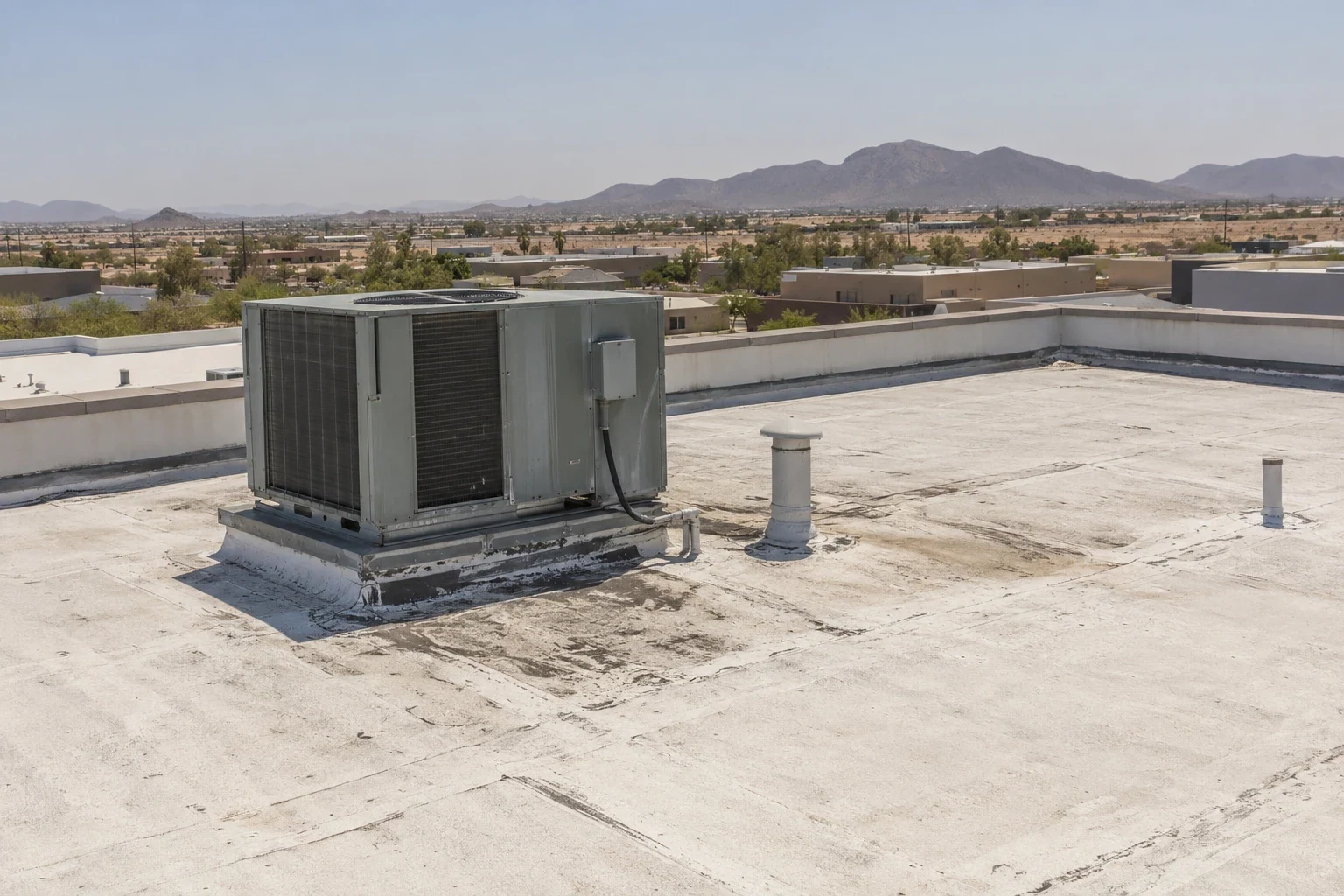
Plan big-box retail roof inspections, repairs, and replacement around long roof zones, customer access, receiving schedules, drainage, and equipment work.
A broad retail roof can hide a small failure inside a much larger field. When a leak appears above sales floor, stockroom, receiving, or a service area, identify the room and roof zone first. Trace the path through seams, curbs, drains, wall transitions, and prior patches before choosing a repair. The scope should identify what has been observed, what cannot be confirmed without testing, and how customer and receiving operations will be protected while work is open. A large footprint changes access and phasing, but it does not tell you whether the roof needs a patch or replacement.
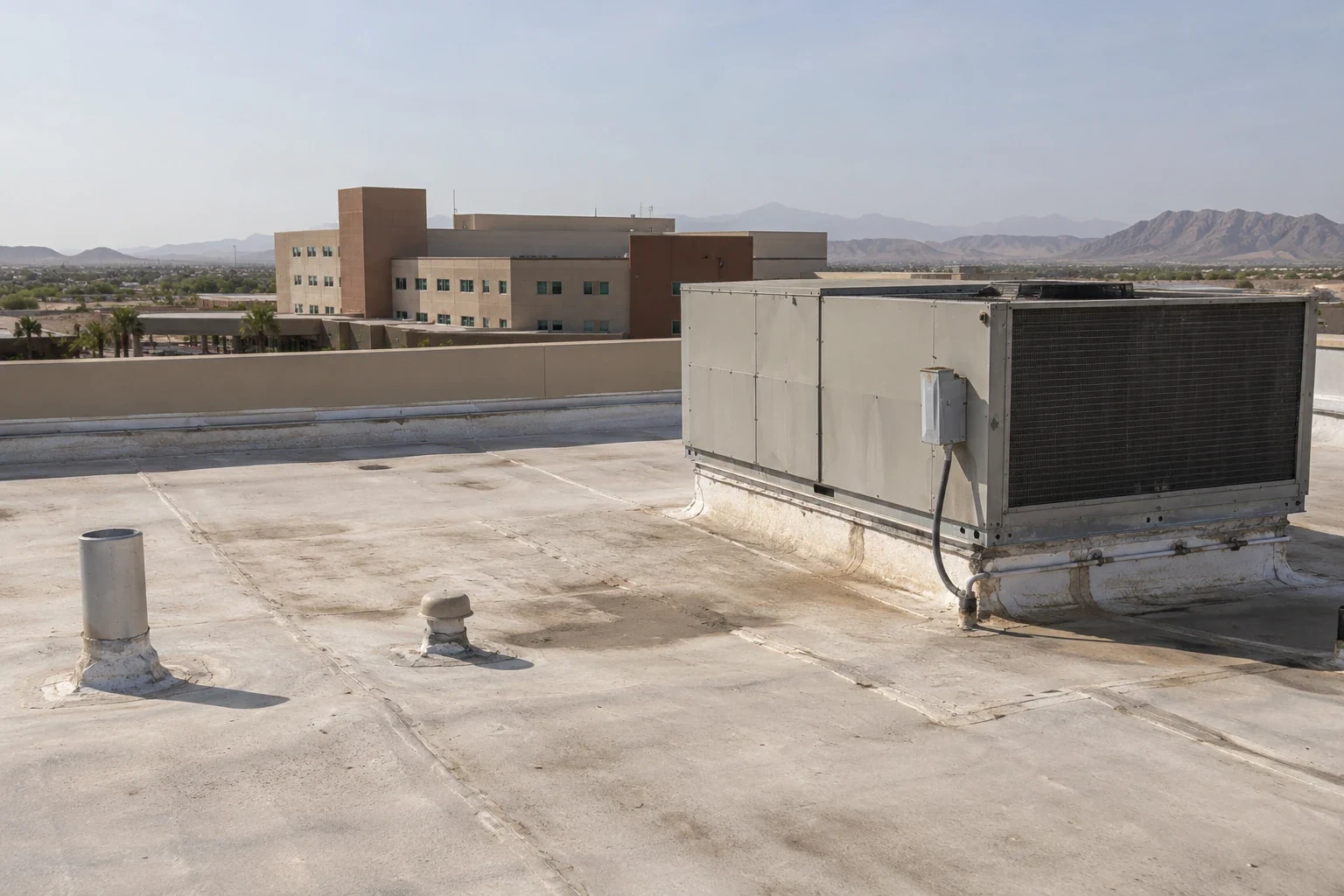
Divide a large roof into inspectable work zones
Start with the roof plan and mark equipment, drains, expansion joints, roof-to-wall conditions, and known leak reports. Break the field into zones that the facilities team can identify again, then record the condition of each seam, penetration, edge, and repaired area. Long drainage paths deserve attention: debris, blocked outlets, and low points can change how water reaches a drain, while a visible pond does not prove a membrane leak. Photograph each finding in context and close enough to show the detail.
Before mobilization, confirm roof-access controls, ladder or hatch authorization, lift and staging limits, and any customer-facing route affected by deliveries. Establish the receiving schedule, check-in contact, and end-of-shift inspection. The commercial roof inspection record can connect observations to the plan. For a related but different footprint, compare warehouse roof-zone planning without assuming the loading-side conditions are the same.
Commercial Roofing Questions
Does a large retail roof need a full replacement when one area leaks?
No. First locate the entry path and define the affected roof zone. A verified local failure with serviceable surrounding material may support a repair. Repeated leaks or broader assembly concerns can justify testing or a larger review, but the findings and repair history should establish that decision.
How should rooftop equipment changes be documented?
Record the unit or curb affected, work date, trade, access route, temporary protection, and final flashing or membrane check. Compare the changed detail with roof plans when available. If the assembly is concealed or the opening was not inspected, mark that limit so later teams do not mistake an assumption for verification.
Can roof work happen during store hours?
It depends on the noise, delivery, lift, staging, public-access, and weather-protection plan. Some inspection work may fit normal hours with controlled roof access. Repairs that affect a customer route or require disruptive equipment may need a different window. Confirm approval and the stop-work contact before scheduling.
What roof findings should be prioritized after wind?
Document visible edge movement, displaced flashing, loose rooftop items, debris, open details, and any new interior report. Use safe ground observations unless trained staff are authorized to access the roof. A qualified inspection can determine whether a temporary protection step or permanent repair is appropriate.
What should a replacement proposal state for a big-box building?
It should identify roof zones, access and receiving limits, phasing, protection of occupied areas, disposal, daily closeout, and the assumed substrate condition. State testing needs and concealed-condition allowances separately. The proposal should make clear what area remains weather-tight after each phase and what approvals are needed for changes.
More Roofing Detail
COMMERCIAL ROOFING IN NORTH LAS VEGAS, NEVADA
Check equipment curbs and roof penetrations
Retail equipment can change over time as refrigeration, exhaust, electrical, and rooftop mechanical units are replaced or relocated. Compare current curbs and penetrations with available plans and work records. Look for disturbed flashing, abandoned supports, unsealed fasteners, and membrane stress where equipment service crews cross the field. The inspection should distinguish a visible detail issue from a concealed condition. If a curb cannot be accessed safely or the membrane is covered, identify that limit rather than claiming it is sound.
Big-box property teams may have several trades requesting roof access in the same week. Keep a record of each opening, temporary protection, responsible trade, and closeout check. Where the roof includes documented metal areas, a metal roof retrofit review can frame substrate and attachment questions. If wind has moved edge metal or exposed a detail, wind damage roof repair begins with documenting the affected boundary and protecting it against the next weather window.
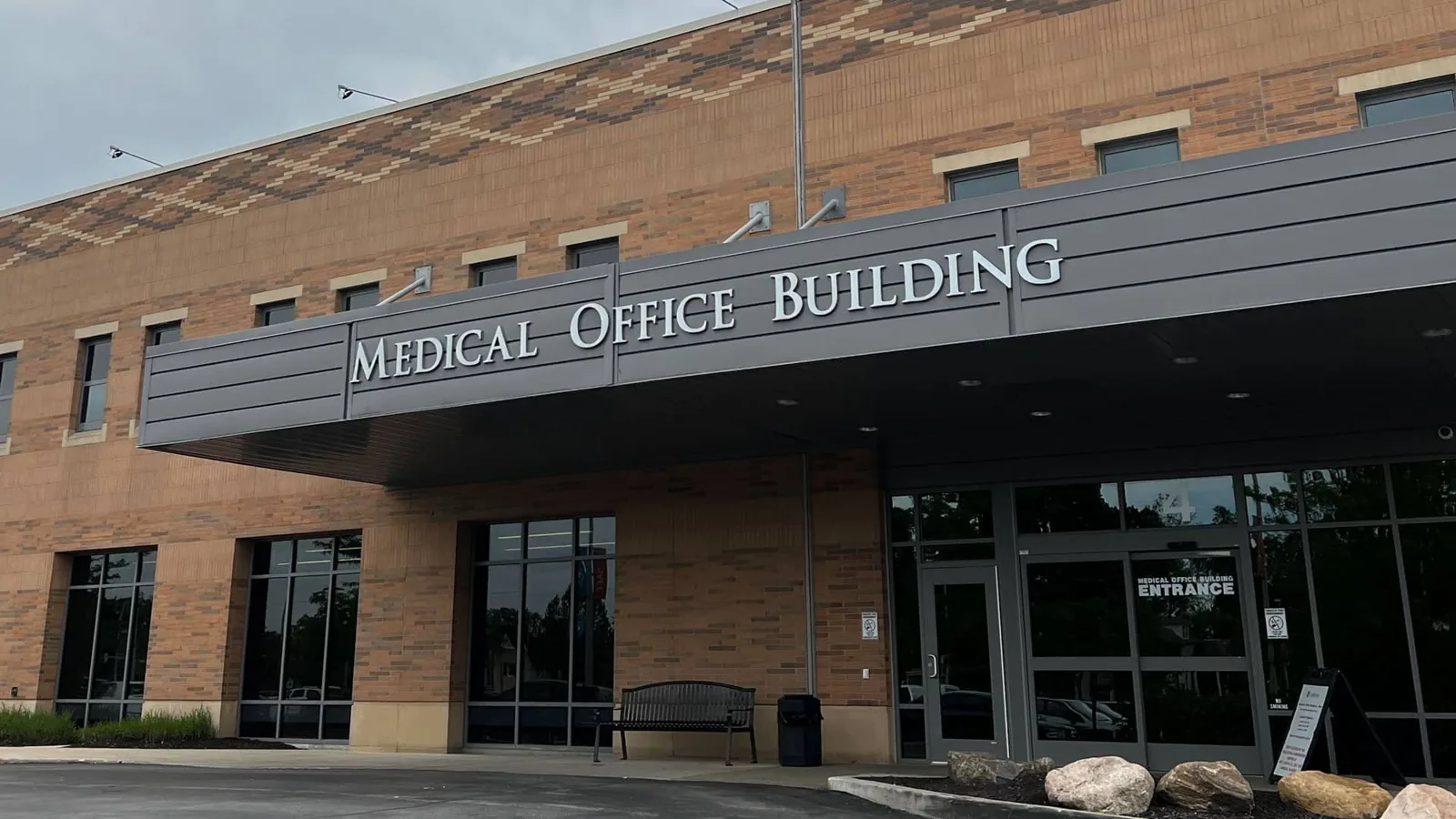
Protect the customer path and the receiving plan
Set work hours around store operations, deliveries, fire lanes, parking, and lift placement. Identify where a crew can stage materials without blocking a dock or customer entrance. A project involving odor, noise, hot work, or a crane may need advance approval and a defined exclusion area. Assign a site contact who can coordinate a changed delivery slot or pause work if a public route becomes unsafe. The daily plan should state how debris is contained, how rooftop items are secured, and who verifies the roof is closed before the crew leaves.
Heat and monsoon showers are part of the valley's regional weather context, not a forecast for a specific shift. Check current conditions and set a dry-in method for any opened zone. The crew needs a clear threshold for stopping work and a material-protection plan that accounts for exposed insulation and drainage. When the system and timing support it, commercial replacement phasing can reduce the area under construction at once, but each stage must have a verifiable weather-tight closeout.
Read the local context at city scale
North Las Vegas planning material labels the Apex Industrial Area as a broad planning area on a framework map dated 2006. It is not a current zoning map or a record of a retail parcel. Census QuickFacts also reports $704.951 million in transportation and warehousing receipts for the city in 2022, an economic statistic that does not establish the count or condition of retail roofs. These details can help a portfolio manager understand the wider market setting, but they do not replace site plans, roof records, or a field inspection.
Whether a large-format store sits near the Apex Industrial Area or elsewhere, the roof walk, drainage check and access plan are written for that building. Keep scope language tied to the actual roof and the owner’s records. A shopping-center roofing review covers tenant coordination on a different property configuration; the same access controls may apply, while roof geometry and equipment remain building-specific.
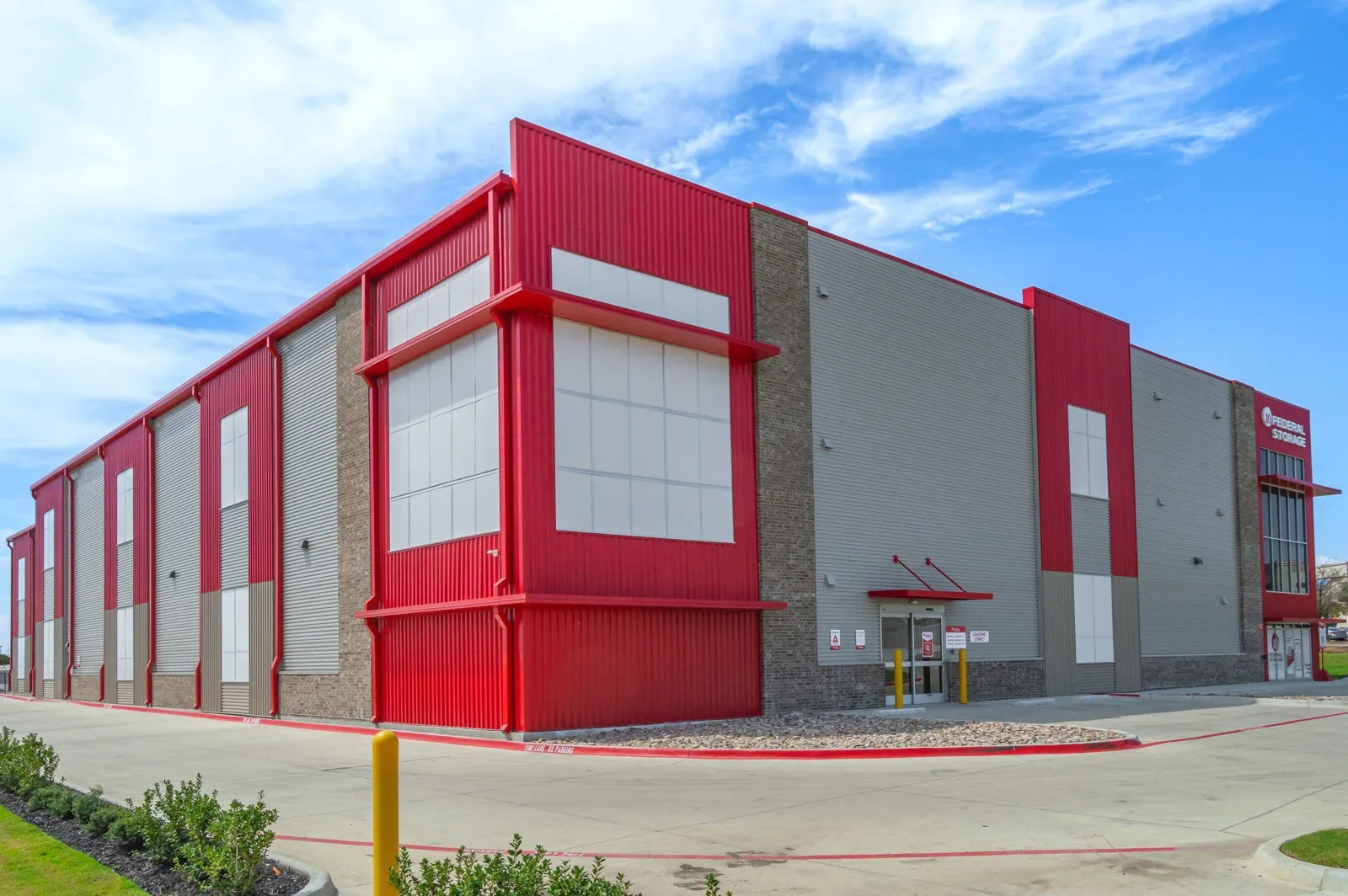
Compare repair, restoration, and replacement evidence
Use the inspection record to define a repair boundary. A local repair can be suitable when the failure point is verified, surrounding material is serviceable, and the detail can be restored without creating a new transition problem. Repeated leaks, broad seam deterioration, widespread moisture indications, substrate concerns, or an expanding patch history may support a larger evaluation. None proves replacement by itself. State what additional testing would change the recommendation and which roof zones remain outside the current scope.
For budgeting, separate a short-term leak response from a longer-term roof decision. Record access hours, tenant or customer protection, disposal, temporary dry-in, equipment coordination, and concealed-condition assumptions. A roof condition report can organize findings by zone for review. A preventive maintenance inspection can schedule the next review around documented repairs rather than repeating a generic walkthrough.
Make the closeout traceable
Closeout should show the exact zone and transition repaired, products used, photographs, and any condition discovered after removal. Record the date, weather protection, limits on access, and the name of the site representative who accepted the work. List open items with an owner and follow-up date. If a leak did not reproduce during the visit, say what was inspected and what evidence is still needed; do not treat a dry interior as proof that the assembly is dry.
After a wind or rain event, staff can note new interior symptoms and visible changes from safe locations. Roof access remains limited to trained, authorized personnel. A good record lets the next inspection compare the same roof zone and repair boundary, which is more useful than a general note that the roof was checked.
Set the roof-zone and operations record
Share roof plans, leak dates, equipment changes, receiving windows, access rules, and prior repairs so the inspection can define a workable scope.