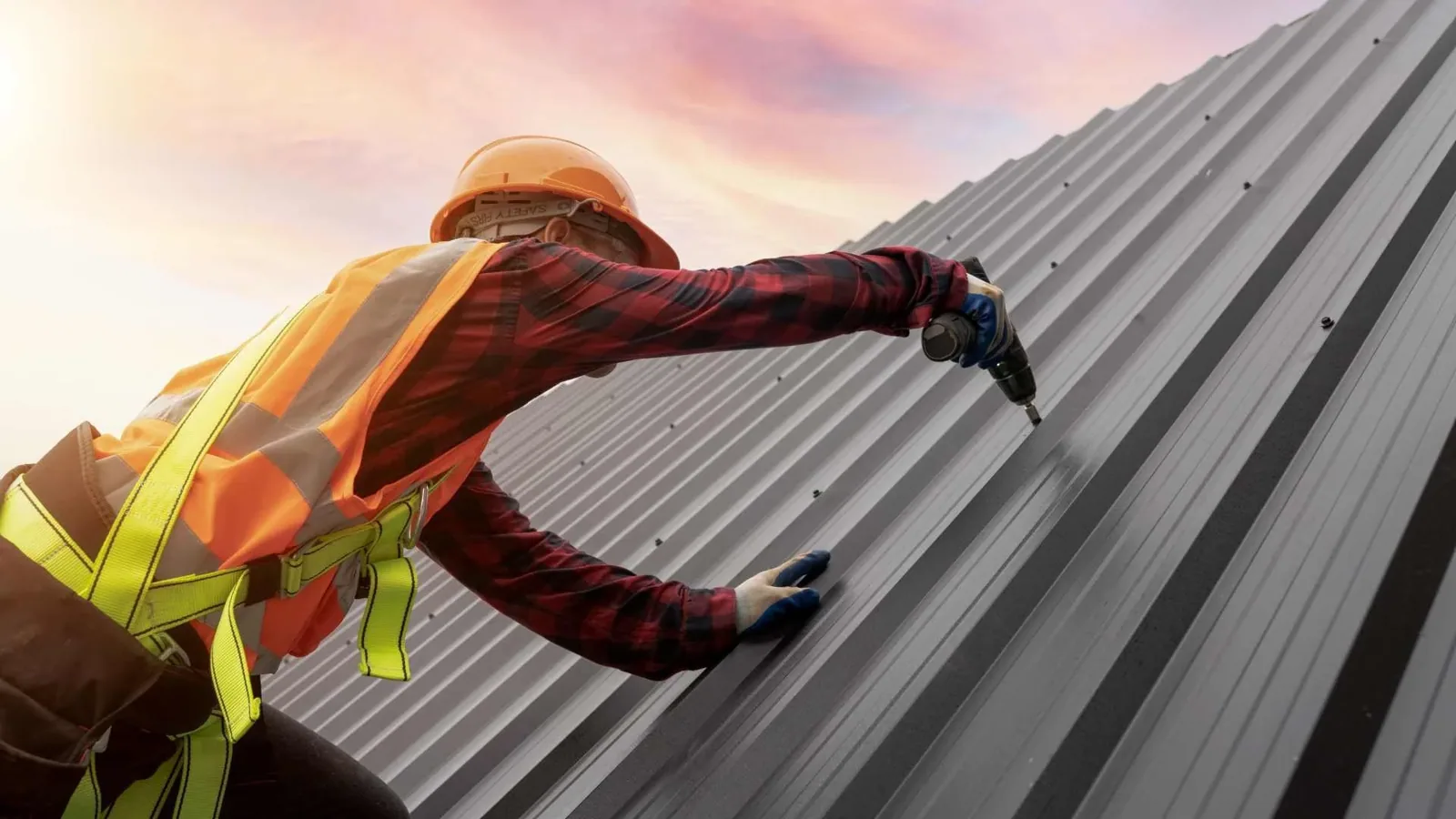
Metal roof retrofit in North Las Vegas, NV: exposed-fastener panel inspection, fastener and lap repair, coating, and framing or recover options.
Rust streaks running down from fastener heads on an exposed-fastener metal roof point to the exact cause of many leaks, and a manager can find them from the ground with binoculars. Each fastener passes through the panel with a rubber washer under its head, and when the washer cracks or the screw backs out, water gets a path into the lap and the deck. A roof with a few such fasteners is a maintenance item. A roof with them everywhere is telling the owner that the fastener system has reached the end of its service.
An exposed-fastener metal roof, common on older commercial and industrial buildings, uses corrugated or ribbed panels screwed through the face. The inspection on a North Las Vegas building establishes panel and fastener condition, the lap sealant, the substrate and framing, and the corrosion state before choosing fastener replacement, coating, a new roof over the old, or full replacement.
Fastener Failure: Washers, Backout, and Stripped Holes
The first walk counts and photographs failed fasteners by roof zone. Typical findings are cracked or missing washers, screws that have backed out of the purlin, and enlarged holes where thermal movement has worked the screw loose. A backed-out screw can often be replaced with a larger one or moved to a new hole beside it. Where holes are stripped, the repair needs a sealant and a different fastener size.
We also check panel laps, where sealant tape or mastic joins one panel to the next. Dried or displaced lap sealant is a common leak path, especially at the low end of a slope. Repairs are recorded by location, so the next visit can show whether new fasteners are holding and whether a pattern of failure is spreading across the roof.
Penetrations get their own count. Vent pipes, curbs, and skylights through a ribbed panel use boots or formed flashings that cure and crack, and a cracked boot is a faster leak than a loose screw. The scope lists each penetration separately from the field fasteners so the cost of each repair is visible.
Commercial Roofing Questions
Can failed fasteners be replaced without replacing the roof?
Often, yes. If the panels are sound, replacement fasteners with fresh washers or moved screw locations restore the seal. Stripped holes may need larger fasteners and sealant. The repair works only if the panel metal and the purlin are in good condition, so we check them first. A roof with widespread corrosion needs more than new screws, and re-fastening would cover the problem.
Is coating a rusting metal roof a lasting fix?
It can be, when rust is removed or treated, laps are sealed, and the coating is compatible with the existing finish. Coating over loose rust or failed laps fails early. We clean, prepare, prime, and test adhesion before applying. Coating buys time on a roof with sound panels, while perforated panels must be replaced or covered, since coating does not bridge holes.
What is the benefit of a new metal roof over the old one?
It avoids tear-off, keeps the building in use, and adds a new watertight layer on top of the old panels. It also lets insulation be added. The tradeoffs are added weight, the need for sub-framing, and reworked flashings and curbs. We review the framing and loads first and compare it with a coating or replacement on the same evidence.
Why does a metal roof leak after fasteners have just been replaced?
The cause may be elsewhere: laps, penetrations, or condensation. A metal building can drip when warm interior air meets cold panels, and the drip looks like a leak. We check the weather at the time, the location of the drip, and the laps near it, and use a water test where possible to separate roof leaks from condensation.
More Roofing Detail
COMMERCIAL ROOFING IN NORTH LAS VEGAS, NEVADA
Corrosion and Panel Condition
Surface rust on a painted panel is a finish problem. Perforation, where the metal has rusted through, is a panel failure. We check low points, laps, and areas around penetrations where water collects, and we tap suspect spots to hear whether the metal is thin. Scratches, cut edges, and dissimilar-metal contact points are the usual starting places.
The condition of the substrate matters as well. A leak that has run into insulation or a deck can cause rot and corrosion in framing that is invisible from above. Where interior stains or sagging ceilings suggest hidden damage, a moisture survey or a look from below can show how far it spread. The scope separates panel repair from framing repair so the cost of each is clear.
Access matters too. Corroded panels can be unsafe to walk, so we plan routes along purlin lines, use planks where needed, and sometimes inspect from a lift or by drone instead. A crew member who falls through a panel is a far larger cost than any retrofit.
Retrofit Options: Fasten, Coat, Cover, or Replace
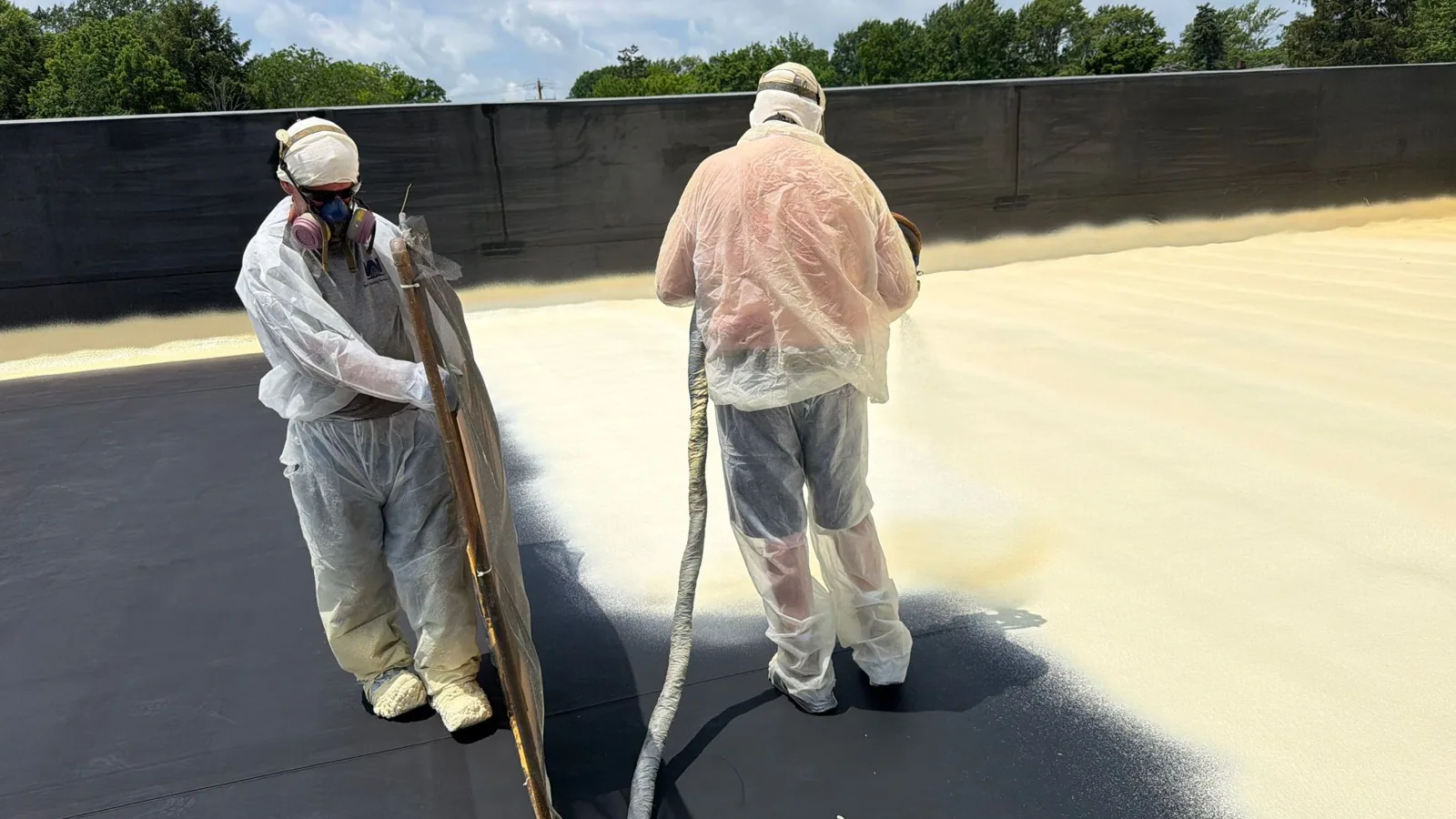
Four routes cover most retrofit decisions. Re-fastening and resealing restores a roof with sound panels and failed washers. Cleaning, priming, and coating with a compatible system, such as silicone or acrylic, seals laps and seams and adds a protective skin to panels that are still sound. A new metal roof over the old, often a standing seam system on sub-framing, adds a watertight layer without a tear-off. Replacement removes the old panels and rebuilds.
The choice depends on corrosion, framing condition, building use, and budget. A coating restoration works only if panels are sound enough to hold the coating, with rust treated and laps sealed. A cover system adds weight and changes edge and penetration details, which means flashings and trim must be reworked. We state each option's limits so the owner can compare them on equal terms.
Insulation and condensation are part of the retrofit conversation. A new cover system or a spray-applied layer can change how a metal building handles interior moisture, and the choice should be reviewed with the interior use in mind, whether dry storage, a heated shop, or an occupied office. Emergency tarping and temporary sealing are available at any hour when a failed panel or storm opens the roof before the retrofit begins.
Heat, Wind, and Movement on Exposed Fasteners
Hot, sunny desert conditions apply, and wind events come more often in spring and fall. Daily temperature swings make long panels expand and contract against their fasteners, which wears holes, and wind lifts panel edges and works fasteners loose. Both are regional exposures that explain a pattern of wear and do not diagnose any single roof.
After a wind event, we walk the ridge, eaves, and rakes for lifted panels, bent trim, and missing fasteners, and we document the damage for the file. A wind damage repair that stops at the visible tear misses the fasteners that were loosened nearby, so the scope checks the surrounding field as well.
Setting: Industrial Lands and Unincorporated Towns
The city's planning map marks Industrial Lands as an employment district; a metal roof on any building there is judged by its own condition. Clark County describes Sunrise Manor as an unincorporated town in the northeast Las Vegas Valley with a planning area of about 46 square miles. Jurisdiction differs between the city and the county, so permit and code requirements need confirming for each address before a retrofit is designed.
That confirmation includes the number of roof layers allowed, the wind and fire provisions for the cover, and any energy requirements for added insulation. We put the answer in the scope, along with the access, staging, and operating-hour constraints for the building, so the retrofit does not stall at the permit counter.
Send the Panel Photos and Leak Dates
Share roof plans, access rules, leak dates, repair history, equipment changes, and operating-hour constraints. We will inspect the metal roof and return a defined scope for fastener repair, coating, cover, or replacement.