
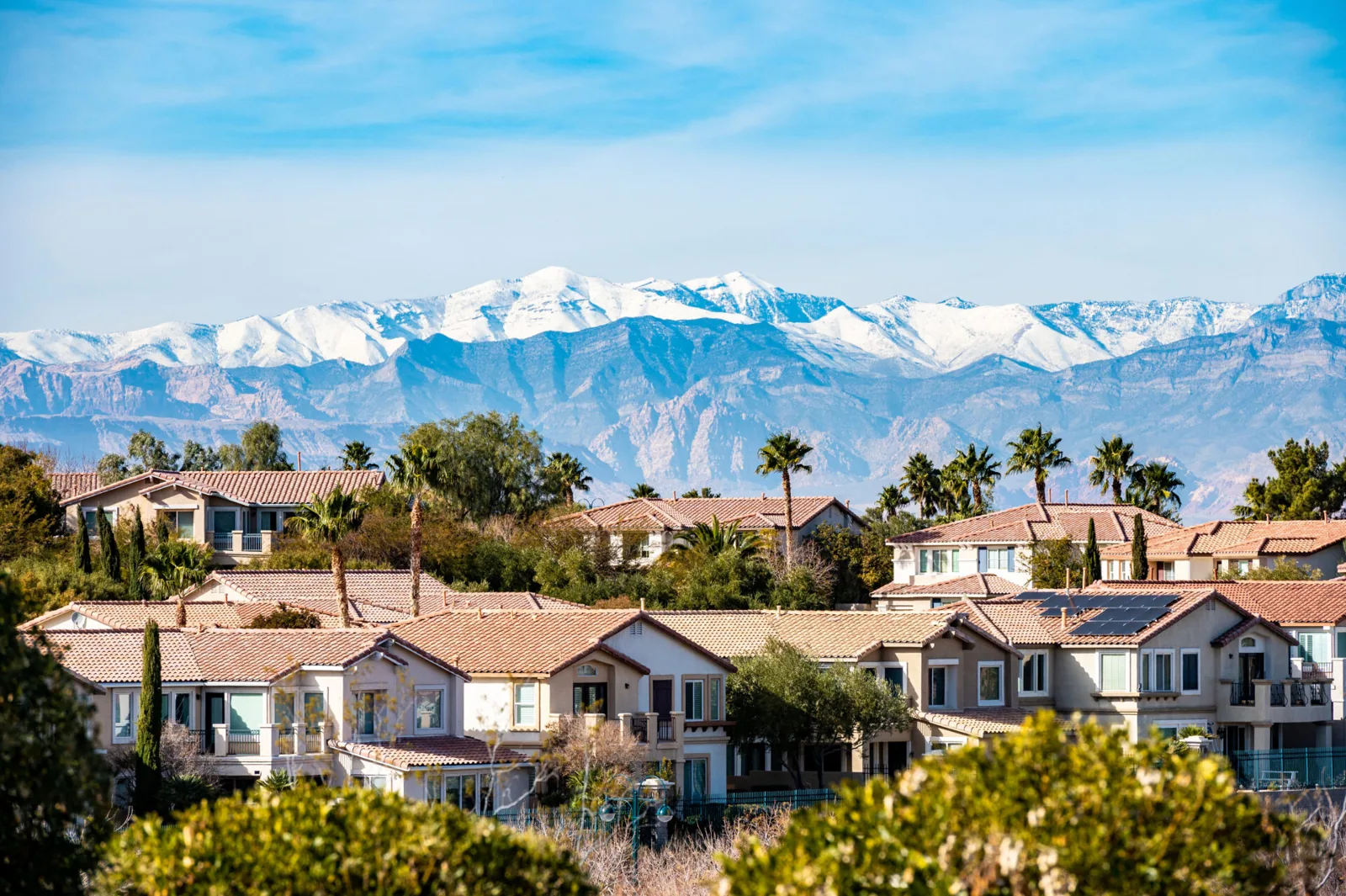
Commercial roof maintenance, repair and replacement in Sunrise Manor, NV, with county permit checks, scheduled inspections and written roof records by zone.
Sunrise Manor covers about 46 square miles of the northeast Las Vegas Valley, and Clark County administers it as an unincorporated town. For a property owner, that size matters in two ways. A portfolio can be spread across a wide area, so inspection routes and emergency response need planning. And permit questions go to the county, not a city, so the project record has to name the right jurisdiction from the start. We handle commercial roofs in Sunrise Manor, NV the same way on every building: identify the assembly, map the roof zones, trace the water path and write the repair boundary against fixed features. A preventive roof maintenance schedule keeps small failures from becoming leaks across several sites at once.

Jurisdiction: confirm the county map before design
The county publishes land-use maps for Sunrise Manor and its neighbors, and an address-level check against the current map settles which agency has jurisdiction. We ask owners to run that check. Before a replacement or recover is designed, the owner or design professional should confirm which agency reviews the work, which building and energy codes apply and whether a permit is needed for the scope.
Nevada has adopted the 2024 International Energy Conservation Code at the state level, and the state Public Works Division lists the 2024 IBC and IEBC for projects under its authority. Those lists do not decide what a county reviewer will require on a particular roof. We include our assumptions about insulation thickness, fastening and edge details in the proposal, so the reviewer can check them and any change is priced as a defined item.
Repairs usually move faster than replacements, but the same rule applies: ask before the crew mobilizes whether the scope needs approval.
Commercial Roofing Questions
Which agency reviews roof permits in Sunrise Manor?
Clark County administers Sunrise Manor as an unincorporated town, so owners should confirm the reviewing agency and the current map for the specific project address before design. We list our code assumptions in the proposal for that check.
How should an owner with several properties order roof spending?
By condition. Active leaks and wet insulation come first, then open flashings and edges, then surface wear. A common scoring format across buildings makes the order easy to defend.
Does a large planning area slow emergency response?
Access notes on file shorten the time at the building, and a documented plan shortens the repair. Travel across a wide area is part of scheduling, and we confirm arrival windows when the call comes.
What does a preventive visit actually include?
Drain and scupper clearing, a walk of seams and flashings, edge metal and curb checks, photographs by zone and a comparison with the last report. Findings are sorted by urgency.
Can repairs wait until after the summer storm season?
Active leaks should not wait. Small defects can sometimes be scheduled, but a split or open flashing is easiest to fix before heavy rain arrives. We rank items so the owner can decide what must go first.
More Roofing Detail
COMMERCIAL ROOFING IN NORTH LAS VEGAS, NEVADA
Portfolio route: inspecting several roofs in one sweep
An owner with a handful of properties in a large planning area gains the most from a route-based program. We group buildings into inspection runs, walk each roof with the same checklist and produce one report format across all of them. The reports rank roofs by condition so the budget follows risk and not the calendar.
The checklist covers drains and scuppers, seams and laps, edge metal, penetrations, equipment curbs, ponding marks, patches and the surface itself. Each item gets a photograph and a roof-plan reference. Because every building is scored the same way, a manager can see at a glance which roof needs money this year and which can wait.
For owners who want to stage spending across years, a multi-site roof program converts those scores into a rolling schedule. Emergency items come first, planned repairs follow and capital replacement is placed by remaining service life.
Heat and monsoon: two stresses, one maintenance calendar
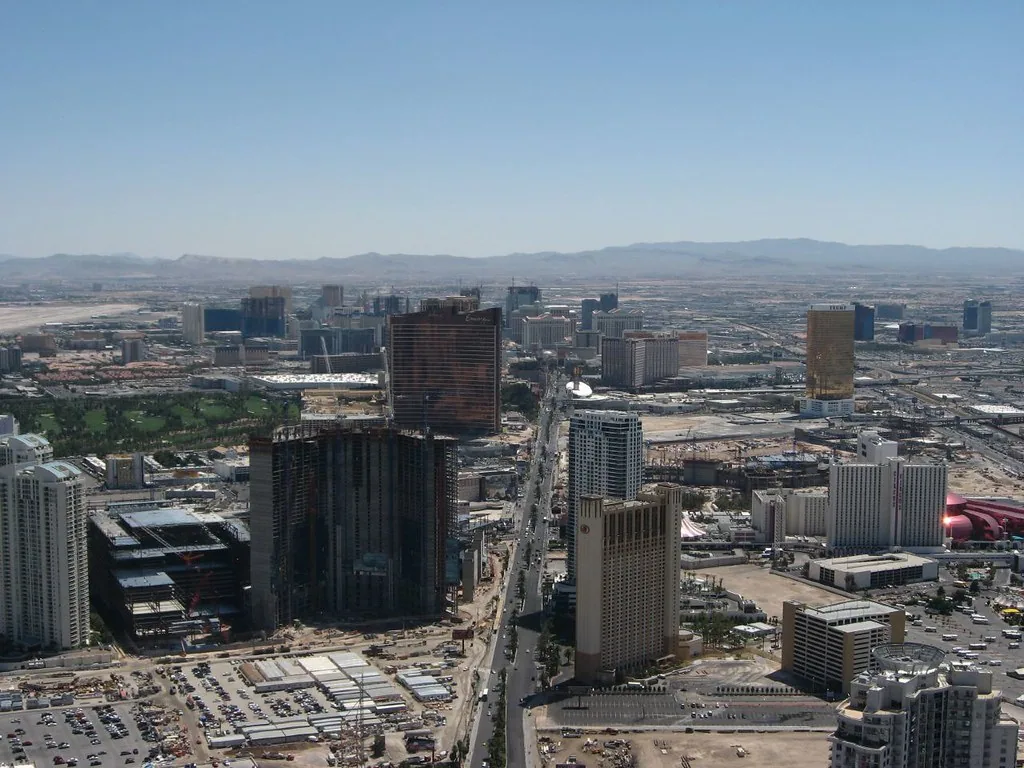
Regional weather is hot desert with monsoon storms in summer, and those storms deliver gusts and quick downpours. That frames the calendar for Sunrise Manor but says nothing about any one property's roof. It does suggest a calendar. Before the monsoon months, drains, scuppers and edge metal get cleared and checked. After the season, a walk looks for storm marks, shifted material and new ponding. Through the hottest months, sealants, coatings and seams get a surface check for cracking and chalking.
Each visit compares the roof with the last report. A hairline split at a seam in one visit can be sealed at the next for a small cost, whereas the same split after a hard rain can wet the insulation across a larger zone.
Where a roof has already lost its protective surface, a coating restoration may extend service, provided the insulation below is dry. We confirm moisture before pricing the coating.
Response: how the work window gets set
On a wide planning area, response time comes from preparation. For each building we keep access notes: roof hatch or ladder rules, keys, escort needs, alarm codes held by the manager, and the hours that cannot be disturbed. With those on file, an emergency roof repair visit starts with the leak and not with a search for the roof door.
Temporary measures follow a rule: document before and after. A tarp, patch or drain clearing is recorded with its location and material and given a next inspection date. Temporary work that is not tracked tends to become permanent by neglect.
For planned work, the work window is set with the property manager. Roof zones are opened one at a time, dried in by evening and photographed at each tie-in. Interior protection, noise limits and rooftop equipment shutdowns are agreed before the schedule is final.
Scope: what drives cost and timing
Cost on a commercial roof follows a handful of drivers. The first is moisture: how much insulation is wet and has to be removed. The second is access: how materials reach the deck, whether a lift or crane is needed and how many days equipment sits on site. The third is detail count: the number of curbs, penetrations, drains and edge lengths to rebuild. The fourth is the existing assembly, since tear-off depth and the number of layers change labor and disposal.
Timing follows the same list plus the weather window. Coatings and adhesives need temperature and dry surface conditions, and the crew sequences around them. We give owners repair, recover and replacement options on one documented scope, so the comparison is on condition and not on whichever bid arrived first.
Owners with roofs in Whitney or in Winchester and Paradise receive the same scope format, and each property still gets its own inspection and plan.
Records: leave a file the next manager can use
The record at closeout lists the roof zones addressed, materials used, photographs of each finished tie-in and any condition worth watching. It names what was repaired and what was deferred. A manager who inherits the building can see the history in one place and can schedule the next visit against it.
Photographs are tied to roof-plan references such as a seam intersection, a drain or a curb corner, so any reviewer can find the same spot on the roof. Measurements, material identifiers and weather during the work go into the file too, along with any area that could not be reached and why.
To start, share the roof plan if one exists, a property list, leak dates, prior repair invoices and access rules. We will schedule the first inspection runs and build the baseline report.
Plan a Sunrise Manor Inspection Route
Send the property list, roof plans, access rules and any leak history. We will schedule inspection runs, rank each roof by condition and give you a repair sequence.