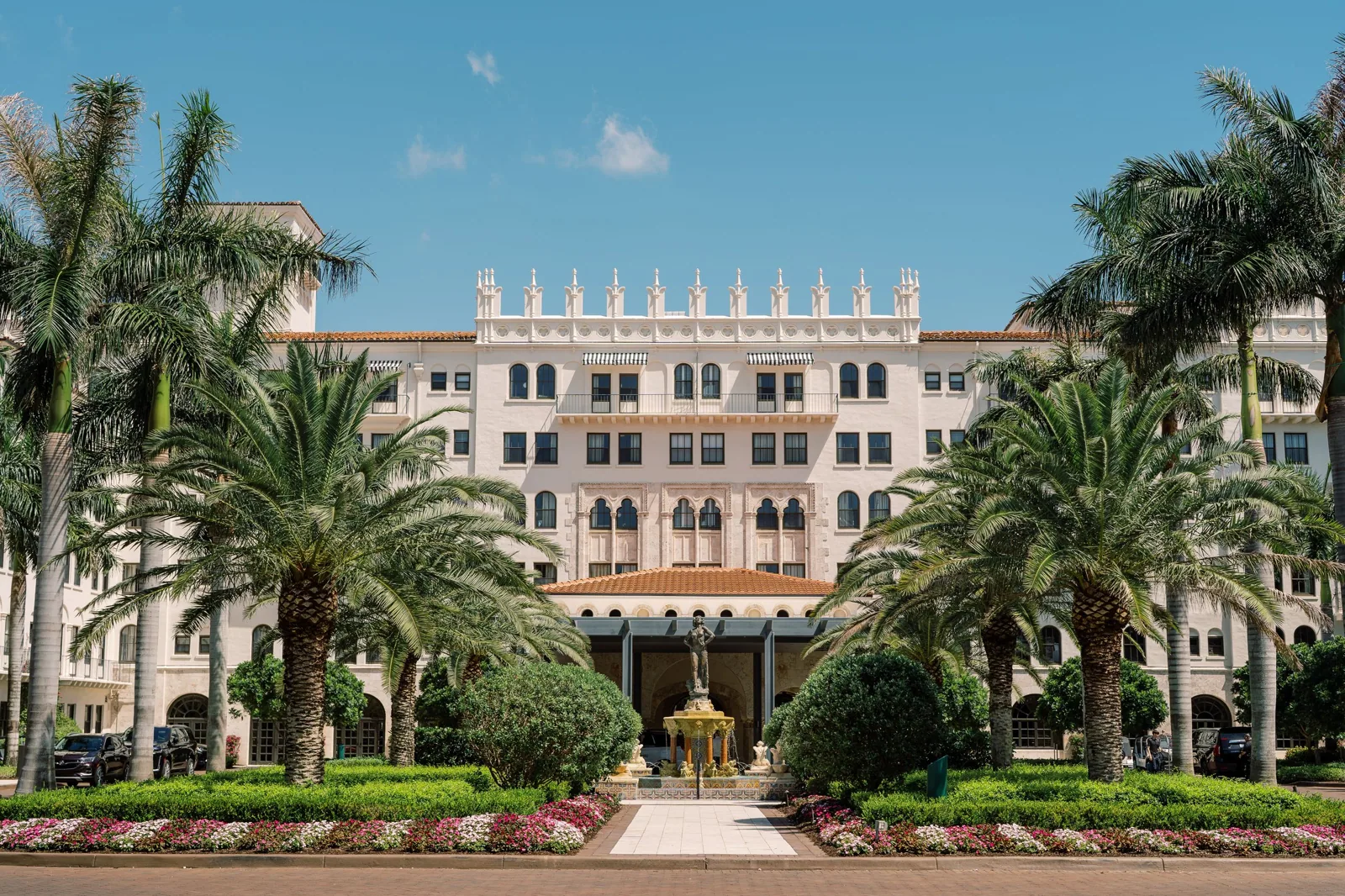
Roof inspection, leak repair and replacement planning for hotel owners and hospitality groups in North Las Vegas, NV, protecting guest rooms and revenue.
One guest room taken out of service for a ceiling leak costs a night's revenue, and a roof that leaks over several rooms can cost a floor. For hotel owners and hospitality groups in North Las Vegas, NV, the roof is tied directly to occupancy, so the inspection starts from the room list: which rooms have reported water, when, what the weather was and what sits above them on the roof. Then we decide what the walk must prove before a repair or replacement is scheduled.
In 2022, North Las Vegas accommodation and food-services sales reached $794.934 million in Census QuickFacts. That is a citywide indicator and not a count of hotels or roofs, so we assume nothing about a property from it. A hotel's roof is read from the roof: the membrane, the mechanical penthouse, the kitchen exhaust, the pool equipment and the drainage layout. We record each property on one format so a group can compare its assets.
Rooms: tie each leak to the roof above it
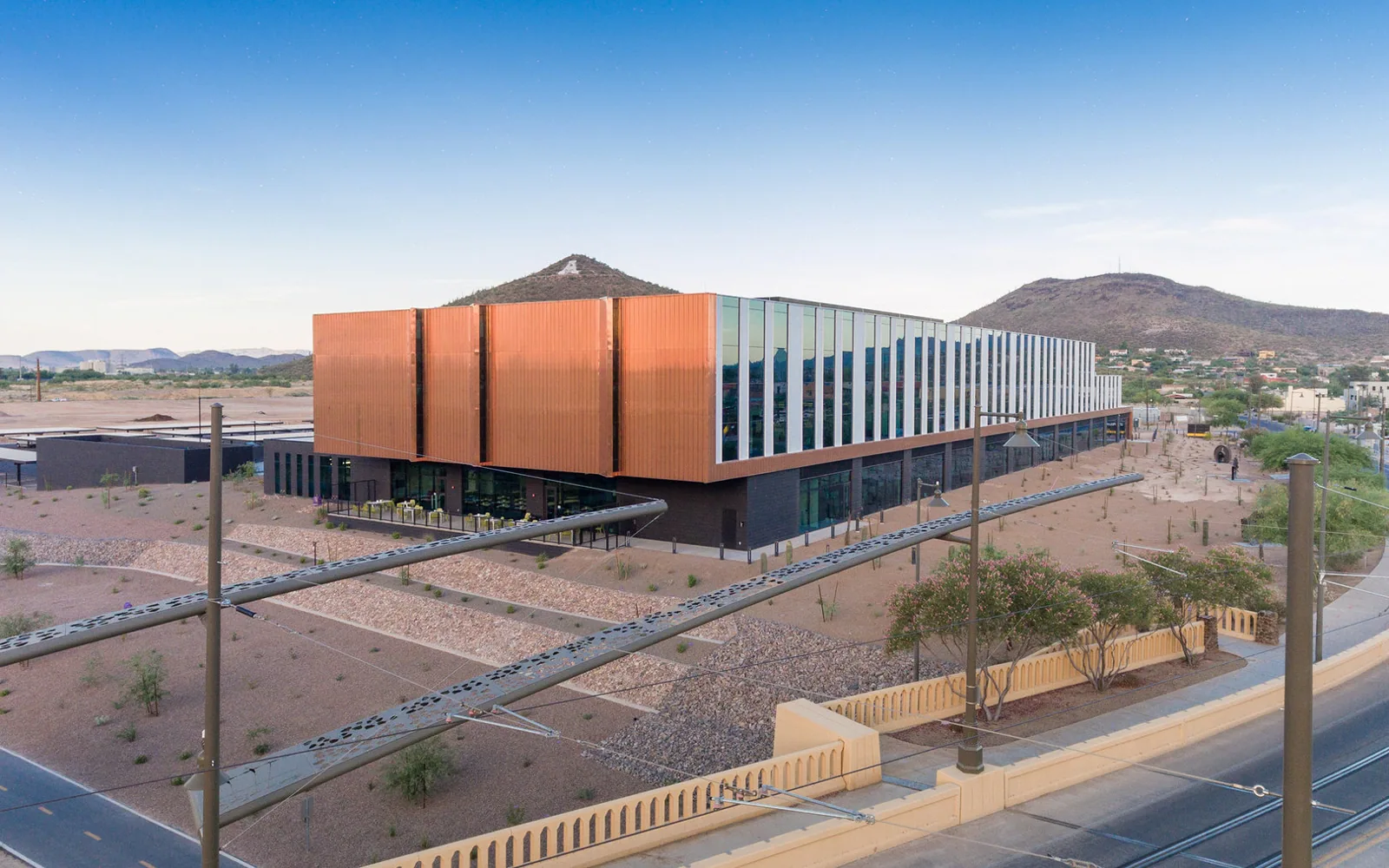
Guest-room leaks have several possible sources. Bathroom exhaust ducts, plumbing risers and PTAC condensate can all stain a ceiling, so we confirm the roof is the source before we price roof work. We trace each reported room upslope on the roof plan, check penetrations, vent stacks, parapet flashings and drains in the likely path and test with water where the roof allows.
When the roof is the cause, the entry is often a detail: an exhaust vent flashing, a parapet-to-wall termination or a seam near a roof drain. A hotel roof repair targets that detail, protects the rooms below and records the repair in the property file. If the cause is mechanical, we say so and give engineering the finding, which keeps the roof budget focused on actual roof problems.
Commercial Roofing Questions
How do you confirm a room leak comes from the roof?
We trace the stain upslope, inspect penetrations, parapets and drains in the path and compare timing with rain. We also check plumbing, exhaust ducts and condensate lines before blaming the membrane. Water testing on the roof helps when conditions allow.
Can the roof be replaced while the hotel stays open?
Yes, in sections with sound control, protected entrances and a plan for each floor. Loud work is scheduled away from occupied rooms, and the front desk receives a daily update to answer guest questions.
What protects a membrane near kitchen and laundry exhaust?
Containment, regular cleaning and a membrane or protective pad that tolerates the exposure. We check discoloration, swelling and clogged drains downwind of each discharge, and repair damaged areas with compatible material.
When should a roof project sit relative to a renovation?
Before it, whenever the roof is near the end of its life. Replacing the roof first protects new finishes from leaks. We coordinate the roof schedule with the renovation calendar so the sequence is deliberate.
Do you respond to hotel roof leaks at night?
Round-the-clock emergency service includes holidays. A crew protects the opening, documents damage and reports to the manager so affected rooms can be assessed.
How are amenity-deck leaks different from ordinary roof leaks?
Finishes hide the waterproofing, so the entry point is harder to see and the repair boundary needs more testing. We map moisture, open small test areas with approval and repair the layer that failed. A full deck rebuild is recommended only when the evidence shows the whole assembly has failed.
More Roofing Detail
COMMERCIAL ROOFING IN NORTH LAS VEGAS, NEVADA
Operations: plan around guests, not around the schedule
A hotel never fully closes, so roof crews work above sleeping guests. Noise, odor, vibration and dust all matter. We ask the general manager which floors can be blocked off, what hours are quietest, where deliveries and valet traffic run and which public areas need protection. Cranes, hoists and staging go where they do not block porte-cochere or guest entrances.
Early starts are common in this climate because of heat, but early starts also wake guests. The plan balances both: loud tear-off is scheduled for late morning on the side of the building away from occupied rooms, and quieter detail work fills the early hours. An occupied building reroofing plan lists the sequence and a contact at the property, so the front desk can answer guest questions with facts. Guest entrances and kitchen exhaust paths are marked off the work route before the crew mobilizes, so the roof work never crosses a guest path.
Decks and amenities: protect what sits over occupied space
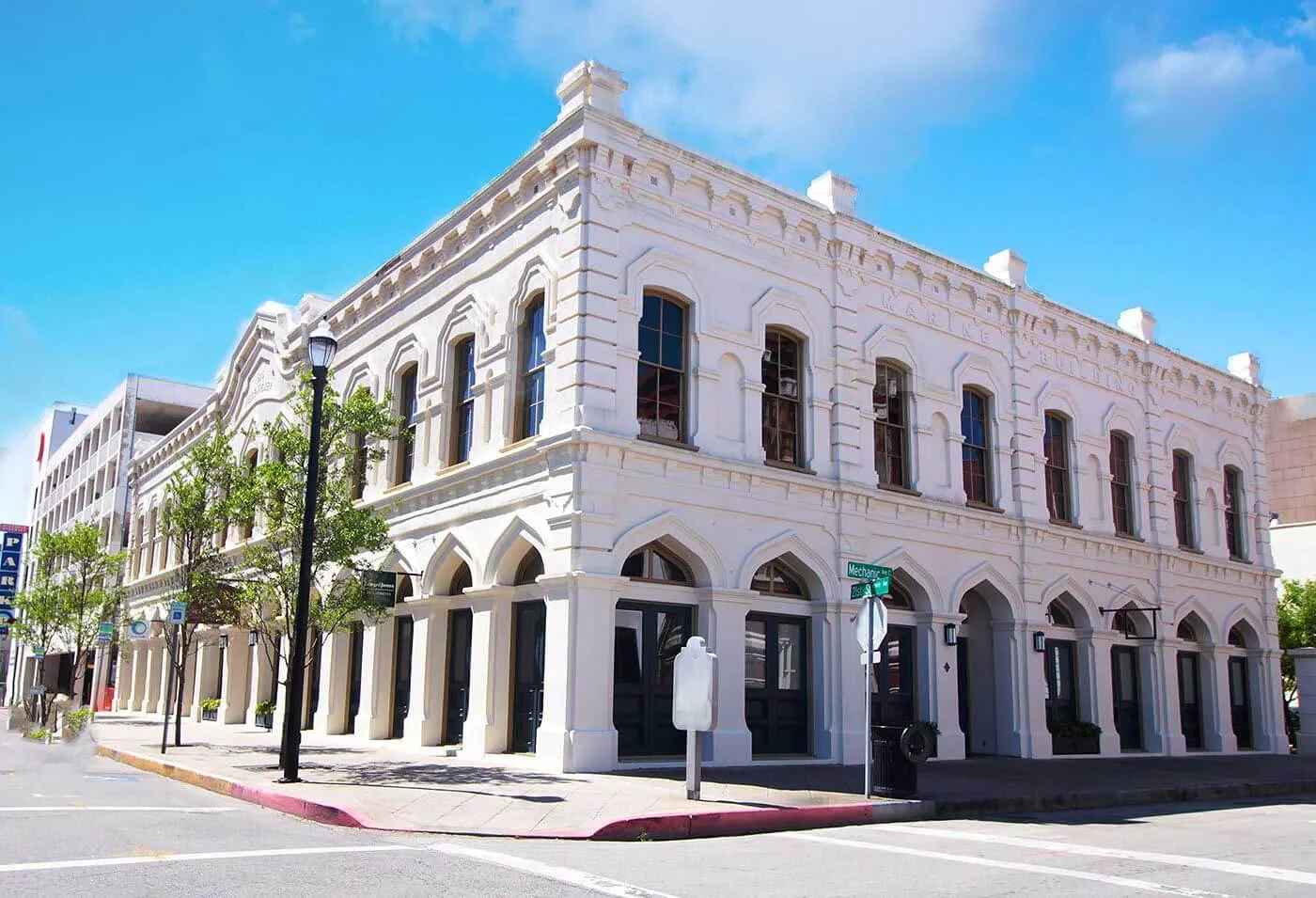
Some hotel roofs double as amenity space: terraces, pool decks, event lawns or equipment screens built over occupied floors. Those assemblies carry more layers, more drains and more waterproofing details than a plain roof, and a failure often shows up as a ceiling stain two floors down. When a property has such an area, we review the waterproofing and drainage as a separate roof zone, with its own plan, its own drains and its own inspection notes.
Expansion joints, planter edges, deck-to-wall transitions and drain bowls are the usual weak points, and because pavers and finishes hide the membrane, finding the entry takes patience. We use moisture mapping and, where the owner approves, small openings in the finish to confirm the source before cutting anything large. The repair boundary is drawn from that evidence. Where a deck is in constant use, we phase the work to keep part of it open and protect guests from open edges and loose material.
Pool and spa equipment areas deserve a separate walk, because wash water, chemical splash and constant foot traffic wear the surface faster than the open field.
Equipment: check kitchens, pools and plant on the roof
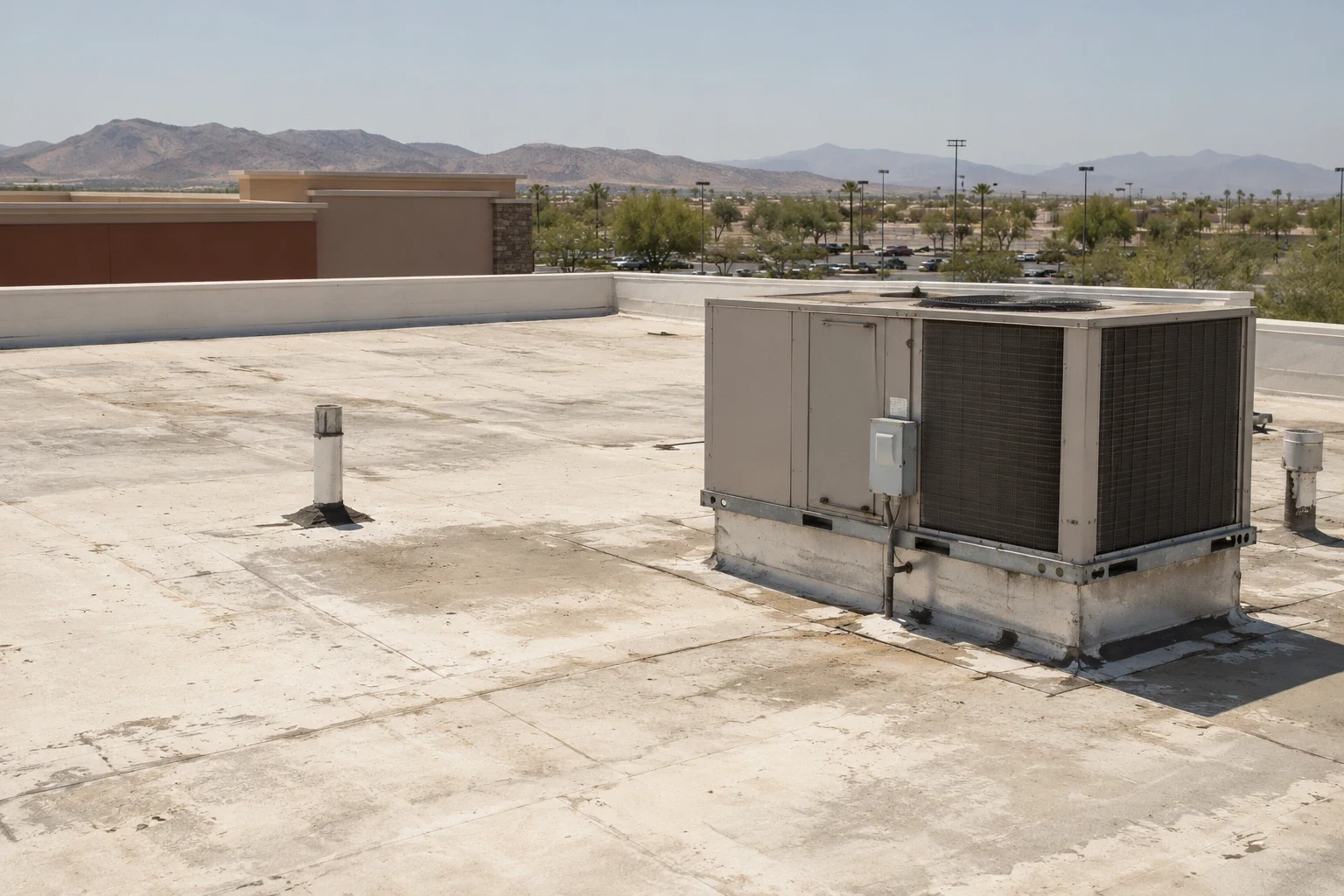
Hospitality properties carry a lot on the roof: kitchen exhaust, laundry vents, boilers, chillers, cooling towers and pool equipment, depending on the property. Each adds penetrations, heat, moisture or chemicals. We map equipment, check curb flashings and look for corrosion, staining and standing water around supports.
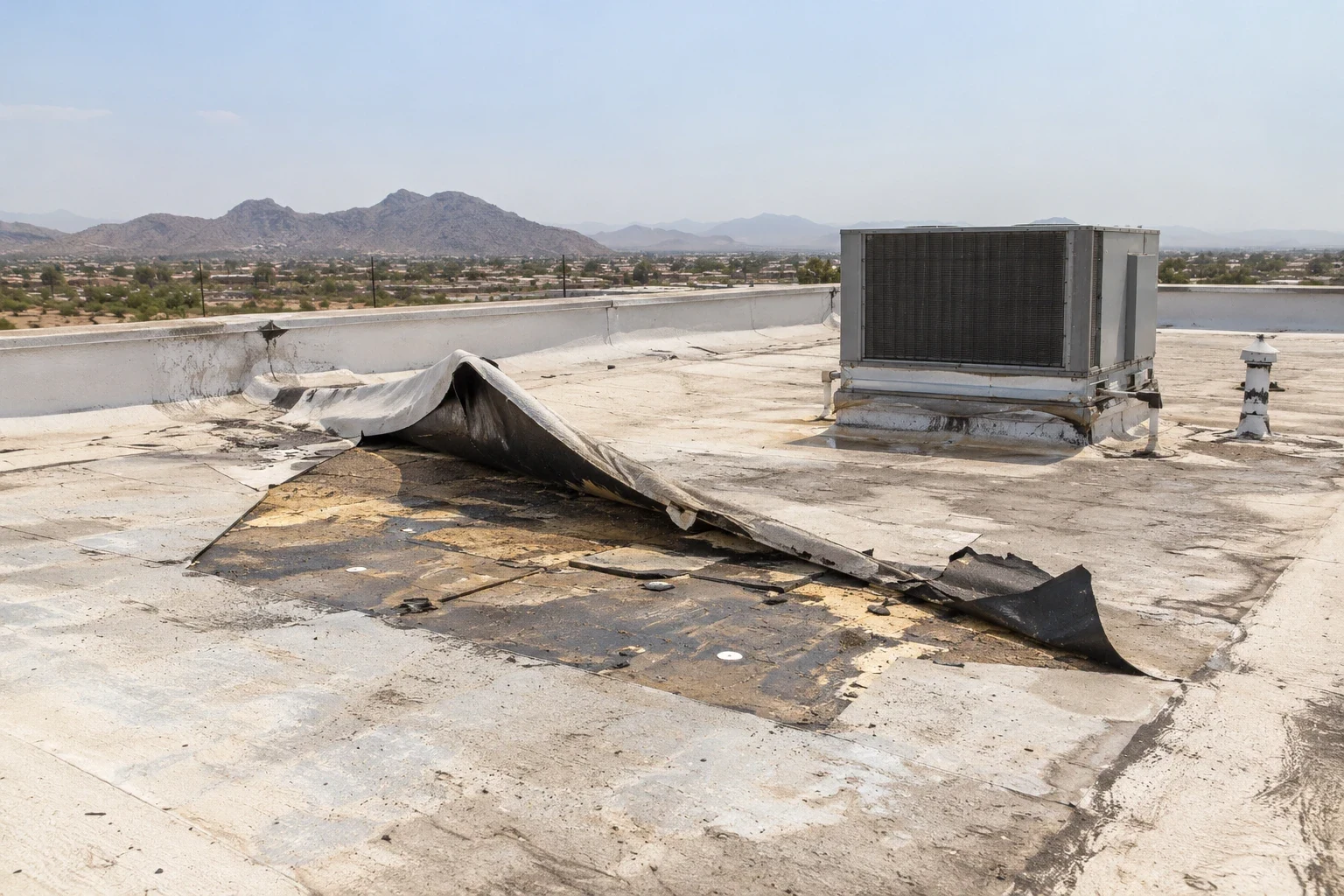
Kitchen and laundry exhaust can discharge grease or lint onto the membrane, and some water treatment chemicals can attack roofing materials. We identify the exposure and recommend a protective pad or compatible material where needed. A rooftop equipment curb and support scope can raise units above ponding and replace flashing that has failed. We keep a log of every added or relocated unit, since new penetrations are a frequent source of later leaks.
Weather: prepare for monsoon and wind before peak weeks
Hot desert days run into July and August monsoon moisture, with thunderstorms that carry gusty wind and heavy rain into low areas. Wind events are most common in spring and fall.
A pre-season walk checks drains, scuppers, edge metal and parapet flashing, and a post-storm walk compares conditions with the baseline. The groups that run properties in different districts can use one format everywhere: a hotel in the neighboring Resort and Casino District of Las Vegas, a property near Fremont East or one in North Las Vegas gets the same checklist and the same photograph layout.
Capital: sequence roofs with renovation cycles
Brand standards and renovation cycles often decide when guest rooms or public areas are refreshed. A roof replacement placed just before a renovation protects new finishes, while a roof replaced right after one risks damaging them. We build the roof plan alongside the property's renovation calendar, so the roof comes first when it should.
The roof file feeds the group's capital plan, with remaining life by zone, recommended action and cost drivers. Groups that also run restaurants and shops can apply the same approach used for retail and restaurant chains, and owners who hold hotels as investments will find the same documentation useful for real estate investors.
Send the room list and the roof plan
Share reported leak rooms, roof plans, equipment lists, renovation dates and quiet-hour rules. We will organize the inspection around protecting guests and occupancy.