
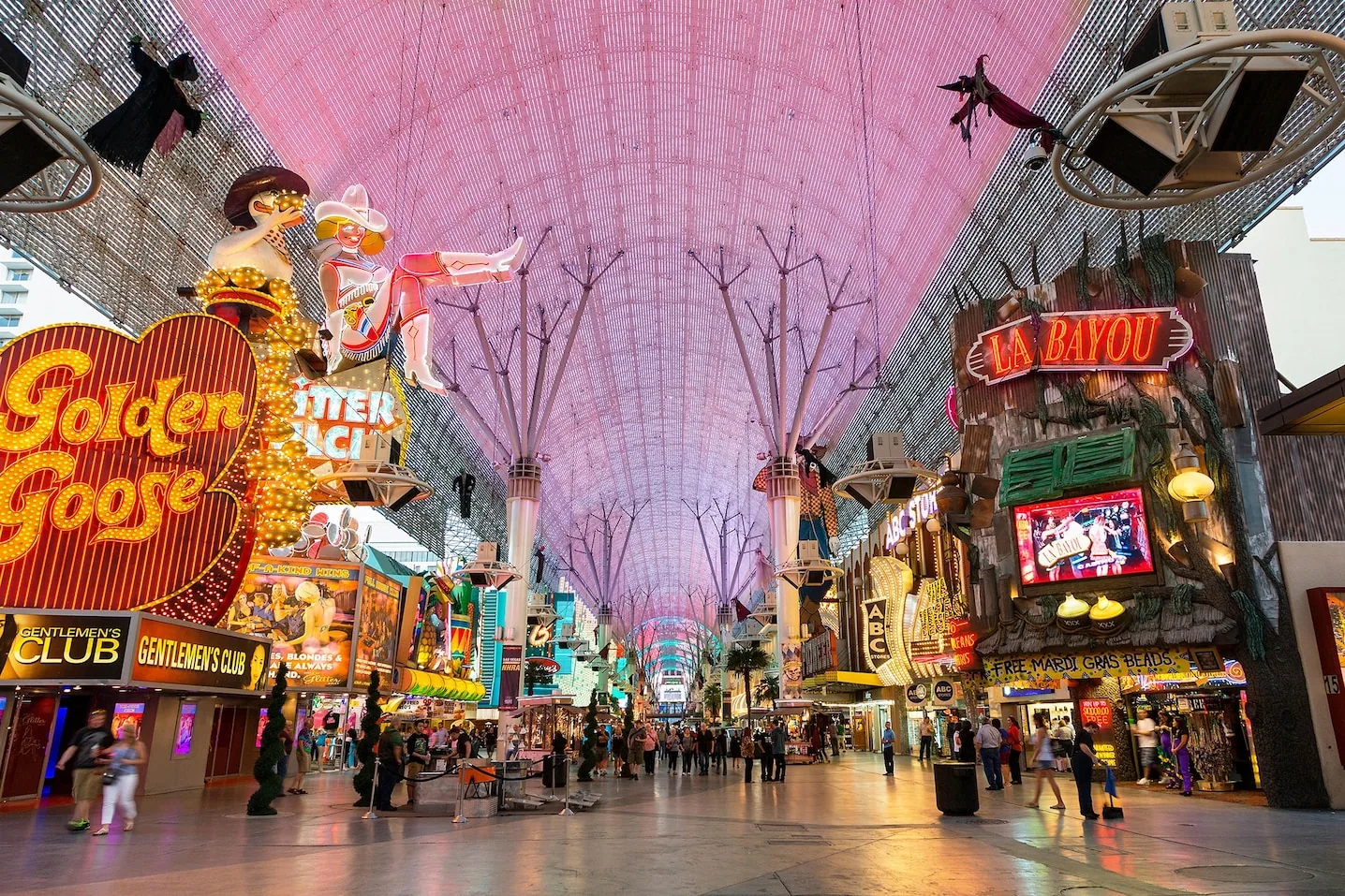
Roof repair, grease-resistant details and night-friendly scheduling for restaurants, bars and mixed-use buildings in Fremont East, Las Vegas, NV.
Grease on a roof surface tells a crew where the kitchen exhaust sits long before anyone opens the plan, and in a multi-block entertainment area such as Fremont East that clue matters on any restaurant or bar roof. The City of Las Vegas describes Fremont East as an entertainment district downtown, and its Vision 2045 framework includes it. A restaurant, bar or mixed-use building there has a roof that may carry exhaust fans, make-up air units and a parapet around its edge. We start the first walk at the kitchen exhaust, record how grease has traveled and what it has done to the membrane, and then price the repair against the roof's real condition.
Kitchen exhaust: grease, heat and membrane damage
Fats and oils from cooking leave the exhaust fan as vapor and settle on the roof around it. Many membranes soften, swell or lose adhesion when grease sits on them for months. A pool under a fan outlet may look like a stain and be a failing seam. We check whether the fan has a grease containment tray, whether the tray is cleaned, and whether the surface below it feels soft or tacky.
Repairs can include replacing the damaged section with a grease-resistant membrane, adding a protected walk surface and fitting a larger containment device. A restaurant roof also needs clear curb flashing around the exhaust and make-up air units, since vibration from a fan loosens sealant over time. Where a fan has been replaced, we compare the new curb to the old opening and look for gaps the installer left.
Roof traffic is the other grease carrier. Staff who service fans and hoods walk through residue and track it across the field, and the dirt and oil wear the surface along that path. We add walk pads on the route between the hatch and the equipment, so the wear lands on a replaceable layer and not on the membrane. Pads also make the route visible, which keeps service technicians from stepping on seams and flashing.
Commercial Roofing Questions
Why does grease around a rooftop fan matter to the membrane?
Cooking oils settle on the surface near the exhaust and many membranes swell, soften or lose adhesion under them. A soft or tacky patch beneath the fan often marks the place where the seam below is failing. We clean, test and replace the affected area with a grease-resistant section, then fit a containment tray that is easy to service.
Can a roof be worked on safely right beside a neighboring wall?
Yes, with a method chosen for the site. We check parapet material, what sits behind it and how close the next building stands, then pick heat-welded or cold-applied systems where open flame is a risk. Fire watch, extinguishers and a cool-down period go in the plan when hot work cannot be avoided.
What hours work best for a roof crew above a restaurant or bar?
Morning hours usually suit a building that opens late in the day, with loud steps ahead of prep and deliveries. The schedule is set with management, and the roof is closed before doors open. Sections stay small enough to dry in within the shift, so a sudden summer storm never finds an open area.
When is standing water on a flat roof a problem rather than a nuisance?
Water that remains well after a storm has passed adds weight, speeds membrane aging and finds any weakness in a seam. The cause may be a clogged outlet, a drain set too high or deck sag. We measure and photograph the pool, trace the cause and choose between cleaning, a saddle of tapered insulation or an added scupper.
How should an owner of several buildings decide which roof comes first?
Rank by active leaks, then exposed details such as failed flashing, then the remaining life of the membrane. A report written the same way for every building makes the comparison direct. The roof with an open water path goes to the top, and one with a slow-aging surface can wait a budget cycle with monitoring written into the plan.
More Roofing Detail
COMMERCIAL ROOFING IN NORTH LAS VEGAS, NEVADA
Hot work: choosing methods near wood, parapets and adjoining walls
Roof work in a dense block puts the crew close to neighboring walls, signs, awnings and occupied spaces. That affects the method. Open-flame torches are a poor fit beside combustible materials, and a heat-welded or cold-applied system can reduce fire risk. We ask what the parapet is made of, what sits behind it and how close the next building stands, before choosing a method.
Where hot work is the only workable choice, fire watch, extinguishers and a cool-down period become part of the day's plan. Adhesives and sealants have their own fumes, so air intakes near the work zone are covered or the work shifts to a time when the intake is off. A TPO membrane that is mechanically attached or adhered can avoid open flame entirely, and the choice is made from the building, not from habit.
The same thinking applies across the downtown districts. A roof near the Founders District and one in Fremont East each get a method chosen from what stands beside them, since a street edge, a shared wall or a signage frame changes where a crew can stage materials and where sparks or fumes could travel.
Night operations: scheduling around the hours a venue is busiest
A building that opens in the evening has its quiet hours in the morning. That is the working window for loud tear-off, fastening and equipment lifts. We ask management for the hours deliveries arrive, when staff clean, when music or kitchen prep begins and which areas below the roof cannot take dust or noise.
The plan for the day keeps the roof closed by the time the doors open. We never leave a section open overnight on the chance that the weather holds. A summer cell can bring gusts and heavy rain with little notice, and a half-open roof over a dining room is the worst result. Temporary protection, tarps and sealing materials stay staged, and the forecast is checked at the start of every shift. An occupied building reroof follows this kind of day-by-day plan.
Low spots and drains: where water waits after a storm
Flat roofs in a desert market see little rain in a year. Yearly rainfall measured at the airport weather station is only about 4.18 inches, and that makes low spots easy to ignore until a storm sits in one. Standing water adds weight, speeds the aging of the membrane and finds any pinhole in a seam.
We look for stain rings, dirt lines and algae or debris along drain paths, and we check that sumps and scuppers are clear. If a pool remains well after a storm has passed, the cause may be deck deflection, a blocked outlet or a drain set too high. The correction ranges from clearing debris to adding a tapered insulation saddle. Our guidance on ponding water repair weighs those options against cost, and an added scupper is sometimes the cheapest correction.
Maintenance record: what keeps the next surprise small
On restaurant and bar buildings, roofs collect debris, grease and the residue of rooftop work. A schedule helps: clean the containment trays, clear the drains before monsoon season, check sealant at curbs before the peak of summer and walk the roof after a major storm. Each visit is photographed and dated.
For owners with more than one property, the file also supports comparison. A building near the Arts District and a building in Fremont East can be ranked by active leaks, exposed details and membrane condition, so work goes first where it matters. A preventive maintenance plan keeps those visits on the calendar.
Tell us the hours and the exhaust layout
Send the roof plan, the location of kitchen exhaust and make-up air units, the hours the venue is quiet and any leak dates, and we will plan a walk that fits the building's schedule.